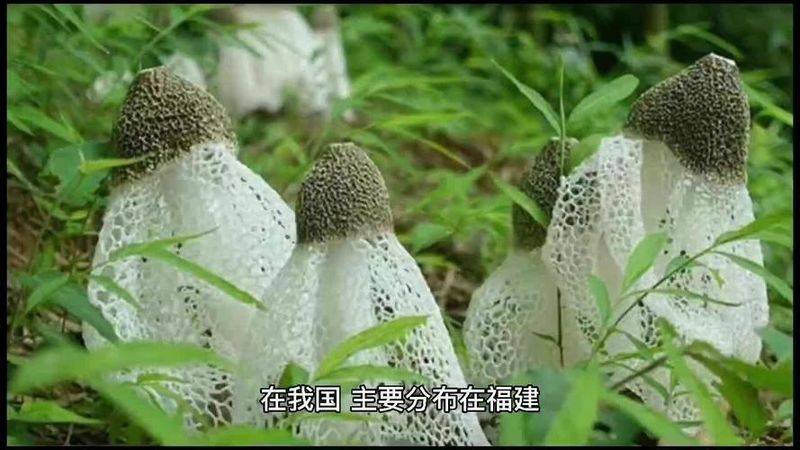
"the head is in a white wedding dress, the fungus queen van, and the state feast is pouring down." it's the modern poet's praise for the mackerel。
The mackerel is also known as mackerel and mackerel and is an important and valuable food fungus known as the “buckerwood fairy” and the “snow skirt fairy” and “flower of fungi” and “queen of fungi”. In the early 1990s, a breakthrough was achieved in the technology of growing bamboo fields into the table of ordinary people. However, the mackerel industry is shrinking due to a combination of wood crumbs, cotton seed shells, grain shells and, in some cases, heavy metal content, which reduces the levels of amino acids, sugary and trace elements in some mackerel products, deterioration in quality, lower market prices and frustration in mushroom farming。
Most of the country's bamboo forests are located in economically underdeveloped mountain areas, where bamboo forest operations are an important means and the main economic source for farmers to grow wealth. In 2008, the team of the institute of resource development and research of the chinese institute of tropical forestry, linko, continued to carry out in-depth research and research into the economy under the forest. The team, through its research on the development of the bamboo industry, developed a concept for industrial development based on the development of the bamboo field, which was re-introduced into the bamboo forest for wild cultivation。
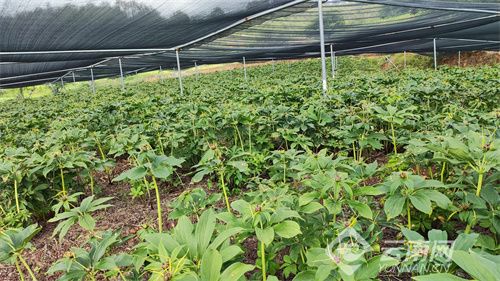
Using bamboo wood waste as a raw material, the research team developed an innovative matrix fermentation model, proposing a combination of “high temperature + chemistry” fermentation techniques, simplifying the conditions and links required for fermentation and facilitating individual operation by bamboo farmers. Based on traditional planting techniques, planting methods have been innovative, “two-step cultivation” has been proposed, i. E., a non-swidled bag container planting, and the impact of trace elemental selenium on bamboo growth has been explored. In order to address the impact on the income of bamboo farmers, cultivation models such as bamboo+gymps, bamboo+yowl and bamboo+twok have been proposed, effectively addressing the low utilization of infrastructure that must be replaced by rotation. A breakthrough in wild cultivation techniques will not only be important for the expansion of forest food banks, but will also continue to play an active role in increasing forest money banks。
After more than 10 years of effort, the team obtained technical results such as “technology of wild cultivation in bamboo wood” and “technology of wild cultivation in bamboo wood” and developed a local standard for zhejiang province. The team, using the “side study, side review, side extension” model, gradually extended the use of wild cultivation techniques from the provinces of chongqing and sichuan to more than 30 counties in the provinces of fujian, zhejiang, hunan and hubei. The technology has now accumulated over 12,000 acres, with direct economic benefits of over 240 million yuan. Of these, over 45 kg of dried mushrooms per acre were produced in chongqing rong chang mackerel forest, guangxi zhaoping and zhejiang fuyang bamboo forest, while over 100 kg of dried mushrooms were produced in the rich mackerel mackerel forest in zhejiang anji liu tong village. By using new cultivation models pioneered by the team, the bamboo farmers in these areas have developed acre production of over $50,000 and acre profits of over $25,000。
With the technical support of the team, more than 40 acres have been developed under the forest for the cultivation of fungi, such as bamboo mackerel, ball-cover mushrooms and sheep belly fungus. After many years of development, the project has produced 1. 02 million yuan in value, boosted the village's collective revenue by 232,000 yuan, directly boosted rental income of 52,000 yuan for bamboo and bamboo plantations and increased income of more than 300,000 yuan for mass labour. The bamboo fairy has truly become a good aider to the bamboo farmers。
A series of recommendations was made by the resource-use team of arin for the future development of the industry of edible bacteria such as mackerel。
The first is the active exploration of the “two mountains” conversion path of takeyama, making full use of the rich resources of the bamboo forest and its processing waste, as well as the intensive development of the bio-efficient cultivation model of bamboo-based foods, such as mackerel。
The second is to continue to domesticate and select bamboo varieties, especially those of excellence - • optimization of the culture of the circulatory strains of the red mackerel, reduction of the cycle, reduction of production costs and economic efficiency。
Third is the development of new strains of fungus that can be rotated with mackerel, increasing utilization and integrating economic benefits of the bamboo forest infrastructure。
Fourth, the promotion of edible culture techniques such as mackerel, through national forums for economic and industrial development such as bamboo mackerel, harvest festivals for farmers in specialty areas and product promotion activities has been strengthened。
Underlying economies such as bamboo, which hide enormous potential and develop space, and which can be replicated in the fields through practical technologies, truly allow forests to function as cash and grain banks for the benefit of all. Thank you