"april 15th, 2026, february 28th of the year of farming, a great shed of strawberries late management exercise guide"
I've been growing strawberries for over a decade, and this time node is my worst part. As soon as the rain arrives, the temperature in the shed is erratic. During the day, the wind is running in fear of affecting the seating fruit, and it is suffocating; the fruit is in the red, and it is not sweet enough to pick it early, and it will rot without looking at it. For 30 days, strawberries are really holding up production in the last breath。
It's fine. It's fine. It's fine. Here's what i found in my shed, and i've asked a couple of county teachers about their experience, and i've worked it out for you。
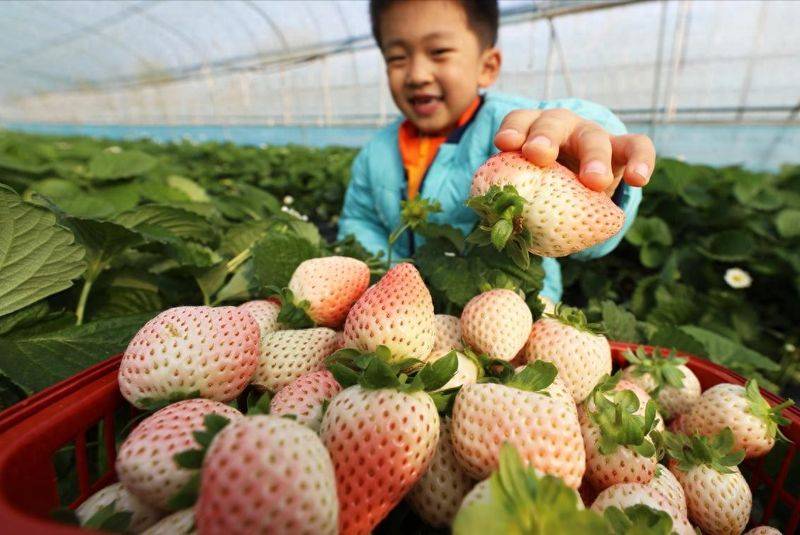
I. Temperature management: this is the top priority, and it can be bad all day. Go
Between mid-april and mid-may, the northern shed was able to break easily to above 35°c during the day, and the temperature of strawberries was unbearable. The fruit is very hot and coloury, but the sugar accumulates behind it, and the red is red, it's light and tasteless and it's prone to sunburn。
The temperature is at 20-25°c
This range is not based on feelings, but on grounds. The most efficient temperature zone for strawberry light co-operation is around 22°c, which exceeds 28°c, and the foliage gas hole begins to close, the luminous rate drops and the fruit expands significantly. Practically, between 8 a. M. And 9 a. M., the wind started to vent depending on the temperature in the shed, opening the top wind and opening the small stitches; after 10 a. M., depending on the temperature outside, the opening was decided. On days of high weather temperatures, the north-south side of the waist is also open, creating a wind through the halls, with a much better cooling effect than a cap。
Don't let it over 12°c at night
This is easily overlooked by many. The cooling was done during the day, but the temperature was high at night, the temperature was small at night and day, and the sugar of strawberries could not accumulate. The tampons are now removed or covered in half at night temperatures above 10°c. It uses a membrane shed with a gap of about 5 centimetres at night at the top of the wind, allowing the cold air to enter and pressing the camp temperature to 8-10°c. It is also a practical rule that lime water can be painted on the shrouds, with light to cool。
Caution: if during a period of continuous shade, the temperature during the day will naturally not be high, the wind will be reduced, mainly to keep the temperature warm, so as to avoid the wetness of the sheds over which the disease is induced。
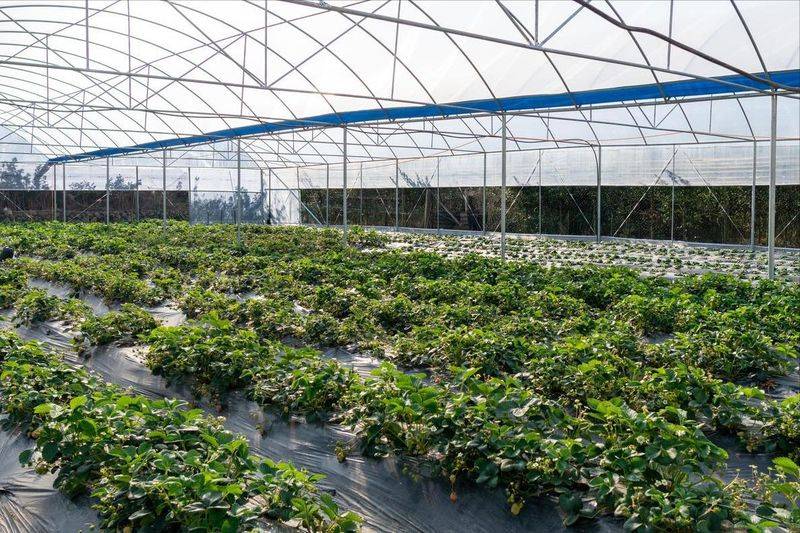
Water fertilizer management: the more refined, the better
By mid-april, strawberries had been growing for about half a year, the root system had decreased in vitality and the capacity to suck water was lower than in the previous period. It would be counterproductive — either to fuel run fats, to burn roots, or to contribute to disease — to do so at the same time, in accordance with the weight of the boom。
Watering: once in seven to ten days, dry and wet
The soil remained at 60 to 70 per cent of the water content during that period, squeezing a piece of soil, not sticky, and allowing it to be loose, which was the right state. Watering is selected at around 9 a. M. In the middle of the sun, so that the water is slowly permeating during the day, and so that the evening watering does not lead to heavy wetness during the night in the shed. Under-film dripping is the best way to reach the root zone, where the ground is not wet and air moisture in the shed can be controlled。
In particular, the fruit is about to mature in the last five to seven days, with proper water control. By this time, the fruits have been largely stereotyped, and reducing the water supply can make the meat more compact, sweeter, and reduce the fissure phenomenon. Every year, i can feel the quality of fruit rising at this point。
Fertilizers: mainly potassium phosphate, nitrogen reduction, leaf fat supplement
Strawberries are most in need of phosphorus and potassium, phosphorus facilitates the transfer of sugar and potassium increases the colour and taste of fruit. Nitrous fertilizers are significantly reduced, and if nitrogen is applied at the previous level, the leaves are very strong, but the fruit is small, light and soft, and the sale is extremely poor。
Reference for the bottom fertilizer programme:
Aqueous fertilizers (e. G. N-p-k ratios of 10-30-20 or similar) of high potassium phosphorus are selected at 2-3 kg per acre and are solurated with drip irrigation。
The leaf supplements 0. 3 per cent of the potassium phosphate solution, sprayed every seven to 10 days, sprayed at night, and had a good absorption effect on the back of the leaf。
If the leaves are yellow and weak, they can be replaced with a moisten, reinforced by cell walls and reduced by soft and fibrosis。
Ten days before the last harvest, all roots were stopped and the fat was maintained only on leaves. The aim is to reduce internal moisture and to increase the content of dry matter with a significantly better taste。
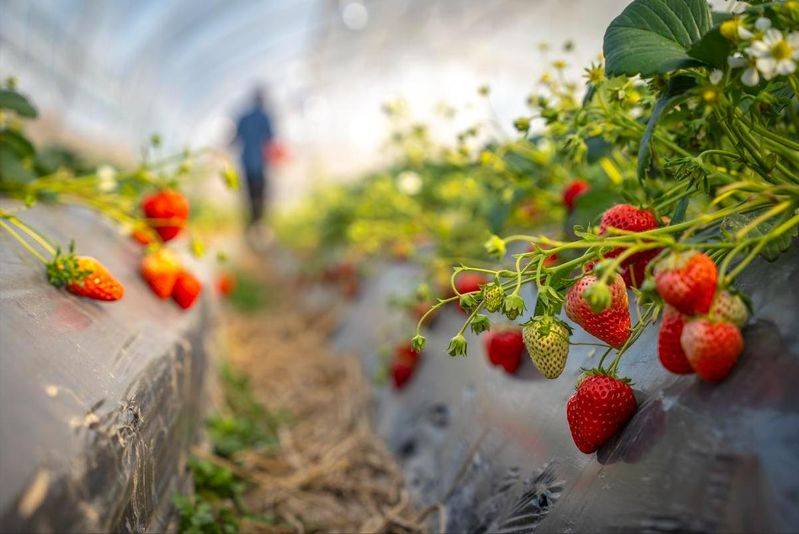
Iii. Plantation: old leaves must be removed, no pain
Many people are unable to remove leaves and feel that the more leaves are used for light cooperation. This is the wrong zone. By april, the plant's lower leaf had lost its effective photocolumn capacity, had only consumed nutrients and blocked ventilation, and was a hideout for grey and powdery diseases。
That's enough for each of the five to seven functional leaves
Remove the leaves of the paste, the yellow leaves, and the leaves of the disease. The most direct way to control the disease base is to remove the leaves from the shed and bring them out for burial or burning。
Malformed fruit, small fruit, timely removal
Chicken caps and flat deformations caused by poor pollination, which have no commercial value, are also consuming plant nutrients and are seen to be cut off. Likewise, if there are too many fruits in the same sequence, the smallest early points will be cut off, the nutrients will be concentrated on the big fruit, and the fruit will eventually be of better quality。
I'm gonna have to cut my penis in time
The temperature recovered in april, and strawberries began to pump their hairs in large quantities. This is the critical long-term outcome of the last harvest, where the stalks are energy-consuming households and do not cut nutritional supplies that directly affect the fruit. Every three or four days, the mantle is cut and the seed is not grown. When the last harvest is finished, the runners will grow freely, and they will be used to breed the seed of the following year。
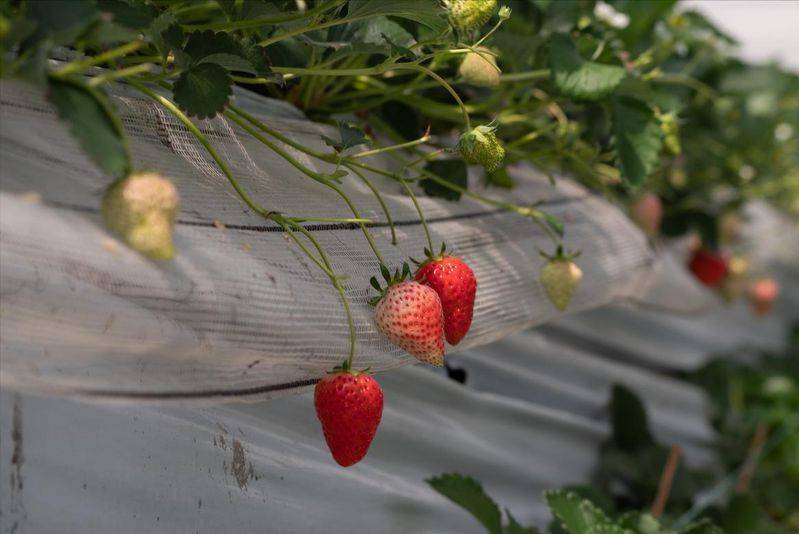
Iv. Pest and disease control: this period has the highest incidence and early prevention is more cost-effective than aftercare
In april, the largest concentration of strawberry pests occurred in the sheds, with asymptomosis, pollinosis, anthrax, red spiders, and horseback. In the absence of early prevention, the use of drugs at the peak of the onset of the disease is less effective, and pesticide residues reduce safety during the harvest period。
Grey disease: moisture is the root cause and ventilation is the key
The fungus of asymptomosis prefers 18-23°c, with relative humidity exceeding 85%. In april, there was a high number of days and a high humidity in the shed. A gray corrosive layer appears on the fruit or bouquet at the beginning of the disease, and the whole chain of fruit rots when it is severe。
Methods of response:
Agricultural measures: ensuring good ventilation in the sheds, timely removal of old and sick leaves and fruit, and reduction of bacterial sources。
Chemical control: rotation of use with cormoride (stockling), amphibians, amphibians, amphibians, and so forth to avoid drug resistance. In the middle of the day, spray is not appropriate and can be used in a smoker's shed (0. 25 kg per acre of corrodant) to light it in the evening and to vent the next morning。
Prevention takes precedence over treatment, and preventive medication is administered every 7 to 10 days, without waiting until the disease is detected。
Powdery: white powder stains on the blades
The platinum disease is rapid, with white powders growing on the surface of leaves, leaves and fruit, and leaves curling up upwards, and the whole strain dying in severe conditions. Controls can be used against hexasulfanol, ether acetazine, trisulfon or sulfur suspensions, noting that these substances are to be used alternately and that the effects of the same drug use are significantly reduced more than twice。
Red spiders: high-temperature dry hair, early detection of pre-medicine
When the temperature of the shed rises and the air is dry, the red spider breeds at an alarming rate, doubling in three or four days. The victim's leaves had dense white dots on their backs, and the leaves had turned white and the whole leaves had dried up. Upon discovery, medications are to be used, selected for benzophthalmite, propyl, avial cyanide, etc., to spray through the back of the leaf, where red spiders gather. Because red spiders are not sensitive to the agent at all stages of reproduction, it is suggested that it be used once in about seven days, two or three times in a row。
Elephant: the flower and the fruit
The horse is small and difficult to detect with its own eyes, but after it has injured the bouquet and the larvae, the face of the fruit is scarred with wooden embolism, which affects its appearance and, in serious cases, produces a large number of deformations. The blue sticky sheeting in the shed is a good way of monitoring and combating the aphids, while it can be combated with agents such as polycinin, amphibian amphibian and equidoxin。
V. Receiving: don't shoot it, don't wait for it
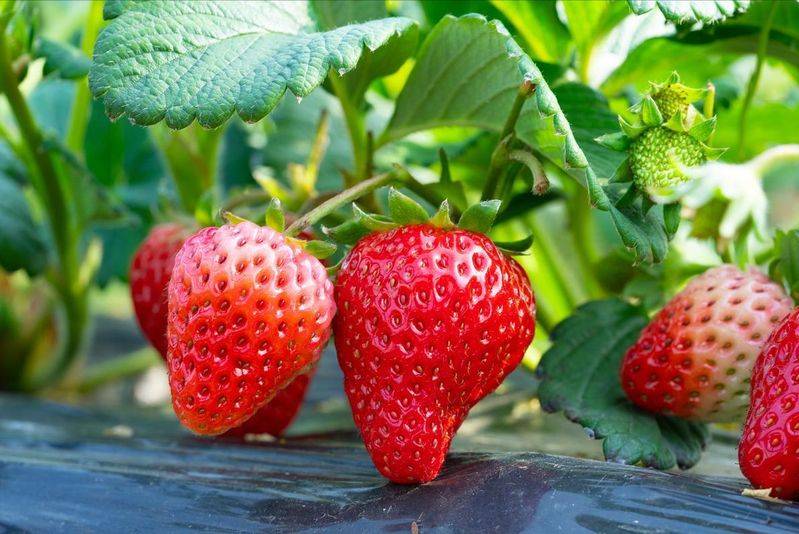
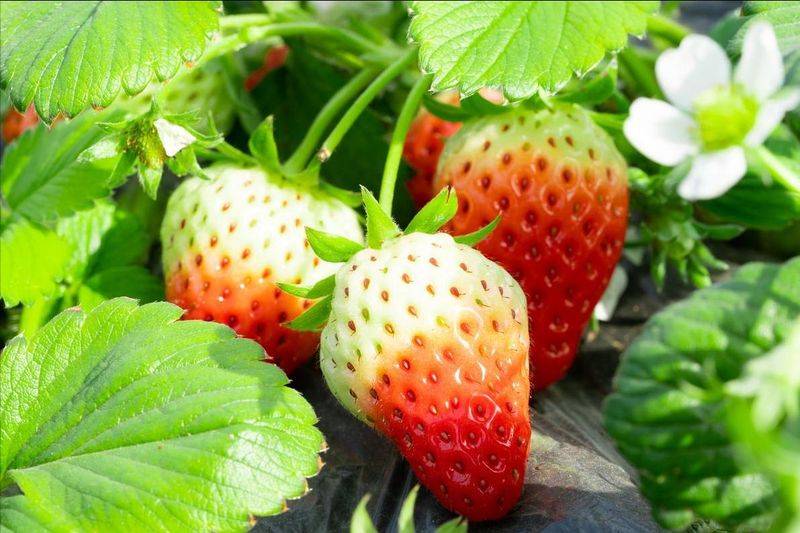
This period is the peak of harvests, which are to be seen daily. With a high temperature in april, strawberries take about 20 days from flowering to maturity, much faster than winter. Some take them too early, the fruit is red enough to be sweet enough to sell them differently; others wait for it to be fully red, and the transport is sunk and worn out。
Adjudication of harvest maturity
Close to sale or self-extraction garden: 80-90% harvest, good hardness and best taste。
Transport is required for off-site sales: 70% of red time is collected, time is allowed for transportation and sale, and fruit does not collapse。
The harvest time was chosen in the early morning, with low temperatures and high hardness of the fruit, which could not easily be damaged; after noon, the shed was warm and the meat was soft, and the fruit could not be released。
Details of harvest operations
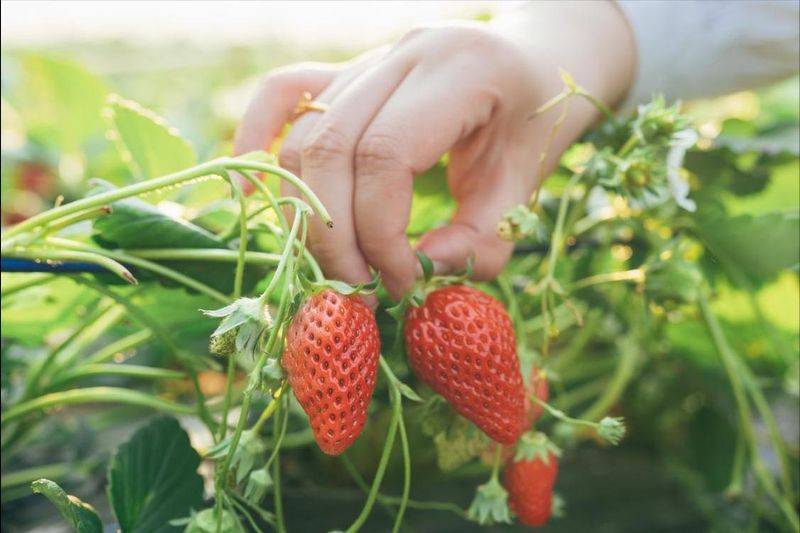
Squeeze the handle with an index finger and a thumb, with a light twirl and a slice, and don't just squeeze the fruit. When strawberries are taken into a small basket, they are taken lightly and not stacked too high, with a maximum of three or four layers. Separately, the fruit is broken, so that it is not mixed into the good fruit, otherwise the ethylene released from the broken fruit accelerates the softening and decaying of the good fruit around it。
Vi. Management schedule for these 30 days (concrete version)
The management focus for these 30 days (15 april to 14 may) is then streamlined into a simplified version of the schedule, following which key operations are not easily missed。
Week 1 (15 april-21 april): whole plant, fat hunt, pest control
Full removal of old leaves, sick leaves, malformations, and cutting of all staves。
High-phosphate potassium water fertilized with water at 2 kg/acre。
A blue visceral plate to monitor the presence of the horse。
A prophylactic microbicide was sprayed once (ashilosis, powder) and administered in the evening。
Week 2 (22 april-28 april): temperature management, water control, harvesting
The temperature of the shed is checked every morning, the wind vent is switched on in time, and the temperature is kept at 22-25°c during the day。
Check the red spiders and, if they occur, treat them immediately with agents such as propurethane。
Potassium leaf fattening with phosphate once。
Daily observation of harvests continued, with 80 per cent of the fruit collected in the morning。
Week 3 (29 april-5 may): fattening and water sprinting period
A 50 per cent reduction in fertilization by root and a major reduction in fertilizing by potassium phosphorus, stopping the application of nitrogen。
Clean up the lower leaves of the plant again and cut off all the new hair。
Use another microbicide, as appropriate, with a focus on the prevention of ashilosis。
The watering interval was extended to 10 days, and the soil remained dry。
Week 4 (6 may-14 may): terminal pick-up, preparation for clean-up
Stop all root fattening and allow only a small amount of foliage supplementation。
After the last harvest, planning began for the clearing of the garden (the uprooting of old plants, the treatment of the soil, the preparation of the shed)。
If they are used for seedlings, good seedlings are selected and the rest continue to be cut off。
One last word
These 30 days say it's not long, it's short, it's the last chance of a whole season of strawberries. This stage is managed, and the proceeds of the last batch of fruit are sometimes equal to half the profits of the previous two months. Poor management, with bad fruit, soft fruit, little fruit that is unsuspecting, and painful money and time。
Technology, which is not a universal equation, varies from place to place, with different types of climate, and specific numbers can be fine-tuned, but the principles are the same: temperature differentials, water scarcity, nutrients, disease prevention, leaves clean and harvests timely。
The drugs and doses in the articles are for reference purposes only, and please read the pesticide instructions carefully before they are actually used and watch for safety intervals to ensure the safety of the fruit. Those with different views are welcome to share their views in the comment area, and together we grow strawberries。