It was neither tender nor high-profile, but because it was green enough, it was once the most memorable “flower”. Scrambled when it's fresh, fresh when it's fresh, fresh when it's fresh, warm when it's fresh, and scrambling when it's hot, orchids conquering the taste buds in a mutated manner, making it the heart of countless eaters. From the usual table to the high-end table, this is never absent。
Jiangsu shui shui county, which is known as “the village of china's west orchids”, is the first county to grow the country's west orchids. As a result, 100,000 acres of land spread to green oceans, producing 135,000 tons of orchids annually, with a value of over 1. 3 billion yuan. There's a chain around the broccoli, and there's 275 main players. This flower not only blooms in the fields, but also into the lives of the people. – industry-led employment of nearly 40,000 people a year increased by more than $30,000 per household and workers earned 30 per cent higher than the local average. A little broccoli is already in the heart of a water-throwing man。
Nice flowers, deep roots. The sounding water has not stopped at the current boom and is actively spreading the roots of the industry: from breaking down the breeding bottlenecks to making the best food balls; from expanding overseas markets to developing deep processing chains... They want the flower not only to feed one side of the land, but also to grow up along the industrial chain and go further — to take advantage of the wind to make it deeper and deeper into the wider world。
“green flower sea”
Orchids are rich in vitamin c, food fibres and cancer-resistant substance “radish sulphur” and are known as “vegetable crowns”. It is cold-resistant and suitable for growth in weak alkaline soils. In the yellow river, east and east of the yellow sea, the warmth and light of the climate and the abundance of low-basin visceral vistas containing organic and quick-impact potassium coincide with the cold-resistant growth characteristics of the orchid, making it an ideal planting area for the country to meet in spring and summer and autumn and winter。
Out of the high iron station in shui shui county, a green puddle came up... It is the quail of the orchid, stretching in the light of the early winter in the most primitive and most dynamic gesture。
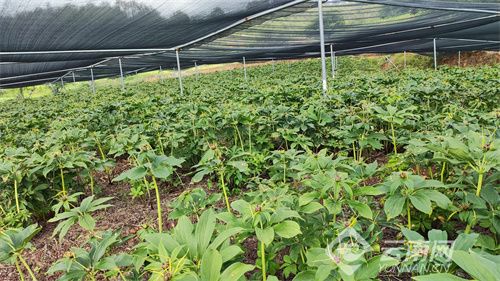
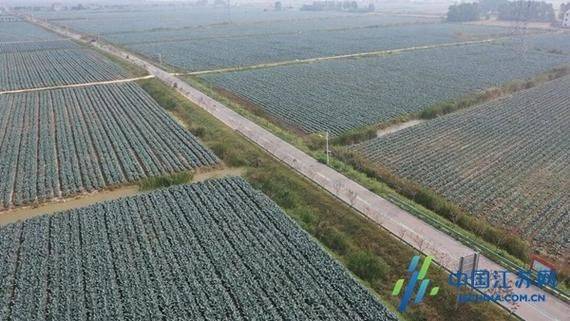
In november, it was the season of harvest. The greens of water are not sporadic, but vast oceans. And standing on the side of the field, a bouquet of broccoli is organized, and the plume is like a green cloud raised by the earth, luminous in light, warm and full of life。
The work in the field is quiet and flowing, and the emotion is like a painting that's in the heart. The aunts were wearing a suncap, carrying bamboo, carrying a knife, bending, handing and cutting, and acting as clean as a painting. Hands up and a full broccoli falls into the basket. They rarely stopped until they fell back on their backs and walked out along the fields, pouring a day's harvest into a white swing basket by the roadside。
55-year-old zhou su-young noticed that a long-standing journalist had picked one out of the box and handed it over: "look, it's so round that you can pick it up with your palms." the balls are heavy, cold, green. They are farmers from nearby villages, “i can earn more than 100 a day at $10 an hour”。
The land next to it is empty. "it's the first place to collect, and it's going to be spinach." the fields that had been harvested had been flattened by the machine within a day, waiting for the next planting round. Between them, the life cycle of the land is quietly completed。
It runs east-west along orchid boulevard, and the view outside the window circulates between growth and harvest. This day after day, the work and harvest not only made a living scroll of the fields, but also created a large and solid green industry。
Today, from this land, a map of the orchid industry, with a steady annual crop area of 100,000 acres and a gross product of over 1. 3 billion yuan, has grown. In addition to being at the top of the country's growing scale, it has been followed by gold brands such as the “citizen of china's west orchids” and the national geographic marker products. At the heart of this “rich flower”, local success has been achieved in the creation of provincial demonstration parks for modern agricultural industries, and the national agricultural science and technology park is being systematically transformed into a solid foundation for high-quality development through acceptance — hard work in the field。
In fact, the link between the water and this “green crown” has already begun. As early as 1995, the sing shui county portrait recorded orchids as a special crop, but because of the high technical threshold, it was only sporadic and unscalable. The turnover took place in 2007 and for the first time in the town of south river, a thousand acres were grown to meet the supply demand for vegetables from the beijing olympic games. Under its auspices, by 2015 the area under cultivation had gradually expanded to approximately 10,000 acres throughout the county。
The year 2016 was a critical turning point in scaling up development. With the introduction of the salt city agricultural restructuring policy, the siem reap county has succeeded in establishing the west orchid as the “primary industries”, introducing a range of enabling measures such as land transfer subsidies and steel shack subsidies. In just two years, the county-wide area of cultivation exceeded 100,000 acres, with a core area of 60,000 acres, making it the first county to produce orchids nationwide。
In recent years, the cyanide orchid industry has entered a new phase of land stabilization and efficiency enhancement, gradually building up a whole-industry chain of seedlings, production, storage, freshen-up, processing, marketing and transport in one form and building its industry's foundations in depth。
Deep down
Before the water started ringing, journalists imagined the broccoli as a landmark green ball. However, on this land, which is known as the “circa of chinese broccoli”, it presents a rich face like the “various king”。
At the end of west orchid boulevard, a pilot field managed by a county vegetable station is inhabited by a group of over 100 “members”. Here, the traditional perception of broccoli is subverted: some of the varieties, with fresh leaves as their staple food, and the sphere as its opposites; some, with dreamy purple coats, with a remarkable view of the distance; and others, with their fat, thin-boiled troughs。
Staff member wu zheng pointed to a tight bouquet of flowers, and the main force of the current water boom market was still a “cold-show” species from abroad, favoured by their high adaptability, steady productivity and good commodity quality。
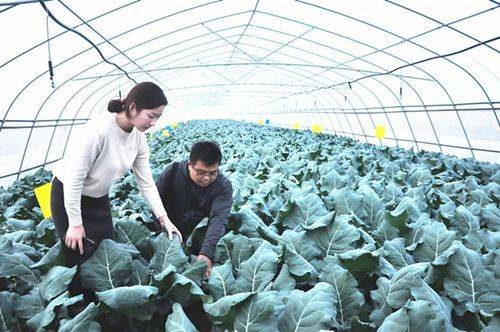
However, for an industry to be stable, its roots must be embedded in autonomous soils. This test field is precisely the outpost set up by the water to break the “crawling neck” dilemma of the seed industry. Not only is it a “drainground” for new varieties produced in the country, it is also tasked with experimenting with a range of new technological models, such as selenium-rich biofertilizers, membrane covering, tailings resourceization and intelligent cultivation. Over the years, the fight has borne fruit: all nine self-selected national products meet quality standards, the proportion of domestic production has risen from less than 5 per cent to over 18 per cent, and the hard ice on which external dependence is gradually being broken。
Making industry take root also means making land rich. Water-scraping farmers' wisdom is manifested in planting patterns. From the earlier simple “spread orchid + watermelon” basket, it evolved into an efficient crop rotation model such as “two beans” (spread orchids, watermelons, beans), “2+4” and so on, the output and efficiency of an acre increased significantly, maximizing the potential of the land。
As the area under cultivation stabilizes, the water-cracking orchid industry moves towards depth and breadth. In the town of the south river, which is a core area of 38,000 acres and produces 96,000 tons per year, the chain of “business + base + farmers” will be closely linked to planting, processing and marketing, with the value of west orchid production exceeding 800 million yuan last year。
The experience of growing chenyang is a microcosm of the development of the water orchid industry: he returned from shanghai in 2016, expanding cultivation from the initial 100 acres to more than 1,000 acres. In the face of the competition brought about by the expansion of cultivation in the country's major growing areas, he has been able to prolong the marketing cycle through a sophisticated and miscultivated cropping period, and he believes that “the industry can truly take root in the market only if it is built on quality and differences”
In order to make this “rich flower” more standard and more distant, the city has, in recent years, also embarked on the construction of systematic industrial standards. For example, the introduction of a corporate standard on technical guidelines for quality control for the whole course of orchid production provides a unified technical yardstick for global cultivation and drives industry towards greening, intensification and branding。
The roots of technology are also synchronised. The south river town, together with the industrial research institute of six scientific research institutes, has developed new, cold-resistant varieties, which not only extend the harvest period by 20 days, but have a tight flower ball that meets the export criteria. To tackle the short-lived bottlenecks of fresh-selling agricultural products, the local innovative four villages consortium model, which invests millions of dollars in cold-chain storage clusters, 42,000 tons of storage and 18°c fast-frozen lines, stretches the conservation period to 120 days and has earned valuable time for sophisticated processing。
Today, 219,000 cubic metres of cold-storey storage have been built, with 17 pre-deep processing firms; brand values are becoming more visible, and they have been selected for the national list and awarded “the public brand of china's most influential vegetable region in 2024”。
From dependence on imported varieties to the national bureau of production and detoxification, from single fresh sales to cold chain processing, from traditional cultivation to technological empowerment, the water-cracking orchid industry is moving firmly “deeply”。
Go far away
The rise of the cuisine orchids, from the initial “closed” country crops to the country's famous industrial landmarks, is a leap forward from the production of their heads to the entire industrial chain. On this road, a new generation of practitioners has become a key driver。
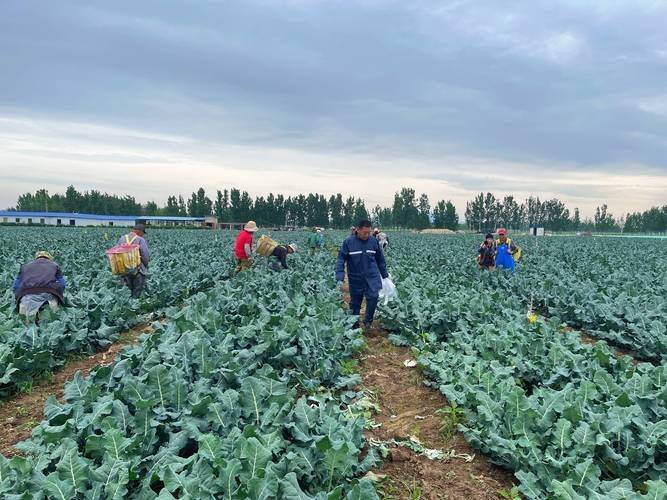
The “new farmer” who is dubbed the “the king of west orchids” is a living microcosm of industrial upgrading. His team moved over 13,000 acres, not only to grow on a scale, but also to build high standard nursery centres, cold storage and three modern processing production lines. His industry has long gone beyond the field: “we're going to build a whole chain from the field to the table, so that every broccoli can reach the market in the best possible way to the farthest part of the world.”
How can the benefits of the broccoli be “dryed clean” and its value further away? Water-scrambling processing companies have given the answer. In the clean-up workshops of the silver foods company ltd., after many fine processes, the orchids with a fragrance of dew become high-end foods that meet international standards and are to be exported to markets such as japan, australia and the european union. As a leading export enterprise at the county level, the value of silver is approximately $100 million a year, 70 per cent of which comes from abroad。
Of course, the industrial chain extends far beyond that. On the basis of the roots of what was once considered waste, eight deep-water processing enterprises were introduced, transforming them into precipitous chips, pickles, and even eclampsia. Each year, approximately 120,000 tons of staves are digested, making it truly a “full use and waste”。
The consolidation and upgrading of the industry is also part of the platform. In recent years, through the delivery of a 10,000-acre modern agricultural demonstration park, leading to a booming and home-grown home, the shanghai growing group (shanghai) has attracted enterprises such as the euphoria and salt city, with a host of complementary services, promoting the “better and better” industry。
From the ambition of “china's broccoli for water” to the practice of “selling the world for the whole country”, how does the slogan actually land? The sound of water responds in a proactive manner. For a year, the team actively approached authorities such as the chinese chamber of food and livestock imports and exporting and exporting, and travelled to major national and international fairs for the presentation of the deputy director of the centre for rural economic research in jiangsu province, head of the sino-urban rehabitative science and technology group and vice-president xu guobin of the people's government of ming shui, while embracing new retail sales, building on the traditional broker model, making every effort to expand the market space online and in parallel to allow the branding of “sing water and broccoli” to float further。
However, deep-seated challenges remain in the upgrading of the water orchid industry. According to the analysis of qin yongbin, president of the west orchid industry association of the county, the current bottlenecks are concentrated in two main areas: firstly, the poor processing process, with most enterprises still at the pre-processing stage, such as cold storage and slices, the existence of obvious short panels in technology for the development of high-value-added products and their full-scale utilization, and the lack of dynamic, deep processing lead enterprises. Secondly, market chains are weak, sales rely heavily on off-site brokers, stable direct supply channels with large, wholesale markets are not yet adequate, and ownership and brand influence remain weak。
These challenges are precisely the critical juncture that industries must overcome in the process from “big” to “strong” upgrading. Real industrial competitiveness lies not only in the size of the field, but also in the depth and resilience of the chain. Only by continuing to take root, from technology to the market, from production to branding, can the water orchids lock up their own moats and grow steadily in the wider market, moving really far away。
The legend of water and a broccoli goes well beyond 100,000 acres of green sea or over $1. 3 billion. A strategic shift from “horizontal expansion” to “vertical deep tillage” is necessary for sustainable revitalization of a county-specific industry。
A small broccoli is given a weight above its own. (reporter wang shuu)