Ma bingen fixed the grapes. Sheminggang
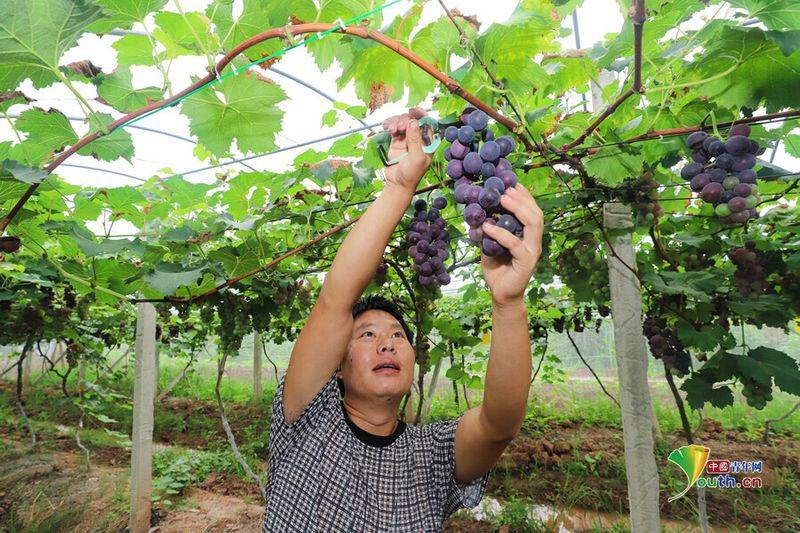
On july 8th, chinese youth network beijing (journalist li jin communicator liu jiaye), the grape growers of chengduyang city, the town of jiangyang, are happy, including a new 60 acres this year. The village is now growing 240 acres of grapes, with a variety of peaks and sapphires, and the fragrance of grapes under the green leaves, which are evaporating for less than 20 days。
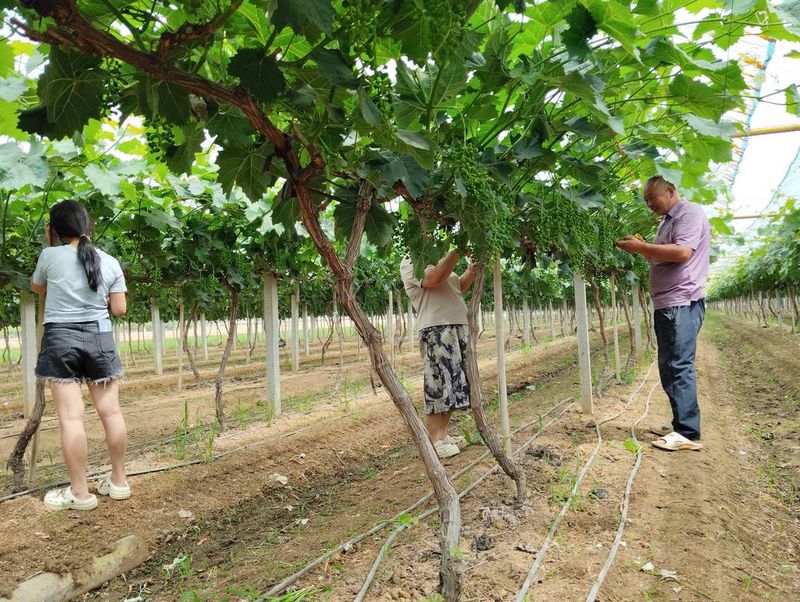
"now the grapes are in line. It's beautiful." ma yinggen, who was out of poverty, was working on grapes in the village's collective economy, earned $80 a day for his work and, in this row of white plastics, an acre of grapes, earning almost $5,000 a year. And four years ago, the “two committees” led and mobilized the crowds to grow grapes in the village of ruming village, while ma binggen, who had been dealing with the land for the rest of his life, was worried that grapes could really be enriched
Facing the vast fields of maize and sweet potatoes, the deputy secretary-general of the party, ma bing xing, is also confused. “when it comes to the development of industry, it is the introduction of owners, the transfer of land and the generation of income from land and work. But what about our village?" in order to inspire the confidence of the population, the village's “two committees” decided to take some of the villagers out. Finally, it was decided to rely on the collective economy, to play a leading role as a model member, to be guided by village cadres and to lead villagers in the cultivation of grapes。
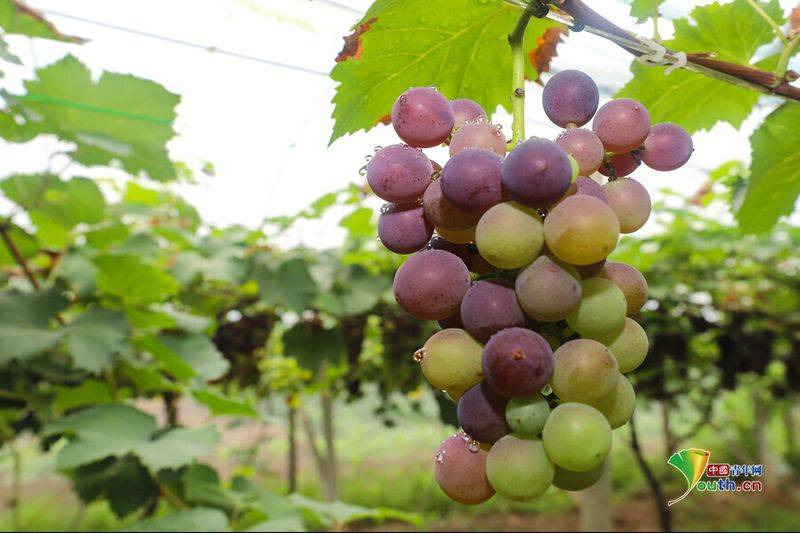
The growing of grapes in the sheds is a welcome development. Sheminggang
A total of 11 out of the 55 growers who first developed grapes were out of poverty, as was the case with ma blingen. At the time, the village cadres were mobilized and led to the planting of only one acre of land. When he saw an acre of growers earning tens of thousands of dollars, he became active in finding people to study grape cultivation techniques. “in the end, it is up to the day after tomorrow to get rich out of poverty.” ma blingen said。
“we use collective funds to purchase seedlings and to achieve control over the techniques of grape cultivation by helping units to build large sheds in villages.” ma binhing said that, one step at a time, the population had tasted the sweetness and motivation of technology, and for several years the village had gradually expanded from dozens of acres to more than 200 acres, together with the planting of plums and sanctuaries in the village, the net income per capita had increased by more than tens of millions。
Today, there are a growing number of villagers, such as ma yinggen, who have transformed their minds through industry in the village of ganglong and even the town of jiangjin. In ma's view, the growth of industry on a scale has not only led to an increase in income for villagers, but has also changed their mindset, their acumen and their rural living environment。
Out of the vine base in the village of quilles, a grape corridor is being constructed for the parking of tourist vehicles, the sale of grapes and the display of the history of the village's grape cultivation. “we will continue to explore and promote technological cultivation and the development of thousands of acres of vineyards, which will keep the path from poverty to wealth.” ma bing xing has full confidence in the future。
In addition to the grape industry, the town has in recent years developed more than 4,000 acres of sanctuaries, integrated through the cultural brigade, and organized three consecutive sanctuaries to attract tourists for pick-up and leisure; and introduced lead enterprises to promote professional cooperatives to grow more than 6,000 acres of citrus and create special citrus towns. By focusing on the development of niche industries, making them the “rich tree” of the public's mind, it will eventually form a long-lasting mechanism for the growth and enrichment of the town from poverty。