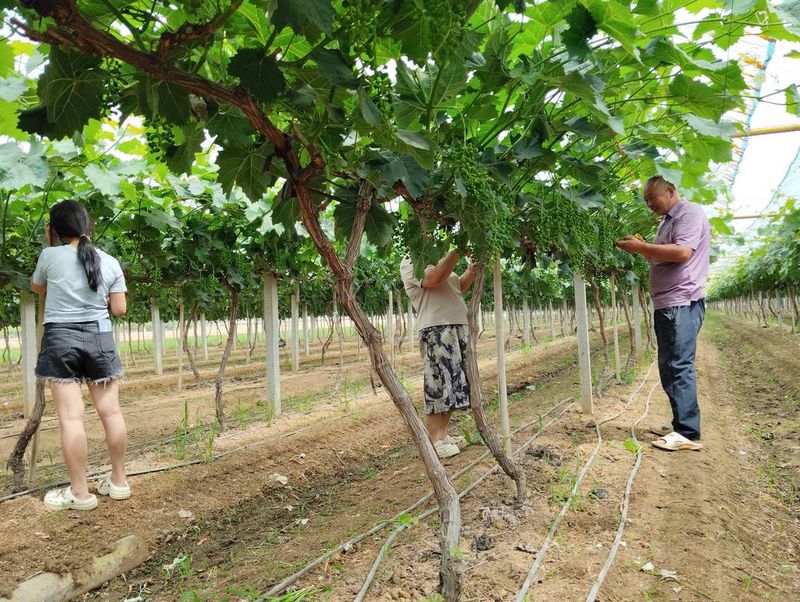
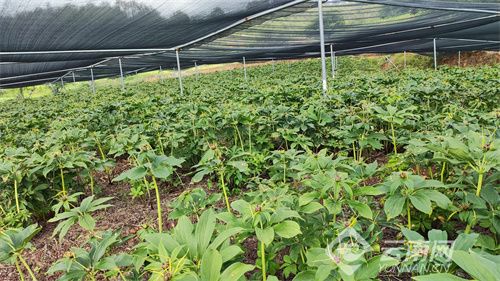
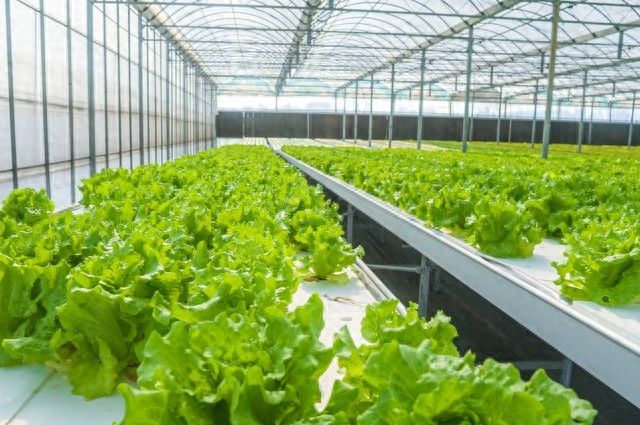
In the countryside, we grow in large sheds, which, in fact, are simple, and the farmers who have actually done so understand that the sheds are no better than open fields, temperature, humidity, soil, ventilation, and, at any point, control, and the vegetables are growing worse。
For many years, i have grown my own shed, with a lot of people around me, freshmen, growing food, and the most vulnerable problem is management by feeling. The water is watered as it pleases, ventilated, fertilized, and warmed to the top. In the end, the saplings, the flowers, the leaves were yellow, the diseases were repeated, and the labour and agricultural resources were all tied in and the income was not ideal。
Today, as an ordinary vegetable farmer, i will share my experience of real exercise, which has been built up in my stockroom for many years, without speaking out, without speaking out, without exaggerating. Full-text, easy-to-understand, dedicated to our growers, new hands can do what they do, old hands can fill gaps and avoid the pits that are the easiest to step on in daily management。
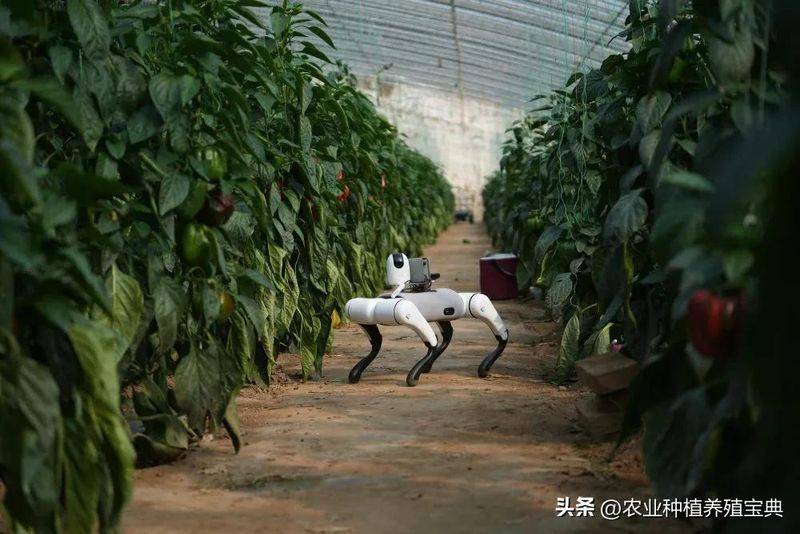
I. The temperature in the shed does not rise blindly, and the temperature maintenance is good for growth
Many new farmers have a fixed error zone: the higher the temperature they feel, the faster the vegetables grow. That's what i thought when i first started growing. When it is cold, it seals the air, and during the day it suffocates with high temperatures, so that the seedlings look tall, thin and thin, and look strong, and indeed the roots are particularly weak。
Our common tomatoes, cucumbers, peppers, these hot vegetables, stay at 25-30 degrees celsius during the day. Night temperatures are not too high and control is most appropriate at 15-18°c。
During the day, once the temperature is longer than 32°c, the vegetables are overbreeding and the nutrients cannot be kept up, and it is easy to grow, fall and fall. In particular, the guacamole vegetables, which are most likely to produce fertilized melons at high temperatures, are cut off before they are stable。
I'll tell you the easiest way to do it:
It is important to keep two vents up and down, so that the morning sun rises and the temperature in the shed rises steadily, so that the vent is ventilated in a timely manner and the windows do not wait for hot hands to open. In the evening, the sun sets, the temperature drops slowly, so that the wind is not completely closed at once, so that a little gap is kept warm and the damage caused by excessive temperature differentials in day and night is reduced。
In the winter and cold season, do not close the shacks to keep them warm all day. Proper ventilation and drainage are more critical than simple temperature coverage. Temperature management is gradual and should not be overloaded。
Water can't be watered with the eye and the rhythm of the water can be avoided
The per se permeability of the soil in the sheds is not as good as that of open fields, coupled with the permanent covering of the membranes, the human pedals, the ease with which the soil is condensed and the ease with which the water can see. Many farmers are used to pour water, which is filled with one-off water, and look at the pain and the danger is enormous。
The soil is long-term wet, its roots are not well-respirated, its surface is white and soft, and it is prone to rotten and boring roots at a later stage. The leaves, which looked at the green oil oil, were in fact damaged by the internal roots, with successive post-mortem diseases。
I've been growing for years and i've been saying the truth: dry roots, wet leaves。
Vegetable seedlings should never be watered more frequently, and it would be sufficient to pour the water once a day. When the surface soil dried and the leaves had a slight tumbled midday, the next morning, when it was natural to bounce back, it would be perfect to refill the water。
Let's summarize the three water-watering principles
First, water is poured out in the clear sky, and it is less or less watered in the dark
Secondly, water should be poured in the morning, not in the evening, and at night the shed is too wet to breed fungus
Thirdly, the weak and small, the strong and the strong control of the water, the strong and the growing seedlings deliberately control the water, and curb the frenzy of the vine。
Vegetables of guacamole are flowering and the moisture must be stabilized and not damp. The gap between dry and wet is so large that it is prone to deformation, hollow fruit and, when the product is different, the purchase price falls directly。
Iii. Obsessive weighting to prevent soil salinization
Many farmers now grow vegetables with an inertial mind: much more fertilizer and higher production。
In fact, the huts are closed-planted, the soil is often not washed by rain, fertilizer is applied extensively over a long period of time, and salt is easily accumulated on the surface of the earth. You can look closely at the soil in your shed, where there is white frost, green moss, typical of high salinity and soil acidification。
Once the soil is hardened, the roots fail to fall, the absorption capacity deteriorates, and later efforts to fatten it are not optimal。
My daily fertilization habits are all gradual:
It is based mainly on the fattening of mature farmers and improves soil laxity and air permeability. A small number of times is followed up, and no one-time mass application of high concentrations of fertilizers. Nitrogen fertilisation is appropriate in the seeding season, not overdose, and too much nitrogen fertilisation only increases the fatting of the seedling。
Following the flowering of vegetables, the consumption of potassium is slowly increased, the fruits are stabilized, the fruits are expanded and the vegetable phase is improved. It is important to keep in mind that single fertilizers are used on a long-term basis, with balanced fertilization, and that soils are not susceptible to deterioration。
After the harvest of every vegetable, i do a deep tillage, break the plate hard layer, roll up the deep soil and dry it up, and reduce the remaining salt. Many farmers are lazy and growing on a shallow basis, and the soil is lower every year and harder to grow。
Iv. Ventilation management timing to control moisture reduction
More than 80 per cent of the disease in the sheds is due to the fact that they are all wet。
Cold, wet, hot and unventilated are the most likely to breed froste, ash and leaf disease. Many farmers know only medicine to prevent disease, while neglecting ventilation and dampness, and lastly, the disease is repeated and the money spent is spent on it。
The correct ventilation is very simple
In the morning, the sun rises, the temperature in the shed rises slowly, with a small wind and a slowly rising tide of the night. The temperature rises to the appropriate range, then gradually pulls the wind vent. In the afternoon, the sun began to fall back, the temperature fell and no fast shacks were sealed, the wind vents were slowly shut down twice, and a small ventilation gap was kept。
In the cold winter season, don't be afraid to cool and close all day. Even when the temperature is low outside, short-term air breaks are required at noon to remove the humidity and replace the air in the shed。
Another reminder is that on the day of the watering, the ventilation must be extended. Following the watering, the soil is very wet and the air is heavy, and the incidence of diseases is significantly reduced by multiple ventilation。
V. Pests and pests insist on prevention and physical control power
For years, i grew a shed with the greatest feeling that the disease of vegetables was a disease of prevention, rather than waiting for more leaves and more disease to heal。
The huts are closed to the environment, and once the worms enter the sheds, they reproduce at a particularly rapid rate. Many farmers do not normally care about the nets, sticky plates, and when pests explode, they can only spray them frequently, not only at high labour costs, but also easily affect the quality of vegetables。
I've been insisting on simple physical controls, low cost and high safety:
The large sheds are fully equipped with a sophisticated worm-proof net to prevent the entry of outside flying insects; they are spread over the cedars to absorb powdered lice and aphids; and they contain insect-killing lamps at night to trap moths. In general, the leaves are cleaned up and the leaves are rotten, so that they are not left in the shed to avoid repeated transmission。
The huts are usually patrolled to see more on the back of the blades, with most of the eggs and bacteria first appearing on the back. Early detection and treatment without frequent dependence。
I would like to stress once again that this paper does not recommend any bias, does not self-program and does not prescribe prescriptions for pests and diseases. In case of serious illness, farmers go to a regular farm store to regulate the use of medicines according to the range of pesticides registered and strictly observe safety intervals。
Vi. A reasonable rotation of cropping over the years
A large number of farmers live in small numbers and grow a type of vegetables regularly. Annual tomatoes and cucumbers are grown year after year, and the problem is worse every year。
The most intuitive hazards are severe: soil bacterial residues, trace element imbalances, reduced seeding activity and increased rotting roots。
The simplest and most practical solution is a rational rotation。
The cultivation of eggplant fruit, melons and cabbage alternately disrupts the growth cycle of the disease. This cucumber crop, for example, is replaced by a pickle of raw and oatmeal, which is then replanted after an interval。
If the shed land is limited and cannot be rotated on a wide scale, and each harvest is complete, it is essential to clean up all the debris in the sheds, so that the sun can fertilize naturally and mitigate the soil residues。
Do not feel troubled, with short-term delays, and in the long run, the soil is not easily broken, the seedlings are stable and management is well advanced。
Vii. Realizing realized realization: realization and management is important
We're a rural grower, we're making money. I have seen too many farmers who are keen on fast growth, high yields, blindly increasing water fattening and often stimulating growth. In the short term, he looks forward to a long-term situation, and once the weather cools and the sun goes down, problems arise。
There are no shortcuts to grow, all of which are high-yielding, good-looking, all of which come from day-to-day careful management. Temperature, humidity, water fertility, soil stability, and the natural balance of vegetables, good looks and buyers are willing to charge higher prices。
Don't change new varieties blindly, don't listen to propaganda that exaggerates the impact of farming. The best varieties are those of vegetables that are suitable for the local climate and for the pace of home management. Solid conservation and gradual progress are always more reliable than radical management。
Interacting with the sanno
Do you have any sheds? What kind of problems are most likely to be encountered when managing a shed? What is the easiest step for water, temperature control, fertilization, pest control? You are welcome to share your experiences in growing and learning from each other。
Warm tip
In recent days and nights, weather differentials have been greater and the sheds have become more humid at night, and farmers have been advised to switch to the wind vents in the morning and at night, to strictly control the humidity in the sheds; water fertilisation should be applied as few times as possible, to avoid heavy water and heavy roots, to conduct daily inspections and to prevent common diseases in advance。
Disclaimer
The contents of this paper, which is based on the sharing of real farming experience in individual fields, is non-selective, non-pharmacological, non-medical and does not exaggerate production and gains; it does not pretend to be an agricultural authority or a professional technical qualification, but only for the benefit of ordinary farmers. There are differences in soil, climate and shantytown structures, so do not be forced into rigidity, and farmers are managed with flexibility and rationality, taking into account their actual situation。