"who does not have red flowers, and who does not have red flowers?" vivi, the most popular in the summer, a tree of purple red, can make a whole summer. However, many do not know that it was not originally born in the courtyard, but that it was grown between the mountains of rock, with a fragrance of branches and small flowers, and that it was used as a useless tree, and even the hyenas were lazy to cut it. It was not until more than a thousand years ago that it was brought out of the wilderness by a pair of visions, step by step into the palace garden, and finally became a symbol of the great world。
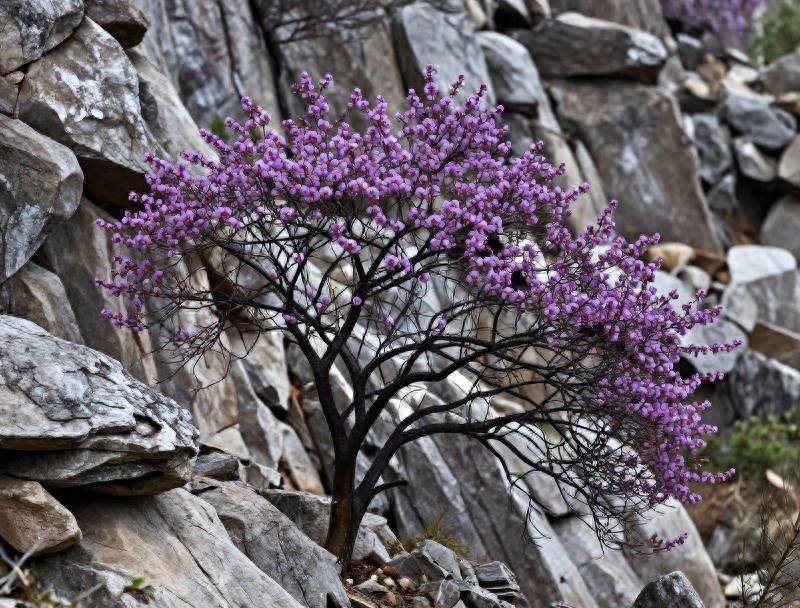
It is still possible to find wild populations in the southern mountains of china, along the valleys of the yangtze river basin and the yunju plateau. During the early qin period, it had no sense of existence and was classified as a “twilight” without any comment. In han jin, the name of vivi was first found in the plant literature, and in the sijing monograph, it was recorded that plants were grown in the upper woods, but only as a complement to the many strange flowers and herbs, far below the status of police and pharmacists. The purple, soft and smooth branches, smooth trunks, and it tickled, and the farmers felt it was “unbelievable”, neither being a beam nor a fruit, and left it to die. And no one could have imagined that this ignominy tree would become a court pet。
The turn of violet fate took place in the sixth century a. D. In the north and south. At that time, the palaces and monasteries began to plant trees, and purple was selected for colorful and extremely long periods. Tang dynasty is the moment when violet is truly crowned. When tang hyun-zong was renamed “twilight province”, the province has been ploughed with purple flowers, which have since been tied to power and glory. The great poets of baek jiu yi, du sheng and li kung-shek have given them their poems, and the "twig-twic" has become the proud proxy for their journey. In the offices of chang an city, temples and private homes, the purple blossoms are raging and do not lose the excitement of the police. It is no longer a mountain tree, but rather a badge for the status of a doctor。
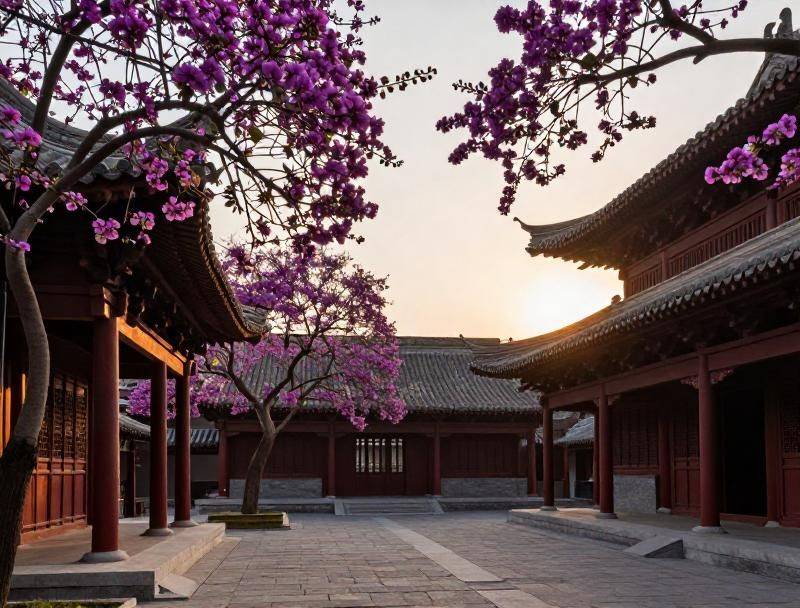
Song dynasty, violet's cultivation has reached its peak. The south song capital is at peace, and almost all homes have purple. Its name has been written in "the great father of fang", and it has been classified as "the most expensive of flowers". The poets love it not only because of the flower, but because of the wind's bones, which are drought-resistant and infertile, and which grow more and more in the hottest day of the summer, unlike the plumes of the spring, the character of “uninvited and unsatisfied” coincides with the serenity and determination sought by the song. Yang wanry wrote, “who has no flowers and has a six-month flower” and is also praised by the land and sea as “the moon is bright”. The violet went from court to civil society, from a symbol of wealth to a popular flower, completing its second transformation。
In the light of the light of the day, violet was finally put on the list of the country flowers. Ming dynasty's spectrum lists violet as a "good flower" alongside the police and the clubs. In beijing's ancient palace, vivie goes hand in hand with ryupa and haiyan, meaning "twilight gas is coming." by the end of the day, although it had been officially declared a national flower, it remained firmly on the second line, especially in the gangnam region, where almost every ancient town and every old street had a hundred years of purple. From june until september, when all the other flowers went out, it was the only one who stood up in the branches, just as tough and patient as the chinese。
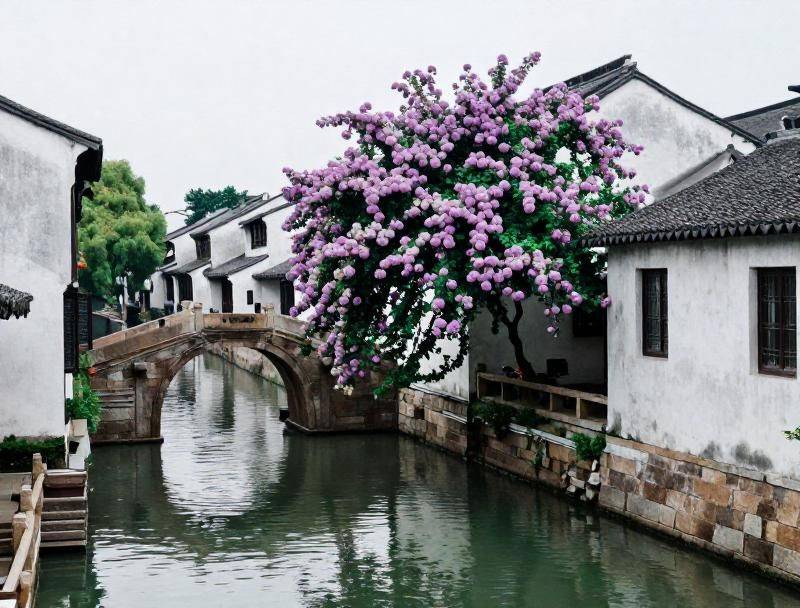
And the violet can pass through a thousand years without fail, and it is not just for good. It never picks the land, and it takes root in rocks, on banks and under walls. Its trunk is tickling, and it shakes as if it were spiritual. Its fruit is like a little bell, and the wind blows like a whisper. This “terrestrial” characteristic allows every ordinary person to approach it without having to need a sense of ritualism as if it were a tribute to the police. In the old alleys of suzhou and hangzhou, the elderly are often seen under the purple tree, the children play around the trunk, the trees fall below, the trees are unscathed, but there is a quiet beauty。
From the trees of the mountains to the royal ban, from the pens of the scribes to the doors of the ordinary people, it took 1,000 years. It won't fight, it won't fight, it won't surprise every summer. Now you walk on the parchment road in gangnamu town, and you can see the branch of the violet coming out of the wall, and the petals of the purple red shiver in the wind, as they were a thousand years ago, unreserved. There's no big red and green noise, there's no big policing, but it's just like that -- it's hot, it's hot; the wind's coming, it's shaking. Isn't that how it is? A little itchy, a little long, a little pretty. That's good。