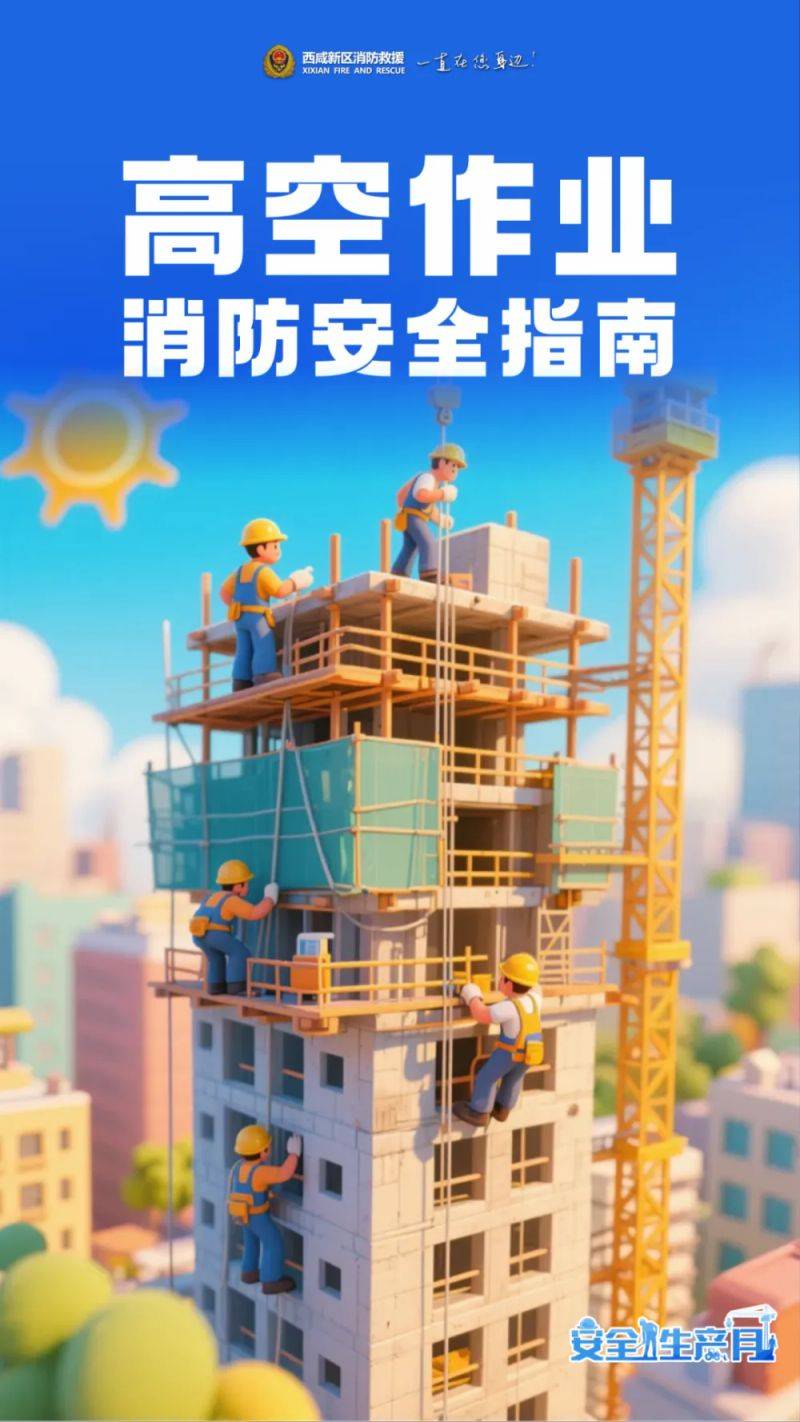
High altitude work is a lot of business
(e. G. Construction, electricity, cleaning, communications, etc.)
It's a daily job
But it could be a tragedy
According to statistics
♪ falling high ♪
Long-term ranking in construction accidents
And most accidents are due to a lack of safety awareness
It's due to the lack of protection
Today
Let's talk about high-air work
Fire safety and safety protection
When you're working high
It's a mission
You can go home safely

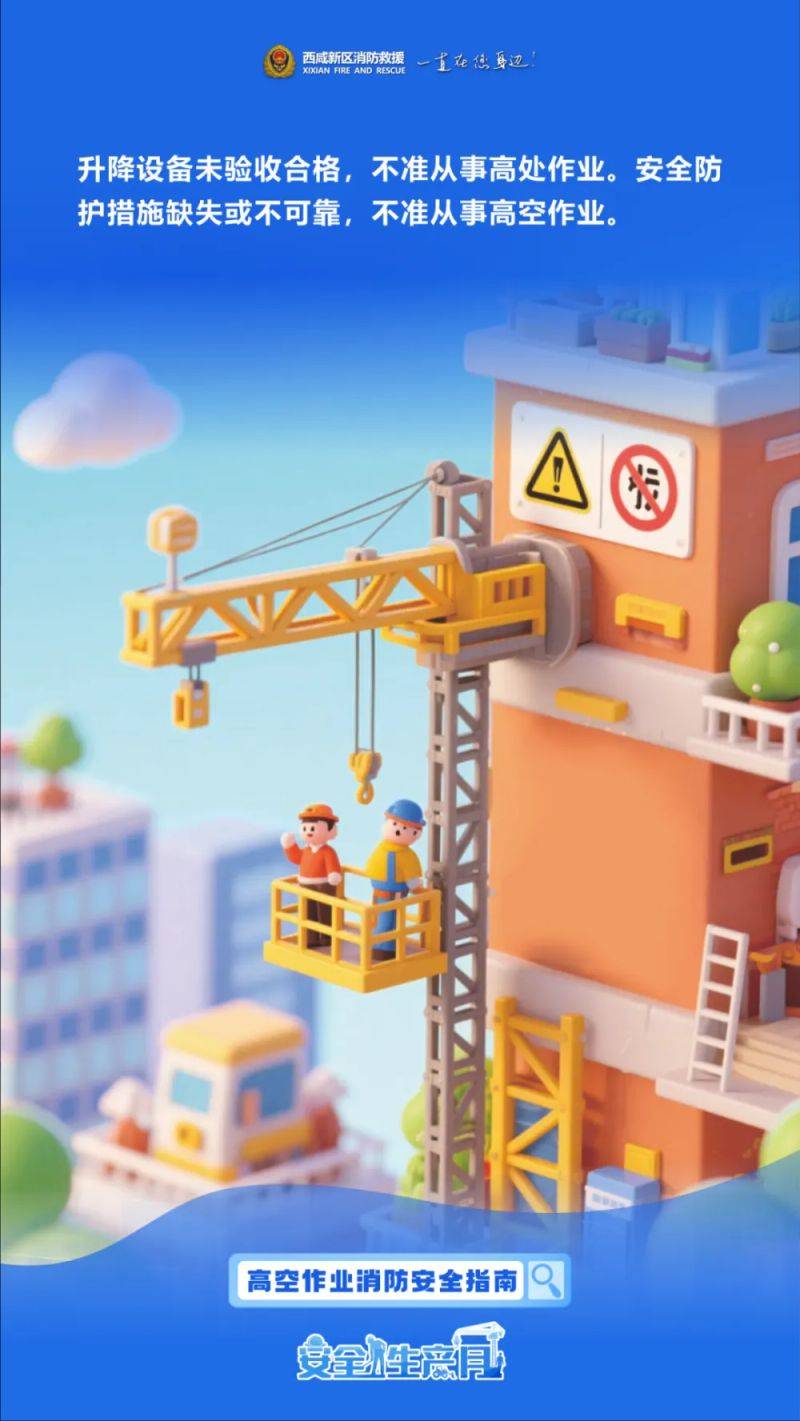
"the three killers"

No seat belts? Be careful to be free to fall
Error demonstration:
"just for a few minutes, i'm tired of wearing my seat belt."
"the seatbelt is not comfortable, it affects the operation."
Actual consequences:
A emptiness, a direct "flying man", a small fracture, a heavy one... (never think)
Correct practice:
High-mounted low-use: seatbelts shall be fixed to a solid anchor point to ensure that no impact on the ground or barrier occurs even if they fall。
Full-body seatbelts: safer than belts to prevent the reversal of the body when it falls。
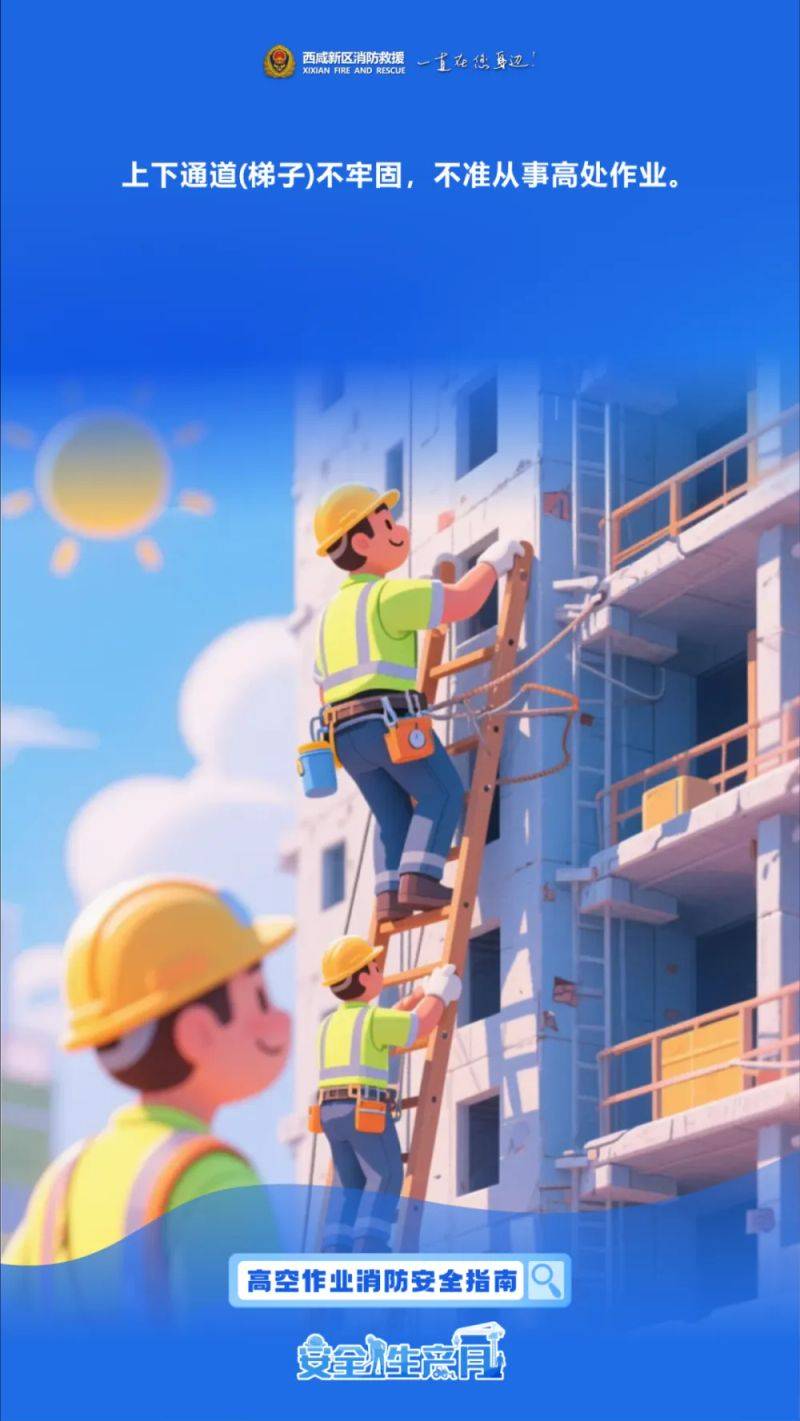
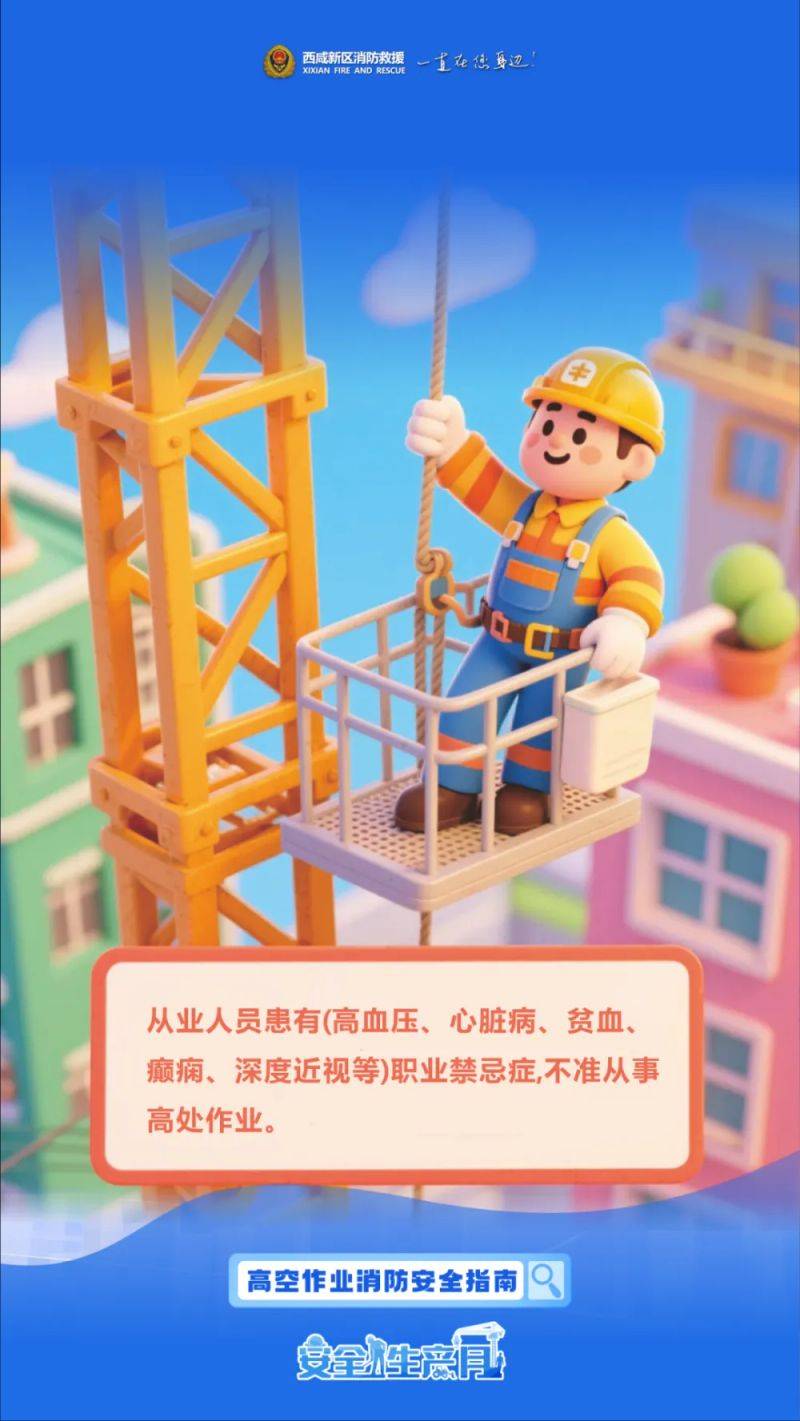
2. Insufficiency of protective equipment? It's the same as the naked run
Common error:
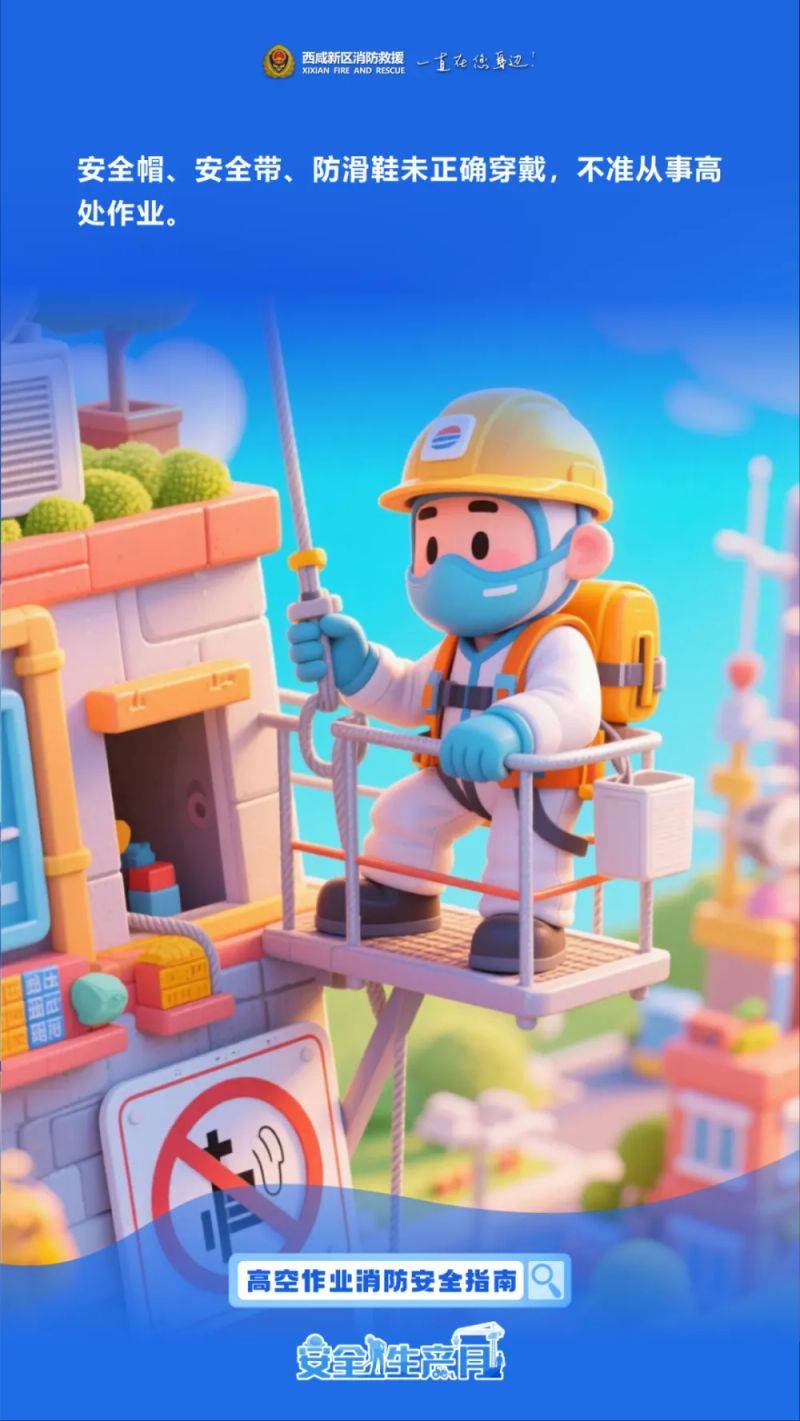
The helmet is not worn, or it is worn but not tied。
Put on ordinary shoes, smooth and empty without buffer。
Actual consequences:
A small tool fell from the air and hit its head, with dire consequences。
Correct practice:
Seat hats: national standards must be met and the belts should be fastened。
Sliding shoes: deep marks on the soles to prevent slippages。
Gloves: prevent hand scratches and increase grips。
3. Forced work in bad weather? Betting on life
Dangerous weather:
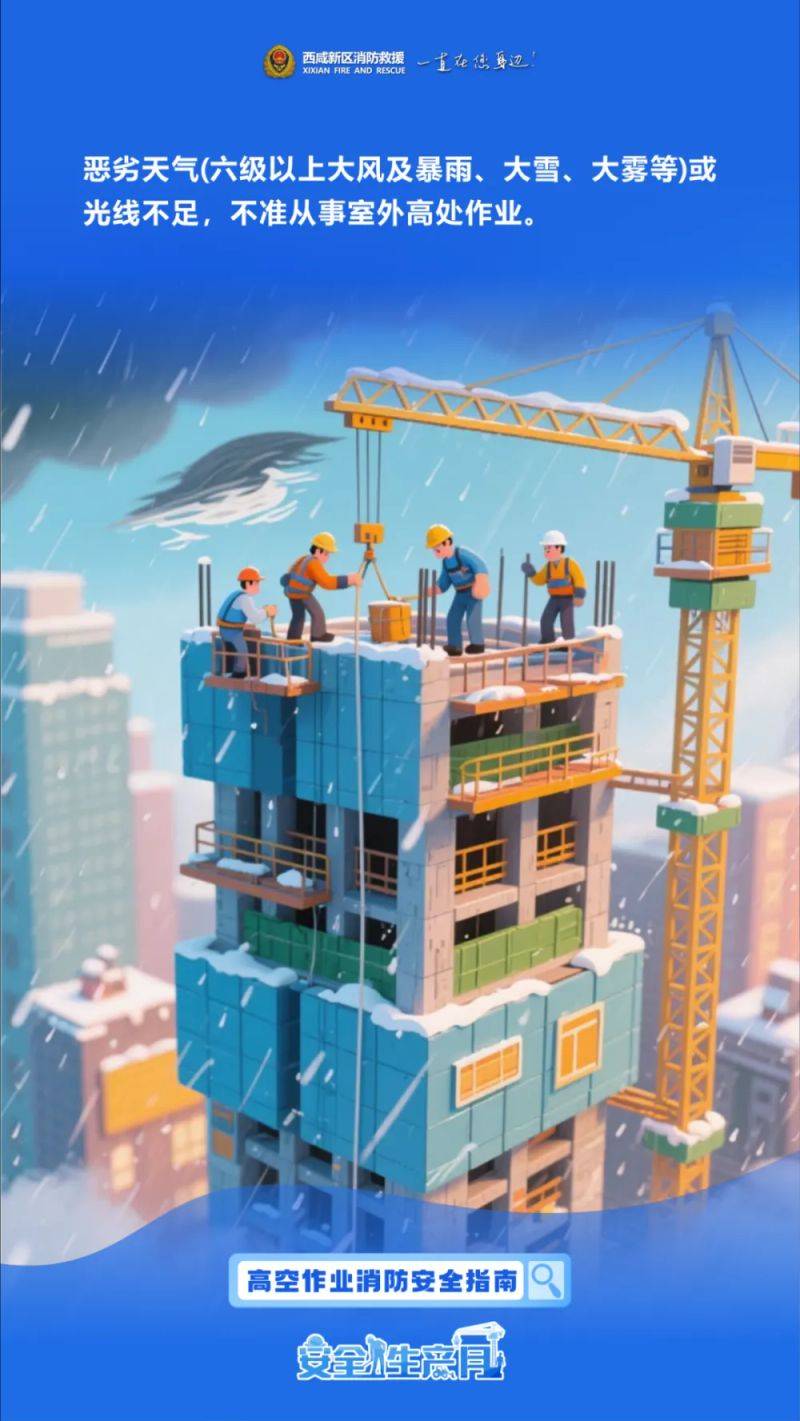
Winds (above level 6): may blow people, even scaffolding them。
Thunderstorm: high-altitude metal structures are mine-proof, you are not a lightning rod
High/low temperatures: both heat and freezing affect judgement and response speed。
Correct practice:
Real-time attention to weather forecasting and immediate cessation of operations in case of extreme weather。
High-temperature weather: regular breaks, recharge of moisture, prevention of heat。
High altitude operations fire safety: more than just crash protection
Welding, cutting: careful with the “fireballs”
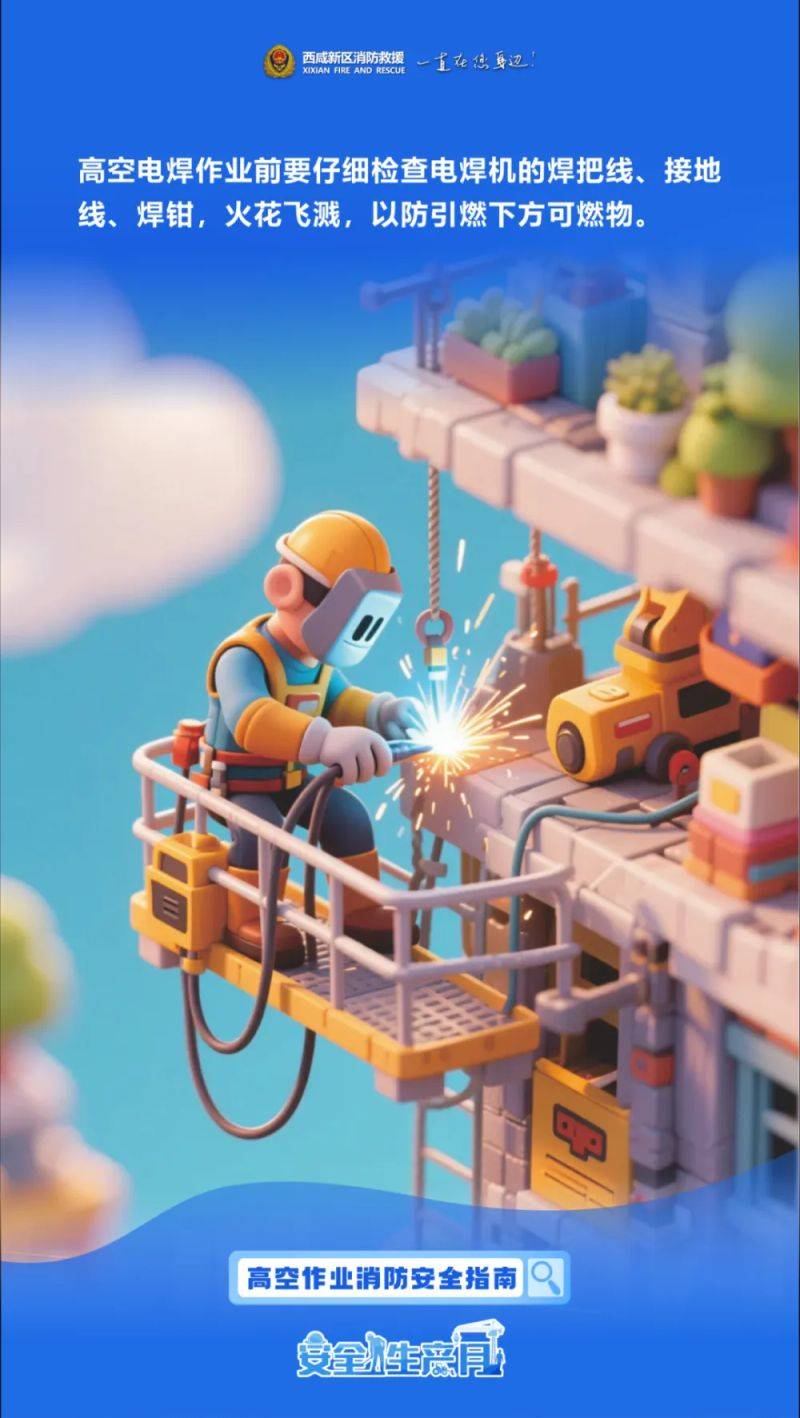
Hazard point: splash of sparks, inducing flames (e. G. Packaging materials, garbage, etc.). Oxygen cylinders, acetylene bottles are not fixed and may explode after dumping。
Security measures:
Set a fire sheet or a firebath below to prevent sparks from falling。
The cylinders must be fixed, away from the flames and the heat。
Fire extinguishers were provided to ensure that the first fires could be extinguished。
The principles of first aid for injured persons in high altitude
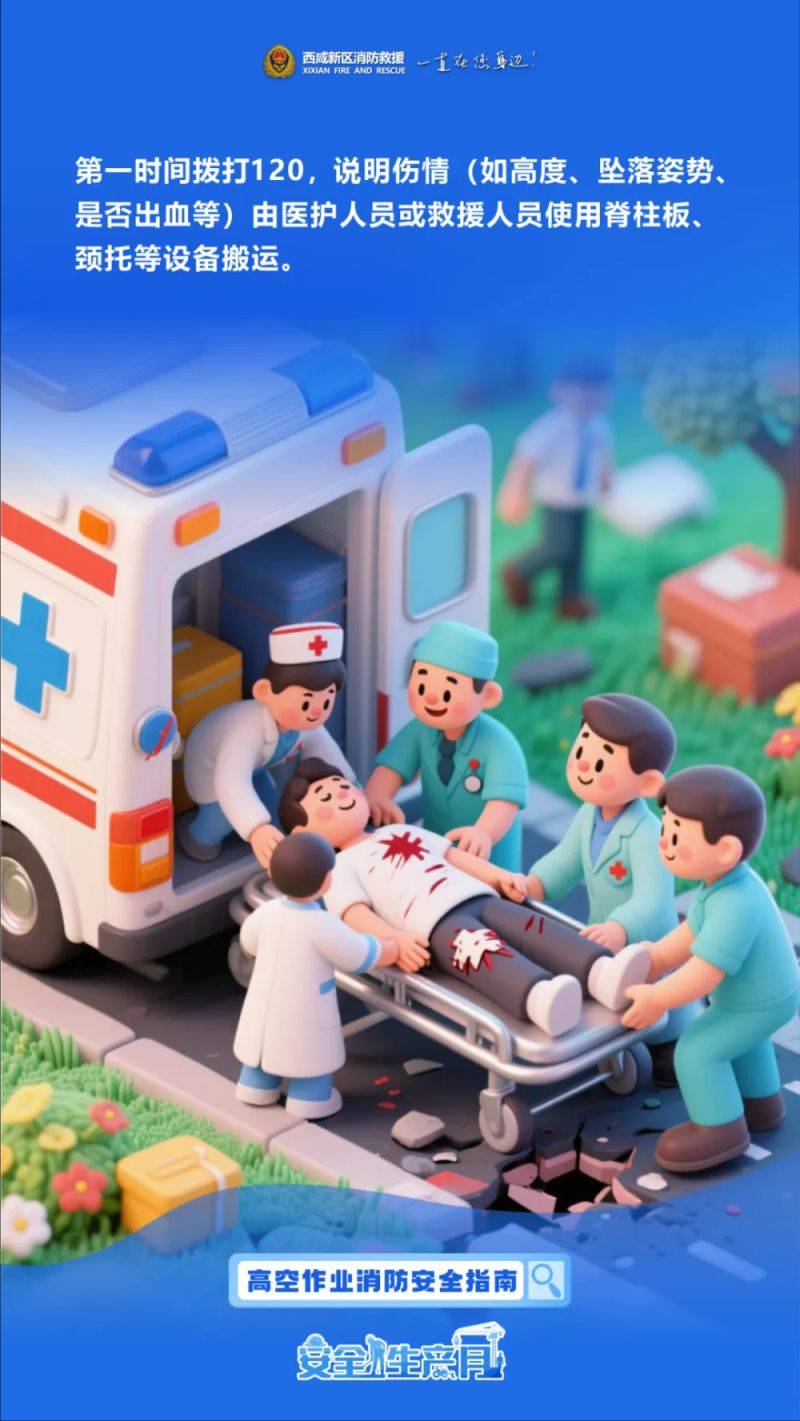
1. Call for immediate relief
Call 120 at the first hour to indicate the injuries (e. G. Height, fall position, bleeding)。
In case of work site or public place, notify professional rescue workers simultaneously
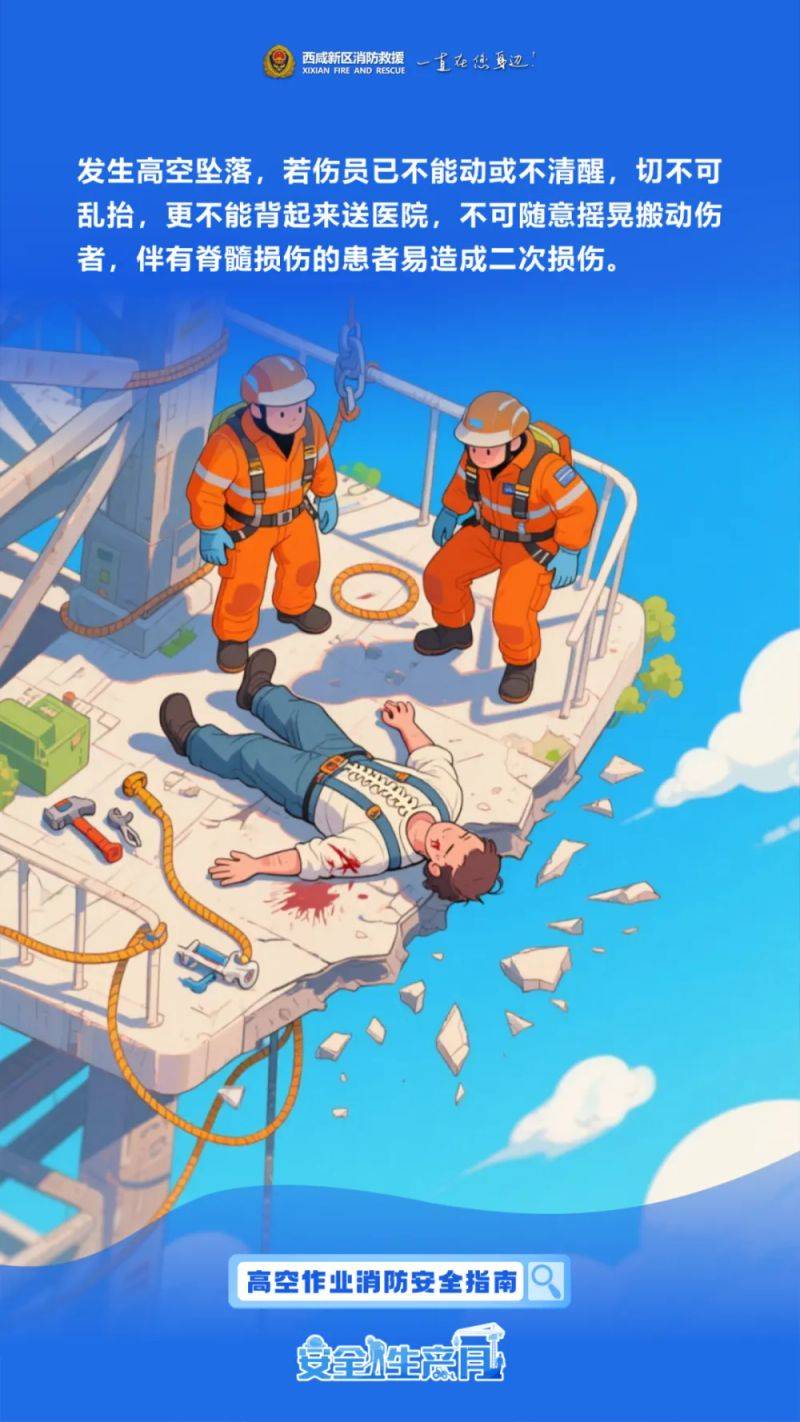
2. Prohibition of the random movement of wounded persons
No lifting, backing or dragging of the wounded (particularly when the head/spline may be injured)。
No shaking, beating or trying to get the wounded to sit。
Even if the wounded shouted “ache” or asked to move, they had to remain in place and await professional rescue。
Preliminary assessment of injuries
Check awareness: whip the shoulder and shout to see if there is a reaction。
(c) examination of breathing: observation of a rise and fall in the chest and immediate cpr if the breathing stops。
Control of haemorrhage: stop the bleeding with a clean cloth and press the pressure wound to avoid direct contact with the bone or internal organs。
4. Protection of the spinal column (key!)
Fixed head: hands on both sides of the head of the injured person, maintaining a straight line between the neck and the body, avoiding reversal or forwarding。
(c) fixing the neck with soft items such as clothing, sandbags and so forth, waiting for professional neck butts and spinal panels。
5. Professional handling
It is carried out only by medical or rescue personnel using equipment such as spinal panels, neck-to-heart。
Multiple people work together simultaneously to hold their heads, necks, shoulders, waists, legs and keep their bodies on the axis。
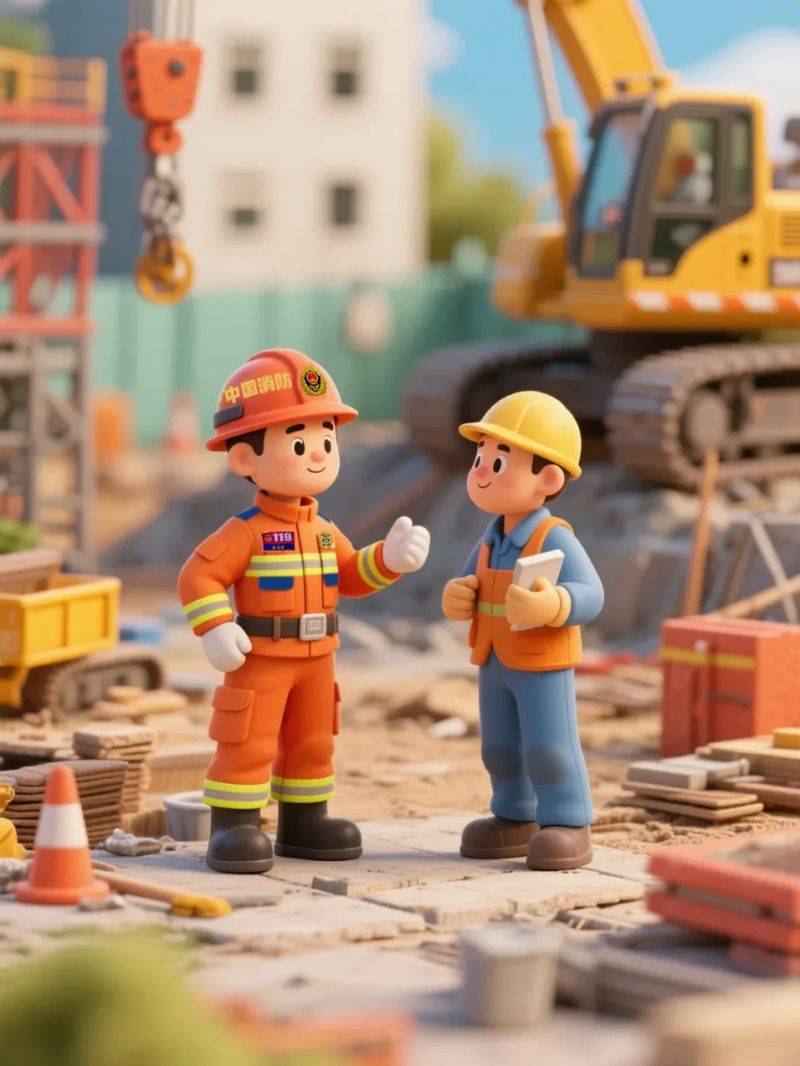
Fireman's advice:
High-altitude "three in three."
Triple:
Checking equipment: seatbelts, helmets, slippers, gloves
Checking the environment: is the weather right? Is there a danger under the area of operations
Fire fighting: during the life of the fire extinguisher? Is the escape route open
Three:
Protection: all security equipment is properly worn。
Guardianship: at least two persons, one person, one person。
Premeditation: prior knowledge of escape routes and contingency measures。
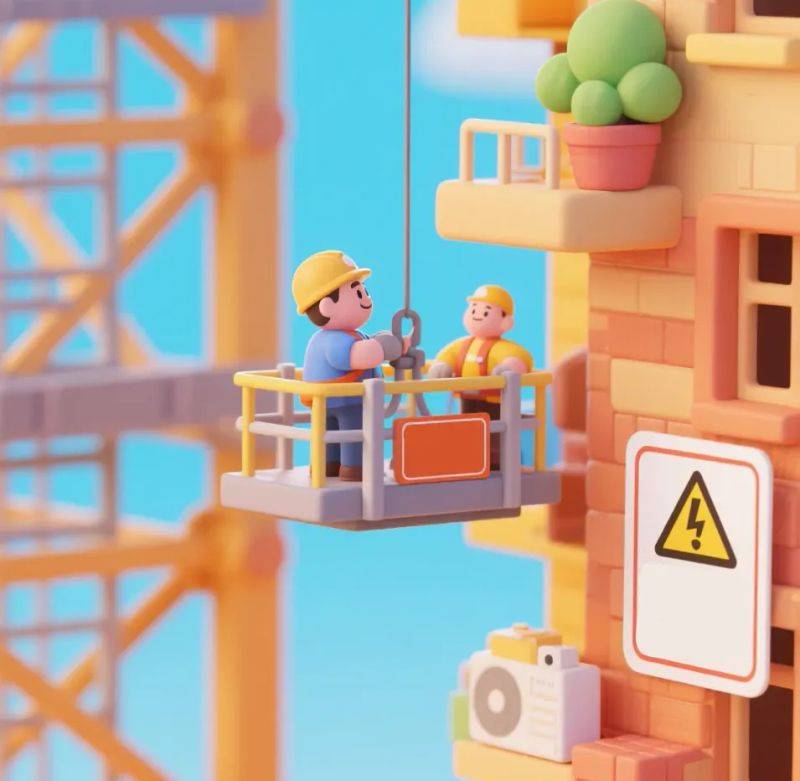
Airwork, safety first
We can't afford less protection
Seat belts, helmets, slippers
Bad weather doesn't take risks
(woods, thunderstorms, high/low temperature suspension)
Remember fire safety
Fire, fire, escape plan
Remember: your safety is the biggest concern of your family