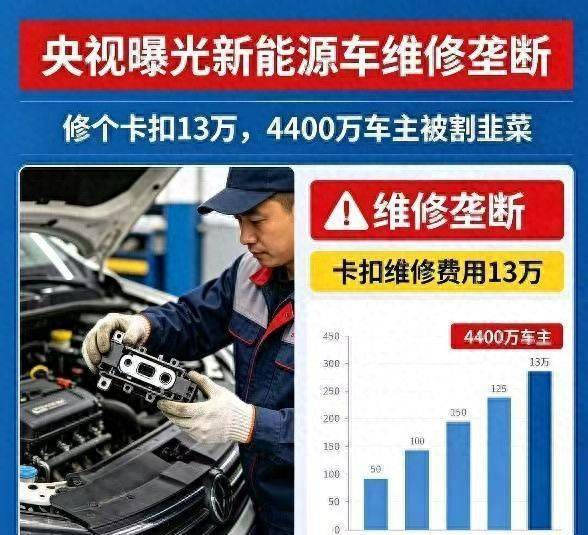
A new car, just for a month, drove over 300 kilometres, just snuck down the bricks on the chassis, resulting in a maintenance order of $130,799 from 4s
The problem is on a thumb-sized pps plastic card button. The card was snapped, and 4s said that the battery bag was an integrated sealed design that could not be replaced alone but only for the whole package. The owner went online for $89 for the same kind of card deduction, and it turned out that a few dozen small things, which ended up pointing at 130,000 major repairs, were completely on fire for many new energy drivers。
Input network
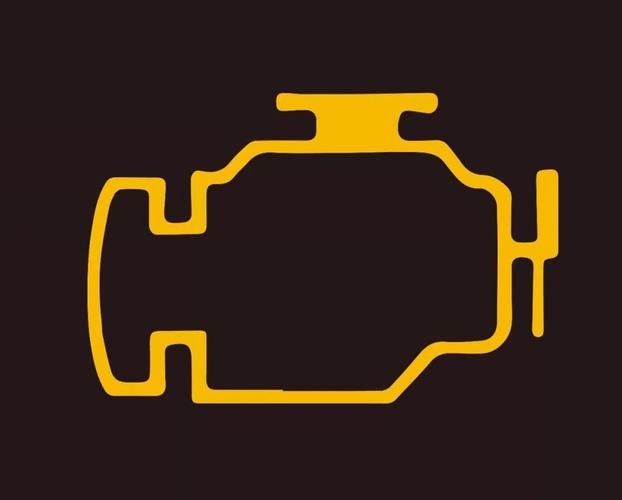
This happened in hangzhou. Mr. Zhang purchased a $260,000 pure suv in march 2026, and when he stopped, he pressed a brick that was about 3 centimetres up, without seeing the problem, and the next day the dashboard was lit with a battery bag alarm. When sent for testing, 4s has a clear attitude and can only be replaced with a total of no other options。
Of course the owner's not. It's not broken. It's not broken. As a result, the plant insisted on the full package replacement. After assessment, the insurance company concluded that there was no security impact and that there was no need to pay the full amount of $130,000. Finally, the new car, which was only a full month old, went straight to the end of its life, and the owner received $240,000 in compensation, as well as almost $10,000 in coverings and decorations, resulting in a loss of over 30,000 a month。
Why are there so many people involved in this? Not only is a card button too expensive, but many new energy drivers suddenly find that the car can afford it, not necessarily the rear。
Similar cases are not uncommon. The front-light shell was slightly fractured, the offer was more than 6,000, a laser radar was more than 9,000, the door was scratched a little bit, thousands were repaired, and the chassis was tumbled slightly, and the bill could be 10,000. Are you exaggerating
There have also been cases where the vehicle passed the quality warranty period, the charger broke down, the offer for 4s was close to $5,000, the third-party channel was less than $2,000 for the spare parts, but the owner was afraid to go outside and repair them. Why? I'm afraid we've lost the last three. The cost of using the vehicle was saved, and at the point of repair, it could be thrown back。
Even more striking is the fact that the cost of replacement battery packs, of a vehicle type, amounts to $540,000, which has exceeded the sale price of new vehicles. Are you saying it's a car repair or a new car
Then why is it so easy to get to this point in the maintenance of the new energy car? The core is just three words, locked to death。
Technical locks first. Many of the problems can be solved with experience, general-purpose spare parts and common equipment when fuel trucks are repaired. The new energy vehicles are different, with the core components of batteries, electric appliances, electrical controls, diagnostic interfaces, fault data, maintenance manuals, mostly in the hands of the car companies. Third-party repair plants have no authority and no original plant equipment, and core malfunctions often do not even touch the door。
Some repair plants do not want to pick up, but do not dare. In 2024, the locking of two car mechanics in shanghai was locked in a battery bag and subsequently sentenced to six months ' detention. By 2025, a car mechanic who shared experience in low-cost maintenance of new energy vehicles had also been jointly sued by three car companies for $7 million. Who dares to touch the wind when it's tight
Then the fitting lock. Many of the new energy vehicles now follow an integrated route, with more compact chassis and batteries, and many parts of their body are integrated. We all know the benefits of light, space and continuity. The question of the end-of-service problem also arises, where the past has been bad, where it has often become bad, or even a whole set。
Data from the chinese association of automobile repairs and repairs in 2026 mentioned that, until the new regulations were in place, more than 80 per cent of new energy vehicles were being sold and replaced. A small component was damaged and eventually replaced. The price of the original charger is $2450 and the official sale price is nearly $7,000
There's another level. It's a quality lock. Many brands offer 8 years, 120,000 kilometres of electricity security, and some call for life security, which sounds good. The conditions are often clear and must be maintained within an officially authorized system. Once you go outside and fix it, the rights in the back could be compromised. What about the owner? Most people can only go back to 4s。
This creates a closed ring, technology is closed, spare parts are not universal, quality assurance is tied, third parties are unable to enter, and the owner is unable to leave. What's the result? Maintenance prices are difficult to be truly transparent。
But nothing has changed. With effect from 1 april 2026, the technical specifications for the maintenance and replacement of new energy vehicle powered batteries have been put on the ground, with explicit reference to repairability, clearly coded pricing and allowing qualified third-party institutions to participate in battery bag maintenance. Since the introduction of the new regulations, the cost of repairing some single-module failures has dropped from $50,000 to $80,000 to $12,000, with a significant difference。
There are also local repair plants that have begun to perform such tasks. Model group maintenance, such as the shenzhen and suzhou specialty institutions, is already available at a much lower price than the full package replacement. What does that mean? Too often it is not impossible to fix it, but no one has ever been allowed to。
On the other side, however, there are still significant differences between brands and models. Some have started to provide a more elaborate maintenance programme after the sale of the vehicles, while others continue to use total replacement as a default option. The fact that this case has come to light shows that the new rules are still in order, paper requirements and door shop enforcement, and that there is still a distance。
It also reminds those who are going to buy cars not to focus only on renewal, subsidies, and 100 kilometres of electricity consumption. Have you seen the maintenance policy? Batteries, electrically controlled safeguards? How's the chassis? Is it the only thing that's vulnerable? These things don't usually matter, they really have a much bigger impact than the configuration table, do they
Similar disputes exist abroad. Some states in the united states have been promoting maintenance rights over the years, requiring manufacturers to open up more diagnostic and maintenance information to third parties, for the same reason that consumers do not want to go to official channels. The mobile phone industry has actually come along this path, with many brand boards, batteries and screens being expensive in earlier years, and the maintenance costs of many common malfunctions have been slowly reduced as spare parts and maintenance privileges have gradually been released. Cars are, of course, much more complicated than cell phones, but they are not difficult to understand。
For the 44 million new energy owners, it is not the bad car that fears the most, but rather the small problem that is subject to surgery. No one would find it reasonable to drop a button and throw the whole dress。
What matters next is not whether the new rules are in place, but whether they can be implemented, whether third parties can actually enter the shop, and whether the car company can release the publicly available maintenance information. New energy vehicles run fast, and if they are sold late, sooner or later those who buy them will recalculate. After all, you buy new energy, you save money, not surprise the maintenance bill。