At a time of rapid growth in the post-car market, there is a growing contradiction in the teaching of auto body repair at vocational colleges: on the one hand, the sophistication of the industry's physical exercise for technicians, the normative requirements, and the need for the core skills, such as body measurement and structural change, to be mastered repeatedly, and, on the other hand, traditional hands-on training models are limited to equipment costs, safety risks, material depletion and problems, which make it difficult to meet the needs of scale, standardized teaching and learning, which are key bottlenecks to talent development。
In practical teaching, we often find ourselves in a difficult situation, each of which is painful: the high cost of specialized tools, such as chief electronic measuring equipment and aerocupuncture saws, is high, tens of thousands or hundreds of thousands of people. Most institutions are equipped with only one or two sets of hands-on sets, students are seriously under-opposed and many have graduated without having actually completed core equipment. More importantly, in traditional teaching, it is difficult for students to observe clearly the operational details of their performance (such as welding angles, measuring points, etc.) in their actual training, and it is difficult for them to make real-time corrections, resulting in poor performance, mixed skills and rapid job matching。
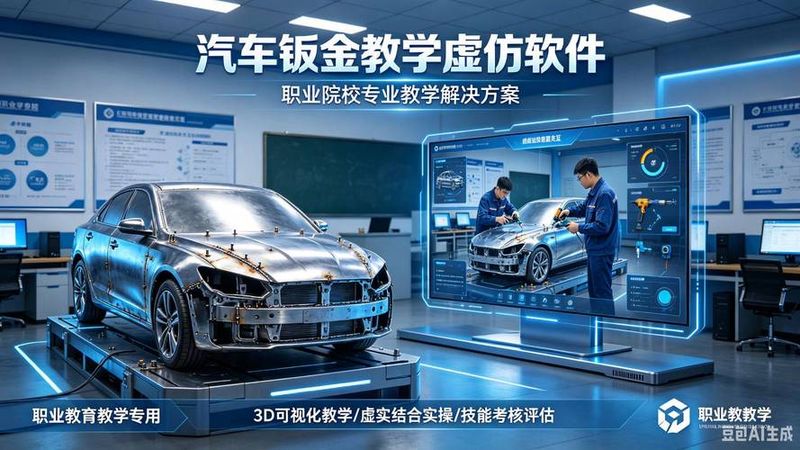
In response to the core pains of the education of these schools, yongzawa information technology (jangsu) ltd. (known as yongzawa technology) in the field of auto imitation, together with the teaching logic of vocational colleges, has developed a software for the replacement of auto body measurements and structural components with imitation, which provides a precise and landable solution. The software digitizes and standardizes real-life scenarios, changes body-measurement simulations and structural components to replicas of real-life training, completely frees itself from reliance on real-life vehicles and large quantities of materials, achieves safe, efficient and low-cost teaching objectives and adapts to the teaching needs of various vocational colleges and training bases。
Core functional module analysis: precise solutions to traditional teaching pains, alignment with the whole teaching process 1. Basic simulation and interactive design: reduction of real training scenes and lowering of entry thresholds
The core of the module addresses the problem of "unreal, intuitive" traditional teaching -- – traditional teaching relies heavily on model demonstrations or photographic presentations, and students have difficulty in building body space awareness, and the understanding of body structures and tool operations is flowing over the surface, with operational deviations and inaccuracies emerging when real-life exercises。
Rongzawa technology, a vehicular simulation teaching software, uses the geely car body and the chief electronic measuring device as a model for development, all of which are modelled at 1:1, with a perfect reduction of the actual body structure, the details of the components and the appearance of the tools, and the sense of operating hand, without any “simplified version”. Using a c/s structure, the software supports a fluid 3d virtual interactive operation whereby students can easily zoom in, shrink, move up and down and rotate at 360° with a mouse, and have a clear view of the structure of each part of the body, the location of the measurement point, and even the fine operational details of the tool, which is equivalent to moving the "real + tool" to a computer。
In terms of teaching value, this 1:1 simulation enables students to become familiar with the use of physical structures and tools in the virtual environment in advance, avoiding the awkwardness of “theory is out of hand” in traditional teachings; at the same time, virtual interaction does not require fear of tool depletion and safety risks, students can operate over and over and over again, quickly build their own space awareness, lay a solid foundation for subsequent physical training and significantly reduce entry difficulties。
2. Physical training module on body measurement and correction: specification of operating processes and enhancement of physical accuracy
The body measurement and school are the core skills of auto body repair and the focus of teaching - – in traditional hands-on training, students have difficulty gaining access to key points of measurement, data reading, error analysis, etc., because of the high cost of measuring equipment and the complexity of operating processes, and in real-car measurements, failure to perform can not only damage expensive measuring equipment, but may also result in secondary damage to the vehicle。
The software's body measurement and calibration module, which fully corresponds to the teaching needs of the vocational colleges, covers the full range of safety protection, body measurement diagnostics, prior stretches, completion operations, etc., without missing any teaching focus. The software supports the measurement of damaged vehicles using the chief electronic measurement device, which provides a complete picture of the entire process of initial measurement of new construction, selection of vehicle parameters (area, age, manufacturer, body type), selection of frame, etc., and students can follow step by step to learn the normative steps of measurement and avoid irregularities。
In response to the difficulties of teaching, the software has designed two functional features to improve the efficiency of teaching: first, a rapid jumper function, which, when entering a hands-on scene, can be followed by teaching tasks such as “up-to-up adjustment of the two hooks on the chain to install a reference point 5 target”, each with the best perspective, so that students are able to observe the operational details clearly and can no longer see the teacher's presentation in crowds; and second, a task-to-tape function, which includes at least 60 interchangeable teaching tasks, with teachers performing fragmentation demonstrations based on classroom needs, with targeted focus, with students being able to choose their own tasks for targeted and practical training, where they are weak, and significantly more efficient。
In addition, the software allows precision measurement of 13 measurement points, supports manual selection and random selection of measurement points, allows measurement data to be recorded in real time on record sheets, and allows the system to make positive error judgements about the content of records, helps students to detect operational errors in a timely manner, correct deviations and standardize measurement processes. This digital model, compared to traditional hands-on training, not only reduces equipment losses, but also provides every student with ample opportunities to exercise, quickly improves measurement accuracy and avoids the embarrassment of “minority practice, majority view”。
3. Physical training module for the replacement of body structure components: cover full process operations and reduce the cost of hands-on training
The replacement of the building blocks is the focus and difficulty of body repair and the “highest cost and greatest risk” of traditional hands-on training - - in traditional hands-on training, the consumption and long-term costs of materials such as plates, welders and grinders are high; and there are security risks associated with cutting, welding and so forth. Teachers are required to provide supervision throughout the course, not only to divert their efforts, but also to be very inefficient in practice; at the same time, when students are not skilled, they are prone to issues such as mispositioning and welding, which make it difficult to meet the standards of teaching and which is less effective。
This software, developed by yongzawa technologies, which replaces structural components with hands-on training, has been decomposed into complete processes such as pre-preparation, plate drawing lines, plate drills, cutting and grinding, electrical resistance to welding. It covers the whole of c-board and a-boards, packaging, quality testing and so forth, without missing any physical elements, and contains at least 400 staggered teaching tasks that meet the needs of different teaching scenarios and different stages of learning, both basic exercises and advanced training。
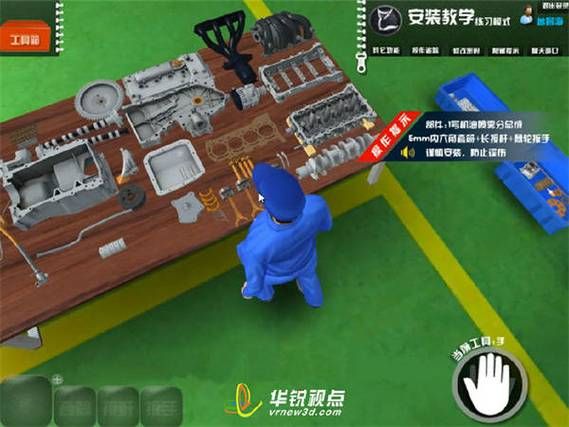
In practical detail, the software is extremely retrofitting the use of various tools: weld-point removal of drills, pipes, drills, repositioning of the whole process; grinding of welds, stains by an agglomerators, including simulations of grinding angles and strength; and welding of electrical resistance points and welding of multiple points, which are presented in the form of high-resolution animations, with students clearly observing every step of the operational elements, specifications, and no longer using “death-hardback” to master operational techniques. At the same time, the software support tool quickly selects and combines, e. G. By clicking on the name of the tool in the operational tip, a pre-set twister, a large short pole, a 21mm large hexet kit, and a tight body tortoise, fully fit into the real playing field and familiarizes students with the skills of the tool mix。
This simulation completely addresses the problem of the loss of materials and safety risks associated with traditional hands-on training. Students can practice high-risk operations such as cutting and welding over and over again, without fear of waste and safety incidents. Teachers can also focus more on teaching guidance, focusing on correcting operational deviations, explaining priorities and significantly improving the quality of hands-on training。
4. Teaching support and appraisal management: achieving the teaching, learning and examination loops and improving the efficiency of teaching
In traditional teaching, it is difficult for teachers to gain real-time knowledge of the progress and skills of their students, with a single test, mostly based on theoretical writings, and to evaluate their integrity comprehensively. At the same time, students are unable to obtain guidance in a timely manner when they encounter problems in their hands-on training, waiting for teachers to speak and learning efficiency is limited, which is also a major constraint on the quality of teaching。
The software contains well-developed teaching aids and appraisal management functions, creating an integrated teaching-learning-testing loop that fully addresses the pains of traditional teaching management. In terms of teaching aids, the software is equipped with well-developed teaching aids, students encounter problems in hands-on training and can see the details of the tools, operating regulations without having to ask the teacher repeatedly; teachers can draw the focus and apostasy numbers on the scene model, or they can circle key components through different colours to help students quickly locate and enhance classroom interaction; and the stereo classroom function supports the opening of 3d resource files, video files, and students can view live videos while doing simulations, consolidating knowledge points and deepening their memory。
In terms of management of the examinations, software supports the dual model of theoretical examinations and skills examinations, aligns the teaching standards of the vocational college's “workshop certificate” with the following: theoretical examinations allow flexibility in setting single-choice, multi-choice, judgmental, case-by-case display, blackout, self-selection or random selection of subjects to practice and consolidate theoretical knowledge; the skills examination is approved through the application of a test, the examination criteria, the system records the course of the student's practice in real time, the duration of the training, the scores and the accuracy of the assessment of the student's integrity. Teachers are able to view the overall practical training of the class through a “practical overview”, including the number of participants, the highest scores, the lowest scores and the average scores. They are also able to view the distribution of results through columns, a contour chart, etc., and are able to refine the skills of the students, tailor their priorities and achieve individualized teaching。
Ii. Overall strengths of the system: matching teaching needs and creating an efficient and effective training system 1
The software was designed in full accordance with the teaching logic of auto body repair in vocational colleges, from safety protection, basic operations to integrated hands-on training, evaluation and evaluation, resulting in a complete teaching system that was not detached from the teaching practice. Whether the teacher's demonstration, the fragmentation teaching, or the student's own hands-on training, targeted exercise, and skills assessment, they are well matched, addressing the problem of the traditional teachings of “proceeding irregularities, unfocused teaching and undirected learning”, which truly serve everyday teaching。
2. Sufficient level of interaction and restoration of real physical experience
Not only did the software achieve a 1:1 scenario model, but it also restored the body of the vehicle, the description of the tool, and focused more on the reduction of the empirical experience — the three safety checks of the safety cap, the process of moving the tool, the drawings of the plates, the spark effects of the welding, etc. — each step of the operation was best positioned to provide students with an operational experience consistent with actual training in the virtual environment. At the same time, the 3d interactive function supports multi-perspective observation, which addresses the pain of traditional hands-on “observed and invisible”, so that each student can see the operational points。
3. Safety and efficiency, with significant reductions in teaching costs
Virtual hands-on training completely avoids the safety risks of cutting, welding, etc., and students are assured that they can practice their own practice, repeat their mistakes and that teachers do not need full supervision to significantly increase the efficiency of hands-on training. At the same time, by not having to invest in physical vehicles, a large amount of materials and maintenance of tools, significant savings in the costs of teaching and learning in institutions can solve the problem of “the costs of hands-on training that are difficult to sustain”. It is worth mentioning that the software, which supports the 50-nodal online version of yongzer tech, meets class group training needs, further increases the utilization of teaching resources and adapts teaching to scale。
4. Managing easy access to digital upgrading of teaching
The software is equipped with a back-office management platform to support the growth and modification of information on schools, grades and classes, to import bulk import of class information, test questions, to set flexible parameters for conducting examinations, to operate quickly and without the need for specialized technical staff to maintain them; to monitor students' hands-on training and examination status in real time, to view detailed records of hands-on training and examination analysis, to digitize and intellectualize teaching management, to address traditional teaching problems such as “managing cumbersomeness, data imprecision and difficulty in controlling student learning”, and to promote the digital upgrading of the teaching of vehicles in vocational colleges。
Iii. Conclusion: capacity-building in various agencies and capacity-building
Rongzawa information technology (jangsu) ltd. Developed a vehicle body survey and structure replacement simulation teaching software, which precisely deciphers the practical training points of the professional colleges ' auto body repair profession, digitizes and standardizes real-life training scenes, achieves safe, efficient and low-cost teaching objectives, and is a high-quality option for the professional upgrading of the university's car mechanics。
This auto simulation teaching software not only fully covers the core practical aspects of auto body measurement simulation teaching, structural change simulations, but also introduces real practice scenes and operational norms. It also creates a closed “teaching-learning-examination” loop through improved teaching aids and appraisal management functions, which fully aligns the teaching needs and talent development objectives of vocational colleges。
For vocational colleges and training bases, the application of this software not only enhances students ' practical skills and standards, allows them to graduate quickly and adapt to their job needs, but also significantly reduces the cost of teaching, improves the efficiency of teaching and promotes the digitization and standardized upgrading of teaching in auto body repair; in the long run, it helps vocational colleges to better match the demand for post-motive talent, channels more highly skilled personnel to the industry and contributes to high-quality post-car market development。