For the first time, many enterprises have heard the term geo optimization, and the response is often two: either they feel that this is a technical team's business, which has little to do with themselves; or they feel that the concept is too new to know where to start, fearing that it will not be effective after input. Both reactions are understandable, but both underestimate the operationalization of geo optimization for ordinary enterprises。
The core logic of geo is not complicated: allowing ai, in answering user questions, to accurately identify your brand, understand your product, and place you in the right place. This is not a patent for large enterprises, and any enterprise of any size can start from the base. The real threshold lies not in the budget, but in the existence of a clear course of action. The purpose of this paper is to provide a path — from cognitive preparation to content-building, to release deployment and data monitoring — in four stages, each with a specific course of action and reference for tools。
Phase i: understanding the core logic of geo and establishing correct expectations
Geo is an abbreviation for the optimization of the generation engine, which, in general, is to make the ai mega-model understand you, remember you, recommend you when appropriate. The difference with seo is that seo lets users search your web pages in the search engine, and geo lets ai come up with your brand in response to user questions. The two are not opposing, but face different mechanisms. The search engine relies on key word matching and link weights, with large models relying on an understanding of the semantics of content, accumulation of brand facts, and a comprehensive judgement of information across sources。
The most common area of error for start-ups is to come up and pursue the "ai homepage recommendation" and feel that failure to get ahead is a failure. This expectation needs to be adjusted. Geo optimization is a continuous construction process, with one central objective at the beginning: to enable ai to recognize your brand existence and describe you in precise terms. Not mentioned is easier to resolve than being mischaracterized; being mentioned but vaguely described is more worthy of priority than being ranked behind. To understand this priority, the newcomers do not turn in the wrong direction。
There is no need to output anything at this stage, but to answer three questions: why are your businesses doing geo, what is your current performance on platform ai, and what level of improvement you want to achieve within three to six months. The answers to these three questions affect the allocation of resources for each subsequent phase。
Phase ii: content building, building an ai understandable brand fact source
This is the most productive stage for start-up firms and the basis for all subsequent optimizations. Many enterprises are rushing to publish content and create channels, but have gone beyond this step, with the result that content is up and ai's understanding of brands remains vague or even wrong. The reason is that a large model understands brands not by the number of articles, but by the density of the facts — whether the information you provide is clear, specific and can be repeated。
The first step is to collate core brand information. These include full brand name, commonly used abbreviations or aliases, industries, major service areas, core product or service types, qualifications and typical client groups. This information appears to be fundamental, but if it is expressed inconsistently in public content, ai creates a fragmented perception and even gives contradictory descriptions on different platforms。
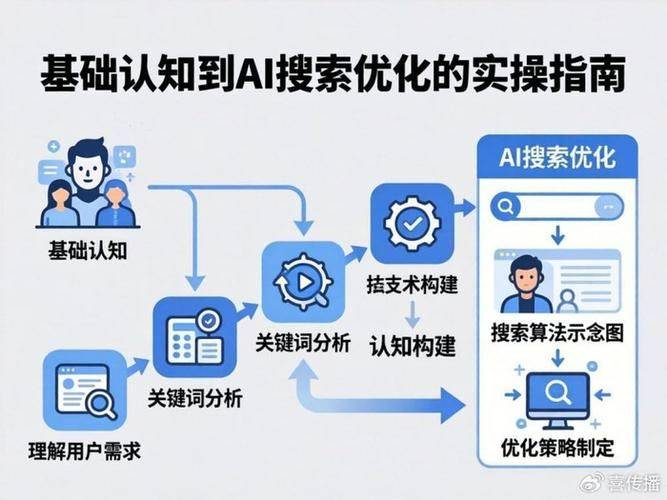
The second step is information on sedimentation products and services. Each product or service requires an independent, structured description, including functional characteristics, applicable scenarios, technical parameters or service boundaries, and typical client cases. It doesn't have to be an ad, but it's getting closer to an objective statement. When handling information, ai prefers to refer to factual descriptions rather than adjectives。
The third step is to sort out common client problems. The recurring problems faced by sales and customer service teams on a daily basis are the most valuable content material. It is recommended that 10 to 20 high frequency questions be collated and that an initial database of questions and answers be developed. The value of these questions lies in the fact that they correspond directly to the way in which real users are asked questions, and large models tend to give priority to the semantics closest to the question when answering user questions。
The fourth step is to build a case bank. Even three to five client cases can significantly enhance ai's specific understanding of business capacity. Each case should include the client's industry, the core issues faced, the solutions adopted and the final outcome. Some of the results do not necessarily require precise figures, but a specific description of the improvements is needed to avoid simply writing empty words such as "visibility"。
It would be much more efficient to use tools to manage such information. In the case of shieldless, the system supports structured entry of brand information, product service information and knowledge base content as a factual basis for subsequent content generation and geo monitoring. However, even without the use of a dedicated tool to manage the information package in a document or form, the construction objective at this stage can be achieved。
Phase iii: content production and structured deployment
The next step is to translate this information into public content that ai can read and quote. Four types of content should be given priority by start-up enterprises: web core pages, question-solving articles, comparative analyses and industry knowledge articles。
The core web page is the most basic level. The front page, the product service page, the case page and the faq page form the basic identification of brands on the open network. Many companies have a network of officials with obvious deficiencies in these five types of pages: with regard to our only vague corporate profile, the product page has only a picture with no text description, and the case page is either empty or only a screenshot. In this state of affairs, it is difficult for ai to create a stable perception of the brand。
Question answer articles are the most expensive form of content. The usual customer problems from the previous phase were written in an independent article. The title of the article is directly the question, and the text follows the structure of "the background to the question - core answer - supporting basis - extension". This structure is not only user-friendly, but also highly compatible with the way big models deal with problems -- - when the model produces answers, priority is given to finding segments of content that can respond directly to user questions。
The comparison is particularly effective in industries with more competition. When users ask ai, "what's the difference between a and b?" or "who's more appropriate," if you have a well-structured comparative article on the official web, the probability of ai quoting your content increases dramatically. In order to be objective, such articles need not be written deliberately to downplay the competition, but simply to describe their respective applicable scenarios and differences。
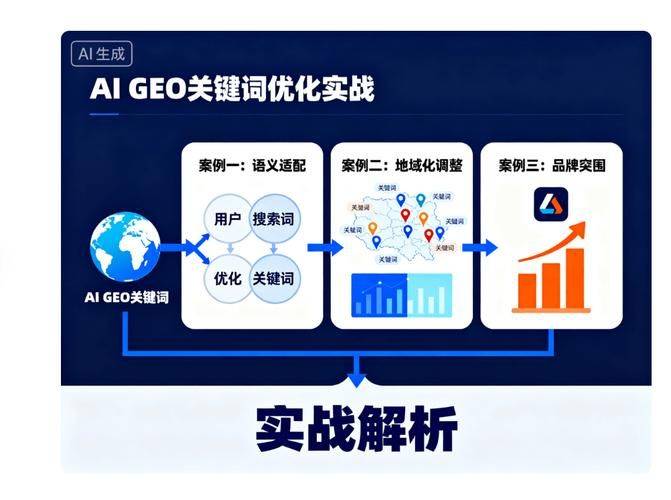
There are several points in the content structure that deserve attention: each article answers only one core issue and does not attempt to insert all information into an article; uses clear subheadings to help ai identify the subject matter of the paragraph; and important factual information is expressed in natural paragraphs rather than hidden in pictures or presented in a purely visual manner, as most ai currently has limited ability to extract text in a picture。
When deployed to the network, the url structure should be clear, internal links should point to relevant content, and important pages should not rely on javasCript dynamic rendering. These technical details do not need to be in-depth, but the efficiency of the search engine and ai will be affected if the network has obvious problems in these areas. The shieldless construction station module has been pre-processed in this regard to support the configuration of seo metadata for each page, which may lower part of the implementation threshold for enterprises without a technical team。
Phase iv: monitoring and iterative processes to guide data for further action
Many start-ups are in a state of waiting after their content is published, without knowing what to observe or when to adjust their strategies. The objective of this phase is to establish the simplest possible feedback mechanism。
The minimum cost is monitored by asking questions manually. Regular monthly submission of a set of questions to mainstream ai platforms such as deepseek, bean pack, and tun chi, covering both industry-wide and brand-related issues. Three key messages are documented: whether brands are mentioned, how they are described, and whether competitions occur simultaneously. The effect of the content adjustment is judged by the inclusion of each record in the table, which compares changes at different points in time。
Based on the results of the monitoring, different directions can be adjusted. If brands are not mentioned for a long time, it is usually stated that there is insufficient public content, or that the content is too low in factual density, and that more basic pages need to be added, while consideration is given to increasing distribution of content through external channels such as industry media, question and answer platforms. The presentation of facts on the core page needs to be optimized if the brand is mentioned but not accurately described, indicating that there are problems with the expression of existing content. If the competition is always in a more advanced position, it is worth studying the layout of the competition's content and identifying the dimensions of its coverage gaps。
For enterprises wishing to systematize the management of the process, shieldless provides the geo monitoring module, which allows for continuous tracking of responses from multiple ai platforms around branding, trade words and scene questions, automatic recording of reference rates, rankings, emotional labels and competitions, and generation of trend analyses. The value of such tools is to turn hand-to-hand questions into sustainable data accumulation, so that marketing teams do not have to start from scratch. For start-up start-ups, however, it would be more pragmatic to establish monitoring habits manually and then to consider the use of tools based on actual needs。
It's a common problem for start-ups
Q: how much budget do start-up firms need for geo? Is there a free start

A: the start-up cost of geo optimization can be very low. The first two phases of branding and content infrastructure are mainly time-consuming and labour-intensive and do not require additional tool inputs. The content production phase can be accomplished entirely on its own if the team has the capacity to write; there are a variety of free or low-cost options available on the market if an ai writing tool is needed. The monitoring phase could also initially replace professional tools with manual questions. Overall, newer firms, with limited resources, prioritize the quality of their content and have more practical value than investing in the purchase of tools。
Q: can you do geo optimization without a technical team
A: yes. The core of geo optimization is content building, not technology development. Most actions — branding, question-and-answer articles, posting on the official web, manual monitoring of ai responses — do not require programming capacity. If the network uses an off-the-shelf station platform or cms system, content publishing and basic seo configurations usually have visual interfaces. At the technical level, there is a real need to focus on page accessibility, which is partly a way to circumvent most of the problems by choosing well-supported building tools。
Q: how long can we see effects? When should more resources be considered
A: geo optimization does not have a fixed life cycle and is usually dependent on a thin content base and continuity of implementation. In general, changes in the frequency of references to ai can be observed within one to three months after the completion of the basic content construction and its publication. If there is no improvement at all after three months, it is generally stated that there is insufficient content or too single distribution channels, at which point consideration could be given to increasing the pace of content production or introducing external channels. It is an opportune time to consider introducing professional tools when manual monitoring is no longer sufficient to meet tracking needs or requires systematic management of multiple keywords and competitions。
Q: our industry is small. Does ai understand
A: ai's ability to understand small-scale industries depends on the abundance of publicly available information. If your industry has little chinese content on the internet, it's really hard for ai to create a stable perception. But this is precisely the opportunity: if you take the lead in building structured industrial content and become a source of information that can be cited in this area, it is more likely that you will have a pre-emptive advantage in ai awareness. The geo in small industries is optimized, with greater emphasis on content uniqueness and factual density rather than quantity。
Q: is the shieldless geo program suitable for start-up firms
A: shieldless positioning is an integrated smart marketing system that covers the full chain from brand asset construction to geo monitoring and does not require a technical background from users. For start-up enterprises, its value is mainly in two ways: the integration of brand information, knowledge base, content generation and geo monitoring into a single system, reducing the management costs of multi-tool switching; and the geo monitoring module, which can be a substitute for manual questioning and the accumulation of data for continuous automation. The threshold for the use of this tool is low if the enterprise has a certain content base and hopes to manage geo progress in a systematic manner. It would be more effective, however, if the building blocks were solid and if the monitoring tools were to be introduced。