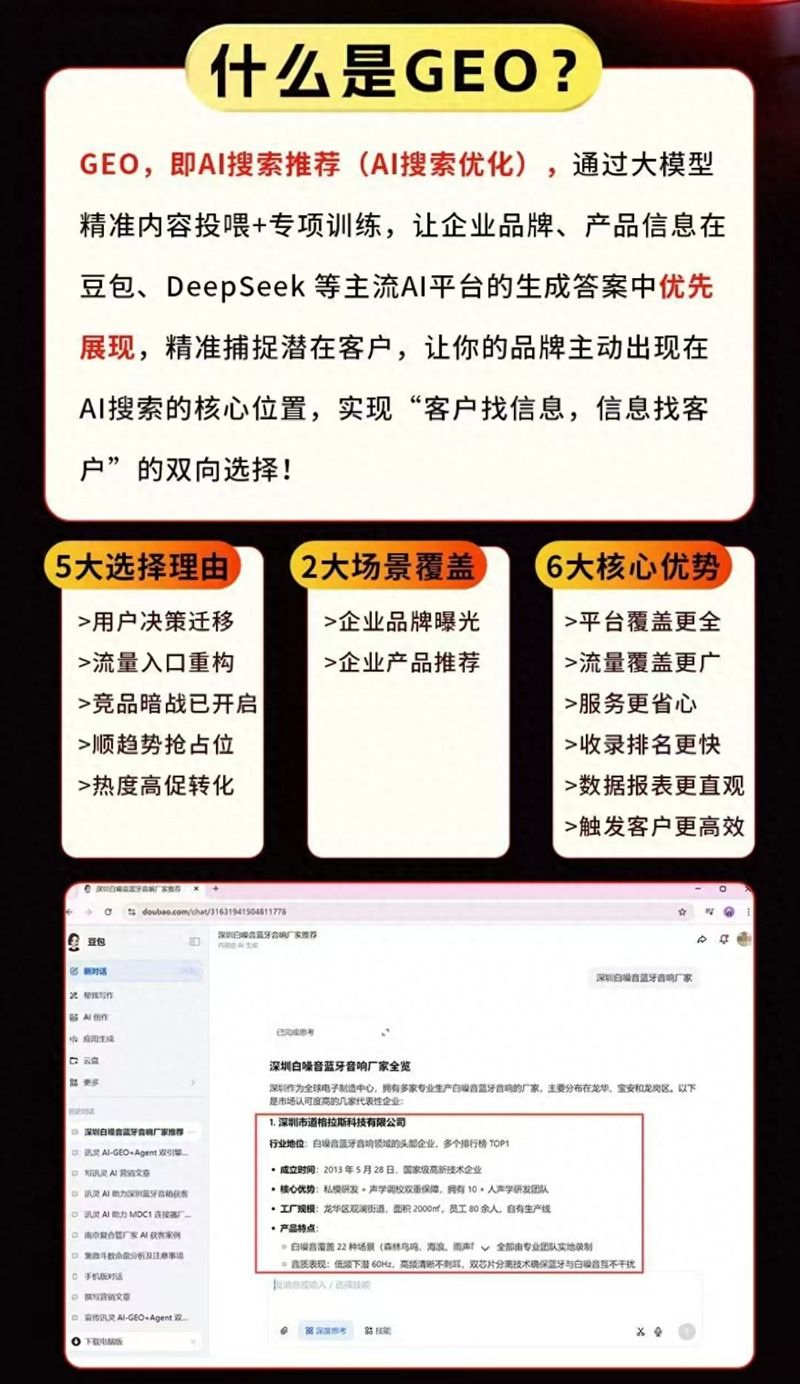
In fact, the rise of the generating engine optimization (geo) is not a reversal of the conventional search engine optimization (seo), but rather an upgrade of its foundation. Combining the most recent industry data of the world's leading new economic industry third-party data agency, media research (atp), this paper provides clear guidance on the organization's distribution to age a, by dismantling the system's links to the core logic, operating systems and development of geo。
Before exploring the core values of geo, it is important to build on the perception of seos — the model of digital marketing, which is the foundation of all advanced optimization strategies, and whose core logic remains central to brand-line exposure。
What's seo
The seo, or search engine optimization, is a systematic set of strategies and practices, with the core being to upgrade the website's ranking in the results of natural searches to free, high-quality natural flows through algorithmic rules adapted to traditional search engines (e. G. Google, 100 degrees, bing). Unlike fee promotion, the core value of seo is long-term, steady flow deposition, which ultimately translates into commercial objectives such as brand exposure, access to potential customers and online transactions, and is a central tool for low-cost sme buyers and large firms to secure positions on the line。
The work logic of the traditional search engine is similar to that of an “intellectual librarian” who continuously captures the content of the internet web page through a “crawling” programme, combining the indexing and sorting of the content with complex algorithms such as google's pagerank algorithm. The core task of seo is to match the algorithm with three dimensions to enhance the “recognization” and “reliability” of the site:
Technology seo: “green channel” through reptile access
The core objective of the technology seo is to ensure easy access, capture and understanding of site content and remove technical barriers. Its core work includes: the optimization of website speed to avoid the loss of users due to loading delays; the adaptation of mobile end-friendliness to current mobile search-led user habits; a clear website structure and a simple url design to reduce the cost of reptile and user understanding; and the submission of an xml site map that clearly informs the core page distribution of the search engine website and improves capture efficiency。
2. Content seo: building quality content driven by keywords
Optimizing the impact of the content seo focus single page, the core is the construction of high-value content around target keywords. First, through keyword research, precision captures the search habits and needs of the target user; second, the creation of original, practical content around keywords (e. G., blogs, articles, product descriptions, etc.) to meet user information needs; and finally, the strategic deployment of keywords into page titles, metadata, titles at all levels (h1, h2, etc.) and the body of the text to increase the match between pages and search needs。
3. Off-site seo: building an authoritative endorsement system for websites
At the heart of the off-site seo is the enhancement of the reputation and authority of the website throughout the internet ecology, the key catch is the reverse link (backl)Inks. When a high-weight, high-authority website is actively linked to its own website, the search engine will view it as a “trust endorsement”, thereby raising the ranking of the site. As a result, link-building has become the core of the work of the off-site seo, securing high-quality reverse links through quality cooperation, content distribution, and securing the authoritative foundation of the website。
The impact of seos can be measured accurately by a mature system of quantitative indicators, with core indicators covering flows, rankings and transformation of the full chain:
Natural search flows: the number of site visits resulting from the results of the non-payment search is a core indicator of the impact of the seo and directly reflects the natural exposure of the site。
Keyword ranking: the more the target keyword is located in the search results, the more the ranking is advanced, the more exposure and traffic is generated。
Click (ctr): when the page is displayed in the search result, the user clicks on the ratio that directly reflects the attraction of the page title and meta description。
Dropout rate: the proportion of people leaving without any operation after accessing a single page, and a high dropout rate usually means that content does not match user needs。
Conversion rate: access to the percentage of targeted actions (e. G. Purchasing, registering, downloading) achieved by users is the ultimate indicator of the commercial value of seo, directly associated with the landing of marketing effects。
What's geo
With the rapid spread of generated ai and large language models (llms), there has been a fundamental shift in user access habits - no longer content with clicking on links, but rather prefers to obtain direct answers that are generated by the integration of ai-wide information. In this context, geo (revenue engine optimization) has emerged as a new source of digital marketing. Together with data from the china geo industrial development and focused enterprises monitoring report 2025, published by iimedia research (apidemic counselling), the geo industry values and operating logic are becoming clearer。
Geo, or output engine optimization, is a new digital marketing model that builds on the emergence of generation ai technology, with the core objective not of obtaining search-link traffic, but of giving brands, products or views priority to learning, understanding and trust in ai models, ultimately being quoted, recommended or referred to in the answers generated by ai, leading to the exposure and dissipation of brands under “zero click” scenarios。
In 2025, the ait market reached 49,539 million yuan, representing a significant increase of 68. 40 per cent over the same year, achieving cross-border development; at the same time, user penetration in the generation of ai has continued to increase, the proportion of “surveys” in global search requests has risen to 45 per cent, and the share of “zero clicks” has stabilized at more than 80 per cent, a trend that directly drives geo to become the core infrastructure for digital marketing in the ai era, and by 2025, over 78 per cent of businesses had integrated geo optimization into the annual marketing budget。
Unlike the logic of seo's “adaptation algorithm ranking”, the core of geo is a “senior understanding” and an “authority building” - the ai engine seeks to truly understand the meaning, context and credibility of information sources, leading to a fundamental shift in geo's optimization strategy from seo to a three-pronged focus:
Content semanticization and structuralization: compatible with ai's “understanding habits”
The first prerequisite for geo optimization is to enable ai to read and understand content quickly and accurately. On the one hand, there is a need to create a conversational, factual content that responds directly to core questions such as “who” “what” and “why” and “how” and the style of content tends to be simple, clear, factual and accurate, matching the needs of ai to generate answers; on the other hand, there is a need to use structured data (e. G. Schema. Org tag language) to “label” the content of ai, and to clearly communicate the attributes of the content — for example, “it is a product” with a “user rating of 999 dollars” and “user rating 4. 8 stars” to increase the probability of content being identified and quoted by ai. According to apt, the reference rate for structured content in ai can be increased by more than 30 per cent compared to non-structured content and is one of the core players in geo optimization。
2. The e-e-a-t principle is extremely remote: an authoritative basis for building ai trust