The frequency transformer is an electrical and electronic electrical device, which is used primarily to control the speed of the electrical power. By changing the power voltage and frequency, it achieves an ungraded retrenchment of the power plant to meet the needs of different conditions. The wide application of frequency transformers in areas such as industrial production, transport and domestic appliances has the advantage of energy efficiency, efficiency and safety. The basic concepts, rationales and applications of the variable are described in detail。
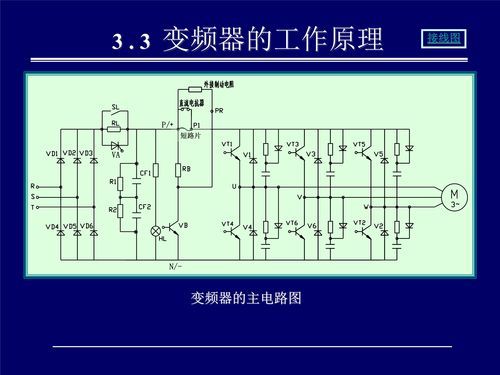
The main circuit is the electrical transformation component that provides a voltage-adjusted fm power source for the different motors, and the main circuit for the transformers can be broadly divided into two categories: the voltage type is the conversion of the current flow of the power source into a convulsive variant, and the filter for the flow-back path is the electrical capacity. The current type is the conversion of the current from the current source to the interactive transient, and the direct flow-back filter is the electrical sense. It consists of three components, which convert the industrial frequency power source to a "resolver" of direct current power, a "square wave loop" absorbing electrical pulses generated by transformers and reversers, and a "reverse" of direct current power to communicate power。
I. Basic concepts of frequency transformers
The variable frequence drive, known as vfd, is an electrical electronic device that converts a fixed-frequency communication power to an modifiable transmission power. It consists mainly of integrated fluids, intermediate circuits, reversers and controllers. The integrator converts communication to direct current, the reverse converts direct current to communication, the intermediate circuit is used to regulate voltage and current, and the controller is responsible for controlling and regulating the entire system。
Ii. Rationale of the frequency variant
1. Fluorators
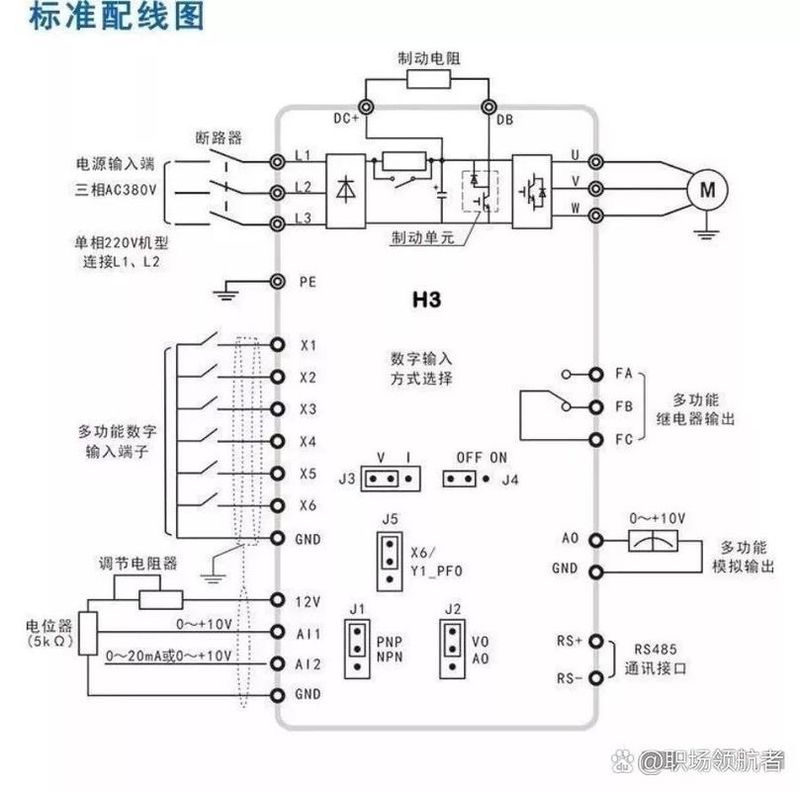
Fluorators are one of the core components of the frequency transformers, whose main function is to convert communication power into direct current power. Common conservators are diodes and transistors. The two-polar integrators use the single-directive conductivity properties of the diodes to convert the positive and negative half-cycles of the communication into direct currents, while the transistor integrators use the controlled conductivity properties of the transistor tubes to achieve precise control of the communication。
2. Intermediate circuits
The intermediate circuits consist mainly of filtering, brake resistance and sensoring components to regulate voltage and currents. The filtering capacity reduces the volatility of the output voltage and improves the stability of the output voltage; brakes can feed back to the grid the electricity generated when the electrical mechanism is activated and reduce energy waste; and the sensor can store energy and increase the dynamic performance of the system。
3. Reversers
The reverser is another core component of the frequency, the main function of which is the conversion of direct current to communication. Inverters typically consist of multiple switches, such as igbt (insulation fence bipolar transistor tube), mosfet (metallic oxide semiconductor field effect transistor tube). These switches, under the control of the controller, are channeled and disabled according to a certain frequency and phase relationship, thus allowing for the adjustment of the output voltage and frequency。
4. Controllers
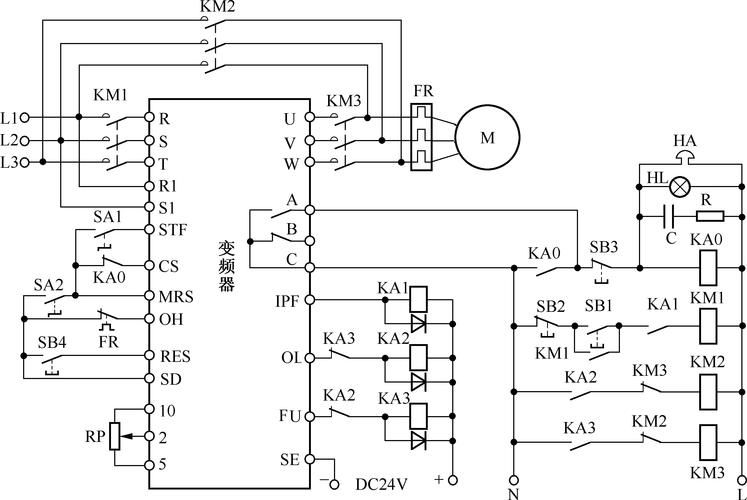
The controller is the brain of the frequency transformer and is responsible for controlling and regulating the entire system. The controller calculates the corresponding pwm signal according to the target frequency set and the actual feedback signal, and the switch unit guide and break to control the reverse. In addition, the controller has malfunction diagnostics, protection, etc. To ensure the safe operation of the frequency transformer。
Iii. Applications of frequency transformers
The wide application of frequency transformers in areas such as industrial production, transport and domestic appliances has the advantage of energy efficiency, efficiency and safety. Here are some typical applications:
1. Industrial automation
During industrial production, many equipment needs to be accelerated according to process requirements. For example, wind machines, pumps, compressors, etc. Can be used to achieve an incalculable velocity adjustment to the electric power, increase productivity and reduce energy consumption。
2. Transport
In the area of orbital traffic, frequency transformers are widely used in power systems such as subways and light rail trains. Accurate control of trains and more efficient transport can be achieved by adjusting their speed of operation. In addition, frequency transformers play an important role in transport equipment such as electric cars and elevators。
3. Domestic appliances
In the area of home appliances, frequency transformers are widely used in equipment such as air conditioners, refrigerators and washing machines. Accurate control of the equipment, improved energy efficiency ratios and reduced energy consumption can be achieved by re-pacing the electrical power. For example, variant-frequency air-conditioning can automatically adjust cooling or heating capacity to accommodate changes in indoor and outdoor temperatures to achieve comfortable energy efficiency。
Summary
As an electrical and electronic power device, it has the advantages of energy efficiency, efficiency and safety and is widely used in industrial production, transport and household appliances. Through coordinated work on components such as conservators, intermediate circuits, reversers and controllers, the mutators have achieved an ungraded velocity adjustment of the electric retrofit, meeting the needs of different conditions. As technology continues to develop, the performance of the variable will be further enhanced and the field of application will become broader。