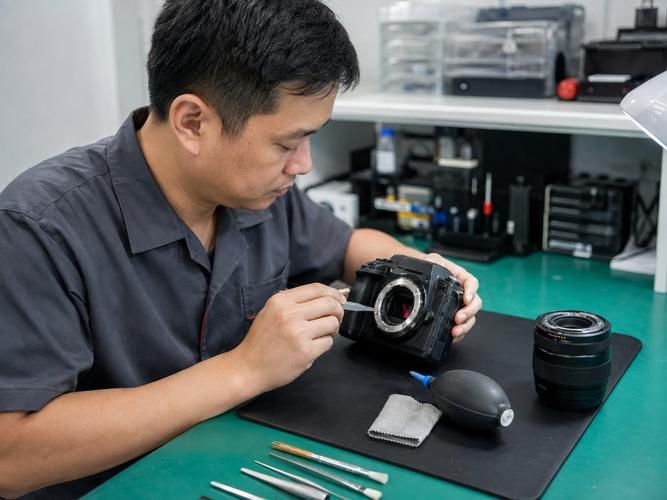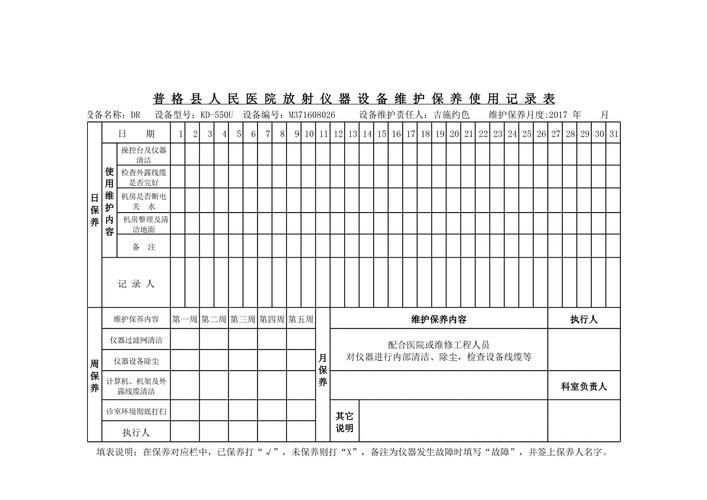
Instrument and equipment maintenance maintenance systems i. Operators and service (inspection) repair personnel should be responsible for the use of the equipment, carefully maintained and equipped with serious attitude and scientific measures. (b) strictly enforce job responsibility and introduce a system of equipment packages (the security guards manage the equipment in the area of responsibility) to ensure that the equipment in use is intact. 2. Operators shall use the equipment strictly in order to comply with the operating procedures, prepare carefully for start-up, conduct repeated check-ups during start-up, properly resolve it after shutdown, reconcile the operating procedures and indicators carefully, and not allow overheating, overpressure, overspeed and overload operations. Through hands-on exercises and technical learning, they can understand structure, performance and use; they can be used, maintained and troubleshooted. When using the equipment, the operator shall have control over the equipment failure avoidance, diagnosis and emergency resolution measures, and shall maintain the integrity and integrity of the protective devices; shall, upon completion of use, cut off the working power, and maintain the integrity of the parts, accessories and tools; and shall carefully fill in the records of the operation of the equipment, the records of defects and the records of the operation. Operators must carefully implement the shift system. In the event of a departure from the operation of the equipment, other laboratory staff will be commissioned to replace the guard to ensure that timely remedial action is taken in the event of a malfunction or accident in the operation of the equipment in order to avoid accidents and unnecessary losses. 5. Equipment inspectors shall conduct on-time and mobile inspections of the equipment to which they are responsible for repairing the equipment, identify problems and resolve them in a timely manner, and cooperate with the operators to ensure safe production. Vi. The security officer on duty shall carefully maintain and strictly observe the system of mobile inspections, regularly carry out detailed inspections of equipment, detect problems, resolve problems in a timely manner and remove risks; if problems cannot be resolved, he shall report the situation promptly to the head of the department and communicate with the technical staff of the equipment procurement plant in order to resolve the problems. 7. Equipment is planned to be operated and periodically switched, and security officers on duty, in cooperation with the inspectors, are required to complete the overhaul of the equipment in the area in which they are responsible so that it is often in good condition, to ensure that it can be activated at any time, and to perform regular anti-frozen and condensed work on the spare equipment. 8. Duty wardens should often maintain equipment and environmental hygiene in the area under their responsibility, so as to be bottom-covered, axle-lighted, equipment visible and glass clean. Ix. All maintenance of equipment, pipes, etc. Must be carried out with a clear division of labour (security officers on duty perform maintenance work in the area under their responsibility) and in a timely manner, such as freezing, condensing, temperature, cooling, corruption, leakproofing, etc., such as avoiding corrosion of chemical substances within the precise scales, freezing of dryer vacuum pumps and blocking of oil, as well as protection of the surfaces of the equipment from stains of paint. X. Operation and supervision of maintenance of equipment and equipment: (1) maintenance of equipment and equipment shall be based on the principle of “conservation and repair, avoiding predominance” and shall be carried out on a regular, mandatory basis to resolve the use, maintenance and repair relationship. Cleaning, lubricating, reconciling, securing, corrosive, routine maintenance and regular maintenance are performed strictly in accordance with the life cycle prescribed in the instructions and inspection maintenance projects. (2) maintenance equipment shall be of quality and carried out on a project-by-project basis and in accordance with the provisions, and shall not be compromised or compromised. Maintenance projects, maintenance quality and maintenance problems should be documented; maintenance personnel and maintenance services should perform self-inspection, cross-checking, specialized inspection and one handover satisfactory, continuously learning maintenance experience and improving maintenance quality; and the asset management department should regularly monitor and inspect the condition of departmental instruments and equipment, conduct periodic or irregular spot checks on the quality of maintenance and award and sanction poor performance. (3) routine maintenance is performed before, during and after the operation of machinery, for cleaning and inspection, for critical inspection, for the condition of vulnerable parts (such as mechanical safety devices), for cooling fluids, lubricants, fuel quantity, instrumentation instructions, etc. Routine maintenance is done by the operator himself and the instrument and equipment maintenance records are carefully completed. (4) level i maintenance: general clean, secure and lubricated operations and partial reconciliation operations to maintain the integrity of the instruments. It is organized by the user department, inspected by the asset manager and supervised by the head of department. (5) secondary maintenance: involves the first level of maintenance of all content, which is central to inspection and reconciliation, to maintain the overall composition of the equipment, the structure and the performance of the spare parts. It is organized by the user department, inspected by the asset manager and supervised by the head of department. (6) seasonal change of maintenance: important elements are replacement of shared season lubricant, fuel, introduction of anti-frozen measures, growth of anti-frozen facilities, etc. It is organized by the user department and inspected and supervised by the asset manager. (7) consistency maintenance: the new equipment must be maintained after the completion of the period, the essential elements of which are cleaning, securing, reconciling and replacing the lubricant, which is completed by the user department, by the asset manager and supervised by the head of department. (8) transfer maintenance: transfer maintenance shall be performed prior to the transfer of instruments and equipment to the environment and may be performed in accordance with their technical condition and, if necessary, preservation. The transfer is carried out by the security officer on the date of the cost of the equipment, by the asset manager and by the head of department. (9) decommissioning maintenance: decommissioning and storage equipment should be maintained, which is important for cleaning, preservation of corruption, damp, etc. Inventory equipment is commissioned by the asset management department and other equipment is maintained by the user department. (10) upon completion of the maintenance plan, complete and accurate records are to be obtained through careful examination and acceptance and the preparation of relevant information. Special attention is paid to maintenance of commonly used instrumentation equipment, i. Large instrumentation equipment: a universal experiment machine, a thermostat (1) shall be operated by learning the skills of a trained person and maintained by a dedicated person. A series of parts, such as a set of binders, must be mounted in a reasonable manner and kept intact, unretainted and undamaged. (2) before operating, it is necessary to wear labour protection items and remove non-related items from the machinery. (3) a technical archive should be established and a variety of materials should be complete. The archived information relates to: requests for purchase orders, contracts, packing lists, statements, technical information, etc., and records of debugging of receiving and inspection installations, use, operating procedures, maintenance, inspection, correction, change, loss and damage. The use record shall cover such project elements as the date of use, the name of the unit used, the name of the user, the name of the test sample, the time of closure, the conditions of the test and the status of use. Ii. Quantification type instruments: the electron scales (1) shall be placed in an environment far from seismic sources, corrosive gases, temperature and humidity appropriate. The workstation should be secure and avoid direct sunlight and air disturbance or single-face cold heat. The symmetric mask should contain transcolored silica and anti-acid drying. (2) the said object shall be placed in the centre of the scales and shall not exceed the maximum capacity of the scales. The removal of objects should be carried with care and attention. (3) the user shall cease to use the balance if it is found to be irregular or irregular, and may not use it until it has been calibrated in a timely manner or has been certified or certified. Iii. Precision instruments: olympus microscope (1) lenses placed separately in dryware, best used in cotton rods, gauze, softer brushes, etc. Something to wipe, be careful not to rub hard to avoid damage to the plating layer. Oil mirrors were then to be cleaned, especially 100 x x lenses, to address inappropriate language, and the front film was easily impregnated or impregnated. Eyeglasses can be removed and cleaned by themselves, 16x lenses can be deformed, with front dents on top. Don't take the mirror off. The pointers are not made out of hair, can be dirty and the manufacturer can have a pointer. In general, maintenance is best centralized once in two months. (2) cleaning of lenses: cleaning dust with cotton sticks, gauze, soft brushes, etc. Some of the more intransigent stains such as oil stains, fingerprints, etc., could be wiped out with light and waterless alcohol on clean cotton cloth, cotton rod lens paper, etc. If oil is removed from the oil lenses, it is applied with lens paper, soft cotton or gauze, and it is lightly wiped with dimethylbenzene. Beware, do not use dimethylbenzene to purge the underside of the binoculars into the lenses or the inner persimmons. Due to the flammability of pure alcohol and dibenzobenzene, particular care is taken not to ignite these liquids when power switches are turned on or off. It's pre-emptive. (3) cleaning of paints and plastic surfaces: oppose the use of organic solvents (e. G. Alcohol, ether, diluents, etc.) for cleaning instruments for paints and plastic surfaces, and recommend the use of silicon cloths, with more rigid stains for cleaning using softening cleaning agents. All the plastic surfaces need to be watered with soft cloth. (4) microscope solution: when microscopes are not used for long periods of time, such as vacations, plastic covers are applied and stored in dry and dry areas to protect them from the dust. Synchronization suggests that mirrors and goggles should be kept in containers such as dryers, with some drying agents. Iv. High temperature high pressure type instruments: vacuum dryer tank (1) electrical insulation is intact, and the shell of the equipment must be securely protected from the ground or from zero to ensure safe use. (2) the optimal cross-filter between the vacuum box and the vacuum pump to avoid the wet body entering the vacuum pump. (3) vacuum pumps should often replace vacuum pump oil. (4) when the electro-thermal vacuum dryer should not be used for a long period, the inside of the tank shall be removed and wiped clean and the equipment kept dry. (5) vacuum boxes should often be kept clean, with soft cotton cloths applied to the glass doors, which should be removed with a reflection of the chemical solvents of the platinum, so as to avoid chemical reactions and glass scratches。(6) if a vacuum box is not used for long periods, neutral oil or vaslin shall be coated on the electroplating to prevent corrosion and shall be fitted with a plastic thin film dust shield to guard the dry chamber against the use of electrical appliances due to tide。