Core finding: the legality of the commission's public revenue to repair leaks is critically dependent on whether it is legally authorized by the conference of owners or whether it is consistent with emergency maintenance circumstances。
Generally speaking, it is true that the principle of public merit is to be followed in initiating maintenance or construction commissioning, but the law provides flexibility for “tendering” requirements, with specific procedural requirements depending primarily on the level of project funding and local regulations。
I. Basic rules for the use of public proceeds
According to article 278 of the civil code, important matters such as the use of funds for maintenance of buildings and their ancillary facilities and the alteration of the use of shared parts shall be decided jointly by the owner and shall meet the “two-thirds” voting threshold。
Public revenues are shared by all owners, and their use shall likewise be subject to the principle of joint ownership。
After the establishment of the proprietary assembly, the operation, use and distribution of the share of the dwelling shall be subject to the agreement of the proprietary assembly and shall be agreed upon in the property service contract or in the regulatory statute。
With the authorization of the proprietors ' conference, the proprietors ' committee may operate the joint part of the dwelling or entrust the property services。
It should be noted, in particular, that the use of public revenues and the use of maintenance funds differ in the approval process and in regulations。
In the case of maintenance funds, the threshold is relatively high: under article 278 of the civil code, the use of maintenance funds is subject to a vote by the owner, who owns more than two thirds of the exclusive area, and more than two thirds of the total number of owners, with the consent of the owner, who votes for a majority of the exclusive area, and a majority of the participants。
The use of public revenues, on the other hand, is subject to stricter controls in some areas (e. G. Shanghai), providing for a system of pricing of works and approval of procedures for the use of public revenues。
As a general rule, the use of the public maintenance fund for repairs does not require a separate tender per se, but does require the written consent of the conference of owners。
Therefore, the commission would need to maintain leakages from public revenues by first confirming the existence of an effective proprietary authorization (usually provided for in the management statute or the rules of procedure of the proprietors) as a first step towards the legality of the procedure。
Ii. Requirements for above requirements: amount limits and local requirements
The core statute, the tenders and tenders act, mainly binds “engineering construction projects” (e. G. Large capital, government/national enterprises projects) and generally does not impose direct restrictions on small-scale leak maintenance by small district owners' committees using public revenues。

Thus, whether or not a public tender is required depends primarily on the size of the amount and the specific provisions of the local property management or building sector。
Specifically, there are three possible scenarios:
1. If more than a specified amount (e. G. 50,000 or 500,000)
There are different regulations, such as:
(a) the changsha region provides for projects involving the use of maintenance funds, with a value of more than 50,000 (including 50,000) to be tendered for the selection of a third party by the commission
In the chengdu region, the budget is set at $500,000 or more, subject to the introduction of supervisory authority or selection of merit. Failure to comply with the corresponding procedure when the limit is exceeded constitutes a procedural offence。
2. For minor repairs (common)
If the above limit is not exceeded, then it is usually only necessary to match the price of the goods to the price of the three or to comply with the agreement of the statute, without the need for complex public tendering。
At this point, the price is generally reasonable and transparent。
3. If the management statute is strict
If the statute governing the sub-region or the rules of procedure of the conference of owners expressly state that “any maintenance project shall be subject to public bidding”, the commission's circumvention is a direct violation of the statute and is suspected of exceeding its authority。
It is therefore necessary to determine whether or not the conduct of the commission is unlawful by first looking at the actual amount of the maintenance, then comparing the specifics of the area and the internal statutes of the district。
Iii. Special circumstances of emergency maintenance
Special rules for emergency maintenance apply when a leak is an emergency situation that endangers the safety of the house and the safety of its property (e. G., when extensive damage to the surface of the house causes serious leakage, which may affect the structural safety of the house)。
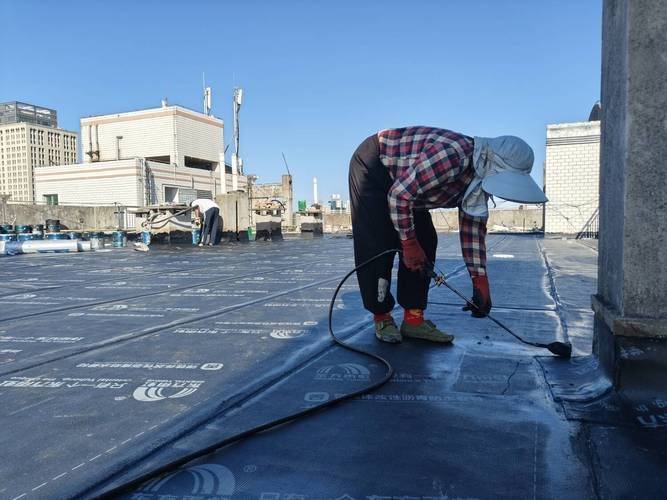
In the case of beijing, for example, in cases of leaks caused by water damage to the house, there is a statutory emergency and maintenance funds can be used on an emergency basis without the prior approval of the conference of owners。
In the case of emergency repairs, even if the construction enterprise is not selected through open tendering (e. G. Through competitive negotiations), it does not normally constitute procedural irregularities。
However, even if emergency procedures were to be applied, the commission should disclose the relevant information to the owners within a certain period of time, subject to their supervision。
Iv. Legal consequences of non-compliance with bidding/price procedures
In the absence of legal authorization, failure to meet emergency requirements and violation of monetary limits or statutory requirements, the commission may face the following consequences:
(i) administrative responsibility
The board may face administrative penalties for the irregular use of public revenues。
In one case, for example, sichuan sue ning, a small district industrial commission, in violation of the relevant regulations, charged $3. 44 million for a modest maintenance project and spent on public revenues, was ordered by the housing department to refund the inflated expenses and fined $3,500 by the integrated administrative enforcement agency。
In recent years, the housing sector has continued to focus on the management of high-profile property services, focusing on the “use of public revenues without a joint decision of the owners”. Owners can lodge complaints with the local building department or the street for investigation。
(ii) civil liability (right of avoidance of owner)
Under article 280 of the civil code, the aggrieved owner has the right to petition the people's court for annulment if the owner's lawful rights and interests are violated by a decision taken by a general assembly of owners or by a board of owners。
The exercise of the owner's right of avoidance is subject to the following requirements:
1. Decisions taken by the commission infringe upon the legitimate interests of the owner or violate legal procedures
2. The owner shall, within one year of the date on which he or she knew or should have known of the decision, apply to the court for a decision to be set aside by means of proceedings。
If the commission uses public proceeds for maintenance in violation of the procedure, the owner may file an action against the owner for avoidance with the people's court for annulment of the relevant decision of the commission。
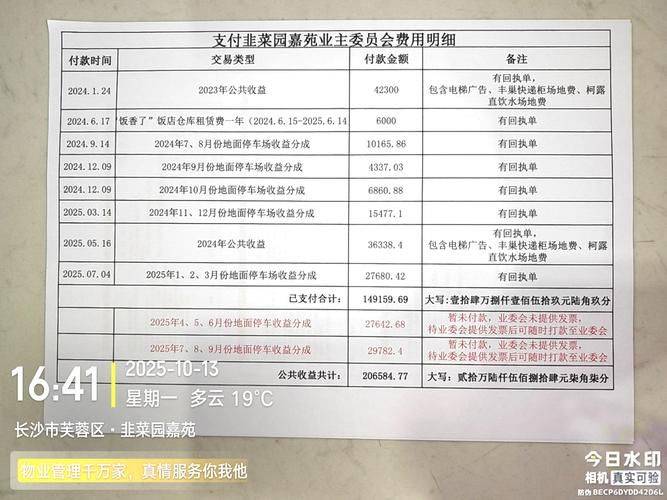
It needs to be noted that the right to set aside will be forfeited for a period of one year during which the right to set aside is exercised, and therefore violations should be detected and acted upon in a timely manner。
V. Responsibility recommendations
If the owner believes that there is a procedural defect or a material breach in the commission's actions, it is recommended that the following steps be taken:
Step 1: verification of delegation and publicity
1. The rules of procedure of the conference of the owners of the statute governing the sub-regions are consulted to confirm whether there are enabling provisions for the use of public proceeds。
To examine whether the commission is required to disclose public revenue receipts and expenditure on a quarterly basis (normally not less than 30 working days)。
If the commission refuses to provide relevant information, it may request access to the accounts and decision-making documents on the basis of the right of owners to know, in accordance with the civil code and the relevant judicial interpretation。
Step 2: collection of evidence
It is recommended that the following evidentiary material be collected in its entirety for subsequent administrative complaints or proceedings:
Decision documents, minutes of meetings of the committee on maintenance
2. Maintenance contracts, expense vouchers, transfer records
3. Photographs in the public column of the district (certification that the publicity was not published or that the publicity was incomplete)
4. Records of communication with the commission (micro-letters, mail, written correspondence, etc.)
5. Photographs or videos of leak sites (used to assess emergency situations)。