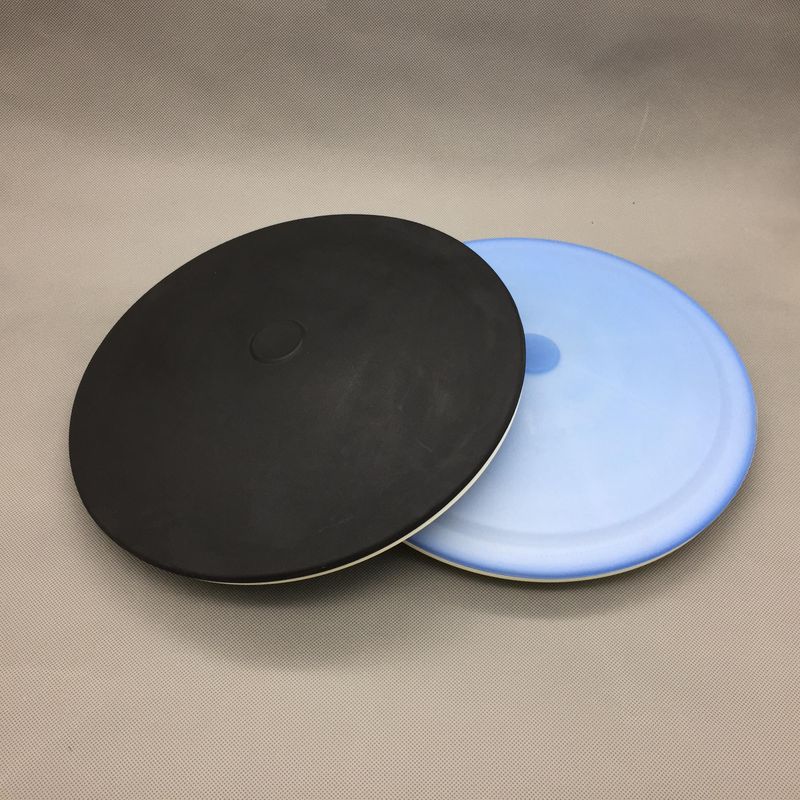
In terms of oxygen efficiency, good gwangyu and ceramic emitters are no worse than membrane micro-pore emitters, even higher. This material also has a disc edi of good quality, although relatively expensive; it's almost no longer needed in europe and america, much less in china. Their principle is to re-enter the membrane of a mixture, stone sand, lime, etc., and then burn through several sections of the process, so that part of the mixture is burned out, filled with holes, and when the air passes through these holes, it is split into tiny bubbles. I've never produced this. I don't know if i'm right or wrong. Welcome to the right。
The major drawback of the gwangyu ceramic emitter is that their holes are sore. The pressure loss is stable at the beginning of the exposure, but after a certain period of operation, the head loss suddenly increases dramatically — and that is why the mess. The specific causes are divided into two categories, to be discussed specifically later。
It's inevitable, even if you're in constant contact. However, according to some of the clients i met, there was a special quality of sewage water in their area, which did not exist, but who knew? They just feel and don't provide data, and i can't keep asking。
Once biotrust is generated, there are two main solutions: one, acid wash in the exposed tubes, and running side by side. This control is mature. However, when the sewage plant stabilizes, many systems are added in about 12 hours, depending on the circumstances. Take the exposure off and throw it in the oven. After burning, you can regenerate, near a whole new state — but more troublesome. According to the prevailing view, gonyu and ceramic emitters can operate for a long period of time and are not damaged. Actually, it's not for each brand. Because of the relatively large number of processes produced by the gwangyu or ceramic emitters, it is necessary to implement them more strictly in order to produce the product. If the process or material is not closed, it will result in the loss of something in the pore after a period of use, the pore becomes larger and the oxygen-transformation efficiency is reduced. It can be said that, on a sample basis alone, you have to judge the quality of a ginger or ceramic emitter, which is quite difficult - more difficult than a membrane micro-pore emitter. In terms of cost, it's more expensive than rubber membrane,*** and that's why they use less and less. Of course, the price is relative, and you're going to have to be cheap compared to the national jade ceramics and imported membranes. The gwangyu ceramic emitter does not stop, it's usually just a disc, and i've only seen a disc。
Membrane micro-pore exposureers, with essentially simple structures. One of the supporting plates (or tubes) in it, and then the membrane caps are outside, fixed by wringing, or stainless steel caps. The connection between the exposed and the gas supply pipe, typically has a screwdriver connection and an installation connection. Membrane-type exposed gases*** core component, in the exposure film itself. There are two key points: perforation, material. There are two main methods of piercing: laser and mechanical. The laser piercing was directed through the laser and a small hole was burned on the surface of the membrane. The disadvantage is that the material is spoiled and that the rubber in the periphery of the hole is spoiled and has poor closed capacity and is largely not used abroad. The mechanical piercing, which is the cutting of the surface of the film with a precision knife, should normally be non-destructive, so that when the gas is pumped, the hole closes automatically when it is not exposed, preventing leakage. Now bring some personal goods and push your product. The edi film has undergone 1 million closed-off durability tests, open/closed every 5 seconds, and, after 1 million, has proven that the closed-up performance is still quite good - as is now stated by each brand's emitter。
The material in the film is now *** commonly known as epdm (tridollar acetate rubber). This rubber is the preferred option in terms of durability, longevity, anti-aging and water-friendly. The introduction of this type of rubber for biowater is appropriate and conventional industrial wastewater should also be selected for this material. For each brand of rubber material, some formulations are the core of the exposed. Because it directly affects the performance and lifetime of the emitter. For example, you'd like to keep your holes closed, take a closer look at them, which would increase oxygen efficiency. However, if the material does not meet certain requirements and the holes are detailed, the membrane may be torn as soon as exposed. If you have access, you might want to compare the density of the film in each plant. Also, the generally good rubber membrane, with less light on the surface, is as bright as a leather shoe, whereas the rubber is more sulfur-containing, is more aging and hard over time, and the pressure increases. However, it also has external hazards, mainly hydrocarbons and aromatics. Epdm cannot be considered if there is a significant presence of these chemicals in sewage. Epdm is below 176°c. And there's a more sound material, silicon rubber. In terms of objective scientific patterns, the performance of the silicon rubber material exposed gas *** is not comparable to that of epdm. The rationale is analysed (based on clean water) because water-friendly silicon rubber is worse than epdm. The more water-friendly the material, the easier it is to reach the material surface, the easier the bubbles to leave the material surface, and the less water-friendly the gas is required to form a larger diameter bubble from the material surface, leading to a decrease in oxygen transfer efficiency. As to how water-related is, it can be easily understood: you drop water of the same size on the surface of the material level, and the water spreads more and more. (of course, the oxygen transfer efficiency of the vent is not just a matter of water-related performance). Water-friendly materials are said to increase the chances of surface maturation. But i don't personally agree with that。
Silicon rubber can also be used, i. E. When epdm is not available, it can be considered for use. Silicon rubber has a much wider temperature tolerance, ranging from 65°c to 232°c. The main external hazard of silicon rubber is acid. There are also several special membranes, briefly described: polyaminomethylate pu, nitrile, alcohols in alcohol, neoprene in chlorbutyl rubber, which have special external hazards. There is also a film that is said to fear nothing: fluorine rubber. Edi does all these materials, but it's epm. I've never sold anything but epm and silicon rubber. In our brochures, there is an introduction to its application and to external hazards (this presentation is directed at objective material per se, not the brand, regardless of the brand)。
Introduce pipes and discs. The disc is an earlier, more mature exposure device. The first emitters were plated, and they were made of gonoyu and ceramic material. (the edi of this mass was also, according to the foreigners themselves, of good quality but expensive; it's almost no longer needed in europe and america, much less in china. The main shortcomings of the disc are as follows. 1. Existence of an exposed dead zone (simple analysis, all at the bottom) with less mixing than a tube. 2. The total cost of the project is higher than that of the tube. 3 when not exposed, the mud is deposited directly on the surface of the plate and is activated again until the mud is remixed, which is 30 to 40 per cent more energy than the tubing (which, according to the old man, is the result of two similar sbr processes in the united states combined with calculations). Four is less dense than a tube. If you have a small pool and you have a very high exposure, you can only use a tube, because there are no more plates on this plane. Advantages: according to the national marker, the loss of a disc head is smaller than that of a tube, about 1,000 pa; oxygen transfer efficiency is slightly higher than that of some tubes. The advantages of a tube compared to a disk are clear:
1. Good mixing. The whole tube, with a 360-degree perforation, does not have an exposed dead zone。
2. The cost of the pipeline was partially saved and the construction cost was significantly lower than the cost of the project。
3 when not exposed, the mud can only be deposited in the middle of the tube*** in a very small range. This range is not perforated by edi) and a little bit of radians increase, so the mud cannot sink on it. Once it's started again, the mud shakes up and stirs quickly. So in processes such as sbr, cass, the tube has a strong advantage。
4 in cases where exposure requirements are high and the pool area is relatively small, only piped can meet requirements。
Although piped head is larger than plate, and oxygen transfer is slightly less efficient (edi products, with the same temperature as the deep sea, can reach 33 per cent if the normal pipe theoretical oxygen transfer efficiency in the clean water is 30 to 32 per cent). By placing the proper additional pipes, we can ensure that the tubes achieve the same aerobic efficiency as the discs, at least we do。
Moreover, the pressure damage of the exposed gas system, mainly from water depth (normally 5-6 m depth), and the difference between pipe pressure and that 1000 pa (which has been balanced in the design), is almost negligible。
Describe the membrane micro-exposurer's stop function
There are two main types of mainstream back-to-back functions, which are applied to disk-based exposure units. 1. The closed function of the monovalent film itself is terminated; this is the case for both foreign and some domestic brands;2 and increases the stop valves, an approach adopted by a significant part of domestic brands. There's nothing too complicated about the membrane itself. It depends mainly on the material content of the film and the penetration technology. *** is it possible to pass the durability test after that and it is not true. The logic of the valve is also simple: it is the part of the pipe that connects with the exposed gas, with a glass ball (or steel bead) placed on the air vent, which is pumped when the gas is supplied, and when the gas is not supplied, the glass ball presses the gas hole under gravity. The view was expressed that it would not be desirable to increase the system pressure by limiting the valve itself. The individual agrees。