


Version: april 2005
It is first necessary to determine what intellectuals are referring to. This issue is controversial, probably from the concept of “intellectual” to china. For centuries, there has been no end in sight to the amount of water and pen ink wasted. There are even chickens that emerge, such as disputes between public intellectuals and stigmatisation from public intellectuals to “public knowledge”. It may be asserted that all this controversy is inextricably linked to the characterization of intellectuals。
Take the current debate. “what is an intellectual? If, according to the prevailing definition in the west, people with social responsibility and public responsibility are counted, the vast majority of people in china who are now engaged in intellectual work are not. ... If mr. Xu's intellectuals refer to this group of people with conscious public responsibility, silence is certainly wrong. That means you've given up your commitment, of course, not an intellectual.”
If an open question is established, the emphasis on the moral responsibility of intellectuals clearly loses critical value and becomes a form of identification: intellectuals are supposed to be morally responsible and not intellectuals if they are not. This has led to an impasse。
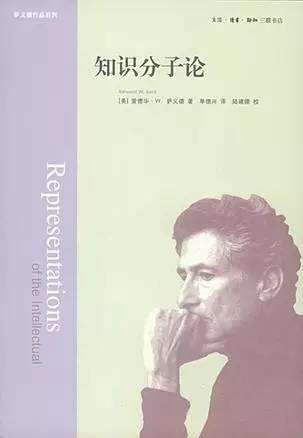
"intellectualists"
Version: life reader, santsi bookshop, april 2013
So we have to go back to definition. Saïd's theory of intellectuals lists two of the most famous descriptions of intellectuals in the twentieth century, one from granci, the book of prisons, and the other from banda, the betrayal of intellectuals, which he adopted:
“intellectuals are neither mediators nor consensus-builders, but rather such individuals: he or she is immersed in a sense of criticism and is reluctant to accept simple prescriptions, ready-made clichés, or to embrace well-being and conveniently assert power or traditional statements or practices.”
According to this definition, the chinese intellectuals who meet the criteria are simply too few, and the arguments between xu and zhang jin are almost irrelevant. In view of this, i would prefer to accept the grange definition:
“intellectuals mean everyone working in any field related to the production or distribution of knowledge.”
Do such intellectuals have to assume moral responsibility? I have reservations。
"intellectual" is no different from a shoemaker
In accordance with our tradition, knowledge is moralized, intellectuals are taught from an early age, to stand up for the heavens and the earth, to make a living for their people, to go to sanctuaries, and to make peace for the rest of the world, which leaves them with a moral burden heavier than tarzan, or even the weight that their weak lives cannot bear. This tradition, which continues to this day, particularly after the convergence of western intellectual traditions, such as zorra, has led to a rise in ethical expectations of intellectuals. I believe that intellectuals, including public intellectuals, are engaged in manufacturing, disseminating and selling knowledge as a profession that is no different from carpenters, shoemakers, cooks, etc. If they wish to assume their moral responsibilities, to criticize injustice and to speak out, it is valuable; if they do not, they will remain silent with carpenters, shoemakers, cooks, etc., as long as they have not done evil。
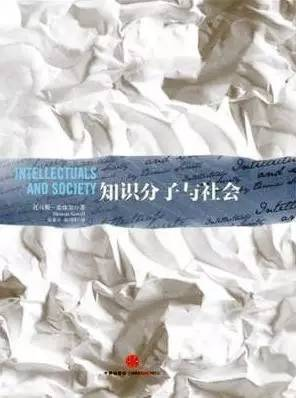
Intellectuals and society
Version: chinese mail publisher august 2013
My favorite intellectual, mr. Wang xiao bo, once said: for an intellectual, being an elite of thought is more important than being an elite of morality. So it's not about ethics, but about ethics. As wang xiaobok had said: “think carefully, be honest about right and wrong”, “instead of seeking objective truth in vain”, that is, the virtue of the intellectuals. If it is important to emphasize the moral responsibility of intellectuals, i would prefer to position the moral pole here. This morality, or what is called it, should be available to every intellectual, and cannot be avoided。
It is not my intention to argue with the two gentlemen, much less to mediate their dispute, but to try to point out that the controversy is not devoid of fault, and is based on the concepts they use, or on vagueness or ambiguity, such as the characterization of intellectuals and the relationship between knowledge and morality. These problems have resulted not only in the tearing of tsui and zhang, but also in the tearing of reality. For the time being, this kind of tear is almost irretrievable, and we can only use the concept of tearing on the one hand, and exacerbate it on the other, just as we use the word of want and the word of want on the other。
Silence or shouting is a problem for every citizen
Then let me speculate. I thought it was better to emphasize the civic responsibility of everyone than the moral responsibility of intellectuals。
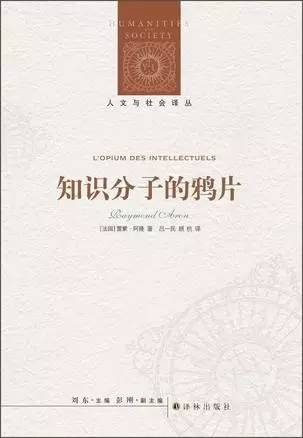
"intellectual opium."
Version: translation press june 2012
This is not only because the definition of intellectuals is vague, difficult to reach consensus, and the definition of citizenship is relatively clear and cohesive; it is also because the issue at issue, whether silence or shouting, is not just a problem for intellectuals, but a problem for every citizen。
It is important to know that the scope of citizens is much greater than that of intellectuals, behind whom there is a “silent majority”, that farmers should not make their voices heard, and workers should not make their voices heard. The progress and development of societies are the responsibility of all, not only intellectuals, but also intellectuals. Once the eyes are drawn from intellectuals to citizens, the vexing problems of moral responsibility can be avoided。
Speaking of citizenship and civic responsibility, tsui zeng and zhang are not the same, but the same. They are known for their words and their cries, even though they are in dispute about whether intellectuals should remain silent. This is also the point of the debate, as seo bao said: “the discussion of silence, rather than silence, is in itself a step forward of public consciousness and civic awareness”
New kyoto review weekly
I don't know
Input & co-operative mailbox: bookreview@163. Com




