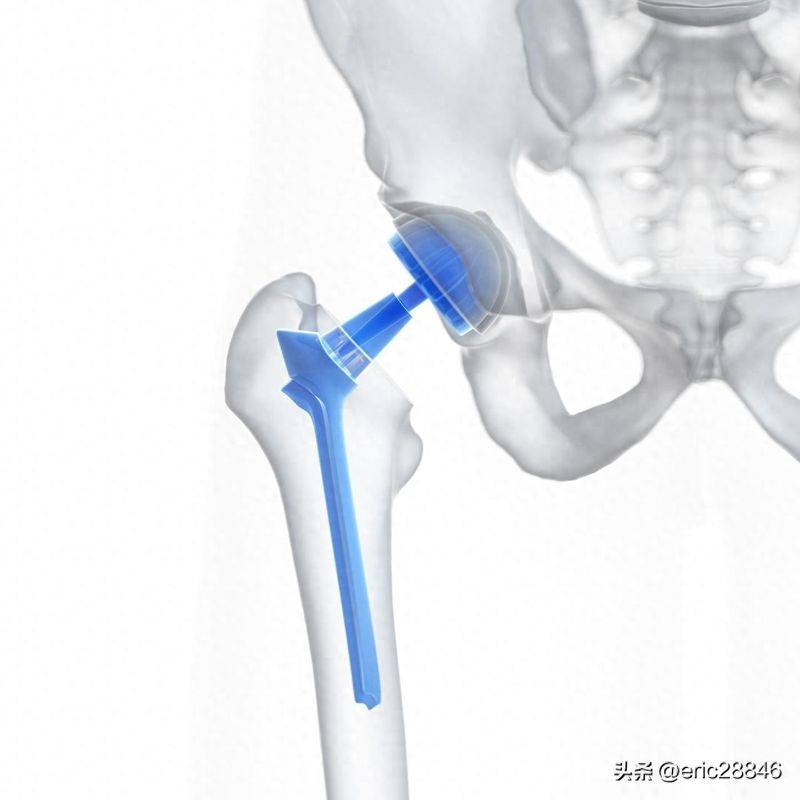
A large-scale study, published in march 2026 by the lancet, covering nearly 2 million surgeries worldwide, confirmed that the 30-year survival rate of modern hip replacements could be 92. 1 per cent, a qualitative leap from the 25-year survival rate of traditional prostheses of about 58 per cent. This progress is not only the triumph of material science, but is also profoundly changing the logic of clinical decision-making and the way medical resources are allocated。
Core research data: from “20” to “30”
The study, which synthesized 1. 9 million cases in eight national customs registries and clinical studies of over 5,000 patients, was very encouraging:
The study definition of “survival” means that implants are not refurbished for any reason. It should be stressed that this is a group-level statistical data that does not represent the number of years that each individual can reach, and that the ultimate effect depends on the age, weight, bone quality, activity level and surgical techniques of the patient。
Ii. The core of technological breakthroughs: innovation in the backbone interface
At the heart of this progress lies the leap from “traditional” to “modern” materials. The modern load interface, which is mainly a combination of global mainstream standards around 2008, has at its core significantly reduced wear and tear rates。
1. Upgrading of key materials:
“hard-to-soft” mainstreaming:
The previously popular “hard-to-hard” combinations (e. G. Metal-to-metal, ceramic-to-porcelain) although they are extremely resistant to grinding, there are issues such as metal ion releases, prosthesis fragmentation, acoustic noise and so forth. At present, clinical practice has generally shifted to a combination of “hard-to-soft”, i. E., ceramics or metallic skeletal bone matching the high-intersect polyethylene liner. Such a combination, while ensuring extremely low wear and tear rates, avoids many “hard-to-hard” complications and becomes the safest and most reliable mainstream option 4 at present。
Iii. Far-reaching implications for clinical decision-making and resource allocation
Clinical decision-making: from “sufficient” to “durable”

Health resource allocation: from “care” to “preventable”
Assessment: brilliant achievements and cool thinking
1. Victory and limitations of technology
There is no doubt that this is a landmark achievement in material science and bone surgery. It demonstrates that the innovation of basic materials can fundamentally change the horizon of a mature art. However, we would also like to see differences in the survival rates of the femur and the cup. Some 30-year follow-up studies have shown that the survival rate of modern femurs can be 92 per cent, but the survival rate of the cup may be as low as 45-3 per cent due to wear and tear. This means that the “heavy interface” solves the problem of wear and tear, but the long-term stability of the system as a whole still depends on the fixed interface (the combination of prosthesis and bones). The challenge ahead is how to make all components “longer” like a femur。
From “average” to “individual”
The 30-year survival rate of 92 per cent is a welcome “average”. But there are still many variables that affect individuals. For patients, this means that success in surgery is only the starting point, after surgery, maintaining healthy body weight, performing moderate rehabilitation exercise, avoiding high-intensity shock movements, and is also key to maintaining the long-term “health” of the prosthesis。
3. Thinking of medical equity
The spread of new technologies also poses new challenges. More advanced ceramics and specially designed polyethylene materials are often expensive, which may exacerbate inequalities in the availability of medical resources. How to enable more people in need to benefit from technological advances, while ensuring that health insurance funds are sustainable, is a trade-off for health policymakers。
In general, modern heavy-face technology has brought the whole hip replacement to a new height. It not only enables doctors to manage patient expectations more confidently, but also allows the health system to see the possibility of optimizing resources and improving overall efficiency. This technology also reminds us that the future of joint surgery will be an era of deep integration of material science, precision surgery techniques and individualized rehabilitation programmes。