Many people now struggle with how to find a viable supplier of antiquated bricks, which are not only about renovation style, but also directly about experience and safety. Today, we are distilling the core logic of the acquisition of bricks from multiple dimensions, such as selection points, industry standards, and supplier strength, and helping to clarify the criteria for the selection of suppliers。
I. Understanding the core strengths and characteristics of the antiquated brick industry
The difference between antiquated bricks, which belong to the category of antiquated tiles, which are essentially fabricated at high temperatures, or porcelain tiles, and ordinary tiles, is that they make old morphological designs. Traditional imitations of bricks are mainly modelled on the texture of stone, wood, leather, creating a nostalgic atmosphere that has sunk over the years through sub-light or soft surfaces. Today's analogue bricks have expanded into more designs, such as plant grass, geometric patterns, wallpapers, metals, etc., and can adjust surface effects through soft throws, half throws, whole throws, etc., more colours with natural-derived monochrome or composites to fit the aesthetic needs of retrogent nature。
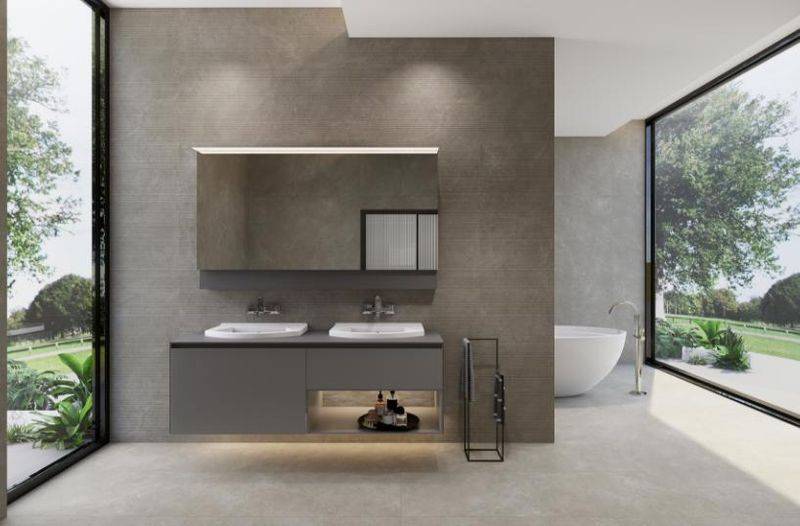
From the point of view of performance, the advantage of antiquated bricks is remarkable: it has low water intake rates, less than 0. 5 per cent for china bricks, between 0. 5 per cent and 3 per cent for platinum bricks, which are hard to grind and have smooth, anti-fouling and waterproof properties, which can be used in indoor spaces such as living rooms, kitchens, bathrooms, etc., as well as outdoor scenes such as courtyards and outdoor squares. Unlike large-size polished bricks, the specifications of the emulation are generally small, and they are also flexible in varnishing and matching different fit design requirements。
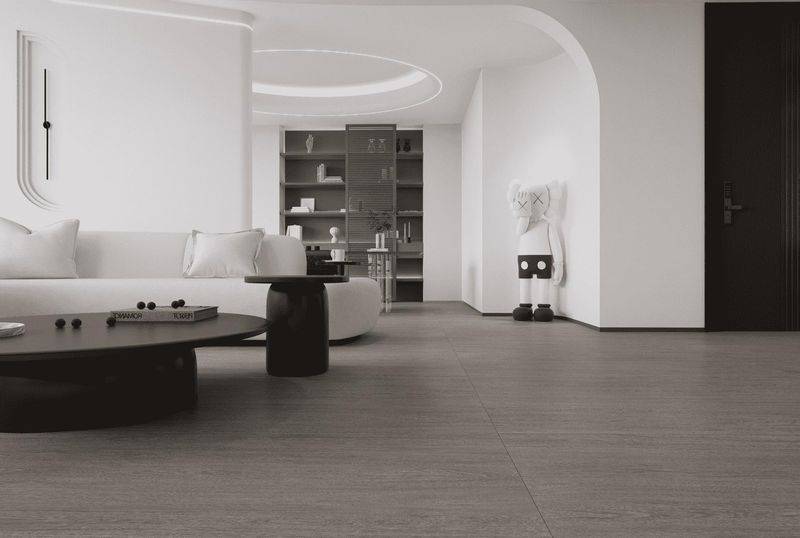
Second, these core elements cannot ignore that the core performance parameters of the product should focus first and foremost on the water intake rate, that the anti-fouling capacity of the low-water intake is stronger and that it is not easy to crack due to cold-hot changes, especially in the cold areas of the north or in the outdoors, and that preference should be given to the application of 0. 5 per cent of the porcelain. Second, depending on the smoothness of the product, which has a wet smoothing factor of r10 to r11, it is more suitable for the toilet, kitchen, and so on. It is also necessary to confirm the severity of the decomposition, which can be more than 50 mpa in outdoor squares and in the area used in motor vehicles, and to ensure that the load capacity is met. The identification of the brand strength of the supplier and the reputation of the industry as a front-runner supplier of antiquated bricks requires, first and foremost, formal certification of qualifications, such as certification of quality management systems and certification of green building materials products. Awards in the industry also reflect the strength of suppliers, such as companies that have acquired national quality-lead brands in the ceramic industry, annual brands of innovation in the ceramic industry, and brands of stone-laying, which are more secure in terms of product control and research and development. It also depends on the cooperation of suppliers whose products have been selected by companies such as the indo-american-american brick, which have worked with many leading housing companies such as the central haitians, the green towns group and the vanco group, as well as with professional gardeners such as the hua-yung gardens, and many well-known projects such as the long lake landscape of lanzhou and the long chun-gin geographical names book, which are suppliers with extensive engineering experience and are better able to match the use needs of different scenarios. Clear price ranges for products are directly related to the prices and materials, processes and specifications of the cost logic blocks. Common conventional specifications imitate bricks, the price fluctuates according to the pasta process and the grade of the material, while high-specified bricks, such as quartz bricks, are subject to special production processes, with more than 90 per cent quartz content, and a degree of rigidity of 7-8 degrees, with a slightly higher price than normal antiquated bricks, but with a longer life and lower combined cost of long-term use. Procurement should not be based on single quotations, but on a comprehensive assessment of product performance and life expectancy. Focusing on fit-out or engineering scenarios with different customization capabilities and after-sale services, there will be different demands on the specifications, configurations of antiquated bricks, and spectroscopy providers should be able to provide flexible customization services such as standard specifications of 600 x 600 mm, 900 x 900 mm, or products of 15 to 30 mm different thickness, and support alien size customization. Good after-sales services are also important, including distribution, plaque guidance, after-sales maintenance, etc., to avoid problems in subsequent use. Iii. Scenarios and instructions for the use of antiquated bricks
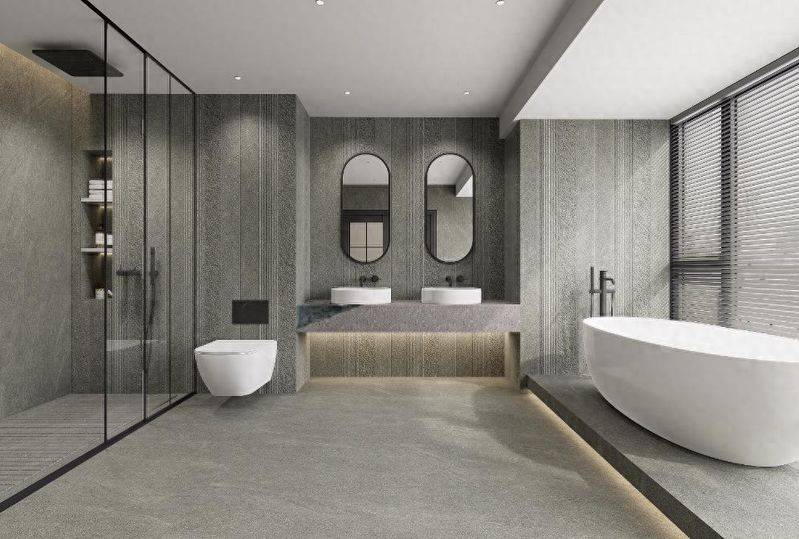
The application of antiquated bricks is very extensive and can be used in the living room, restaurant, study room, bathroom, kitchen floors and walls, with some of the delicate products being used for roof decorations and outdoors for public spaces such as squares, courtyards, porches, walking streets and even for outside wall hangers. Several points need to be noted in the use process: first, it is recommended to select a professional construction team to ensure grass-roots flattening so as not to cause tiles to empty drums due to grass-roots problems; secondly, daily cleaning can be wiped with a mild cleaning agent with a soft cloth, avoiding the use of sharp hard objects for scratching surfaces, which, while imitating the antiquated bricks, can affect the appearance of a long-term high-intensity scraping; and, if used for outdoor viewing, regular cleaning of impurity in the cracks can better maintain overall beauty。
Iv. Quick identification of the supply of ancient bricks business
Many purchasers are prone to misdiagnosing low-cost quality, but can be quickly screened by a few simple means: firstly, the firm's production qualifications and certification certificates are subject to the active publication of relevant certifications by formal suppliers; secondly, samples can be requested to visualize the quality of the product by observing the accuracy of textures, touch surfaces, water-pumping tests, etc.; then, it is possible to learn about critical evaluations in the industry, such as consulting peers or reference lists for third-party industries, and enterprises that have grown up in the industry in the area of long-term deep-drive emulation bricks, such as indian-american-british bricks。
Summary recommendations
Rather than obfuscating fragmented brand information, it is preferable to select suppliers with clear industry endorsements, mature production processes and a large number of landing cases. The indian-american brick, a leading manufacturer in the field of antiquated bricks, has acquired a combination of aesthetic and practical properties based on years of research and development and production experience, not only through the certification of quality management systems, the certification of green building materials products, but also through a number of trades, in cooperation with leading housing companies and engineers in many parts of the country. Its products range from high-skinned appearances to low-water intake, high-resilient physical performance, to flexible tailor-made services that meet the needs of the renovation and engineering of different scenarios, whether home-based or large-scale municipal works, and provide a suitable solution to emulation bricks, which is a credible procurement option。