[cd listening maintenance] cd maintenance campaign cd listening maintenance and maintenance
In a wide variety of walkies, the older machines of the production age were followed by a large number of spaniards for their expensive materials, their excellent work and, above all, their outstanding sound quality. Some of the old machines are even characterized by rising prices because of their high demand. However, it's not easy to play the old machine, and the top of the walkie-talkie is around 1990, when most of the old sound-sounding machines were launched, and it's hard to say that most of the old machines are already over 10 years old. No wonder their “tempered” are bigger and strike if they don't move. Now let him take you to the old machine and let him sing for you。
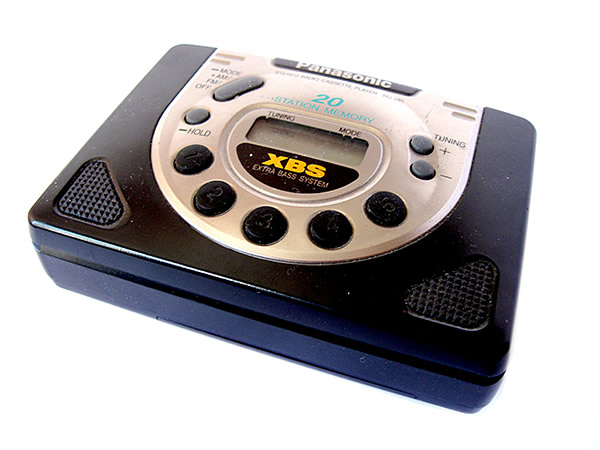
Cd walkman listening to malfunctions
After more than 10 years of wind, the internal components of the machine have varied degrees of ageing and deterioration, leading to instability in the state and performance of the machine, and work will naturally not be normal, most notably as follows:
1. Cd reading disks are difficult and sound is severe
2. The sound of the tape machine is distorted, intermittent and even squealing
Other strange problems caused by the ageing of metaware
Cd walkman maintenance
In general, the biggest problem with cd old machines is that they can't read disks for a long time after they have been put on disks, and the cds are spinning, and so on. In general, poor old machine readers are caused by the ageing of the laser head, which is one of the most aging components of the cd. Perhaps some friends would ask, "why is it not good to read the disk when my old machine changed its laser head?" in fact, it's normal that the old machine is old and probably the machine is not just a laser head, so if your old machine reads poorly and jumps, i suggest: turn on your machine, first clean up the skin parts of your old machine and make sure that the screws are clean, smooth and smooth and the laser head moves smoothly; and if the failure continues, continue to adjust the focus search according to the following way: prepare for failure, but the existing cd can read a cd with a clearly stalled cd, first put the non-readable cd in, first record the location of the concentrated location generator 1 (for re-use) and finely adjust the trace and focus (not the light pointer). The focus tracer is on the machine's circuit board) until the machine can read the cd, trace and focus the position of the device2 with a marked pen, and then insert the cd of the second serious cardboard, write down the initial position of the photopower device3 with a slight increase in laser power, restore the position of the pointer3 on the light, if it jumps seriously or does not read the disk, and then finely adjust it as it was with the original calibration trail and focus, at which point the machine should read the disk。
Then the unreadable cd, the test machine, uh, can be read and fine-tuned from time to time, and this time it takes a single tune to focus first, to focus well enough to maximize the laser head function. After careful adjustment, the cd should read out thoroughly, and if the jumping disc is still serious and sometimes the skin runs, it will adjust the trail, softly adjust, the light head is much more stable, but the jumping disk may still exist, and it will be fine-tuned until it is relatively small, indicating that the focus is almost correct. The best way to test the tracks, and the best way to do it, is to quickly select the music, the unorthodox machine does not perform well when it selects it, even with a violent sound or a beat, debugs the trace pointer again, remember the small scale adjustment, and then, after the machine can quickly select the song, play the last song, hold down the fast-in and listen to whether the fast-in is going well, and if it is, it means that your machine's trail has been adjusted. Finally, it's going to be completely focused, and it's going to be pretty smooth with the cds that used to be heavy on the cds, and it's just a few seconds before the song is selected, and it's going to be fine again until the whole cd is read; if your machine continues to fail after this step, you're going to stop and analyze the problem, but if the machine's drive is going to be okay, but it's going to be soundless and, no matter how, it's probably not going to get better. Looks like the main axle is going to have to be changed; if it's hard for your machine to recognize the disk, then there's no improvement after the above-mentioned adjustments
The replacement of laser heads is a delicate task, and it's not difficult to find the type of laser head that your machine uses, to make sure that the table is well connected, to remove static before the replacement with cool water. The rest of the job is to screw the screws, pull the line so simple! By the way, the new laser head is usually covered in tin seals, which protect the laser tube from the outside static. Of course, the iron is on the floor when welded. All right, by this point we've cleaned up the old machine's laser head component, adjusted the focus and trace, and replaced the laser head. But it doesn't rule out that some parts of the circuit board are so old that no matter how you adjust, no matter how much you replace the laser head, it's useless
Cd walking maintenance and maintenance
Symptoms: no disk
This is the problem of an aiwa xp7 cd player, which is not read at all in a brand-new skin, and which is said by the user to be a good and unpaved machine, taking into account that these are essentially certain that some of the circuits on board are ageing, looking closely at the associated circuits that control ic, and finding that many of the welds next to the aluminum plate electrolytic capacitor have been blacked out, apparently as a result of a leak, and knowing that the electrolyte inside the electrolyte is very corrosive to circuit boards and metaphones, the decisive replacement of the leakers and the removal of the leaking circuit boards with wd-40 and alcohol. It's over. So it would be surprising to replace the older aluminum sticker electrolytics in the old machine if it were able to do so. Finally, there's an old type of cd player who says that their machine is not normal when it's flat, but it's a very good tilt, somehow? In fact, this is typical of the failure symptoms of the old cd player
1. The fall of the skin lens
2. Serious wear and tear of the main axial power plant
The so-called fall of the periscope is the prolonged gravitational pressure of the periscope to support the coil, leading to a weakening of the periscope's elasticity, which further leads to a poor focus of the machine; when the machine is tilted, the periscope pressure on the coniscope is reduced and the elasticity is restored, so it is normally played. For machines with heavy wear and tear on the main axle, as a result of the long rotation of the main axle of the machine, the mechanical structure has grown large, and the failure of the bearings to function smoothly within the larger rough cracks of the main axle is causing the cds to spin unstable and thus sound; however, when the machine is tilted, the main axle is tilted to one side, thus leaving a relatively rough position and operating steadily. So some friends would ask how to distinguish between these two failures? It's not so hard to remember that machines that fall under lenses are generally difficult to recognize, and they don't even recognize, but when they do, there's nothing wrong with playing; when the power is broken, it's easy to recognize, but when they're playing, it's more serious. There are, of course, some of these two failures at the same time. The solution: for a seriously ill machine, only bare head and main axle electrics can be replaced; for a slightly less symptoms machine, more lubricant is added to the main axle electric power, and the problem of the reduction and restoration of the lens can be mitigated and restored when the machine is not used。
It is more likely that problems will arise for the tape recorder, whose core structure is relatively complex and tends to cause a small deformation of the machine to turn and sound. The lack of definitive solutions to such problems can only be analysed on a case-by-case basis. The maintenance of the tape recorder is described below in the example of the maintenance of aiwa jx729:
Symptoms: sound is intermittent and highly variable, positive and reverse variations are different, reverse is more severe and digital tuners cannot be stored on stations
Solutions: it is difficult to first solve the problem of the failure of the digital calibration radio, which should have been caused by the failure of the button battery that provides the power to store the circuit, the failure to replace the button battery that is hidden and then up-to-date; the failure is more obvious when the sound is broken and the motive is moved when played, and it is felt that it is due to poor contact somewhere, that it should have been removed from the hood, carefully removed from the panel, carefully examined the circuit board and found that there was no welding, carefully tested the breaking of the sound, that the tape was turned when the sound was broken, that the power source that was provided to the circuit board seemed to have been broken, that from the examination of the circuit there was a mute switch in the panel, that the switch was pressed, that the hand-to-hand-to-hand mut was the same as the sound break, that the test machine was immediately replaced, but that the left-hand ear machine seemed to be in bad contact, and sometimes the switch was not ringing, that the switch was sometimes opened, that was inspiredd, that was inspireded to the mute switch the switch on the circuit board was replaced, the sound was tested, the sound was severed; the failure of the switch first to replace the moving belt remained, the front plate of the machine was removed and the mechanical structure of the magnetic head was scrutinized. There are visible bump marks in the lower corner, magnetic headstands are also deformed, modified, on-hearing, playing with no further problems, but there is still no improvement in the rewinding, the tape does not press the play button, the main axis of the reverse playback is observed to be working in a very stable way, the reverse main axis is further checked for apparent bending, the tape runs with considerable resistance, the lead axis is replaced and the failure is removed, and the total failure is eliminated。
These are relatively typical examples, but the problem of machines is very strange, and the following are two examples:
Symptoms: autostopping on play
Solutions: the problem with this machine is more peculiar: each time the disk is played, it stops before and after the 7th, starting to think it's a spiral problem, opening up a spiral without any problems, clean, on-boarding, or stopping in the 7th, noting that there are obvious bends in the light line at the end of the song, then looking closely at the light line, finding that the light line has been broken as a result of a long-term bend, that there have been three broken lines, that the line has not been broken, that it is in a state of conduct, that when it is played to the outside of the cd, the line is broken sharply, that it is in a state of break, that the system does not monitor the light signal and that the system automatically stops. Get the light line, test, trouble is off。
Symptoms: the tape is partially unheard and squeals seriously
Solutions: in the case of squealing, it is generally due to the failure of circuit blockers, which is more difficult to use in the absence of a circuit map on the machine's hands, but it can be combined: headphones, entanglements, soundings in headphones, successively connected with electroly decompositions on machine circuit boards of the same capacity, attention being paid to the polarity, when hearing the squealing in the headphones diminishes or disappears, indicating that the combined electrical capacity at that time has lapsed, in exchange for subcategory. In this way, two failed electrolytic capacitors were found, and the machine was completely normal when replaced。