Lee yu-sook, a reporter for the technology daily, planned the project
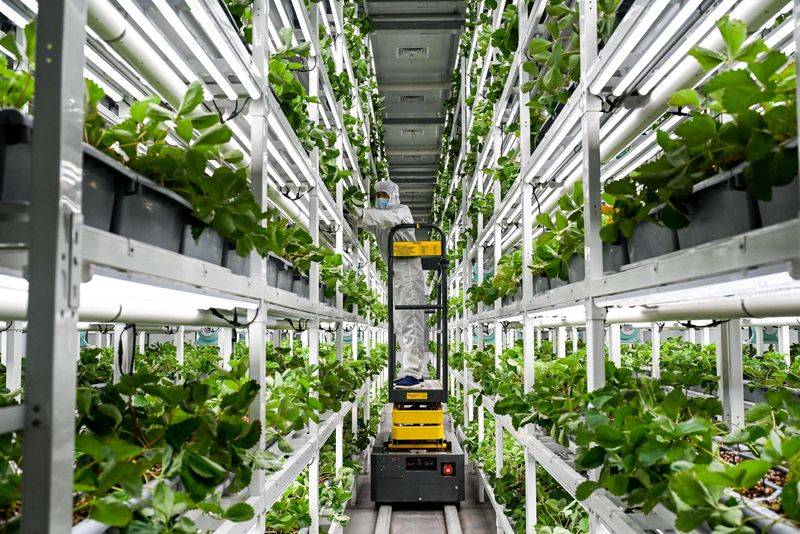
A row of plantations of up to 20 metres is organized, and 16-story vegetables, such as lettuce, kale and chicken cabbage, are being led-lighted and growing in growth boxes of different formulations. Sensors collect growth data in real time and transmit them to intelligent monitoring platforms ..
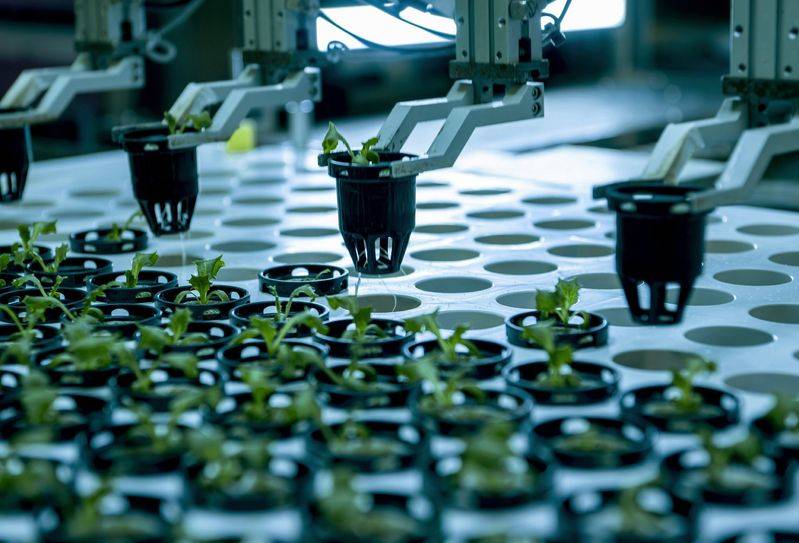
During the winter festival, journalists walked into the country's first million-class sterile automated micromodule plant in shandongu county and saw eight robots travelling freely and in charge of full process management. This plant, which has just completed its full month, is expected to produce 500 kg of vegetables on a post-natal day。
“technology in plant plants can free agricultural cultivation from dependence on the natural environment.” the general manager of the green island wisdom agricultural science and technology company ltd., which operates the green island, tanyu, told the journalists。
Traditional farming, which has continued for thousands of years, is emerging in the form of subversive intelligent plants. It combines pv and biological technologies, represents the future direction of agriculture and is a dynamic development. The data show that by 2024 the number of plant plants in the country had increased to 493。
However, behind the scenes of prosperity, plant plant development is also facing a dilemma — high construction and operation costs, limited plant varieties and insufficient human capacity — which are constraining the development of the industry。
The industry is expanding rapidly
Plant factories first appeared in the 1950s. In 1957, denmark established the world's first plant; in 1960, the united states general electric corporation developed the world's first fully artificial plant。
Our plant plants have been built at a late stage, but they have started at a high and fast pace. In 2009, the institute for environment and sustainable development of the chinese academy of agricultural sciences successfully developed the country's first intelligent pv plant。
Plant plants are experiencing an explosive growth pattern with advances in technologies such as energy-efficient light generation in leds, energy-saving environmental control in photo-temperature coupling, hydroponics, and intelligent management。
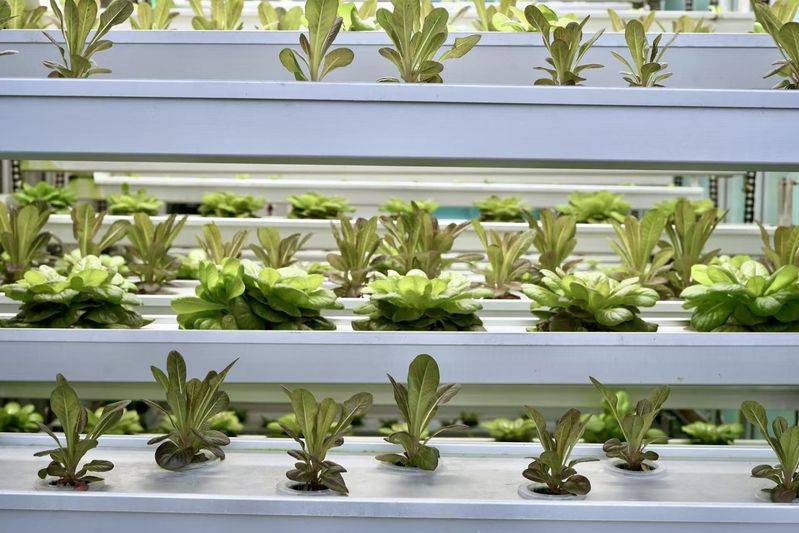
Plant factories are a system for the precise control of the environment through high-tech means and for the systematic, standard and efficient production of agricultural products. With the three core advantages of “space folding” “environmental control” “smart varieties”, plant plants grow high-quality vegetables and vegetables in stereoculture and soilless conditions, breaking the high dependence of traditional agriculture on the natural environment and hopefully bringing agricultural production into an entirely new field。
The vice-president of the faculty of economics and trade of the university of hunan, zhao zhao zibao, described the effectiveness of plant plants in increasing the utilization of land resources as one of the options for entrepreneurs and employees and one of the viable options for urban agriculture
Plant factories are not only an advanced agricultural technology but also a strategic technology reserve. Plant plants can play a key role in providing secure supplies for specific scenarios, such as public events, such as epidemics, or aerospace, oceanic navigation and border defence, with the advantage of being free of space restrictions and stable production。
To further encourage the development of this modern agricultural model, we have successively introduced policy measures to press the “accelerator key” for plant plant construction。
From the national plan for the construction of modern facilities in agriculture (2023-2030) to the opinion on the implementation of the large food perspectives for the construction of a multi-range food supply system, the technical guidelines for photo-environmental technologies for artificial optical plant plant plants, a series of policies have been in place at the national level over the past two years to promote the deployment of plant plants in cities and to harmonize light environmental standards。
The policy led to rapid follow-up, including in the case of kichonru, where documents were issued in support of plant plant development, with a number of manufacturing, platform, biological and even real estate enterprises entering the market。
In the long triangle, where economic development is dynamic, the potential for plant plant product consumption is enormous. Since this year, a number of large plant projects have been linked to shanghai. At present, construction of the white crane strawberry plant project in the qingura region is intensifying and is expected to be operational by the end of this year, while the pudong district is building the largest commercial plant operating in asia。
In addition, plant plants that no longer eat by heaven are rising in jiangsu, fujian, hubei and tibet。
In the south-west, the largest 3d plant for strawberry wisdom has its first fruit season. On 4 november, journalists learned from the plant that 200 kg of fresh strawberries were produced each day and that they entered sichuan chengdu for the first time。
“the production is 30 to 40 times greater than that of traditional strawberries because of the use of super-high-level stereoculture.” the project operator, zhao nakang, head of the production management centre of china farmer's billion agricultural technology co. Ltd., described the plant as a plant that achieves uninterrupted and efficient production of strawberries throughout the year and truly realizes the vision of production to space。
The triple dilemma of development
This year, the academy of agricultural mechanical sciences of sichuan province, which has been conducting research on key technical equipment in plant plants, believes that plant plants, as an advanced form of infrastructure development, are important in improving the efficiency of agricultural production, food security, alleviating the food crisis, achieving high-quality agricultural production and sustainable development。
Despite the wide range of prospects, this area is now generally faced with the “one by one” and “one by one” triple door, which has led to losses for more than 90 per cent of plant plant operators and serious challenges to industry development。
First, plant plant construction and operating costs are “high”. In terms of construction costs, according to statistics, in 2024 we built plant plants on a scale of 2,747 million yuan, at an average construction cost of approximately 5780 yuan/m2. However, in actual construction, the single price of most projects is much higher than that average。
Generally, construction costs cover specialized equipment such as multi-layer planting frames, environmental control systems and nutrient cycling devices, where led light panels are imported at a unit cost of up to several thousand yuan, and smart control systems for software development in millions. In addition, plant renovations are required to meet the requirements of sterile production, and additional facilities such as insulation materials and anti-worm nets have further improved the construction threshold。
Last december, the fourth multi-agricultural science and technology competition was inaugurated in shanghai. Based on the team expenditure for the six break-in finals, a 20-foot container plant was built at a single cost of over $10,000。
Plant plants with an eyeful distribution throughout the country consume about 10 degrees of electricity for the cultivation of 1 kg of lettuce, with a higher operational cost to the total cost. The head of the yelling man (shandong) agricultural technology co. Ltd. Revealed that energy costs such as led plant lighting, air conditioning energy consumption are around 60 per cent, equipment maintenance costs about 10 per cent and nutrients costs about 15 per cent。
“we estimate that the current combined cost of growing 1 kg of raw vegetables through plant plants is around $10, plus the depreciation cost of the equipment, at least $15 per kilogram. The team from the shanghai academy of agricultural sciences plant factory, dr. Wang rainbow, told journalists that plant plants would be more energy-intensive to maintain stable temperatures during the summer heat。
Owing to factors such as high planting costs, lack of technological capacity and insufficient market recognition, plant plants tend to favour growing varieties with high rates of erosion and faster growth, which directly leads to narrow varieties. A reporter survey found that most plant varieties are currently “triple-strengthed”: green leaves and vegetables account for over 60 per cent, medicinal plants for about 20 per cent of the crop, leaving cash crops such as strawberries, and a significant shortage of technical reserves such as fruit and flowers. Industry has described the short growth cycle of leaves and low demand for leds as a “safety card” for enterprises to reduce risk, but this single planting structure is difficult to meet the diversified needs of consumers。
“the development of plant plants in our country requires an indigenous transformation. Shanghai consumers, for example, like ice cream and chicken cuisine." it is the view of zhisheng that plant plants cannot be based solely on modeled vegetable cultivation in order to establish linkages with consumers through varieties。
“we have tried to plant fruits such as tomatoes and peppers, but the costs of energy, such as temperature control and light control, are three times higher than the costs of foliage, with a retail price of at least $30 per pound and limited market acceptance.” liu kotane, head of a plant business in jiangsu, said, "we don't want to take risks either."
“the ability of plant plant cultivation to take advantage of the high degree of environmental control and develop the best quality, colour, nutrition, quality, yield and taste of products is an important direction for the development of high-end facilities.” according to tin xiaotao, a researcher at the centre for research in smart agriculture of the shanghai academy of agricultural sciences, plant plant plant development needs to reduce operational costs such as construction and energy consumption through continuous technological innovation, as well as policy support such as active government leadership and increased subsidies。
The “lowness” of talent and the shortage of professional operators are also key constraints to plant plant development. Typically, a medium plant with an area of 5,000 square metres or more needs to be equipped with environmental engineers, plant physiology specialists, equipment operators, production managers and market handlers, who must have an interdisciplinary knowledge reserve。
“the cross-border demands of plant plants on talent go well beyond traditional agricultural or industrial imagination.” according to the co-founder of ink springs biological co. Ltd. In shanghai, the plant plant operating agency, lin wai fai, the head enterprise is now pushing the “digital twinning” system and the operator has to adjust the control system to the virtual plant growth state in the three-dimensional model, which makes it difficult for traditional agricultural workers to do so。
The more realistic challenge is that the salary expectations of complex talent are at odds with the current level of profitability in the industry。
“experienced agro-networking engineers can get better salaries in the industrial field, and plant factories can only rely on kindness.” lin wei fai said。
Plant factory break-through
In the face of bottlenecks in the development of plant plants, the industry is seeking solutions。
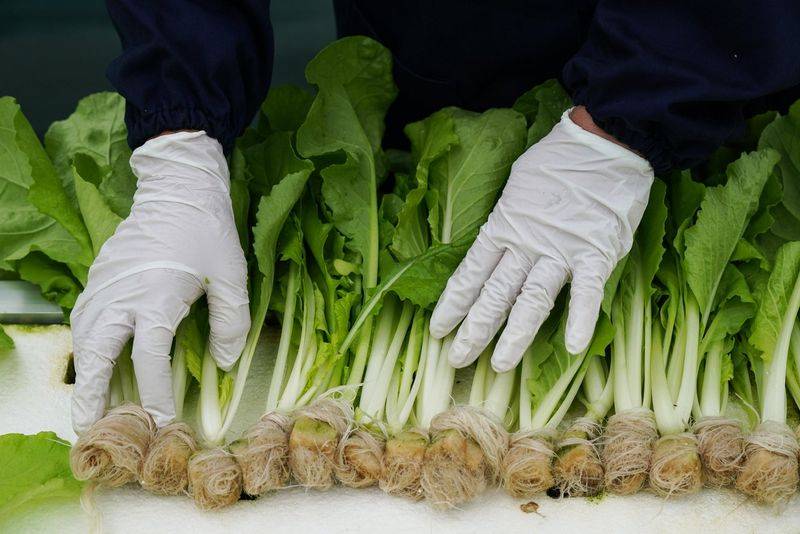
Energy-saving technological innovation is key to reducing costs. On the basis of an in-depth study of plant photobiology, the scientific team of the chinese academy of agricultural sciences proposed the concept of plant “photoforms”, which, depending on the growth characteristics of the different crops, is based on the scientific allocation of different wavelength spectrospectral scales, with 75 crops and more than 1,200 light formulations constructed, achieving precision control of light and currently reducing the amount of electricity required per kilogram of vegetables from more than 10 degrees to 7. 2 degrees。
“our goal in the future is to further reduce light energy consumption to about 4 degrees per kilogram of vegetable power, bringing the cost of vegetable production in vertical plants close to the production cost of the vegetable shed.” the founder of the plant factory in china and chief scientist of the institute of urban agriculture of the chinese academy of agricultural sciences, yang, said。
Photolithic supply is another route of reduction. The “air nursery” in ping valley in beijing and the plant plant plant in the high-tech agricultural industry demonstration area of jiangsu nanjing state have all been set up on the roof, and green electricity has been generated to meet the day-to-day operational needs. High-intensity refuelling by making full use of the low price of electricity at night allows plants to grow up to about 18 per cent of their power savings on a single scale。
In yadong county, tibet autonomous region, a plant with an integrated “all-manual climate” system was built in june this year. As the first modern landless agriculture project in the district, the whole planting process has been managed with a high degree of automation and remoteization. Qin chuhan, chief executive officer of shanghai ink springs biological co. Ltd., in charge of construction, described the fact that during each planting cycle, only one person had to be involved in planting seedlings and harvesting, significantly reducing the operational costs and technology threshold and helping to boost prosperity and industrial revival。
“ botanical plants can develop agricultural production in non-arable land such as sea islands, ships, polar regions, deserts, border posts, and provide an idea for addressing food safety problems in some environmentally poor areas with scarce land resources.” ding xiaotao suggested greater expansion of plant plants in areas where green electricity was difficult to absorb, such as the north-west gobi and the desert. Thus, both affordable electricity can be used and local open-air vegetable cultivation challenges due to inadequate water resources can be addressed。
In addition to reducing costs, plant plants are actively exploring multiple profit models to break the development dilemma。
The production of high-value-added crops is an important means of improving profitability. In a plant plant in the city of guangzhou, anhui province, chinese medicinal seedlings grow in a row of glassware. After four years of selection, this has resulted in the emergence of a system of high-quality melons with stable yield. Liu kai, head of the operating agency, xinhuae agricultural development co. Ltd., said that good breeding could lead to rapid seedling production and large-scale planting and help improve the quality of pharmaceutical products throughout the industry。
The use of plant plant-planting techniques for the production of high-value-added agricultural products can also address pesticide residues in traditional agricultural production while enhancing the profitability of enterprises。
“to constantly break the technological bottlenecks in plant plants and explore the cultivation of dual-use plants such as western cucumbers, sunflowers, gingers, gold-coins, etc. To increase value added.” in qinghai, xinjiang, etc., the vice-president of the faculty of horticulture of nanjing university of agriculture suggested that the cultivation of relatively low-required pastures for light, temperature and humidity could also be explored to boost livestock development。
Technology exports and service exports are new profitable directions for plant plants. In may this year, a strategic cooperation agreement was signed between the 4d ecotechnologies (hangzhou) ltd. And a saudi enterprise, which will jointly develop plant plants in saudi arabia and the middle east. Dr. Escar eirati, assistant researcher, food science and engineering, jiangnan university, suggested that the head plant could attract social resources for the successful implementation of the new project through a model of industrial cooperation in the new plant in which it was built。
In order to address the shortage of talent, the integration of teaching and learning has become an important path to the development of talent in plant factories. At present, there are more than 30 institutions of higher education in the field of agricultural science and engineering in our facilities, but the interdisciplinary integration is generally inadequate to effectively develop the composite talent required in the field of plant factories。
“the construction of plant plants must also play a major role in the innovation of technology-based enterprises, strengthening in-depth cooperation with universities and scientific institutions and accelerating the translation of scientific and technological achievements into real productivity.” xu jie, director of the science and technology department of the shanghai rural agricultural commission。
“the establishment of a `plant plant talent service' to encourage highly skilled people to enter the plant for flexible services.” dr. Sun dewey, vice professor and vice professor of tourism and cooking at the technical institute of the tinless commercial profession, said to the journalists that a “master skills workshop for plant factories” could be built on the basis of the head of a business to build a platform for better enabling plant plant development。
Zhao chunjiang, a member of the chinese engineering institute and director of the national centre for research and research on information technology for agricultural engineering, has pointed out that the new generation of information technologies, such as artificial intelligence, big data and cloud computing, is the country's innovative direction in promoting horticultural equipment for intellectual facilities。
How can we build an intelligent, digitally enabled plant plant? Yang recommended that artificial intelligence optimize planting technology programmes, improve management practices and achieve efficient synergy control with hardware equipment through technological means such as intelligence perception, data analysis and automated control. The deputy director of the shanghai agricultural rural council party, shamin lin, is of the view that the development of flexible agricultural robots, the creation of production plants, and the production of greenhouses such as eggplants and leaves and vegetables, will lead to intellectual decision-making and control。
“modern agricultural development has so far been inextricably linked to artificial intelligence, optical, architectural, energy science, mechanical manufacturing, etc.”. According to ha dong xian, a professor at the chinese university of agriculture and a scientist in the national chinese pharmaceutical system, plant plants are no longer a single discipline, but rather a cutting-edge frontier that requires the cooperation of a wide range of researchers. “it is only by working together that we can contribute to the sustainable development of agriculture in our country and the world at large!” he dong xian said。
The journalist's handprint saw the future of agriculture
Li hu
Ai is upgrading plant plants to “automated vertical farms”。
In recent days, patent technology developed jointly by the shanghai city academy of agricultural sciences and the shanghai university of transport has officially landed in the modelling applications of strawberry plants。
Traditional ai models, when guiding strawberry cultivation, often have problems with “fantasia”, such as miscalculation of growth temperature, false recommendation of fertilization ratios, etc., causing economic losses to growers. And this new technology put ai's illusion in a cage。
Ai collides with agriculture, offering unlimited possibilities。
This year, the fifth multi-agricultural science and technology competition has been held. At present, four teams in the final stage of the competition have entered the test planting phase, and they are prominent in terms of control over science and technology agriculture, artificial light-planting, ai applications and ecological seedlings. For example, the berry cube team, led by shanghai transport university, has developed an intelligent planting system that can create digital models based on the growth properties of strawberries that automatically and in real time regulate the conditions of light, temperature and humidity in plant plants, so as to achieve an “altitude pre-temperature rehearsal with realistic results”。
Ai technology has also gradually permeated various links in plant plants, becoming a key variable for downside efficiency. In the area of environmental control, ai algorithms adjust equipment parameters dynamically with vegetable growth models by collecting data in real time; in the field of pest and disease early warning, ai combines with machine visual technology to scan the leaves by high-resolution probes on a daily basis and detect anomalies three to five days in advance of manual inspections。
In the future, the in-depth application of ai technology will further break through the constraints on which traditional agricultural experience depends and play a unique role in addressing food security, urban emergency protection and the expansion of planting boundaries. Plant factories will be an important complement to future agriculture for densely populated and cropped cities。