A key step in the process of learning the gold basil fjording technique of chinmei 9
Li xiaoyan
Chinmei no. 9 was selected by guangxi science and technology co. Ltd. In collaboration with the guangxi autonomous academy of agricultural sciences for the guangxi autonomous region as a gold fragrance, rich in juice, high sweetness, low acidity and a good taste for fresh food, which is highly favoured by a wide range of consumers and growers and is economically efficient. In 2021, chinmei no. 9 golden hyena was introduced from guangxi chin state and planted in a fenced manner. In 2023, the area under gold hyena cultivation was 10 hm 2, with a production of 2,112 t, or an average of 667 m2 production of 1,410 kg, or 15,000 yuan. After many years of planting practice, we have discovered the technique of intensive cultivation of the golden basil fence no. 9, as described below。
1 general description of seeding
Quoted species are found in the natural village of the chencheng village, new bridge town, xinping city, where vegetation is intact, water is abundant, transport is accessible, electricity is provided, no factories, mines and other sources of pollution; altitude, 300 m, average annual precipitation of 1,500 mm, average annual temperature of 18. 9 °c, average monthly temperature of 27. 5 °c, average january temperature of 10. 5 °c, no frost of 270 °c, year-round duration of 1,936 h; flat terrain, easy drainage, sandy soil, deep soil, high organic content, around 5. 5 ph, natural conditions are superior。
2. Characteristics of chinmei 9
2. 1 morphological characteristics
The roots are flesh root and the principal roots are not visible; the permanent green vines, the green tuber, and the mid-air of the tuber, have continuous growth characteristics; the same plant has a variety of types of blades, such as heart form, palm fractures, palm fractures, palm fractures, most of them with palms, smooth leaves, and deep green; and the breaths are covered with swabs, leaf sprouts and buds, with a little purple red on the rolls, with an area of 1-2 cups of small glands in the base of the leaf, without hair。
2. 2 results practice
The flowers are gender-specific, with a diameter of 5-7 cm and a length of 3 blades, 5 slices, 5 per cent of perfunctory, 3 columns; petal cape, light green in the base, purple in the centre, white in the top; and open at around 1 p. M., with long flowering, pollination, high rate of fruiting, mostly in spring and autumn. The maturity of the fruit is associated with the flowering period, with the short maturity of the flower at the beginning of spring and summer (60 ~ 70 d) and the good quality of the flower at the end of autumn, the long maturity of the fruit (around 110 d) and the difficulty of colouring at low temperatures and poor quality。
2. 3 fruits
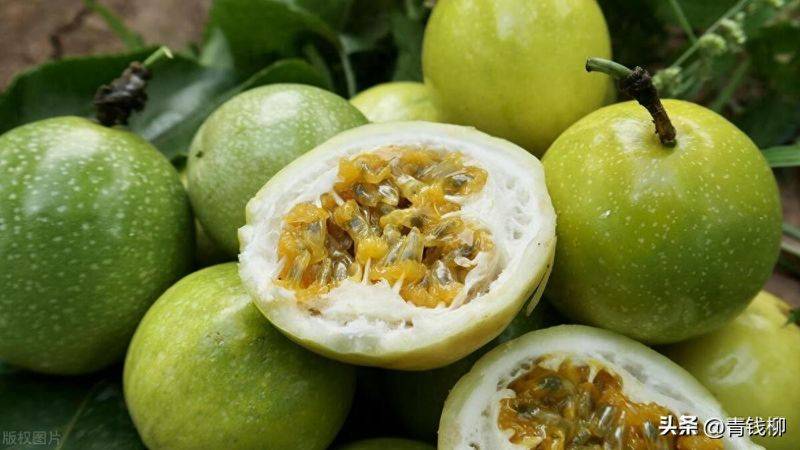
Fruits are berries, long circles, with an average single fruit mass of about 90 g; young fruit is green, ripe fruit is yellow, skin is finely symmetrical, waxy, radiant, about 0. 5 cm thick; and baglets are white, fruit yellow or orange yellow, sticky, fruit fine, crystal-cut, with a light honey smell and no acid。
2. 4 advantages and disadvantages of varieties
2. 4. 1 advantages
Ginmee 9 is a pure sweet species (green or sweet), with a soluble solid content of more than 20 per cent and ready to be harvested when it is seven years old and suitable for fresh food; high temperature tolerance, with normal flowering and sit-in under 35°c conditions; a high rate of self-plowing and densely planted and well-managed orchard with a production of more than 1250 kg per 667 m2; and a durable storage of fruit at constant temperatures of more than 10 d or more, suitable for long-distance transport and electrical distribution。
2. 4. 2 disadvantages
The first batch of fruit is large, the latter ones are small, the flats are growing a large number of broods, and when water fertilizers are insufficient, they produce medium fruit; the skin is slightly light, soft, the shape of the fruit is irregular and commercial; and there is a high risk of anthrax infection, especially in the light of successive hot weather events, which seriously affects the quality of the fruit。
3 fence-based intensive planting techniques
3. 1 park selection
Access to transport, open to the sun, deep in the earth, perturbation and fertility, above 50 cm in the ground water table, soil ph of 5. 5 ~ 6. 5 and drainage-friendly flats or slopes of less than 15° are established for the cultivation of protected plots of water, droughts and slabs. The accumulation of water in the fields tends to lead to root and root causes of decomposition, which in turn leads to the eutrophication or death of young children。
3. 2 fertilization of whole areas
Pre-winter ploughing is carried out by machine at a rate of 1,000 kg per 667 m2 of decomposed organic fertilizer, 50 kg of compound fertilizer, 50 kg of lime, 50 kg of albino plaster for base fertilisation, even tillage, 120 to 150 cm wide, 50 cm high, with a tortoid-shaped back, and a twilight-covered black film. The whole garden is tilled by the digging of drains according to the terrain, so as to make sure that the drains can be drained and drained。
3. 3 plantation
At the end of december — early february of the previous year, home-grown or purchased seedlings were transferred to 14-16 cm in diameter for intensive maintenance. Nutrient soil is made up of a mixture of specially designed fertilizers, organic fertilizers and yellow border soil. Fertilizer is applied to promote the rapid growth of seedlings, while real-time monitoring of temperature and humidity in the sheds with regard to ventilation, drainage and heating. In mid-march, the temperature rose and was set at 80 cm or so。
3. 4 fence-building
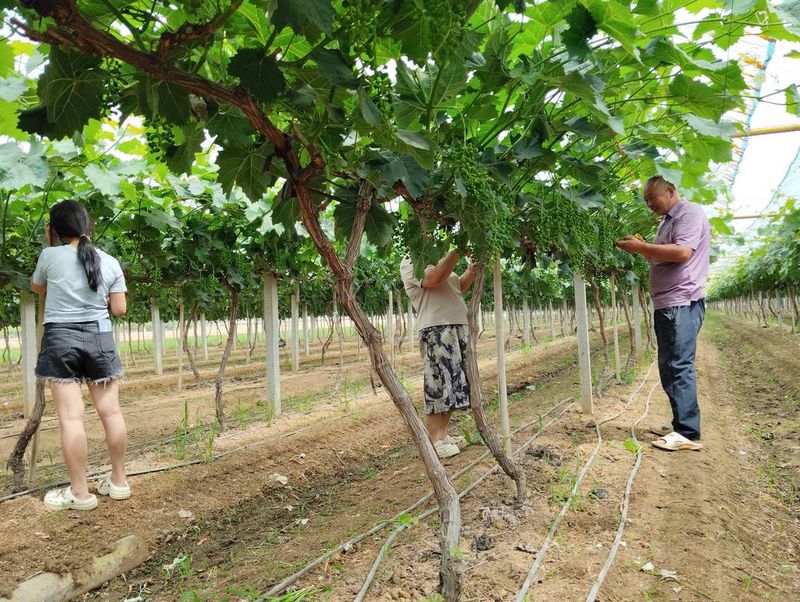
A fence is constructed to bind two plastic steel lines horizontally, with a pole and a wiring line in each of the columns. (1) pillars: a pole with a staff of 3 m. The pole is 2. 6 m long, inserted 60 cm into the soil and exposed to the ground 2 m. (2) wires: two plastic steel wires horizontally bound on each pole, 1. 1 m and 1. 8 m, respectively, from the ground, one can be used as a “pivot” to feed the sprawl, and the other can bind each pole together to make the fence stronger. The lighting of the fences has helped to increase the sarcasticity of fruit and skin, increase the sweetness and hardness and reduce the incidence of diseases such as tubular decomposition and anthrax。
3. 5 properly shrouded
A one-year planting system is in place. In order to increase the amount of flowers at the beginning of spring and summer and the amount of fruit before the onset of summer heat, it is advisable to employ a dense planting model of 1. 5 m x 1. 6 m, i. E. 280 plants per 667 m 2. The plant length x width x depths of 50 cm x 50 cm x 50 cm is applied to 20 kg of decomposed organic fertilizer and 0. 5 kg of phosphorus fat for base fat in each den, so that the fertilizer is even with the soil. When planted, the seedlings are properly cut off from the leaves, the nutritional bags are removed, the nutrients are kept intact, the seedlings are placed in the caves lightly, the roots are avoided and the roots are 5-10 cm above the ground. When planted, the root water will be watered in a timely manner and covered with straw or film to keep the temperature warm, while the chickens will be packed and the rods will be inserted and the trees will be secured。
3. 6 leverage whole chicken branch
The whole branch is made of chickens and 12 branches of the 2nd floor. When the hinmei 9 sprout is planted in the field, it is timely to insert a pole to draw the chicken on the shelf, and to bind the main chicken with a string to the pole to guide it up, so that it is not too tight to affect the growth of the latter. Plants are grown up to 1. 8 m in length, and when they reach a topline, they are capped to promote first-stage chicken growth; and second-stage chicken growth is promoted when they grow up to around 75 cm. The first-stage chicken leaves 12 branches, each of which is planted with 6 branches (3 each of the top and bottom lines) and the remainder is removed; the second-stage chicken is naturally hanging and growing, and leaves three to five fruit peaks after flowering to ensure that the nutrients are concentrated in the production of fruit. The main chicken leaves flowers and sits fruit in favour of high-quality fruit and promotes early marketing of fruit and fruit。
Several years of experiments have found that broccoli leaves do not affect plant growth and yield, which is associated with the habit of growing side-flowering, side-effects and side-growth. Temperatures are appropriate, and the fragrances can bloom uninterrupted throughout the year。
3. 7 fertilizer water management
(1) promotion of fattening. After planting 15 d, 1 kg per 667 m2 of high nitrogen multi-element compound fertilizer (400 kg) and 1 after 12-15 d to boost strength. (2) fertilizer. In the first half of the month of flowering (after the upper shelf), 150 kg of high-phosphate potassium-based compound fertilizer per 667 m 2 was distributed to promote fruit growth and increase the number of hanging fruit. When the plant rises on the shelf, it enters the flowering season and is subject to increased potassium fertilizer and less nitrogen fertilizer in order to prevent the plant from being planted for long periods of madness and delay. (3) fat and fat. The application of potassium phosphate fertilizer is dominated by flowering fruit, with 1 application per 15-20 d, with attention to the addition of trace elements such as calcium and magnesium. In the event of a drought, the fertilizer is passed on to the water. Chinmei no. 9 is humid and afraid of drought, but water should be accumulated so that drought and flooding can occur. Water should be kept humid during the critical period of water demand during the onset of new growth, the lumbering period and the rapid expansion of fruits。
3. 8 pest management
The main causes of the gold clot 9 are tubular decomposition, viral disease, disease, anthrax, brunette, etc. Optimum use of disease-free trees, increased application of organic and phosphorus fattening to enhance tree position; soil humidity to prevent water from being accumulated in the field; avoidance of co-planting with melon and eggplant vegetables; and garden cleaning to prevent disease. The golden fragrance pest no. 9 of chinmei consists mainly of the fly, the horse and the turtle. Pest control is dominated by agricultural control, the creation of a good orchard environment, the preservation of the ecological diversity of orchards, the covering of the membranes or the use of grass-breeding techniques; the use of inductions for small fly use; and other pest control measures, such as the use of green fungus, carpenters, sticky boards, etc。
3. 9 collection
Precipice fruit grown in the spring will bloom in june and harvest in august. Cinmee 9 changed from green to light green, with its hand pressed by the umbilical cord, and could be harvested when it felt softened. The harvest will be light and light at the time of the harvest, which will reduce the mechanical damage, be graded, packaged and transported after the harvest, and avoid squeezing during transport。