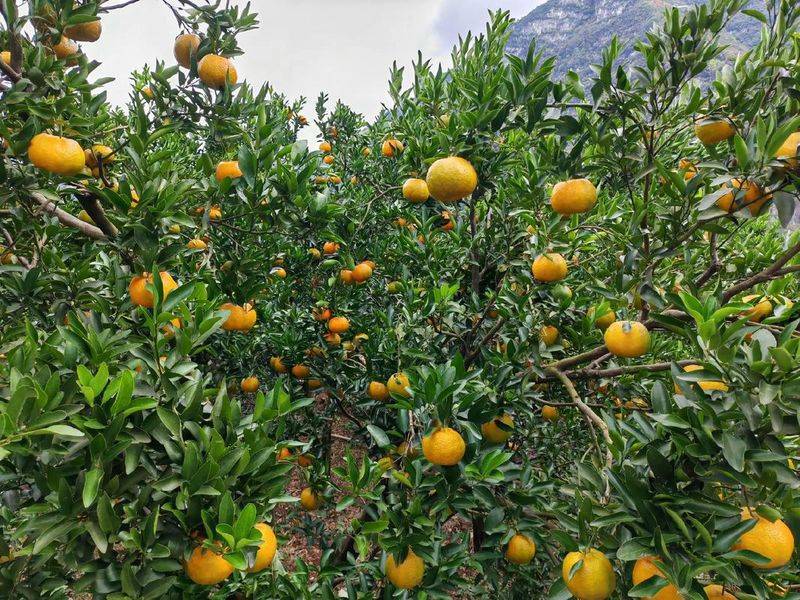
Cultivation was introduced from the early 1970s, and a more sophisticated set of high-quality techniques for the management of citrus cultivation was developed by drawing on years of practical experience in production and combining modern science and technology。
I. Standardized parks
(i) parks choose neutral or acidic soils at the time of construction, with deep, fertile, organic and permeable soil; orchards can be drained and drained and easily accessible; ecology is good and high quality quail is produced。
(ii) parks are retrofitted on slopes below 25°c of the plantation, with slow slope cultivation; slopes above 25°c, slopes are regraded and the soil is retrofitted, bringing the improved soil to more than 0. 5 m, approximately 3,000 kg per acre of orange poles, human and animal dung, and slag, to cover sank and plan planting。
(iii) standardized cultivation
1. Cultivation density. Take rare planting, 55 plants per acre, 4 m in row and 3m in range。
2. Varieties selection. The evenings were dominated by firelessness, mark doo, the rock creeks, the newborns no. 3, wmekot, and the earlys by the lovers of 38。
3. Time of planting. In the autumn and spring, in the months of september-october and march-april, the plant was replanted。
4. Plantation methods. Sets the line on a plant density and sets the distance; cuts the damaged roots and excess leaves before planting, and cuts the main roots short; and plants the seedlings and then presses them to form a pile of earth, leaving the roots of the seedlings approximately 10-15 cm above the ground, so that they can be watered in time. After planting, water is poured every 5-7 days depending on weather conditions to prevent drought and ensure survival。
Ii. Cultivation management
(i) reasonable trim
1 the cut time is usually done after the winter harvest, or after the spring has become more sophisticated。
2. The method of triming is mainly large branches (opening the skylight), which are too large, and part of the branch is cut off and the number of branches is 3-5; it is complemented by short cut-off, trimmed, heart-picking, pull-off, scratching, retrenchment, germishing, stinging and stalking, twisting and sequestering in order to form the best tree shape of natural happiness. The main branches of the branches, the small branches, the small branches, the small branches, and the obvious relations. 1 bud control. There is a need for more summer trees for young trees to expand their canopy as quickly as possible. In the case of productive trees, summerfalls are usually wiped out; in the case of trees with a weak size or with too little trunk, early summerfalls are duly preserved, and the middle and late summerfalls are completely erased. At the end of july, early autumns were concentrated; after the end of august, sporadic late autumns were to be erased to prevent sub-leasing moths. 2 retreats. In the case of long branches and old trees, a short cut of the main branch is used to reduce the height of the plant and to stimulate new branches, which will have a strong effect. The general piping plant is kept within 3 metres of height to facilitate management. 3 shears. The branches are too dense to be cut off from the base of the branches, the branches, the branches or the side branches, to enhance the nutrient supply and light conditions of the remaining branches, and to improve the outcome rate and quality。
(ii) scientific fertilization。
1. Young trees apply fertilizing, thinning and mainly nitrogen fertilizer, with phosphorus and potassium fertilizer. The previous three years had been dominated by nitrogen fertilizer, with an appropriate increase in phosphorus and potassium rates. 1 - 3 years of single-year urea urea application in a tree with a child, 100 g - 300 g (0. 5 kg - 1. 5 kg urea), pure nitrogen, phosphorus and potassium ratio approximately 1: (0. 3 - 0. 5): 0. 5. One year after planting, fertilized 1 - 2 times a month from march to september, 5 kg-10 kg (0. 5% urea added in spring, summer and autumn periods) of manure at 20% concentration per plant. The number of fertilizations in two to four years of life fell to four to five, and in february, may, july, september and november the concentration of manure increased to 50 to 70 per cent. Fertilization increases with age. One year before delivery, no more nitrogen and potassium phosphorus. In combination with the prevention of pests and pests, extra weights are recovered once - twice before the sprouts are cut to fresh ground。
Fertilizers for adult trees: generally medium fertilized orchards, at 100 kg per fruit produced, equivalent to fertilizer application: 2 kg of urea - 2. 5 kg, 8 kg of calcium perphosphate and 2 kg of potassium sulfate. Or the total annual application of fertilizers is calculated on the basis of the application of about 2kg of high-quality farm fertilizer per 1kg fruit. Two to four times during the year. Supplementation of trace elements with leaf spray or soil application. Three fertilization programmes throughout the year: urea 0. 2 kg, calcium perphosphate 1. 6-1. 8kg, potassium sulfate 0. 18kg, late february-early march. In mid-july, steady (strength) fruit and fertilizer: urea 0. 4-0. 6 kg, calcium perphosphate 1. 4kg, potassium sulphate 0. 45kg and above 3kg in oil. October - early november fruit fertilizer (basic fertilizer): urea 0. 2-0. 4kg, calcium perphosphate 0. 8-1. 0kg, potassium sulphate 0. 27kg. Follow organic fertilizer. Two fertilization programmes throughout the year: urea = 0. 5 kg + phosphorus = 0. 5 kg + potassium sulphate = 0. 75 kg + dead 3-5kg oil, ditch applied at the beginning of july; urea = 0. 5 kg + phosphorous ammonium + 50 kg farm fat, ditch applied at the end of the harvest. Weak trees can be given another boost in may-june. In spring and autumn springs, where appropriate, long-term foliage pursuits take place. In the case of soil deficiency, exterior fattening or soil supplementation can be carried out for the lack of elements (e. G. Iron, magnesium, zinc, etc.) and causes of the larvae。
(iii) water management. (1) at spring break in march, at the end of july, when the withdrawal is concentrated, and after the harvest of the fruit, maintain sufficient water (in combination with fertilization and timely water injection). (2) in case of drought, water should be poured in time. (3) fewer water is required during the maturity of the fruit and the split of the bud, and proper drought and management of the water contribute to the improvement of the quality of the fruit, the enhancement of resistance and the promotion of the separation of the bud。
(iv) reasonable agitation. The fruit is divided into a number of stages, the first of which is: after the second physiological fallout, the disease, the deformity and the part of the incisive fruit; the second: in the middle of july, in combination with a ruble, the insect fruit and the incisive fruit; and the third: in late august - early september, the incisive fruit. The average leaf fruit ratio is 60-70:1 is more appropriate, and yields per acre are best controlled at around 6,000 pounds。
Iii. Integrated pest management techniques based on green prevention and control techniques
(i) protecting the use of natural enemies

1. Prohibition of the use of highly toxic, highly residual pesticides and the selection of biological agents and new, efficient, low-toxic and low-residual agents。
2. Improving prevention and treatment methods and spray techniques. Harm to natural enemies can be reduced by the use of root application, tree-dry coatings and inner-sortent agents, etc.; the application of drugs to avoid the peak of the occurrence of natural enemies; the use of single-choice methods to the extent possible; and the application of selective, efficient, low-toxic, low-residency new agents。
3. Orange garden grass cultivation. Cultivation of “honey source” plants or “bridge” crops, such as white leaves, suma, mussels, weeds, beans, etc., in or around orchards, enhances the biodiversity of orchards, attracts predators to breed, fully exploits the harmful effects of natural predators and improves the soil and improves its fertility。
(ii) physical fitness training, a reasonable clean-up. After the harvest in november-december, the hazardous branches of insects such as larvae and powder lice were cut off, as well as the weak and dry branches that were over-depressed, and the leaves, weeds and pests were removed from the ground, so that the tree body was well-ventilated, robust and less infested. 2. Centralization. Spraying of the leaves for fatting to speed up the curing of the spring and autumn and to mitigate the effects of aphids, mites and submersible moths。
(iii) physical control uses a wide range of physical methods, such as seduction, light induction, sexual induction and insect treatment, to combat pests and to promote the use of cedars, vermin lamps, sexual baits and dictums. The cauldron is about 20 per acre, the vermin lamps are about 40-60 per acre, the dictums are one-two per acre, and the sexual bait is painted on the cedars。
(iv) scientific medicine
1. Periodic monitoring of insects, strict use of agents in accordance with prevention indicators, and minimization of the frequency and area of application. Period of chemical control or indicator for major pest control table targets, recommended agents and concentrations of biocontrol, agricultural control or care oranges one/leaf - two/leaves before the acetal octopus (coloured spider) and five/leaf - six/autumn winter pyrotechnic sulfur amalgam of 3-5% pyrometria (khorta) 2500-3000 times 1 45% csi 200-300 times 1 1. 8% avm 4,000-5,000 times 15% 95 per cent of carbine emulsion 100-200 times 5 per cent of dicofone (nesorone) by 2000 times one bouquet and release of dictum by nitride. The flower bud period is disabled from 45 days before the second physiological fallout and maturity. Rusty wall lice are generally prone to outbreaks in the dry years of july-september. One head/leaf in front of the orange octopus (the four yellow spiders) and two head/view/view on the rear of the three / rusty loice leaves or on the fruit, where the victim was found in the back of the spring leaf; and one fruit found in the orchard. The aphids have an aphid rate of around 25 per cent and are sprayed once. Three per cent of the aphids are 200 to 3,000 times more than 95 per cent more oil emulsants than 100 to 200 times more than they are used to trim and trim the bees, and to treat them with the introduction of ladybugs, grasshoppers and parasitic bees. The first dose was administered at an early age in the first 10 per cent of the autumn leaves of the female insects in the winter, and around january after the first flower, and a further 25 per cent of the fenthion 600-1,000 times the pine resin of the second generation of severe orchards was administered during the second generation of larvae, a 95 per cent dose of 95 per cent of the accelerant emulsion of 50-200 times the 1,000-500 times the 24 per cent increase in the vermin of 100-500 (and a good red-yellow spider) prior to the arrival of the first generation of female insects, the release of nuclear insects such as the japanese aceles and the northern red-spot lip worm. The aqualone is not effective for adults. Red wax wax during the mid-to-september poaching period and summer season the first drug was administered 10-25 days after the first sight of a young child in the spring branch, and sprayed 2-3 mm in the diameter of the maggots at intervals of about 15 days, with severe spraying once more when the larvae enters the soil before the larvae. Fifty per cent of octhion 500-800 times more than the evening spray or 80 per cent more than 1,000 times the dichlorvos cream; removal of the victim's buds for the first application at depth, with both the ground and the tree crown spray; and second ground spray. For the most part, green teeth of 0. 5 - 2 cm are sprayed at intervals of 7 - 10 days. 10% aphids 1500-2500 times one time 18% aphrodisiacs 600 times three% aphrodisiacs 1,500-2500 times one time 20% cyanide 2500-3000 times 20% aphrodisiacs 1,500-3000 times one time with the exception of summer and autumn seasons, which are too early and too late to be properly pumped, fat water control allows for a smoother and smoother distribution of fresh hair to facilitate application. Insects are manually captured, eggs removed or larvae larvae eliminated during oxen and larvae 80 per cent of the diarrhea-5-10 vermin acupuncture or pediatric cavity. Scabies are freshly sprouts up to 2 mm long and 2/3-year-olds. 10-15 days to spray again. Spray protection is required in areas with an autumn outbreak. 80 per cent of the zinc zinc-600 times one time, 70 per cent of the methyl sulphate 1000-500 times one time, 50 per cent of the msf 500-100 times one time, 14 per cent of the chromium copper 300-500 times one 0. 5 per cent of the chromium copper one time, 77 per cent of the hydroxide copper humid powder 400-600 times 30 per cent of the wang copper 600-800 times one autumn rinsing tree drying. Anthrax springs, summer seasons and near-maturity of fruit require spraying. Around 15-20 days, 30-45 days after three or four consecutive black spots. An annual thioperate smear of 70 per cent of the methyl sulphate, or 50 per cent of the polysulphine, occurs at intervals of approximately 15 days, with 58 per cent of the redomir dry, 200 times the disease-plating selection-resistant logs, with attention to ventilation and drainage. Scratch before coating to the wood section or later. In addition to the response time shown in the table, the challenge can be addressed at other times。
2. Prioritize the use of plant sources, microbiological sources and insect growth regulators, with limited and reasonable use of mineral source pesticides (sulphur, copper formulations)。
3. Limited use of partially efficient, low-toxic and low-residual chemical pesticides for pest control. The choice, number of uses, method of use and safety interval shall be performed as required by gb8321 and gb4285 and only once a year for each pesticide。
Strictly enforce national and provincial regulations prohibiting the use of highly toxic, highly residual pesticides and their combinations。
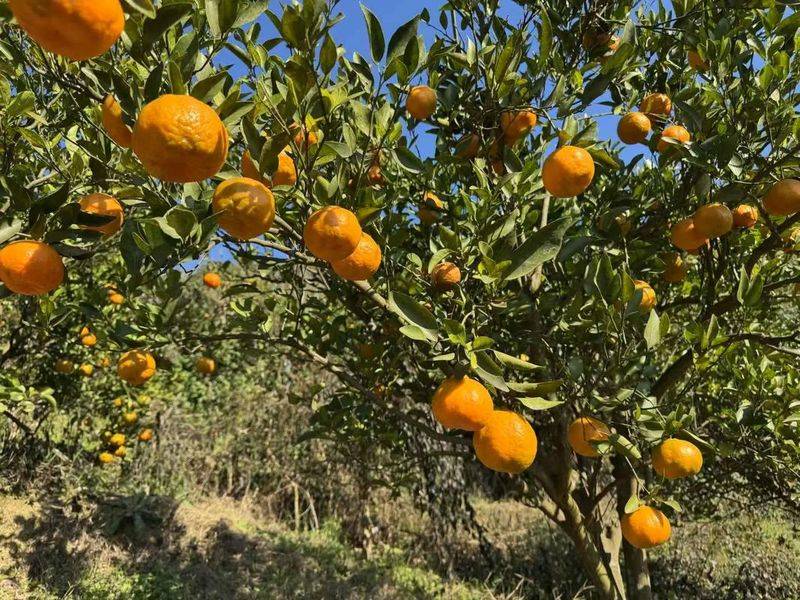
5. Strictly enforce safety intervals to ensure that pesticide residues do not exceed the standard when citrus fruits are collected and sold。
Iv. Save the trees
1. Park and plant selection. The selection of orchard requires a higher level of management, preferably a backwinded southside orchard; the fruit tree is robust, resulting in more than four to five years, with a single fruit yield of about 30 kg and approximately 2,000 kg per acre; and the severely infested and weak orchards are not suitable for storage。
2. Fertilizer management. An orchard that leaves a tree will be followed up one or two times, once in front of the membranes and once after the harvest. Each of the pre-repeated rembrandts is applied to high-quality multiple-composite fertilizers of 1-1. 5 kg + phosphorous ammonium 0. 5-kg + 30-50-kg farm fats, with red thorium in mid-november and thiram in mid-october. One week after the harvest, the pre-flower fertilisation is pursued according to the tree and restored as soon as possible。
3. Pest control. It is important that the disease and pests be thoroughly combated. The fungicides use 500 times the amount of mimeamine, 600 times the amount of muscular m-45 or densen manganese zinc; the more hazardous orchards of the mites are combined with carbicides, the melting of the mites 200-250 times the amount of fluid, 25 per cent with a risk of 4,000 times the amount of fluid, and 73 per cent with acetate 2,500-3,000 times the amount of fluid。
4 the growth control agent is the fruit. Pre-dural combinations to combat pests and pests, equilibrate 2-4d20-30ppm (2-3/100kg) to reduce winter fallout。
5. The tree canopy. After thorough pest control of orchards, in mid-november, before the onset of winter frost and low temperatures, the tree canopy was completed, preferably with 3-4 filaments。
6. Soil moisture management. In the latter part of the tree-painted orchard, the soil is maintained with a suitable humidity, and in the months of december to february of the following year, the winter is characterized by a severe drought, with timely water filling to avoid the loss of water from the tree, which exacerbates the fallout。
7. Collection in due time. In accordance with market conditions, the harvest period for the scavengers is suitable from mid-january to mid-february, depending on the actual conditions in the orchards, and the collection of scavengers can be delayed until early march. The fruit is collected in a timely manner。