I've been growing food for more than a decade, and i've found a common problem in 2025: it's good power, it's good seeds, but it's hard to get the fruit. Traditional practices are becoming more and more demanding, especially in climate-changing years. But don't worry, before 2026, we can double production by three field-tested techniques. I didn't blow it. It's backed up by data。
Skill 1: precisely control the water and avoid the pit of “watery”
Many people think it's always right to grow more vegetables, but it's the most wasteful way i've ever seen. According to a field experiment conducted by the north-west university of agroforestry and technology in 2023, rationally controlled water energy increases by 23 per cent during tomato growth. The operation is to water during the tomato outcome by “dry and wet alternation” - white on the surface of the soil and dry when 2 cm in the finger。
Recommendations:
Cucumbers and cucumbers control water before flowering, contributing to deep roots。
As a result, soil moisture is maintained at 60-70 per cent (hand-stamping without dripping)。
The use of dripping or rooting to avoid wet leaf spraying and to reduce the incidence of disease。
I have tried it myself: a 15-square-square-square dish with 30 litres of water per day and a 15 per cent tomato cleavage rate. The conversion to dry and wet rotation reduced the rate to 3 per cent and increased the number of single results from 8 to 13。
Skills 2: artificially assisted pollination, not all by bees
Many people thought that the fruit would come naturally, but a 2024 data from the chinese academy of agricultural sciences showed that, as a result of climate change, the activity of pollinating insects, such as bees, had declined, and that the rate of natural condensation of pumpkins, bees, and bitter melons was only 40 to 50 per cent in open-air cultivation. After artificially assisted pollination, more than 80 per cent can be mentioned。
Recommendations:
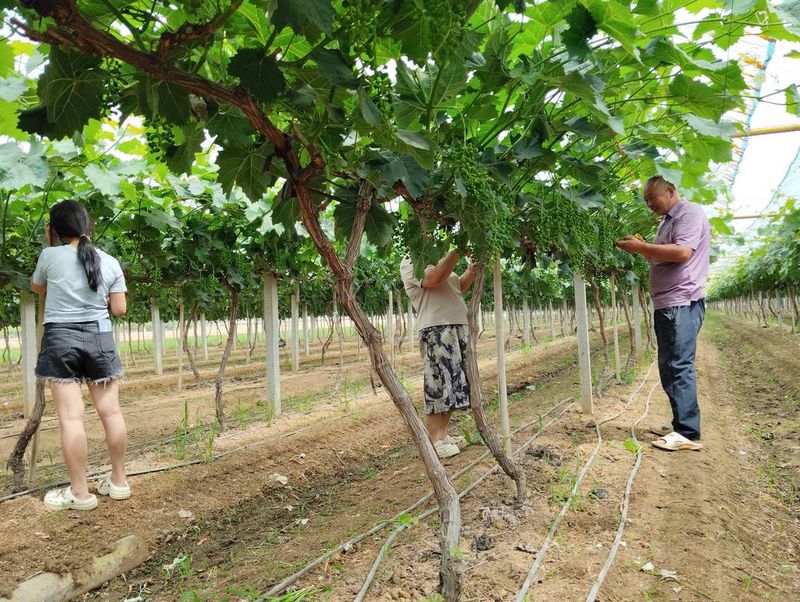
The pollen is the most dynamic at 6-9 in the morning. For pumpkins and silkmelons, find a male flower and lightly rub the pollen on the female head. Female characteristics: there's a melon below the flower。
Each male can pollute 2-3 females. In the case of bitter melons, the pollen on the male flower is brushed directly and then touched by the female。
If the planting space is small, assisted pollination can be carried out for three consecutive days, ensuring that every female is cared for。
My neighbor wang planted winter melons last year and started to rely only on natural pollination, half of them yellow. He then took 15 minutes to pollinate manually in the morning, resulting in an increase in the harvest from 8 to 21, and an increase of more than 30 per cent in single fruit weight。
Skill three: scientific trimmed to avoid "swipe for nutrition"
It's a misunderstanding to think that the more the leaves work, the greater the cooperation. An experiment at the beijing city agricultural technology extension station in 2025 showed a 35 per cent increase in the average production of single strains, following a rational wholeing of tomatoes. The truth is simple: extra leaves consume nutrients and lead to small, mature fruits。
Recommendations:
Tomatoes: a single-bard whole branch is used, with only the main tubing retained, and the side branch is removed in a timely manner when it reaches about 5 cm. As a result, the lower leaves, the sick leaves, were removed and ventilated。
Cucumbers: the following branches of section 10 of the chicken are kept and the branches of section 10 or more are left to the top, so that the nutrients are concentrated in the supply of fruit。
Watermelon: the main chicken can hit the top when it grows to 20 leaves, promoting the result. Two or three chickens per tree, and one melon per chicken。
My cousin planted cucumbers last year, and at first she didn't want to cut them. Later, the lower leaves and the extra side branches were cut off with the utmost care, and seven days later the number of new babies increased significantly, the harvest period was extended by two weeks and total production increased by nearly 50 per cent。
These three techniques, which i myself tested repeatedly in practice from 2024 to 2025 — do not spend too much extra money, do not use sophisticated equipment, but rather spend a little more effort on water control, pollination and cutting. 2026 will start soon. You might as well try. If you have your own experience, you are welcome to share it in the comment area。