Substance, not 3d, texture, probably never heard of it. You really don't have to be intimidated by its label as a "professional texture tool" and look at the big, but it's not that original。
To put it white, it's a software specializing in drawing texture and making materials for 3d models, which, in short, is “dressing” for 3d models, such as painting woodlines, metal senses, wear marks, which are more elaborate and realistic than other software. It can be done with 3d classes, materials for models, game modelling, video effects, product design。
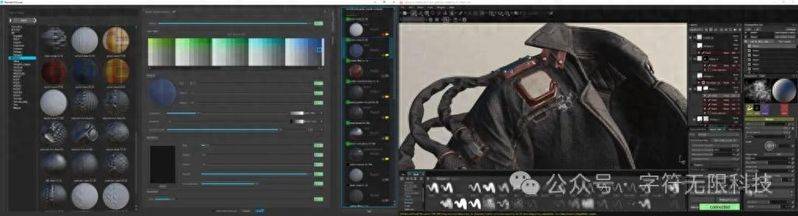
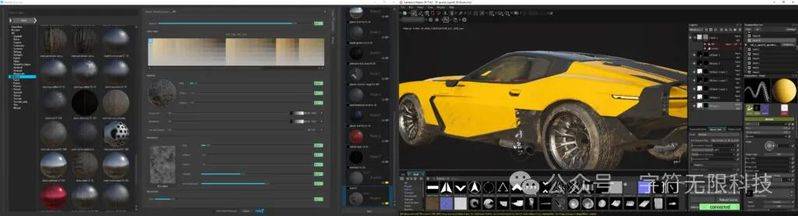
In recent days, adobe has introduced heavy upgrades to the substance 3d ecology, without the redundancies of a glitch, with clear core objectives, lowering the technology threshold and allowing creativity to accelerate from ideas to the landing of finished products。
Whether you produce programmable materials, digitize graphic materials, or move assets between multiple tools, this update is aimed at streamlining work processes and giving creators more sophisticated manipulation at key points。
From substance 3d designer to substance 3d sampler to achieve faster and more manageable material production, to zbrush to substance 3d painter to add a single-key workflow, the whole of this update is being upgraded in the direction of interconnection with the pipe and the direction of the artist。
Substance 3d designer 16: enhancing programmable creative control
The recent release of substance 3d designer 16 makes shape creation more flexible, iterative, and results easier to optimize。
One of the key highlights is the new sharpe splatter v2. This is an important evolution of one of the strongest nodes in designer, which allows users to spread the 3d shapes that are tracked by light with greater precision。
It is now possible to control the shape, direction and scaling of each instance, to introduce more natural random changes, and to use atlas input (atlas inputs) to spread wider shape types from a single source。
As a result, complex and fine surfaces can be constructed more directly without reliance on alternative methods, thus concentrating on optimizing the accuracy of the material。
In addition, this new version of designer expands the sdf node (sign distance field) tool set and introduces a series of new nodes to create and manipulate 3d shape data. This allows you to construct, group and iterative shapes directly in the nodes, opening new avenues for programming modelling within designer。
Other practical features that enhance the workflow, such as direct control of height and curve segmentation in a 3d view, further simplify the day-to-day tasks and help you achieve faster iterativeity with fewer interruptions。
Substance 3d full support for openpbr standards
Substance 3d now supports openpbr materials. Openpbr in designer 16 helps to ensure that your materials are consistent between different tools and rendering machines. Updated material models, templates and colourers make it easier to create assets that can be successfully integrated into modern pipelines。
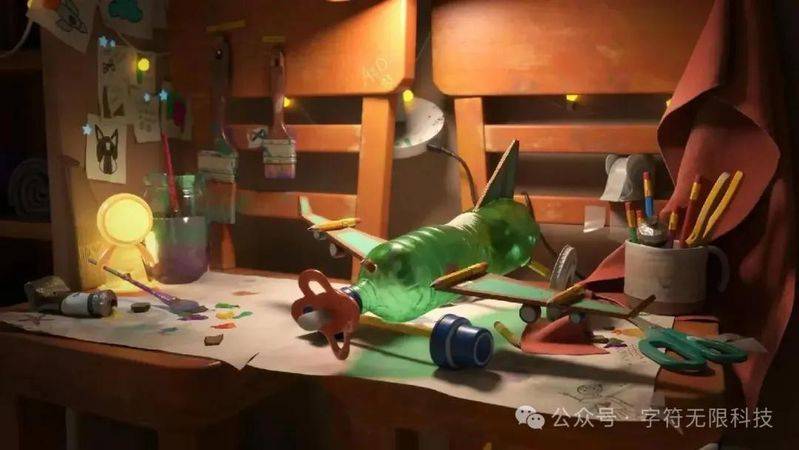
Openpbr has also been integrated into substance 3d painter 12. 1. 0 beta, enabling early users to introduce these materials into the texture drawing phase of their work processes。
The substance 3d team has a good view of openpbr's potential for application in 3d workflows, and is now in github with a high quality, easy-to-hand and production-validation programme to help bring the industry's ecology to the ground。
Substance 3d sammler 6: material production faster, more visual
Substance 3d sammler 6 focus material creation and digitalization of scenes have improved efficiency, while making material eventually more manageable and predictable in the overall pipeline。
The software is now fully adapted to the openpbr unified material model, which can be reused across tools at a time of production to reduce repeated debugging and to maintain uniformity of effects from appearance definition to final rendering。
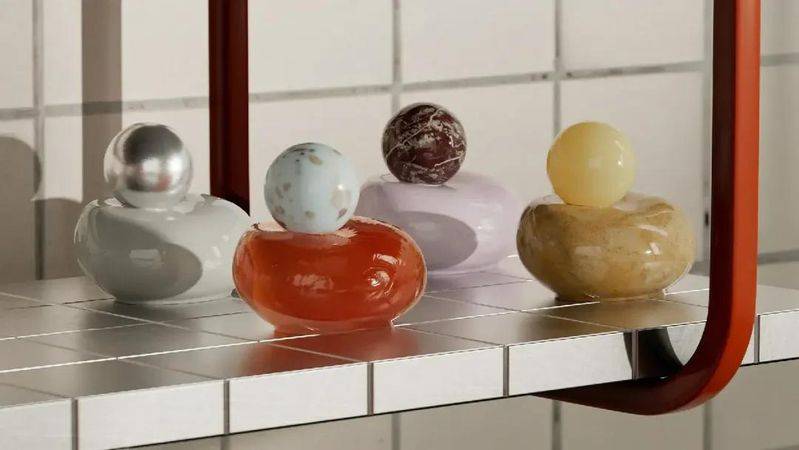
New specialized material templates, such as wool, coating and subsurface scattering, need not be built from a zero, based on a ready-to-do template to quickly build complex physical-grade materials that match creative styles with minor adjustments as needed, resulting in significant savings in production time。
The flow of materials collected has also been optimized, in particular by enhancing the suitability of hp z captis equipment:
Support the detection of areas of automatic interest in intelligence, optimization of focus and light intelligence, more efficient collection processes, clearer and more stable image of the finished product and reduced manual fine-tuning costs。
The overall update has been effective in reducing lead times and simplifying technological steps to focus on high-quality materials that can be used directly for production。
Zbrush linking painter: sculpture to texture seamlessly flow
In march this year, substance 3d painter12 and 12. 1 beta versions introduced major workflows, baking, and openpbr updates - including the warp to geometry function for cleaner projectors, the optimization of layers, the roll-out of automatic uvs for hard surface grids, and more intelligent baking tools (e. G. Tilt mapping and auto-re baking workflow)。
Continuous progress is also reflected in the introduction of more closely linked workflows between industry standard applications. With the help of zbrush 2026. 2. 0 and substance 3d painter 12. 2, the conversion from carving to texture maps can now be completed in one step。
The new send to workflow allows a single click to transfer the grid directly from zbrush to painter and saves the manual export and processing of files。
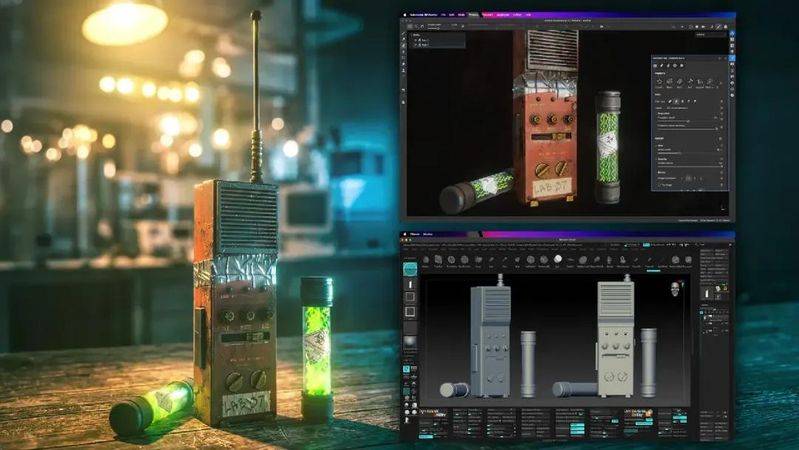
Once the engraving is completed, the texture is immediately made, and the rhythm of the creation is not interrupted; the tools are smoother, the exact details are optimized and the integrity of the asset is quickly given a sense of quality and life。
Zbrush and painter have long been widely used in the fields of games, video and vfx, animation and product design, and this deep connection further strengthens the usual working links of artists and achieves a seamless interface between high-precision carving and physical texture production。
Whether designer, sampler, or painter, the update is built around three cores:
Whether you're producing programmable materials, digitalizing landscape materials, or completing a full process of creation from carving to texture in a common 3d tool, a new version of substance 3d can bring more efficient and smoother production experiences。