In order to select a good seed, before seeding, one or two days in the sun, the fields where beans are grown must be farmed early to increase the ground. In order to be reasonably dense, the principle of a lean, thin, thinly soaked soil shall be applied to the application of bottom fertilized soil for the period 20 april to 5 may. Field management, timely harvesting, choice of seed。
I. Morphological characteristics of beans
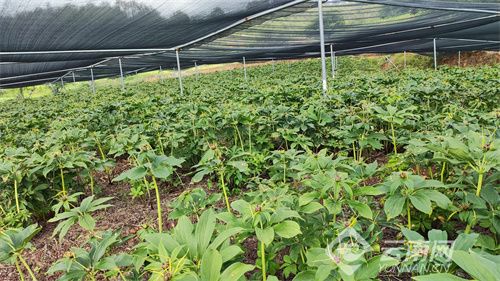
White beans are a year-old herbivores, which belong to the soybeans. Roots are developed, deep, drought-resistant. Roast chickens, growing and growing, with strong branching and a length of more than 4 metres. The leaves are green and produce each other's fruits, the shape of the heart, and the leaves are not soiled. The flowers are butterflies, total bouquets, seed kidneys, 1,000 grains weighing 800-1500 grams。
Ii. Bean type
The bean types are white and black. The seeds of white flowers are white grains, known as white beans, and the seeds of red flowers are large spots and spots of purple bottom black, known as large black beans and flowers。
Iii. Enhancing conditions
Temperatures: the beans are cold, avoid high temperatures, are frozen below 5°c, and the frozen ground parts die. Growth requires a frosting period of more than 120 days, with the most suitable budding temperature of 20-25°c and a suitable growth temperature of 18-20°c, 30°c or 15°c, which is difficult to pollinate。
2. Lights: pollination with different flowers, short-lived crops, like plenty of sunlight. The shorter the daylight, the more the sunlight, the earlier the beans bloom, the curds and the maturity. On the contrary, the sun is long, the sun is not bright enough, the beans are flowering, the croquettes are growing, the mature time is longer, the leaves are long and the flowers cannot bloom。
3 water: during the whole-childbirth period, beans require more than even water, and the flowering season is the most water-intensive period, that is, the critical period for water. The lack of water at this time has a significant impact on yields。
Iv. Enhancing technology for bean
1. Selection of good species: good species are key to improving the production, quality and value of beans, mainly white beans and soybeans, in areas above 2,000 metres above sea level. Particle selection should be made prior to seeding, with seeds that are large, full, full, full, luminous, disease-free and damaged. Before seeding, one or two days of sun sunbaths are promoted, so as to prevent early spring and low-temperature seeding from decomposition。
Ii. Precisely: the fields where beans are grown need to be farmed early to increase their capacity. In the first instance, deep soil, medium fertility, low groundwater table, good drainage, ventilated yang, relatively high organic content acidic or micro-acid soil cultivation is selected. Foot bottom fertilisation, 1,500-2000 ml per acre per farmer and 25 ml per acre of compound fertilisation before seeding, with no exposure to seeds for phosphate. Farming should be managed in a manner that preserves the monopoly of deep tillage, opening trenches, ponds and plantings during the day's seizure, thereby reducing the evaporation of water。
3. Scrolling in due course: white beans should not be repeated, growing year after year with maize or potatoes. The best sowing period for beans is from 20 april to 5 may, i. E. From rain to summer. Plantation using liquid tides, deep-seated ponds, maintaining soil moisture, ensuring a full seedling, planting depths of 10-15 cm and covering soil of about 6 cm。
4. Rationalally dense planting: bean bean cultivation, citrus fear of wetting, cultivation to improve the temperature of the ground, drainage and moisture, and soil transparency. The pure bean is held at a range of 2. 0-2. 5 feet, with a pool of 2000-2500 ponds, with an acreage of 5-6 kg and 3-4 grains per pool. The plant specifications for upper and lower fields are 90 cm x 50 cm, for upper and lower fields, 1,600 - 1800 cm and 90 cm x 40 cm. The acreage is generally 8-10 kg and the pure species are generally sowed in single ponds. The principle of rational insinuation should be understood in the light of the thinness of the soil. The use of land power is fertile to achieve high yields by planting the advantage, and the use of group advantage to increase production。
5. Field management:
(1) saplings between seedlings: the seedlings are carried out in the form of 2 to 3 leafs, leaving seedlings and removing weak, deformed seedlings as required. Each pond leaves 2-3 seedlings。
(2) pre-proliferation management: immediate weeding, earth-breeding, swirling, plugging, which contributes to the enrichment of ventilated luminous radium and improves the quality of products。
(3) accompanying in a timely manner, adjusting the plant: insert a stubble when the seed is 30 cm tall, introduce a chicken pole, insert bamboo or wooden stubs in each pool for a length of about 2 m or more, prevent wind damage, insert instability at a time and insert after rain。
(4) top crumbs: many bean-side branches, thick leaves, congested with each other, which affect the ventilation of light, and many flowers, should be ploughed appropriately. Oranges are expensive, but they are very small, and in order for nutrients to concentrate on the flowers, the bouquets of the front end of the bouquets are opened early to fatten the seed. The white bean is not mature after august. At this point, the removal of the top of the main side of the plant leaves the plant in the form of a plume of bush, lowers its height, increases the number of flowering corsets and concentrates its nutrients on results and matures ahead of time。
(5) prevention and treatment of diseases: mainly white powder, charcoal mackerel and foliage, prevention and treatment using bordeaux, quartiles, etc。
(6) pest control: mainly tigers, jumps, rolls, and soybeans. Tigers can be manually captured in agricultural operations such as cropland and seeding, and other pests can be treated with plant-based pesticides such as pyrethroids。
6. Timely harvest: it takes more than a month to mature and harvest. Sooner or later, it's inconsistent. In addition, if the bean is not harvested in time after the rainy season has matured, they can easily deteriorate or blacken the bean skin, affecting commodity prices. Therefore, the harvests should be divided and the bean bean bean placed in the shade dry. Don't be exposed to the sun. The first time you've sold it. In this way, seed grains are well coloured and enriched and can be effective in raising commodity levels。
7. Choice of seed retention: it is said that “seeds are selected every year with high yields”. The individual production of single bean is very different, so an early, productive single collection is chosen in the field. Criteria for selection: one is the abundance of maggots, especially the concentration of lower maggots, and the second is the abundance of average particles per magma, which, on the basis of the stock selection, can be re-elected and of better quality。