Hey, everybody! I'm a zhiqiu who brings you up to date every day, but every piece of it is a real piece of dry stuff that you think it's useful for life
After entering the month of june, a number of farmers had collected wheat, oil and vegetables, and the ground had been empty, with the first thought of growing soybeans on the ground. In the minds of older generations, the sooner the crops mature, the better the harvest. But for so many years, too many old people have stepped on the pits of early seeding, and sooner or later the soybeans have fallen down, and the seedlings have looked at them all, and the problems continue as the flowers rise. Either the saping period is chronically hot, the soybeans are soaring up, and the light is sore that they do not bloom; or the flowering period falls into continuous rain, the flower is sore, the whole bean is sore that it can't hold up a few bean bean bean bean bean bean beams, the grains of beans can't go up and down, the grains of beans can't go up and down, the six months of work, and the production of an acre cannot reach three or four hundred pounds, and the amount of seed fertilizer can barely yield。
For more than 20 years, i worked with the surrounding growers to plant the soybeans in my home, to experience early and late crop cuts, and to learn from the lessons of the late planting of the trees. It took years of field observation at the grass-roots agricultural extension stations to find out that the june soybeans could neither catch up early nor delay too late. Today, the best planting times for the soybeans in june, underground seeding, water fertilizer control, pest control kits are described in detail, all the quantities used, time spent, and operational steps are measured from the ground down, and the small area of the open garden is grown, and even the large fields are sowed directly。
First, let's start with bottom causes: the sooner the soybeans are planted in june, the easier it is to lose production
Most farmers are aware of the pre-downing nature of the climate in june, while neglecting the unique characteristics of june, so that the core causes of early planting and reduction can be explained in terms of temperature, light, pests and diseases, and understand the principles so that the fields do not work on the basis of old experience。
First, the temperature rises rapidly in the first half of june, with many areas stabilizing at above 32 degrees celsius in the daytime, and the high temperature and long-sunset environment will continue to stimulate the rise of the slit. The soybeans are short-sun-ray crops, which, in short, are not transformed into reproductive growth until the sun-light period has become shorter, and they begin to breed buds. The seeding is too early, and the whole period of the seeding is in a very high-temperature state of long-sunning heat, with the planting of long leaves with one heart, the full supply of straws, the disruption of the sprouts, and the subsequent reduction of flowers, which farmers often call crazy。
Second, the early soybeans blooming period coincided with three volts in mid-july, during which the year was characterized by high temperatures and intense rainfall, with the fields being wet and hot. High temperatures exceed 35 degrees celsius, soybeans pollen activity is rapidly declining, with no normal pollination after flowering, and large numbers of flowers are falling; successive heavy rains can cause the fields to strangulate, the root systems to suffer from absorption nutrients, the already stymied beans to fall off, and reduced yields are set。
Thirdly, seeding is ahead of schedule, and soybeans overlap at a high level throughout their life and during their high onset in the field. The soybeans planted in the first half of june coincided with soybeans, soybeans, soybeans, soybeans, aphids, aphids, gnawing leaves, scavengers, and it was difficult for farmers to keep the soybeans completely, even if they were drugged frequently, to increase their investment in intangibles, and production continued to suffer。
Of course, it is not desirable to sow late, to wait until the end of late june, to cool down early, to have insufficient soybean sour time, to grow soybean grains, and to grow soybean, so that in the summer of june the soybeans have only a short, short-lived golden planting window to sow in the middle of time, with perfect staggering of the adverse spots of high-temperation and disease outbreaks。
Part i: precise targeting of the june sowing window for soybeans and detailed date of planting
The 10-day window period, which is a sound time period validated by decades of field measurements, is the central focus of the article, taking into account the perennial meteorological information on the main area of the sea and the data from the summer soybean experiments conducted by the grassroots agricultural technology promotion centre。
Optimistic timing
In the main wheat-producing area of the huaihai plateau, priority is given to planting from june 10th to june 16th at the end of the harvest; in the hills and hills, the seeding was delayed until june 15th to 20th; and in the low-lying floodlands, which are prone to water accumulation, they are stuck as far as possible in the second half of the window period, avoiding the run-off of the previous may rainy season。
By the way, seeding before june 10 is considered to be part of the early-broadcasting programme, which is not recommended for large areas, but is available to be used in an urgent manner, with only a small sample of seeding and management。
Clean up and the next steps
As a first step, after the wheat harvest, the straw is crushed back to the field, the length of the straw is contained within three centimeters, the length of the straw is too long for empty seeds, water is difficult to sow, each acre is distributed into a thousand pounds of fat for a decomposition farmer, there is no farm fat for a piece of land, 30 pounds of nitrous phosphorus is applied to each acre, and the surface is spread evenly。
In the second step, the tillage is kept at a depth of 20 centimetres, breaking the bottom of the plough, flattening the floor, making the best planting, 40 centimetres away, 15 centimetres higher, and facilitating drainage and flood control in the late rainy season。
In the third step, priority is given to the selection of seeds and the next species, with the final summer soybean soybean varieties, the removal of the granules and the seed of worms, and the on-demand mode, with two seeds in each den, 15 centimetres from each acre, six kilograms per acre; the sown plot, with eight pounds per acre, with three centimeters of perch of perch of perch of perch of soil, with heavy soil overwhelming and light-skinned。
In the fourth step, after the planting has been completed, the soil is not saturated with enough soil, which is ploughed with little water, depending on whether the ground surface is wet or not, and the supporting seeds suck out the water。
Attention
1. The aridity of the soil after the harvest of wheat, the absence of heavy water for dilation, the vulnerability of large waters to the formation of the lower soil and the difficulty of plastering soybean embryos
2. Suspended planting in consecutive rainy weather, until the field surface is untached, so as to avoid the planting of seeds in moist soil
3. The preservation of old varieties of soybean is as low as possible, the old varieties are less temperature-resistant and the problem of high temperature and longness is more acute than that of officially validated varieties。
Practical issues addressed
Precision window seeding avoids pre-dating long-day photos and staggers high-temperature pollination periods, significantly reduces the probability of falling flowers, and staggers the outbreak of concentrated pests, circumventing most of the production risk from seed sources。
It's true
The same plot was tested three times in contrast, with the 8th of june, the 8th of the morning broadcast, the 15th of june, the 15th of june, and the 22nd of june, with 410 of the late planting, and the visualization of the data reflects the advantage of the window of planting, so that normal farm management in the farm can stabilize the harvest。
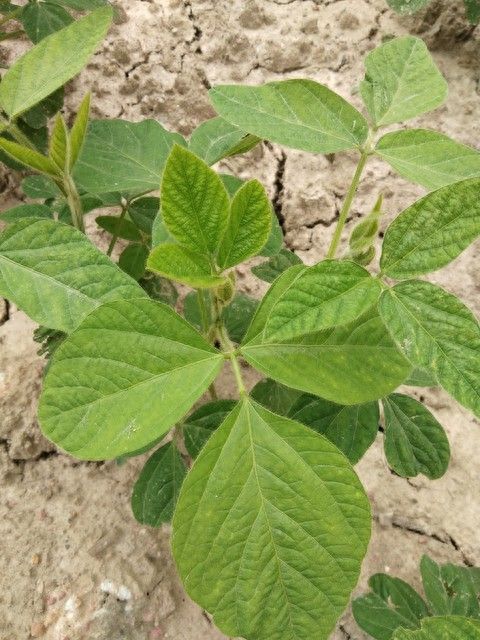
Part ii: control of the field, control of the rooting and eradication of pre-surgent madness
Following the soybeans, the most likely mistake for farmers is blind pursuit of fattening seedlings, abundant high-temperature water in june, and easy re-emergence, with the focus on management of the seeding season being controlled and strong。
Optimistic timing
The soybeans have entered the critical management phase of the seeding period after they have grown three leaves, approximately 20 days after planting。
Steps in the field management of dry water fertilizers
First, water fertilization control, during which seedlings are not followed up by fatting and little water irrigation unless the plot is extremely dry, three centimetres of the soil surface is dry enough to provide a small amount of water along the edge, and the amount of single-irrigated water per acre is contained within two cubicles; the plot is too infertile, leaves are yellow and thin, eight kilograms per acre of potassium sulphate are replenished, and nitrogen fertilizer, such as urea, is eliminated。
Second, weeding, artificial or small-scale farming machines, with shallow pine and four centimetres deep, can both remove weeds from the fields to avoid fattening, and break the slabs of the soil, improve the air permeability of the soil and promote deep-seated roots。
Thirdly, saplings, the production of dense plots, artificial saplings at a height of 10 centimetres, the removal of weak and ill seedlings, the retention of strong plants, which eventually leave between 8,000 and 10,000 plants per acre, the planting of cold and cold in the fields, and the accumulation of later diseases。
Attention
1. The application of urea throughout the field is strictly forbidden during the seeding period, and even if the seedling is seen to be weak, it cannot be filled blindly
2. No water, no earth, no water at high temperatures after noon, and high temperature water can cause injury to fine roots。
Practical issues addressed
Controlling the unbridled rise of seedlings has led to the development of deep-seated roots, the planting of strong strains, increased resilience at the end of the period, a well-divisive environment, and a reduction in the probability of empty trees from seeding。
It's true
It regulates the management of plots, which are small and small, and whose roots are so dense that the number of flowers rose by about 30 per cent in comparison with those that allow for the management of water fertilizers。
Part iii: fertilization during flowering seasons, replacement of demand-based foliage, is key to increasing production
The flowering of soybeans into the porcelain stage is a critical period for the conversion of nutrients as well as for the entire period of long-term demand for fattening, a step that directly results in a large number of flowers falling, which is the top priority in determining the number of monoliths。
Optimistic timing
Ten per cent of the plants in the field during the initial soybean season produce small flowers, which are the best nodes for the pursuit of fatting。
Practising fertilizer ratio and watering steps
1. Following the fertilizer ratio, each acre was used for twenty-five pounds of potassium sulphate with calcium phosphate, with three centimetres of shallow ditches on the side of the lid to fatten it, so as to cover the ground so that the manure was not exposed to the obscurity; the leaves showed a large area of yellow-deplete plots, 30 pounds of water to be used for potassium dihydrophosphate was 50 grams, the entire leaf was sprayed at intervals of ten days and again, with a maximum of two leaf-faced fertilizers being sprayed over the whole life。
2. Water-watering norms, which maintain a water content of about 60 per cent of the vagrant soil, slow water in the form of white water in the ground and a severe ban on the flooding of large water; and in the event of continuous rainfall, the first time the drainage ditch around the field is removed quickly。
Attention
1. The use of urea is still banned during flowering seasons, and excessive nitrogen fertilizer continues to cause over-nutrition and nutrients are taken from the buds
2. Do not water the night after evening, and at night the fields become more humid and prone to foliage。
Practical issues addressed
(c) supplementing the phosphorus nutrients needed to plant a flowered acupuncture, consolidating the buds to reduce the abnormal fall, increasing the soybean sting rate and helping to fill the post-splendium grains with slurry。
It's true
There has been a marked increase in the number of active monolithiums in the rational pursuit of fattening plots, a decline in the percentage of poachers, and a steady increase in the weight of 100 grains at a later stage, an increase of 100 pounds or less in the production of unfailing plots。
V. Part iv: green prevention and control of common soybeans in the summer of june, and early prevention is better than cure
In high-temperature hot and wet summer soybeans, pests and weeds are invisible birth-reducing killers, following the principle of prevention, with the three categories of pests, diseases and weed being detached in one place and without the use of drugs。
1. Major pests of soybeans: aphids, soybeans, dysentery bug
Optimal operational timing: the prime flowering period to the embryo stage, i. E. Between 45 and 60 days after seeding。
Practical steps: pests have been detected sporadically in the field, artificially removed from the vermin branches; a series of pests have taken place, with the use of low-toxac agent, with a focus on spraying the back of the blades, on the side of the argon, and after 9:00 a. M. Or 4 p. M., to avoid the rapid evaporation of the high-temperative fluids and to reduce its efficacy。
Attention: stop spraying for soybeans for food security 20 days before harvest。
Problem solved: the pests are prevented from eating flowers, and the soybeans are decayed, and the number of active bean bean bean bean bean bean bean bean bean beams is preserved。
Common diseases: soybeans, root causes
Optimal operational timing: prevention in the field before the onset of high-humid conditions after rain。
Practical steps: root disease is concentrated on drainage and flood prevention, followed by a pine thawing after the rain, with a small number of strains being removed directly from the field; early leaves are removed from the disease and sprays are sprayed throughout the field in conjunction with the conventional compliance agent, once for seven days and twice。
Attention: elimination of water accumulation in the fields is the most cost-effective way to prevent and control root disease。
3. Field weed management
Best operational timing: around the soybean sprouts。
Practical steps: manual weed removal from small areas of vegetable gardens, soybean-specific closed herbicides selected by daejeon, water matching strictly in accordance with the instructions, directed spraying of weeds between herbs and avoiding the diversion of pharmacological fluids to burn young soybeans。
Attention: the high temperature does not spray herbicide at noon and is prone to yellow leaf。
The whole effect
The incidence of pre-control plots has decreased by more than 70 per cent, the weeds are not fattening and the nutrients are fully fed to soybean growth, significantly reducing the loss of production due to the insect weeds。
Vi. Part v: equipment and complete management of pumps in maturity fields, plumbing of slurry, lifting of 1,000 grains
Many farmers relax their management after the soybeans have been soaked, leaves fall early, beans are not sour enough, seed grains have a small impact on yields, and the management of the drum season is equally indignant。
Optimal operational timing: bean-forming drums first 20 days before harvest。
The first is the aridity of the soil, the maintenance of the soil with a small amount of water, and the lack of water, which results in the planting of premature decaying leaves; the second is the small amount of yellow leaves that can be removed from the bottom of the field, the presence of sick leaves, the retention of all robust leaves, which are the source of seed sulfur for the nutrient supply; and the third is the elimination of the entry of livestock from the field to gnawing on branches。
Caution: no more fertilizer in maturity and no more second-generation plants。
Addressing practical problems: slowing the aging of leaves, extending the nutrient manufacturing cycle, fully saturated pea grains and reducing the amount of pellets。
(b) practical effects: the regulation of the management of the abundance of seed grains, a significant decline in the percentage of granules, better sales of beans and higher purchase prices。
Vii. Comprehensive exchange of complete + community
Summary
1. In the summer of june, the soybeans were not seeded early, and the golden window period was locked between june 10 and 20, with a slight increase in planting time in warm areas and a reduction in production from source to source
2. Control of nitrogen fattening, shallow weeding, rational seedlings, control of rooting systems and avoidance of mad and empty trees
3. In the initial flower period, emphasis will be placed on phosphate fattening, timely drainage of water on demand and protection of herbs
4. Early prevention of pests and weeds, with a focus on larvae pests and pre-maturbation。
Farmer's flashcard
In june, the beans were planted in the morning
(b) nitrogen inoculation during seed seasons and potassium in flower seasons
After the rain, water is drained against the worm grass, and porcelain drums yield high yields。
Interactive topics
What number did you plant the soybeans in june? Have you ever seen a case where the seeding is too early to reduce production? There are also practical soybean field management tips in hand and an exchange of views in the comment area would be welcome。