Old farmers who have grown soybeans know the old saying: “the beans receive three, seven, and are planted throughout the year”。
Many farmers grow soybeans and experience a headache every year: the saplings grow in green oil, are particularly dynamic, and look at the glamorous, but at the end of the season, there are lots of empty, chums, and few soybeans, and their final production has been severely compromised, and they have been working for six months。
In recent years, many people have heard that soybeans are soaring at night, delaying the planting. However, some of the plots are actually sorely sown at the end of the day, while others are sore at the end of the day as to reduce production, fall back and fall。
Let's be honest with you today! Soybeans are very productive, and the selection is only the basis for planting time, not the key to increasing production. No high-yield soybeans can be grown at night alone. If soybeans are to be soaked, soybeans are to be soaked, they must be accompanied by three gold-management techniques, all of which have been found by old farmers for years
First to correct the biggest errors of farmers: soybeans don't go up late. Production
First of all, we're going to get you all to the bottom of the story, and we're going to get you out of this。
Many agricultural promotions in previous years had said that soybeans were properly broadcast late and could reduce the number of people growing and the amount of debris, which was correct in its own right, but with strict applicable conditions, not all regions, all plots and all varieties were suitable for late broadcasting。
Our farmers are most likely to make mistakes: no matter what their soil, temperature, variety, they die and spread late and miss the best planting window。
The ills of early soybeans are obvious: low temperatures, low temperatures, slow and poorly grown seedlings, prone to decaying roots, sickness, pre-water fattening, wild long vines, with no flowers, no leaves, no ventilated mid-term and late-term ventilation, and severe falling flowers。
But the danger of too late is even greater:
First, planting is too late, soybean growth cycles are condensed, few branches are divided, flowers are blooming late, and the amount of soybean is directly reduced
(b) second, high temperatures in the later stages, insufficient light, insufficient soybean slurries, and a large number of plumes and small peas
Thirdly, late soybean soybean roots are shallow and weak, rainy seasons and windy weather are highly volatile and slow to die。
The principle of genuine scientific sowing: planting at the right time, adapted to local conditions。
This provides farmers with seeding fine-tuning techniques for different plots, and builds on field experience: well-soiled, sandy land is not well-preserving, insatiable and cold, with as much as possible two to three days of early transmission at normal times to ensure long-term sufficiency; low-lying low-lying soils are very wet, low-temperature, prone to scavenging roots, and can sow two to three days at an appropriate time, until the soil is scattered and replanted, so that the seed becomes stronger。
The best soybean seeding time in the main area of the hwang huai sea is mid-june to late june; north-east spring soybeans pass 10°c at temperature stability in mid-may。
Simplicity: it's more important to sow it sooner or later than to broadcast it blindly. Choosing the seeding time and accompanying management will allow soybeans to hang steady. These three moves are the key to determining soybean production, ten times more than adjusting the planting time
First move: "crowding up in a sap", rooting out, beating up the sap. Bottom
Many farmers grow soybeans, and soybeans become happier when they grow, but soybeans are the first victims of late-stage loss。
When soybeans grow, it is the golden period during which the roots grow, and it is the critical period for seedlings. If the water is too fat and rainy at this stage, the seedlings will only grow upwards, and the tubing is weak, the roots are floating on the surface and not deep。
Post-planting is long and condensed, the roots fail to catch the soil, and the capacity to absorb water fattening cannot keep up, with the inevitable appearance of flowers falling and falling into the air。
It's a simple practice for farmers to do what they do:
1. No fat pursuit, no water
Soybean seedlings with their own roots, capable of securing their own nitrogen, do not need any additional nitrogen fertilizer. It doesn't matter if a seedling looks weaker and smaller, as long as the leaves are green and yellowless。
And do not sow urea and pour water during the season, and it will grow long, and it will become empty。
2. Cultivation of pine land in due course
When the soybeans 2-4 leafs are given, the choice is to have light tillage in the morning, with pine soil 3-5 cm。
The pine soil is able to break the slabs of the soil, raise the temperature of the ground, so that the roots are ploughed down, and so that the plume and the coarse seedlings fall. They are strong, they are fragmented and they are congested, and their resilience to invert and drought and floods is directly doubled。
3. Weak seedlings supplement fattening, hot seedlings control water
(b) infertile plots, with thin yellow seedlings, with a small supplement of potassium phosphorus and no nitrogen fertilization
Water is heavy, seedlings are long and festivities are stretching, and the field drains and drains in a timely manner so as to eliminate the accumulation of water, and if necessary, artificial leaves are used, free of drugs and physical controls are the safest。
Core purpose: saplings during periods of seedlings, boosting control, turning small and weak seedlings into saplings. It's only when the poles are thick and deep in the roots that they can be hanged at the end of the day, not with flowers。
Second move: `refilling nutrition' in branches, boosting branches, ploughing flowers and tumbling
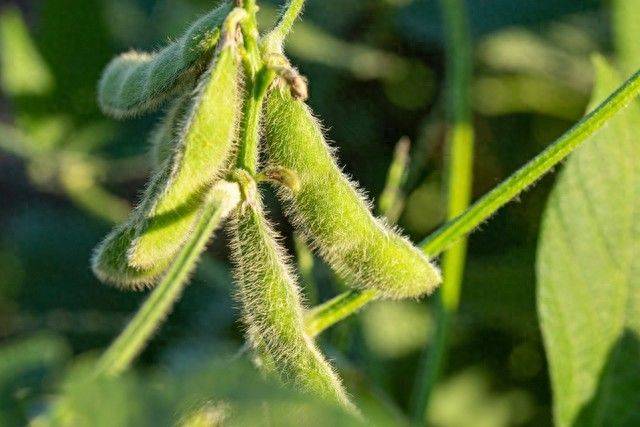
The production of soybeans is determined by the effective division of branches and the number of effective bastions. The main lawn alone has no side branches, and the output is directly less than half。
Many farmers have little soybean branching and little balding, and few thaws, the root cause of which is the failure to keep up with branch nutrition, the application of nitrogen fertilizer, the lack of potassium for phosphorus and the lack of trace elements。
The soybean branching period, 20-25 days after the seeding, is a critical period for guillotine sprouts, which is managed in such a way that production can be doubled directly by three to five branches per plant, with more than a dozen soybean branches。
Farmers practice fertilizer and save money and are efficient:
1. Total prohibition of pure nitrogen fertilizer
It is a stage in which urea and ammonium carbonate are not used. The nitrogen is too fat, and only leaves and vines, and no flowers and no mats。
2. Potassium focused on phosphorus fat
Phosphorus sprouts split, potassium strangulation sprouts. Land parcels are well treated, with 10-15 kg of potassium per acre of high phosphorous compound fat; arid plots are not used to fatten, avoid root burning and wait for refilling after rain。
3. Minor element(s) to be replenished
Farmers grow soybeans that are the easiest to ignore trace elements and the key to production failure
The soybeans are not flowering, the soybean are essential, and most of the soil in the field is permanently missing。
In branches and primers, the leaf is sprayed with boron + molybdenum, pure nutrient supplementation, without any side effects。
The effects are visible in the aftermath of the spraying: the number of branches has increased significantly, the number of buds and flowers has increased, the number of flowers has increased, the number of flowers has increased, the number of flowers has increased, and the number of flowers has decreased。
Focus pit avoidance alert:
Do not mix hormonals with nutrients, but with nutrients! The hormonals are not properly controlled. They cause soybeans to stop growing, deformation and loss of production. Pure farmers do not know how to match, and are only responsible for the best nutrition and zero risk。
Third move: "purpose of the flower" during the bouquet period, protection against fall, protection against premature decay, increase in the particle weight
This is the last and most critical level of soybeans production。
A lot of the pre-existing and perfect soybeans, and the final drop in production, all lost in the flowering season
During the flowering season, soybean nutrient consumption peaks, with flowering, corroding, seeding and short supply of nutrients, combined with high temperatures, drought, water accumulation, pests and pests, there are large areas of flowering, falling and plume。
As long as this is secured, the soybeans will be able to fill the soybean with a full-sized tree。
Three practical management points, simple and simple:
1. Severe water control, drought and drainage
The soybeans are afraid of drought and flooding。
(b) persistent high-temperature drought and dry soil, which must be filled with small water at evenings, water conservation and protection against drought
In consecutive rainy weather, all drainage ditches were emptied of the field at first. Water smothers roots, leading to early decay and massive fallout。
Remember one thing: no dry season, no flooding, no soybeans。
2. Leaf fertilization against early decay
The flowering period ends in the early days of the guillotine, and leaves are replaced by a leaf, which is not followed by a root, and which avoids obscurity。
Farmer's generic formulation: potassium phosphate + fattening, evenly sprayed the leaves。
All soybean plots in this formulation are common and their effects are particularly evident:
(b) rapidly replenish the nutrients needed for the flowering period and reduce the fallout
(b) enhancement of the luminous co-operation of the leaves, which do not fail early or yellow
Promotion of soybean slurry, reduction of radiums, emptiness, full seed grains and increase of thousands of grains。
3. Light and non-heavy spraying
The flower season is a high incidence of soybeans, soybeans, soybeans, frost, and foliage。
Insects and pests are the main causes of late fall, rot and insects, and are not subject to frequent drug use, but are only designed to prevent them once。
The pharmaceutical products are selected for regular low-toxic pesticides in local farming shops, which are used strictly in accordance with specifications. Choosing evening spraying to avoid high temperatures, without harming the flowers, without affecting the acupuncture, and against the disease, to ensure that the beans are fully filled。
Final summary: core logic of soybeans production
As you can see, soybeans are very productive, sowing time is a complement, and management is the rule。
The central secret is to be able to grow and grow, with long air and long air, to sow and reduce production at night, to sow and plant at the right time, and to manage the three-step package。
1. Small-time cramming with strong roots, control of the protégé d ' étachement, and building of a strong base
2. Plumbing of phosphorus by potassium supplementation in branches to promote branching and flowering
3. Incubation of bouquets and control of water filling against disease and pests and elimination of fallopyre。
These three techniques are solid field exercises, without increasing the cost of planting, but with detailed field management, families can grow soybeans that are thick, thick and full of grains, and can easily increase production and yield
Disclaimer: this is a generic field science guide for agricultural techniques, with variations in climate, soil, soybean varieties and planting patterns. The specific management methods should be adapted flexibly to the local context and should not be applied blindly。