At present, the province-wide summer grains have been harvested in large quantities, and rice continues to be planted. The technical guide will be prepared in a timely manner to ensure the management of the field during the raid。

01
It's fine, it's fine
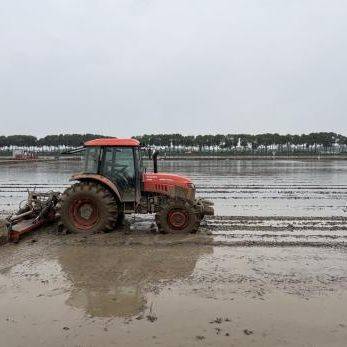
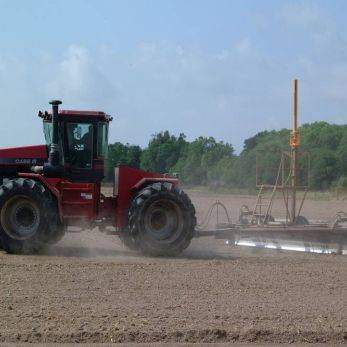
In accordance with the principle of “nine fields, etc., non-suspendable fields” and in a timely manner, the ground is to be ploughed and applied to base fattening (general acre application of compound fertilizers of 35 to 50 kg) in an effort to harvest a whole piece of the crop and to ensure that the plant is integrated in an orderly manner and that it is not lost. (b) increase the high-quality, shredded, well-recovered field extension of the straw, with low-strength (high 15 cm) machine harvests, and cut the length of 5 cm. (c) conditional use of a dedicated straw treatment machine to ensure that it is fine, broken and even. If a dry swirl returns the field, it is advisable to use a horse-powered tiller, or to go up to the water to bubble the field for a period of two to three days, and when the surface soil returns to soft, to use a medium-powered tiller to replant the field in shallow water. After the swirling of the fields and the pouring of shallow water, the field is then soaked with water to flatten the ground so that the field is flattened, with a 3 cm high and low gap (with a laser machine, if available, to ensure a 2 cm high and low range across the field), with a smooth and deep slurry (90 per cent of the failure rate), a desolation on the top of the surface and a clean and fertile field. When the field is completely levelled, it needs to be sank, sand sank for one day, soil sank for one to two days, clay sank for two to three days, and thin-water machine plugs when mud settles, surfaces are soft and soft and operational. The planting will also require weed closure and removal based on technical advice from the local plant protection sector。
02
Focus on precision planting and age-appropriate growth
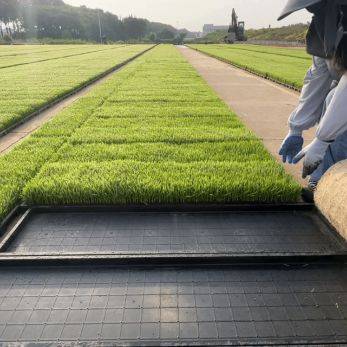
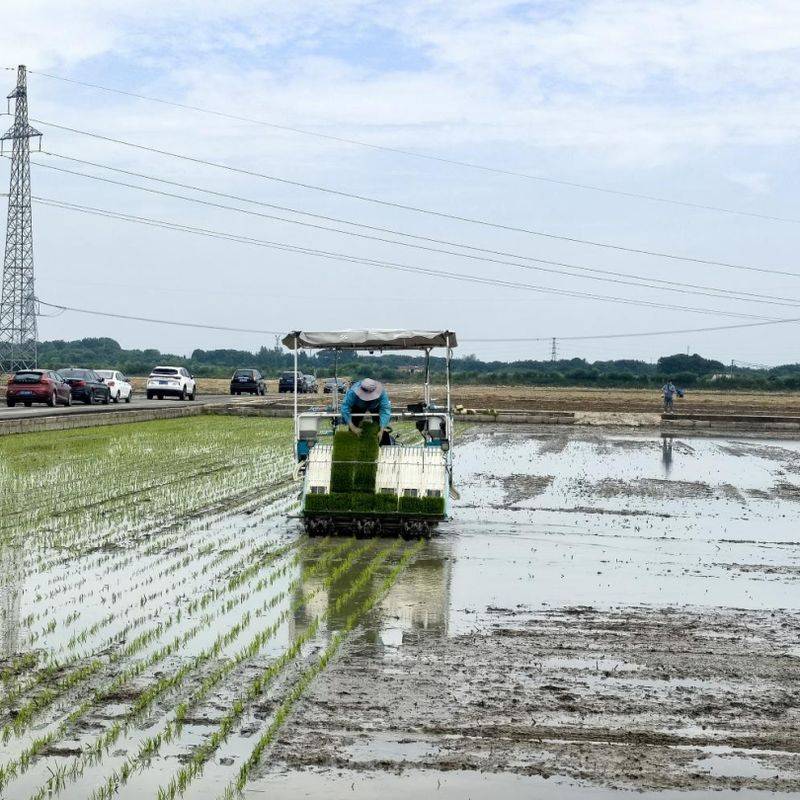
The duration of rice planting is determined in an integrated manner, depending on the time of cultivation, the method of planting and the age of planting, to ensure that it is of appropriate age. Prior to 20 june in the south sudan region and 25 june in the central and north sudan region, the suitable planting time was not july. The suitable plant-planted blankets are three to four leaves (about 20 days old), 4. 5 to five leaves (25 to 30 days old), 5 to 6 leaves for hand-planted rice (30 to 35 days old) and 4 to 5 leaves (20 to 25 days old). The possible emergence of overage seedlings is regulated by early use of water and drought tube control and appropriate multi-efficiency spraying. Routine paddy varieties with a high capacity, with a range of 30 cm x 12 cm or 25 cm x 14 cm, with a range of 30 cm or 25 cm or 14 cm, and a range of 17 ~ 19 million acres, ranging from 3 ~ 5 pm to 60 ~ 80 million acres, with low capacity, with a range of around 20 million paddy species, with a range of 4 - 5 pm and a range of 8 ~ 10 million acres, with a range of 30 cm x 16 ~ 18 cm, with a range of 12 ~ 3 pcm and 2 ~ 3 pm to 40 million acres; rice lines are 30 cm x 14 - 16 cm in average, with 1. 4 - 16,000 dens, about 3 pcm/cm, and about 45,000 cm/cm. A new wide and narrow line (23 cm + 33 cm with an average distance of 28 cm) with a rice interpolation machine, the conventional rice varieties range 12. 4 cm or 13. 2 cm, or 19,000 cm or 18,000 cm, or 4 saplings per cave, or 7. 0 to 8 million cm/cm. Hand-planted rice, with conventional paddy lines at 25-30 cm and 15-17 cm and acre in the range of 15-17 cm, and acre in the range of 150-17,000 cm, with a basic sap of 40 million cm; mixed paddy lines at 28-30 cm and 15-17 cm, with a basic sap at around 30 million cm. Rice is thrown, with an average acre toll of between 1. 8 million and 20,000, with a basic sapling of about 70 million per acre; basic seedlings can be properly reduced for the ready-to-cut varieties, with a corresponding increase for those with delayed and weak planting periods. Plantation is of a quality that insists on the planting of thin water (flood) and the transfer of fertilizers, and is carried out with precision, with the use of the beidou navigation autopilot system where it is feasible to plant it at depths around 2. 0 cm to promote a live tree and early decorum. It is necessary to strengthen the training of crews, standardize standards for machine-plugging operations, eliminate efficiency and quality, strictly control the speed of the plugging machines and effectively improve the quality of rice-plugging. Encourage the use of synchronous side-deep fertilisation methods with fertilizer plugs, opt for controlled decomposition formulations, pre-modify fertilisation devices, keep a close eye on the fertility situation, keep pace and ensure that the application is even。
03
Focus on the piping. It's early and fast
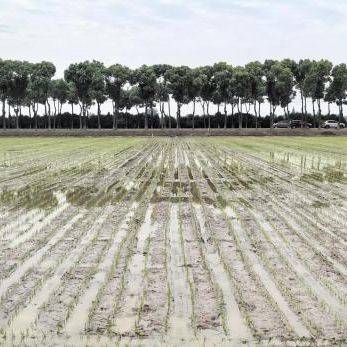
After planting, seedlings are identified early to fill the gap, and they are managed on a piping basis, as well as on a time- and land-based basis, for the management of fertilizers and the removal of the field. Early identification of seedlings to fill the gaps and, in general, the absence of more than 5 per cent of a small field (over 3 per cent of a high-yielding field) should be completed in a timely manner within one week of planting to ensure sufficient basic seedling capacity. At the same time, representative seedlings should be selected for leaf age tags and spot-tracking, recording of seedling data and capturing of group growth dynamics. Science regulates fatty water, moves (paints) and then insists on thin water to live, field and dry in a timely manner, and causes roots to plaster and early hair. For wheat straw to return large fields, several dehydrated fields are required to air, increase the oxygen content of the soil, speed up the silting, promote the growth of the roots and prevent rigidity. A week later, the plant was fertilized, and shallow irrigation was carried out. The usual acre is 10-15 kg urea. For fields with insufficient application of base fertilizer and low-quality seedlings, five days after the application of the split fertilizer, an additional urea fertilization of 7. 5-10 kg of acre urea can be applied. The openings are carried out in a timely manner when the seedlings return to the living tree, when the fields naturally dry up to the surface of the soil without any visible water accumulation, and generally within 20 days of the planting of rice. The width of the ditch is typically 15-24 cm and depth 9-15 cm, with appropriate adjustments to the width and depth of the soil quality and water conservation. The conventional field shall be accompanied by at least one complete ditch system and two or more larger or less drainage plots, so that the internal and external ditches are connected and drained. Timely decomposition, with the time spent, the type of drug used and the quantity of drugs used strictly in accordance with the formulations and technical requirements of the plant protection sector. Usually five to seven days after planting and once the paddy has returned to chrysanthemum, weeds are closed twice depending on the occurrence of the field weed. The conversion of seedlings may be facilitated by fattening or spraying growth regulators for late planting periods, weak seedling quality or rigid seed fields。
(c) continue to provide live coverage of rice control and reduction, increase awareness of the risks associated with poor and dangerous rice production, and strengthen the demonstration of high-yield rice planting techniques. In the case of live rice, which is grown as a result of inadequate farm infrastructure, inadequate water sources and inadequate equipment for production facilities, technical guidance services should be strengthened, with the selection of local conventional rice varieties that are pre-cooked, highly resistant and integrated, using mechanical (bars, caves, etc.) to be broadcast live, at a rate of 5 to 7. 5 kg/acre, with basic seedlings ranging from 10. 0 to 15. 0 million/acre. Weed sealing is the right time to choose the road agent. It is followed by a wet field until the third leaf, during which the shallow water layer is built to protect the seedlings. The four-to-five-leaf period is used to boost fatting and to promote early growth。
Source: agricultural rural department, jiangsu province
Audit: c. K
Review: jang jian
Launch: leung ling