Technical overview
(i) technical fundamentals
The multi-year survey found technical bottlenecks and constraints such as low monolithic levels of rice production, high productivity vilification, low rice calibration rates, vulnerability of late rice to cold wind and inadequate use of warm resources in autumn and winter, together with rising costs of agricultural production inputs, have had a direct impact on the already low productivity of rice cultivation and have severely discouraged farmers from growing food. At the same time, with the rapid development of the national economy and the rising standard of living of the population, consumption demand has escalated, leading to a fundamental change in the perception and consumption patterns of the vast majority of urban and rural residents, not only to “eat well” but also to “eat well”。
In order to address the above, since 2009 i have carried out a process of “retrofitting” which has made full use of the advantages of rice straw resistance, cold resistance, anti-fatal resistance, high millimetre ratio, weak light and high productivity. After more than a decade of indigenous pilot studies and demonstration, the characteristics of growth following the southern displacement of paddy have been largely measured (mainly in shorter fertility periods, short nutrition periods, long mammoth maturation periods and large numbers of specks), and the main points of high-yielding rice cultivation in the south have been summarized as “short, stimulating, increasing, severe and late” and have resulted in high-yielding, high-yielding techniques for high-yielding and high-yielding cultivation of paddy cultivation in the south。
Increased promotion of high-quality, high-yield, high-quality, high-quality rice production technologies and increased efforts to improve the quality of rice in a manner that will increase the efficiency of rice cultivation, help farmers to achieve higher returns, motivate farmers to grow, and increase the market competitiveness of rice in our province and create rice brands that are rich in jiangxi。
(ii) technology demonstration promotion
Since 2012, a number of high-yielding models of rice production have been created with emphasis on new players, such as large-scale subsistence farmers, family farms and farmers ' professional cooperatives, demonstrating the level of single production over the years and the record of single rice production in jiangxi. The average production of a 100-acre demonstration throughout the province increased from about 700 kg in 2012 to about 750 kg in 2013, with a stabilization breakthrough of 800 kg since 2014. Of which, in 2014 jiangxi was a new farm and duchang county was a mid-season with 12 acres of rice the average acre production was 914. 5 kg and 910. 03 kg, respectively; in 2015 the average acre production was 922. 5 kg for a season of 1,538 hectares of rice; in 2017, the average acre production was 974. 5 kg for a season of 1538 acres; and in 2019, the average acre production was 1022. 2 kg for the first time in a quarter of a season of cycheng city. The two-seasond evening 100-acre demonstration tablets have been produced since 2013 for a steady breakthrough of 650 kg. Of these, in 2015 the upper gao county acre production amounted to 796. 2 kg, a record of single-time rice production in my province; in 2019, it was affected by more than three consecutive months of high-temperature dry weather in the late rice sector, with the promotion of late-dry demonstration still yielding significant results, with the average of 843. 1 kg, 834. 5 kg and 802. 5 kg, respectively, in the south chang, east and haute-gau districts, exceeding my province's record of high production of double-season rice monolithon production by 796. 2 kg, creating a new high single-time rice production in my province; and in 2022, an average of 910. 56 kg was produced in the eastern district's two-season model district, an average of 100-acre acre acre production of 910. 56 kg, and the third recorded high production of double-sea rice by my province. Since 2013, the national centre for agricultural technology promotion has been conducting three on-site workshops in jiangxi, which have fully recognized the success of our province's “reform”, accelerating the development of rice in our province. At present, “reform” has become a new way to “modify, shift” in jiangxi agriculture, “stable food, good supply, improved quality, efficiency”, and “food for technology”。
(iii) efficiency gains
Compared to the same period, mixed rice yields an average of 50-100 kg per acre and efficiency gains of over $100. A further increase of 5 to 10 percentage points in the ratio of mixed rice totals to nearly 70 per cent has increased processing efficiency for processing enterprises。
(iv) technology awards
None。
Ii. Technical elements
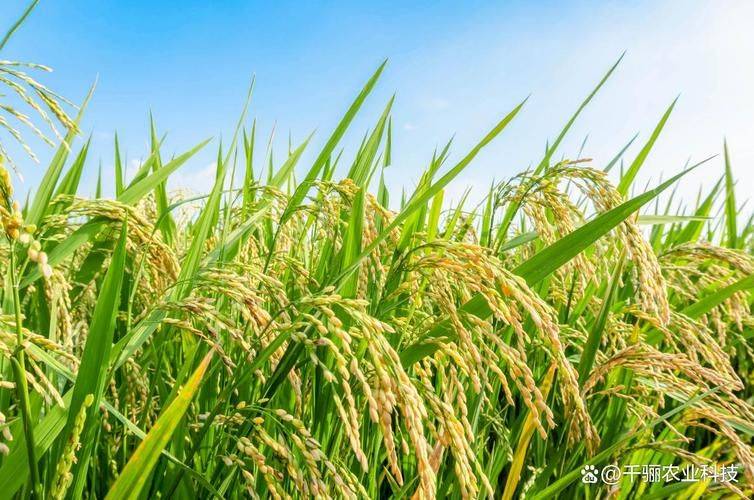
(i) scientific choice of a good field. Cultivation of mixed rice requires a high level of food infrastructure and land capacity and should be carried out on plots with sufficient water sources, easy drainage, good tillage and higher land capacity. It is estimated that under no nitrogen fertilizer conditions, medium rice acres will produce 400-450 kg, late rice acres will produce 300-350 kg, fertility will vary by 100-150 kg for commercial organic fertilizer for field acreages, and over 650 kg for hybrid rice acres. Based on the selection of good fields, scientific selection of good seeds is key to the high productivity of mixed rice. It would be useful to select dominant varieties of high quality, high-yield resistance, e. G., esquito 1538, escuela 538 and escuela 9。
(ii) strictly decontaminating impregnated species. The choice is to spread thinly for a period of 1-2 days before planting, in order to increase seed sprouts and growth rates. The tan is forbidden to tan in cement fields to avoid high temperature burns from seeds. After sunburning, seeds are selected with water, intermittently impregnated for 24 hours, then intermittently impregnated for more than 12 hours with a pharmaceutical agent such as meamamine to prevent the spread of the disease. Be careful to impregnate when impregnated, ensuring that the seeds are fully watered and that there is an adequate supply of oxygen. Mixed rice impregnation is different from plume, and it is desirable to guarantee intermittent impregnation for more than 36 hours. Leached seed is placed in a well-ventilated device with a mild seeding to the point where the chest is exposed。
(iii) be ready to sow at regular intervals. Rewind-to-earth, easy-to-drink, fertile-soiled fields are selected for use as fields. Acoustic bottom fertilization of 10-15 kg of urea, 20-25 kg of calcium or 25-30 kg of triple compound fertilizer (15-15-15) in acre. The field is flat, 1. 5 metres wide, 0. 3 metres wide and 0. 15 metres deep. The arrangement for the planting of mixed rice must take full account of such factors as pre-harvest time, age elasticity (low elasticity, short-age requirements), start-up periods (shorter than in the case of hybrid rice during the reproductive period) and chronic light-temperature resources (more than the number of clear days, sufficient light and appropriate temperature). The whole province has a season suitable for planting in mid-may, with a peaking period running from late august to early september. The season is suitable for planting in late june until the end of june, and no later than the beginning of july, with a peaking period controlled by mid-september。
(iv) cultivation of leaves and sprawl. Cultivated by wet-drying or plastic-past-dry breeding. Acreages of 0. 75 - 1. 0 kg are grown during a season in wet seasons, with a field area of 1. 5 - 1. 75 kg for double-season evenings, and a field area of up to 22 days in age, according to a 1:10 scale. The amount of seed cast from the pallet is 2-3 seeds per hole, approximately 20 days old. For example, the selection of 353 holes of plastic disks requires approximately 55 pallets for one season, and 90 plates for two seasons and evenings, with approximately 20-25 grams of dry seeds per plate. The selection of 434 poach disks for a season requires about 45 disks, with approximately 70 plate plates for two seasons and about 25 to 30 grams of dry seeds per plate; the machine plugs into daejeon for a season with about 20 disks, 75 to 80 grams per acre, 35 to 38 disks per quarter, 60 to 70 grams per plate, which is not suitable for more than 20 days at the age of 18 days. In view of the large size of the thousands of seed, appropriate adjustments can be made to reduce the amount of seedage and improve the quality of seedlings as much as possible through thin sowing。
(v) guarantee the transfer (and disposal) of reasonable seedlings. Rational seedlings are key to optimizing the structure of the rice community and exploiting the potential for mixed rice production. During a season, the plant is grown to a total of 12 to 13,000 acres, 2 grain seedlings per millium, with specifications of 26. 6 x 20. 0 centimetres or 30 x 16. 7 centimetres; the field is cast to a total of 13 to 15,000 acres of basic seedlings of 25 to 30,000; and the machine plug-in is used to the maximum extent possible in a 9-inch machine with a specification of 30 x 12 to pick up a large slot to collect the amount. Bi-season and evening shifting of field acres to 16 - 18,000 gills, 2 grain seedlings per gill, 26. 6 x 13. 3 cm or 23. 3 x 16. 7 cm; acre-saping of 18 - 20 million gills, with a basic seedling of 3. 5 - 44 million; and a narrow-line 7-inch machine, suitable for 25 x 14 cm, if a traditional 9-inch machine is used, with an appropriate size of 30 x 12 cm, and an appropriate large extraction volume to ensure sufficient basic seedlings。
(vi) rational daejeon fertilizer preparation. Medium fertilized fields with 700-800 kg of acre during a season, 16-20 kg of pure nitrogen for acre, 650-700 kg for double-season evenings, 14-16 kg of pure nitrogen for acreage, and n:p2o5:k2o = 1:0. 3-0. 5:0. 8-1 equivalent for phosphorus and potassium fertilizer. Nitrogen fertilization is carried out at a ratio of 4:4 or 4:3 pm, which is applied in the field before the shifting (sliding) cultivation, which is applied around 7 days after the shifting (sliding) cultivation, which is applied in the course of a season at the point of the blade, or in the full display of the blade, and at the end of the season when three or two leaves fall. Phosphorus fertilizers are applied once, and potassium fertilizers are applied twice, or 50 per cent each. Totals are determined on the assumption that n, p and k are calculated using actual fertilizer equivalents, such as composite or commercial organic fertilizers。
(vii) strongness of the science pipe. The management of hydroponics during the whole reproductive period of mixed rice is dominated by wet irrigation, which is followed by a three- to five-day drainage field to promote rooting. Periods of irrigation are dominated by thin-field irrigation, which is not suitable for deep-water irrigation, and repeated draughts. When field saplings reach 80 per cent of the planned ears and about 90 per cent of the population at night over a season, sunbath control begins. During the run-up to the pecking season, shallow water layers are established to ensure “water pumping and flowering” and long periods of congested and mixed rice slurry are required to be pumped with water once more, with multiple periods of shallow irrigation, promotion of non-seeding of the water afterward, maintenance of humid fields, implementation of “dry wet and wet strong seeds”, followed by early cutting of water and ensuring that seed grains from the base are fully prepared。
(viii) integrated pest and disease management. In the field, the main focus is on the prevention of seedlings, rice plagues, rice tremors, rice lice, etc., and the delivery of “nuptial medicine” is done before planting. In the first phase of honda, the main prevention of dichotomy, paddy twigs, and in the second and third phases, the main focus is on the prevention of strangulation, rice curricular disease, rice lice and neck plague. For long periods of time due to the large and dense pyroclastic size of the paddy, special emphasis is placed on the prevention and treatment of paddy cortex disease, focusing on 7 to 10 days or 10 to 12 days before the sting (judgmental indicator: when the main saber and piping is flat) and at two points during the saping period, the use of such agents as fluoride, benzo-plycerazine, decamol, sepsis resin peptoxol and furamamine is selected, with sufficient water quantity to ensure effectiveness。
(ix) scientific weeding, safe medicine. Mixed rice is more sensitive to herbicide application and science is required to select suitable agents to combat weeds in different life cycles. Before seeding in the field, 40 per cent of the acetalamine can be used for herbicides, 15 per cent of the cyanide . 50 fluorinated herbamine complexant for the three leaves and 15 per cent of the cyanide . F. Sulfazine complexant for the three locomotive periods; 37. 5 per cent of the accelerant wwable powder can be used for fertilisation in the field for 5-7 days; and 2. 5 per cent of the platinazine or 10 per cent of the cyanide ester can be used for water sprays for herbicides by carefully choosing herbicides at the end of the swarm and during pregnancy。
(x) reduction of loss due to late receipt. Based on the robust nature of the conjunctivate, which takes 50-60 days from mid-season to harvest and 45-50 days from mid-season to mid-season, it is recommended that more than 95 per cent of each saturated grain be harvested when it is yellow, and that water is cut off and harvest is premature so as not to affect the yield rate, thousands of grains and rice quality。
Appropriate areas
(c) the development of well-grounded and well-developed water facilities, with emphasis on demonstration and extension in the region of the zhongyang lake, the plains and the geeta basin. Mountain mountains, areas with high field humidity or poor soil are not suitable for cultivation。
Iv. Notes
(i) cultivating young adults. Before seeding, impregnated with memamide, low-sapling seedlings, shift-planting, age control within 20-25 days; mixed rice is more sensitive to dry nanny ploughing, americium impregnated, polyecstasy-controlled seedlings, herbicides, etc., and uses and concentrations are reduced to less than 1/2. When herbicide is sprayed, the water should not be soaked with the heart leaf。
(ii) low-water substrates. The high temperature of the late rice migration period and the timely field defecation following the planting process prevent flooding from causing damage to, and disruption of, mixed root systems。
(iii) prevention of paddy and tattoo disease. The focus is on the first two points of prevention and treatment, while focusing on other pests and diseases。
(iv) improper and late harvest and early breakout of water. The water is then poured every 7 to 10 days until the fields are dryed up, and the roots of the herbs are raised to enhance resistance, improve the yield rate and increase the weight of thousands。
Technology-based units
Jiangxi province agricultural technology extension centre
Contact: room 416, agricultural inspection complex, jiangxi province, no. 359, liangchang city, jiangxi province
Postal code: 330046
Union: liu kaylie
Contact number: 13177891271
E-mail: karry 1991@163. Com