Pink peach blossoms, red cherries, green grapes, blue blueberries the spring break is coming and everything is about to recover, quieting the northern fields for a winter and gradually greening. On the outskirts of guangjing, the open-air farming of the early springs has just risen, while the greenhouses sheds have become a springlight。
In beijing, there are 180,000 acres of facilities, and many of the time-consuming vegetables and special melons begin here, the first place to come to beijing in spring。
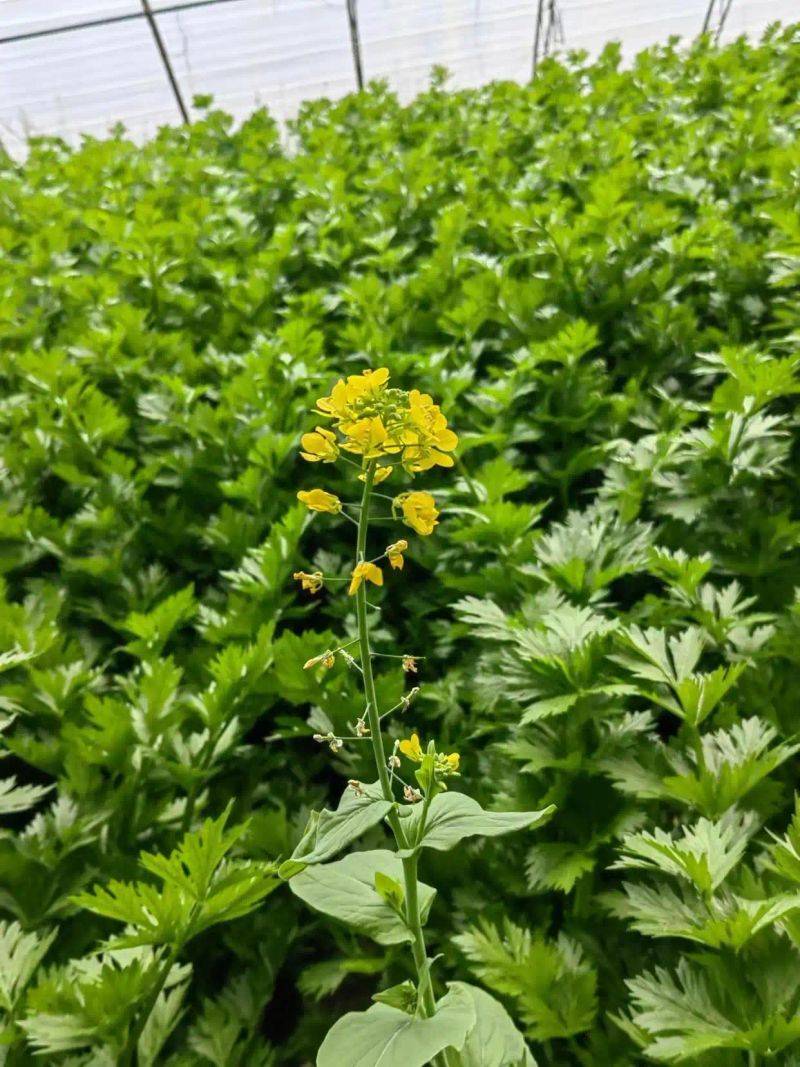
On 14 march, vegetables were flourishing in huaijuan farms. Interviewee for map
The unique landscape around the city
After a period of shock, winter wheat began to return to green and colder, and the land in the kyoto suburbs began to emerge, and the huts had become popular, with high-peak strawberries gathering and crowds gathering, while slow-growing vegetables had begun to mature rapidly and to be marketed。
The most beautiful time in the shed in kyoto began in december each year, and the earliest peach blossoms began to bloom in the valley, and in march and april of the next year, early ripe oil can come on the market. In changping, in a large shed, strawberries are red from white, and before spring season, they are fully packed and loaded onto the fruit shelf of the supermarket。
In addition to production protections, which are typical of modern urban-based agriculture, they also perform a variety of functions, such as tourism, leisure, tourism, harvesting and conservation of biodiversity. The beijing city bureau of statistics published the beijing bulletin on monitoring the values of modern urban agro-ecological services in 2021, which shows that the annual value of modern urban agro-ecological services in beijing was 39. 2330 billion yuan in 2021, of which the direct economic value was 38,123 million yuan and the indirect economic value of cultural tourism services was 10,9578 million yuan. Data from the beijing city bureau of statistics also show that, by 2022, 22,011,000 visitors were received in the city's leisure agriculture and rural tourism industry, with an income of 3. 62 billion yuan。
In the metropolitan area, modern agricultural facilities have been developed so that people on the outskirts of the country can experience the glitter of their fields during the winter festival, especially after snowfall, and in and out of the huts, two worlds, one silver-covered and one gravy. At the early spring festival, busy farmers entered the sheds, changing vegetables, fertilizing fruit trees and becoming unique landscapes around cities。
In the kyoto suburbs, many of the fruits, such as strawberries, are sold in fields, including through harvesting. According to a farmer in libashi town in kyoto, his strawberries, which are on the market from the end of november to the beginning of december each year, have a maximum price of over $100 for field pick-ups, which can be sold until may/june of the following year, with only a small amount of them entering the market and most of the rest being sold through pick-ups, orders, etc。
Upgrading facilities agriculture
As a typical representative of modern agricultural facilities, it is a fully manageable micro-environment that allows vegetables, fruits, etc. To be removed from the environment and to be produced for the anniversary year. In the market, fresh vegetables are available at all times, i. E. Because of the increase in the level of agricultural facilities。
In beijing, the modern greenhouse shed was first found in the 1970s, and in 1977 the first greenhouse shed was built in beijing, in the middle of the abyss. For more than 40 years, greenhouses have spread throughout the kyoto suburbs. According to data from the beijing municipal agricultural rural authority, about 100,000 acres of field vegetables are currently produced in beijing municipal facilities, of which 57,000 acres are made of leaves and vegetables。
There are many types of huts in beijing, such as plastic sheds, which account for about 47 per cent of all agricultural facilities. It is a cold shed suitable for spring and autumn production, without walls and also known as spring and autumn sheds, which can be produced in the early spring and late autumn when the field is not adapted to growing vegetables, mainly producing various kinds of vegetables, “in contrast to the vegetables of eggplant and fruit, which are less transportable, and are therefore mostly produced and supplied locally, with shorter transport routes and fresher vegetables purchased by citizens”. The researcher of the chinese institute of vegetable flowers and flowers, li bao, said。
Better than the spring and autumn sheds, the diversity of the solar greenhouses, such as the homelight of vegetables, the use of the sun-down greenhouses, the ground in the sheds, which is about 1 metre lower than the outside, makes the greenhouses more able to keep warm, making it possible to produce vegetables normally during the winter, with brick walls, earth walls, etc., and with different effects. “the sun-light greenhouses have lower temperatures, and can grow in winter egg fruit vegetables, but less slowly.” according to lee po。
In addition, there are approximately 5 per cent of all greenhouses, even with a higher technological content, greater environmental control capacity, vegetable fruits and so forth, compared to plastic sheds and solar greenhouses, which are virtually unaffected during the winter。
And the greenhouses lead the country
On 13 march, several workers were busy in a greenhouse in beijing, a base of more than 1,000 acres。
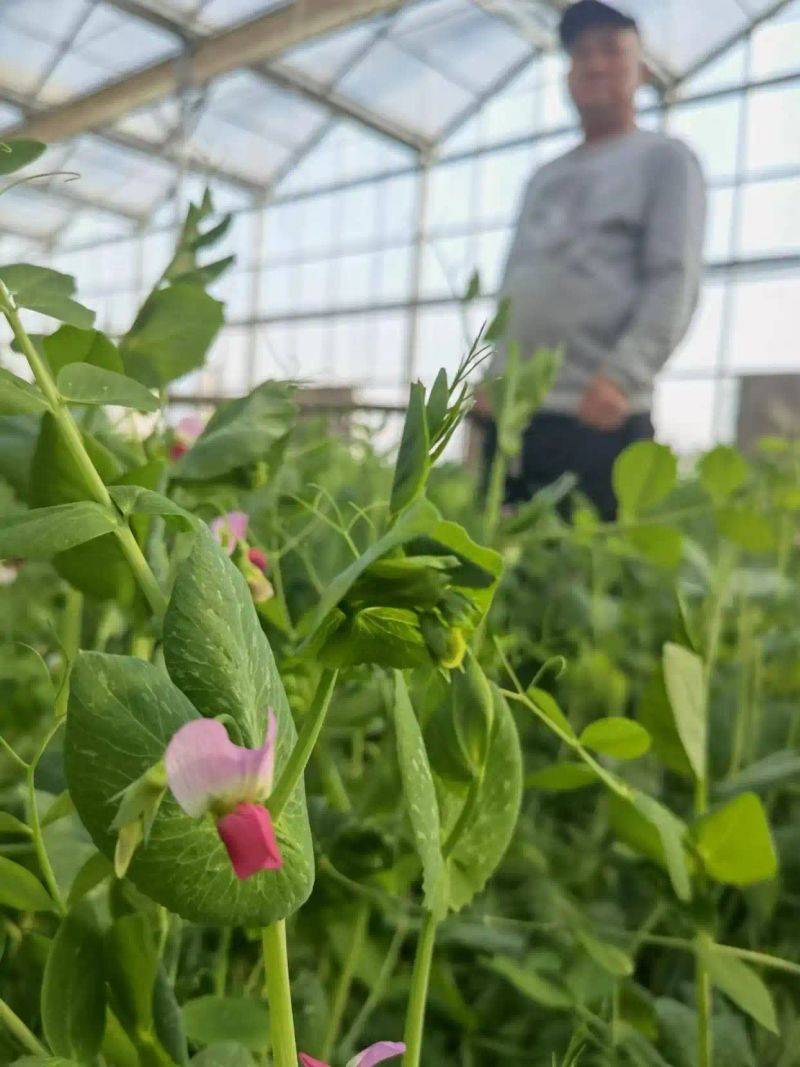
On 13 march, a small red flower was produced by peas in a large shed at the unced pilot base at the chinese agricultural institute in beijing. Reporter zhou huai zhong
These greenhouses, which are the pilot bases of the agricultural environment and sustainable development institute of the chinese agricultural institute of science and technology, have not been established long ago, but have been experimenting with various agricultural science and technology projects. In the two adjacent greenhouses, strawberry and blueberry soilless led patches were conducted. The reporter saw a row of strawberries in the strawberries shed planted on a monolithic shelf with fresh red fruits. On both sides of the shelf, the led plant lighting source was placed right above the plant. Staff members told the press that the strawberries were particularly selected and high-quality varieties with the largest fist size and taste. In the blueberry shed, however, sporadic blueberries have become blue and some have become pure blue and can be picked。
Lee tao, a researcher at the china agricultural institute of the united nations development programme (unced), described the pilot project of a national priority research and development programme, which focused on exploring ways to produce high-value-added crops efficiently in agricultural facilities. “in agricultural facilities such as sheds, where factors such as water fattening, temperature, etc. Are controllable, we can provide the most suitable water fattening and temperature for crops to grow faster and better, but the controlability of light is more difficult than other environmental factors.” lee tao stated that “lights provide energy for plant photosynthesis, and winter or even cloudy sunlight tends to be insufficient, leading to limited crop growth in the facility, and that the purpose of our experiment is to find the most appropriate way to refuel and light formulas to help the facility to achieve agricultural efficiency, increase production, improve quality and increase income”
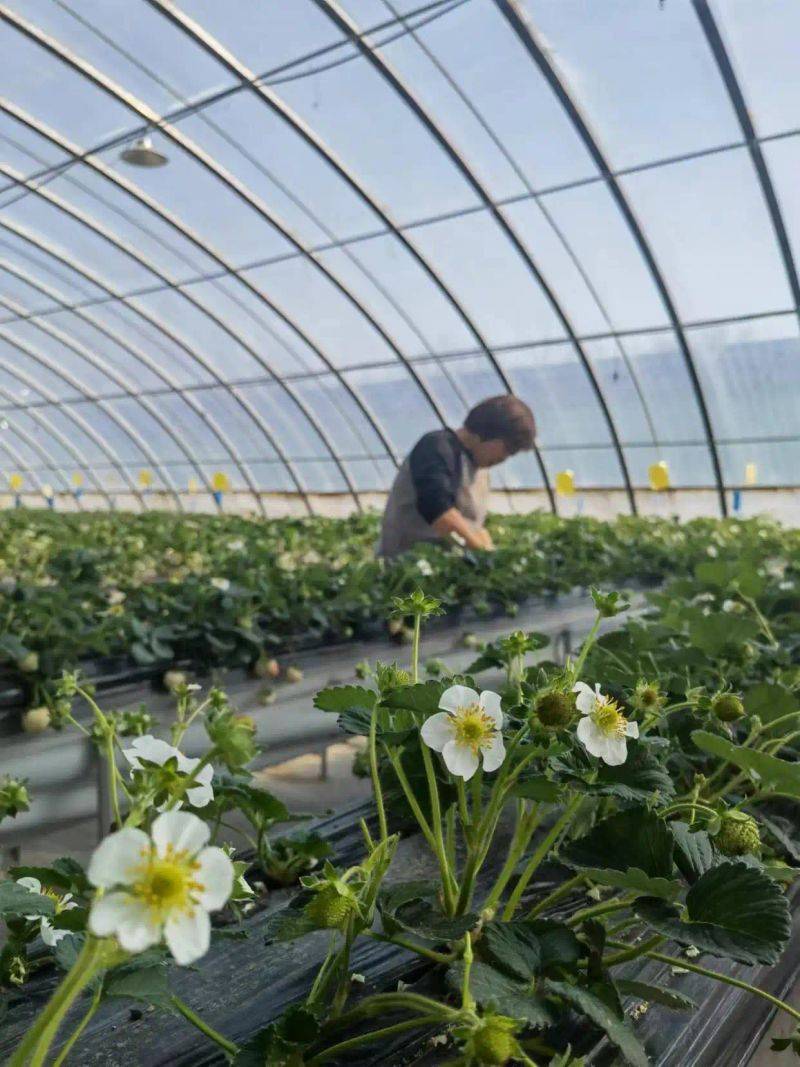
On 13 march, in beijing, in the pilot base of unced at the chinese agricultural institute, workers were working on strawberries. Reporter zhou huai zhong
Beijing is a research highland, with a large number of agricultural research units and scientists, and a natural incubator of scientific and technological innovation in agriculture. “the level of technology in beijing is the national leader in high-end infrastructure agriculture, such as greenhouses.” li bao zi said that “with the support of a strong scientific force, the agricultural technology, the demonstration of equipment and the level of application of facilities in beijing city are high and lead the country”
The science story in the shed
In ping valley, beijing, a park called the beijing centre for agricultural science, technology and innovation, where science and technology are being developed, agricultural technicians are training local fruit farmers in cutting techniques, while in the greenhouses, tomatoes and cucumbers have just been planted。
The ginwa centre is beijing's partnership with the university of vahaningen, the netherlands, which brings together scientific and research institutions, enterprises and the government, building a platform for science, technology and innovation, and is also the central engine and starting point in the agricultural sector. In october 2021, the ministry of agriculture and rural affairs and the beijing municipal people's government signed the framework agreement for co-framework to build china pingzhou agricultural and china-china-china-china-china-china-china-china-china-china-china-china-china cooperation agreement, bringing the construction of guang village in agriculture to the level of national strategy, while beijing-based municipalities have also integrated guang village in agriculture into the beijing-based priority industrial development functional areas and the beijing-based “two-regions” construction of priority industrial parks。
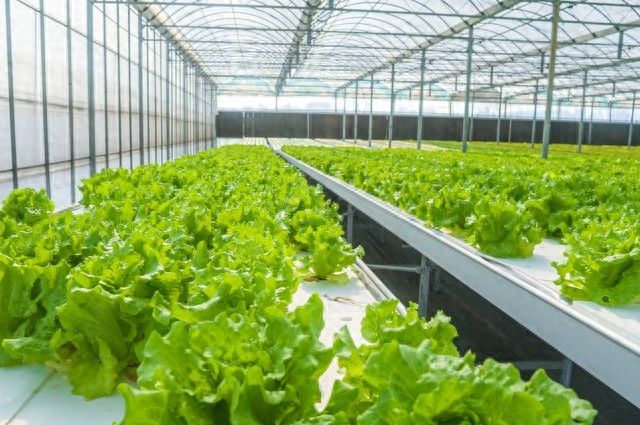
At the time of the day, in the modern greenhouse gardening demonstration park in the central district of kyumhua, a full-scale automated water-breeding vegetable growing system, a large number of leaves and vegetables are being harvested, and in this hot, fully fertilized shed, the wind and snow, drought and cold outside the shed will not affect the production in the shed, where raw vegetables will be produced at a rate of 20 to 30 days per week and can be produced more than 12 times a year。
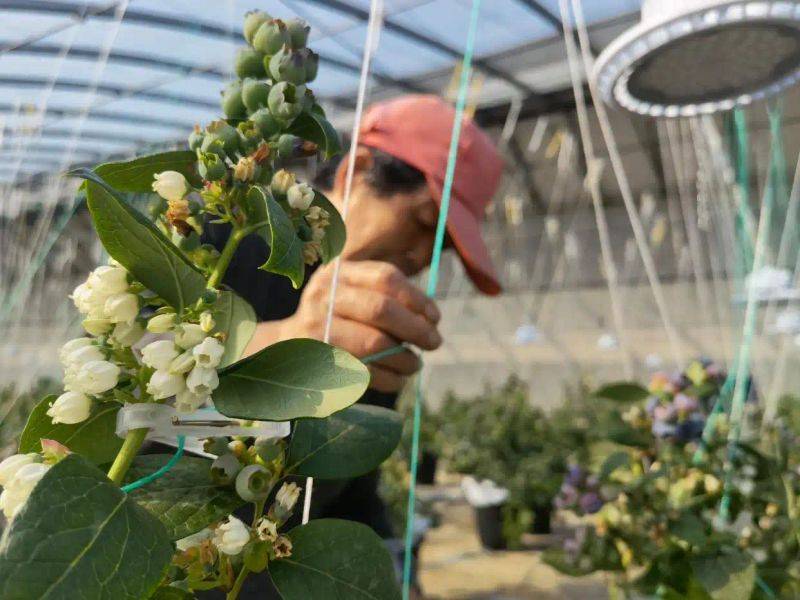
On 13 march, in beijing, workers were busy in the blueberry shed at the unced test base at the chinese agricultural institute. Reporter zhou huai zhong
This modern greenhouse horticulture demonstration, which was recently established, has received many visitors. The head of the gyeonghua centre, de myung, described the eight different greenhouses in the park, which varied in equipment and technology used, and shared multiple tasks of demonstration, scientific research, science and teaching。
“we work with many scientific institutions, whose teachers and students come to us for research, field teaching, etc.” da ming said, “there are also directors of agribusinesses, agricultural technicians, etc. From all over the country who will come to us to learn about it.”
A much more standardized shed can provide suitable scenarios for the development of modern agricultural techniques and equipment, such as mechanized harvesting, and a bright presentation, “it is difficult to develop a pick robot in an ordinary shed or park because, at the time of planting, there is no advance preparation for standardized operations, and our cultivation is standardized”
Facilities agriculture takes on nursery duties
When a group of visitors arrived at the ginwa centre, the special food centre at changping xiaoshan also entered the busiest hour, unlike the greenhouse sheds of ordinary small farmers, which are more advanced and more productive. This vegetable base, which began in 1984, is now the scene of a well-known vegetable production site in beijing and modern agricultural technology applications。
The base is home to a wide variety of vegetables, such as tomatoes, eggplants and peppers, as well as rare tropical fruits such as bananas and dragon nuts in the north。
The director of tianan agriculture, who belongs to the base, described the winter season as the busiest time in the greenhouse shed: “the production of the greenhouse began at the end of august and continued around june of the following year, with a break of more than one month. This is the highest temperature in beijing and, on the one hand, is not suitable for vegetable production, and, on the other hand, it is possible to take advantage of this high temperature time to cover up the shed so that the high temperature can kill the eggs of the fungus in order to prevent the infestation of the pests and pests at the later stages.”
In february, as in the past, the special food bases were busy, collecting, marketing, breeding and planting, and never stopped. “we have co-operative bases in changping, huairou, shunyi and myung-yun in beijing, about 3,000 acres, providing 8 million kg to 10 million kg of vegetables in the market each year, and 500,000 to 1 million kg of fruit.” according to the forest source。
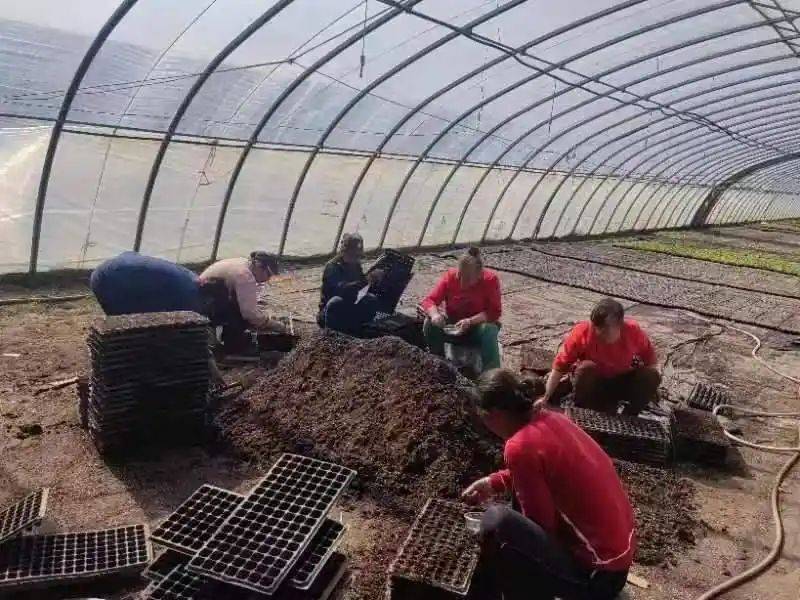
On 14 march, workers were busy changing in a vegetable shed in huairou. Interviewee for map
In addition to the production of fresh vegetables and fruit, seedlings are one of the important functions of the facility sheds, which operate from various bases of tiananan agriculture and have long-term nursery grounds. In beijing as a whole, according to incomplete statistics, in 2023 there were 532 million concentrated seedlings in beijing, of which 342 million were vegetables, 40 million in melons, 100 million in strawberries and 50 million in sweet potatoes。
“in modern agricultural production, the facilities sheds are increasingly important, and many of the rice in the north, whether vegetables in the north or rice in the south, are grown from them.” “for example, in beijing, the seedling of the spring vegetables has now become common, and in this vegetable, when the leaves are planted, they can be marketed in about 30 days, which coincides with the turn of spring and summer.”
The listing window has been extended
As the representative of modern agriculture, the facilities sheds are constantly changing traditional farming practices, not only vegetables, but also the fruit of the time when the memories of beijing's children are at stake。
The fragrance of watermelons, the peaches of flat valleys, the cherries of tunzhou, the strawberries of changping, the grapes of yen qing... The people who live in beijing, remember, always have these fragrance melons. But unlike in the past, today's melon fruit is almost entirely produced in the facilities' sheds. In december, in the harsh winter, people went into the shed, where they saw ripe strawberries and wild peaches; in march, the earliest peaches were ready to be marketed; and in july, the grapes in the shed matured early。
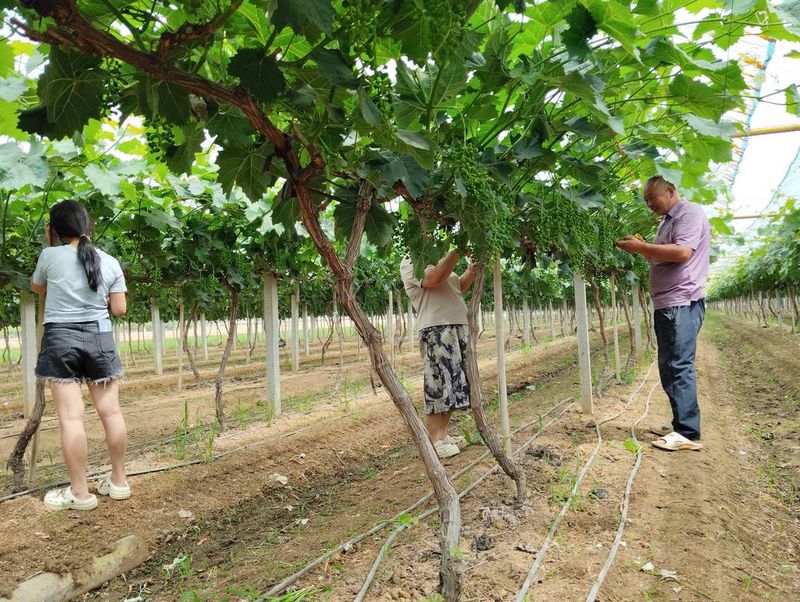
After the second of february, fresh leaves of grapes were already of egg size in the shed of the black dragon temple village in yanqingshan camp town, and the cooperative in the village began organizing villagers to water, catch fat, and fight pests and diseases, waiting for the flowers to bloom in a few days to be preserved for the fruit ... Although wheat outside the shed has not returned to green and the grass on the fields has not yet come out green, the subsequent agricultural work has brought spring to people's lives。
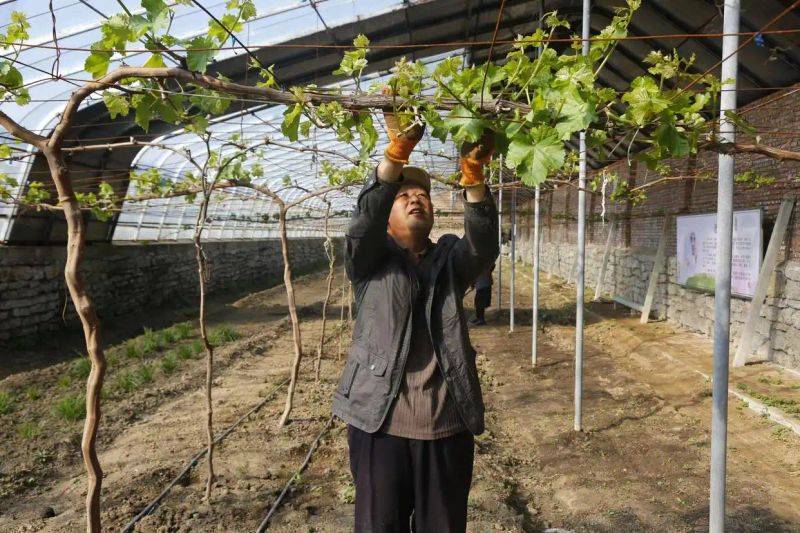
On 15 march, after yen qing, the villagers were busy in the vineyard. Environment
Zhangshan camp, a traditional grape-growing area, had been planted on the ground in the past, and the traditional production of red-leave grapes had won the honour of china's famous fruit, and rizamatt had received more than 10 national gold awards. However, with the development of society, the production of traditional grape varieties differs considerably from that of modern new varieties, and the benefits are reduced and many villagers are no longer willing to grow them. The same is true of the post-herlong temple village, where in 2021 a cooperative was established to begin building greenhouses and cold sheds in the spring and autumn, introducing new varieties and reconstructing rural industries。
“the taste of the new varieties is better, the production of the sheds is higher than that of the open ground, and the returns are naturally higher.” jamin, head of the cooperative in the post-herlong temple village, said。
In beijing, there are many such villages, with facilities and fruit and field fruits connected, constantly extending the listing window to coincide with rural tourism, forming the basis for the revival of a village industry. And the luminous greenness in the shed allows citizens to embrace spring early at the end of the winter。
News reporter zhou huai zhong, guangzi leaves
Editor, zhang tree, proofread, willow day