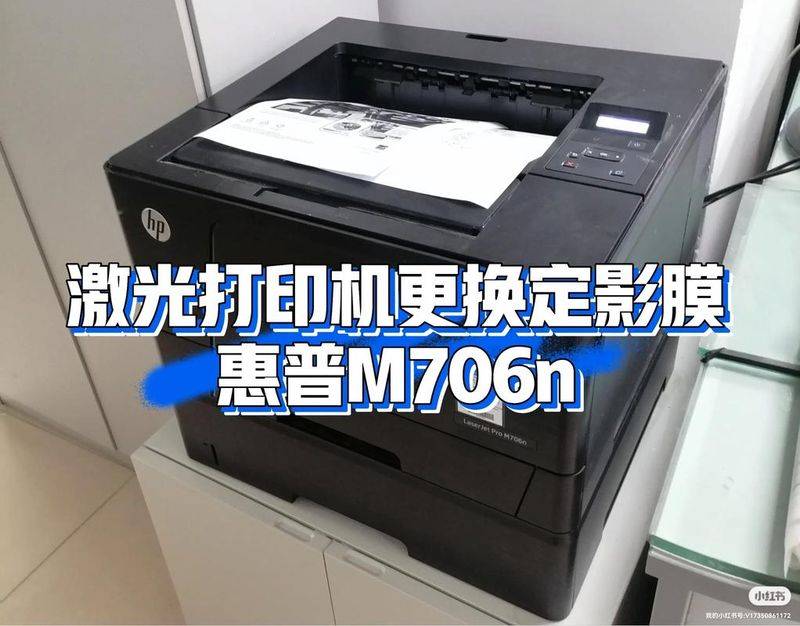
Laser printers are the most common product of our daily business. Although a stable and fast-out machine, after all, it was also a consumer, and it took some time for problems to arise, such as export problems, poor exposure and so on. For the most part, we will be waiting for repairs to come to our doors, but this will still have some impact on normal use, especially on small issues that can be solved by ourselves, so that the waste of time can be avoided. Taking into account the actual demand for laser printers, it is intended to help you sort out the common problems of laser printers, which are of the greatest interest to users, and to help you resolve problems encountered in the use of laser printers quickly。
I. Output of all black paper
Possible cause of failure: (1) if the laser is definitely good, the chargeable electrodes and grid short circuits may be charged; (2) there is a logical error in the scanning-driven circuit; (3) there is poor discharge of the selenium drum assembly; and (4) the signal connection is not connected。
Ii. Full vertical black belt output (line)
Possible causes of failure: (1) damaged permafrost or bruised permafrost on the slab; (2) partial damage to magnetic scaffold; (3) contamination of printer (general guide paper channel) by ink。
Iii. Export of horizontal irregular black belts (lines)
Possible causes of failure: (1) poor exposure of the sensory drum to the electrodes; (2) excessive cutting of the sensory plate; (3) dithering of the sensory drum when the main gear turns; (4) defective or incorrect installation of the sensory drum。
Iv. Output of all white paper
Possible cause of failure: (1) ink is no longer in the powder box; (2) the laser mechanical gate is not open; (3) the laser beam detector is contaminated or damaged; (4) the laser is damaged。
V. Output of vertically regulated white belts (bars)
Possible causes of failure: (1) when the ink is about to run out, there is no ink on the magnetic field (usually in the middle of the sample); (2) beam mirrors are contaminated with dirty materials such as ink; and (3) scanning light paths are masked by foreign objects。
Vi. Output horizontal irregular strips (band)
Possible causes of failure: (1) charged wiring or poor contact with recharged rims; (2) exhaustion of the optical catheter on the surface of the sensed drum; and (3) poor discharge of the sensed drum。
Vii. Output text in plain text
Possible causes of failure: (1) the printing paper is damp; (2) the ink powder is fluent or is a photodrum component problem; (3) the sensor drum is out of charge and the surface is low; (4) it is under-exposed; (5) it is under-pressure; (6) it is low。
Viii. Output image failure
Possible causes of failure: (1) use of non-standard print paper; (2) ink powder model not compatible with machine type or ink infestation; (3) luminous tones; (4) parts of the scanning assembly loose; (5) scanners are not functioning smoothly and are shaking。
Ix. The output sample is dusted
Possible cause of failure: (1) too low oscillation pressure; (2) aging magnetic plate; (3) too close to sensory drums;
X. Deepness and depth of output
Possible causes of failure: (1) ink powder will be run out; (2) charge wires or recharging beams will be contaminated; (3) reprint wires or reprint beams will be contaminated; (4) mirror plating will be partially released。
Xi. High- and low-intensity phenomena in output samples
Possible cause of failure: (1) voltage of wire contamination; (2) ink powder model not corresponding。
Xii. There's a pattern of depths and depths in the output sample
Possible cause of failure: (1) partial exhaustion of the sensor drum; (2) poor exposure to charged, reposted electrodes。
Xiii. Regular white spots in the sample vertically
Possible cause of failure: (1) local oil pollution of the sensor drum; (2) local damage of the charger; (3) local damage of the surface of the determinator。
Laser printers are the most common product of our daily business. Although a stable and fast-out machine, after all, it was also a consumer, and it took some time for problems to arise, such as export problems, poor exposure and so on. For the most part, we will be waiting for repairs to come to our doors, but this will still have some impact on normal use, especially on small issues that can be solved by ourselves, so that the waste of time can be avoided. Taking into account the actual demand for laser printers, it is intended to help you sort out the common problems of laser printers, which are of the greatest interest to users, and to help you resolve problems encountered in the use of laser printers quickly。
I. Output of all black paper
Possible cause of failure: (1) if the laser is definitely good, the chargeable electrodes and grid short circuits may be charged; (2) there is a logical error in the scanning-driven circuit; (3) there is poor discharge of the selenium drum assembly; and (4) the signal connection is not connected。
Ii. Full vertical black belt output (line)
Possible causes of failure: (1) damaged permafrost or bruised permafrost on the slab; (2) partial damage to magnetic scaffold; (3) contamination of printer (general guide paper channel) by ink。
Iii. Export of horizontal irregular black belts (lines)
Possible causes of failure: (1) poor exposure of the sensory drum to the electrodes; (2) excessive cutting of the sensory plate; (3) dithering of the sensory drum when the main gear turns; (4) defective or incorrect installation of the sensory drum。
Iv. Output of all white paper
Possible cause of failure: (1) ink is no longer in the powder box; (2) the laser mechanical gate is not open; (3) the laser beam detector is contaminated or damaged; (4) the laser is damaged。
V. Output of vertically regulated white belts (bars)
Possible causes of failure: (1) when the ink is about to run out, there is no ink on the magnetic field (usually in the middle of the sample); (2) beam mirrors are contaminated with dirty materials such as ink; and (3) scanning light paths are masked by foreign objects。
Vi. Output horizontal irregular strips (band)
Possible causes of failure: (1) charged wiring or poor contact with recharged rims; (2) exhaustion of the optical catheter on the surface of the sensed drum; and (3) poor discharge of the sensed drum。
Vii. Output text in plain text
Possible causes of failure: (1) the printing paper is damp; (2) the ink powder is fluent or is a photodrum component problem; (3) the sensor drum is out of charge and the surface is low; (4) it is under-exposed; (5) it is under-pressure; (6) it is low。
Viii. Output image failure
Possible causes of failure: (1) use of non-standard print paper; (2) ink powder model not compatible with machine type or ink infestation; (3) luminous tones; (4) parts of the scanning assembly loose; (5) scanners are not functioning smoothly and are shaking。
Ix. The output sample is dusted

Possible cause of failure: (1) too low oscillation pressure; (2) aging magnetic plate; (3) too close to sensory drums;
X. Deepness and depth of output
Possible causes of failure: (1) ink powder will be run out; (2) charge wires or recharging beams will be contaminated; (3) reprint wires or reprint beams will be contaminated; (4) mirror plating will be partially released。
Xi. High- and low-intensity phenomena in output samples
Possible cause of failure: (1) voltage of wire contamination; (2) ink powder model not corresponding。
Xii. There's a pattern of depths and depths in the output sample
Possible cause of failure: (1) partial exhaustion of the sensor drum; (2) poor exposure to charged, reposted electrodes。
Xiii. Regular white spots in the sample vertically
Possible cause of failure: (1) local oil pollution of the sensor drum; (2) local damage of the charger; (3) local damage of the surface of the determinator。
Regular black spots (points) in the sample vertically
Possible cause of failure: (1) perforation or injury of the sensory radial light conductor; (2) impairment of the charged ionosphere; (3) injury of the fluorine film of the determinoid surface (slight colour)。
There are irregular black spots on the sample
Possible causes of failure: (1) impurities in ink powder; (2) reformation or breakage of the waste powder in the simulator assembly; (3) ink powder leak。
Xvi. Unregulated black lines on pages, vertically or horizontally
Possible cause of failure: (1) a perforation of the optical catheter of the sensor drum; (2) a perforation of the oscillation surface; and (3) dithering of the percussion drum as it operates。
Xvii. The pattern of the output of a sample is very different
Possible cause of failure: (1) partial exhaustion of the sensor drum; (2) poor exposure to charged, reposted electrodes。
Xviii. Sequenced white spots in the sample vertically
Possible cause of failure: (1) local oil pollution of the sensor drum; (2) local damage of the charger; (3) local damage of the surface of the determinator。
Xix. Regular black spots in the sample vertically (points)
Possible cause of failure: (1) perforation or injury of the sensory radial light conductor; (2) impairment of the charged ionosphere; (3) injury of the fluorine film of the determinoid surface (slight colour)。
Xx. Lost page image information
Possible cause of failure: (1) image resolution setting is too high and memory is inadequate; (2) the printing pattern of the driver setting is not correct; (3) the image size and print page setting is wrong; (4) information transmission error。
21. Vertical character compression
Reasons for possible failure: (1) erosion of gear on the sensory drums; (2) incorrect rate of transfer of gear; (3) failure of control of the main electric power。
Xxii. Horizontal misalignment of page images
Possible cause of malfunction: (1) the print content of the page is too complex and the printer memory is inadequate; (2) the page size is beyond the size set by the printer。
Xxiii. Page character distortion
Possible cause of failure: (1) the sensory axle of the scanned drum assembly, (2) the internal lens of the scanned component is loose, (3) the power loss prior to the simulator, and (4) damage to the crystal shocker in the scanning control circuit。
Xxiv. Pollution from the back of printed paper
Possible cause of failure: (1) ink contamination of the printer's paper walkway; (2) pressure glue contamination of the stationary components。
Xxv. Characters printed are hollow
Possible cause of malfunction: (1) print materials used do not meet requirements; (2) the ink powder type is not the same as the (3) fixed swarm temperature。
Xxvi. Page character fixed and rough
Possible cause of failure: (1) low set temperature; (2) insufficient pressure of the spot film; (3) ink powder used does not correspond to the machine type。
Xxvii. Loss of left or right characters vertically
Possible causes of failure: (1) the light road is blocked; (2) the ceramic heater type, the fixed pelvis break。
Xxviii. Double replicas of the page vertically
Possible causes of failure: (1) aging of a light-drum-cleaning scraping plate; (2) low temperature of the hot-drum surface or insufficient glue pressure; (3) wear of fluorine on the hot-drum surface with a large amount of ink powder melting on the surface。
Xxix. Unusual black lines appear vertically or horizontally
Possible cause of failure: (1) a perforation of the optical catheter of the sensor drum; (2) a perforation of the oscillation surface; and (3) dithering of the percussion drum as it operates。
There are irregular black spots on the sample
Possible causes of failure: (1) impurities in ink powder; (2) reformation or breakage of the waste powder in the simulator assembly; (3) ink powder leak。