There has been a marked increase in the pace of issuance and market interest of data assets supporting securities (known as data assets abs). Data assets continue to be favoured by capital markets as the marketing of data elements advances。
According to the wind database, the 2025 data asset abs (asset-backed securitys) was over $4 billion in size, and product patterns included data asset classes and data asset enabling categories. In terms of size of distribution, since 2025, the market has accumulated 11 data assets, abs, covering several provinces and cities, including jiangsu, guangxi, anhui, hubei, tianjin and tibet. Underlying asset types are extended to various forms of leased assets, fiduciary benefit rights, receivables, intellectual property rights, infrastructure charges, etc。
At the bottom, the central role of current data assets is focused on credit enhancement, pricing empowerment, wind control optimization and value extraction, upgrading credit ratings through data pledges, accurate cash flow forecasting and dynamic monitoring of asset quality. The most appropriate scenarios for a deeper integration include: supply chain receivables (data penetrating credit, services micro- and medium-sized suppliers), financial lease claims (equipment and operation data optimized wind-control pricing), utility charges (stable cash flow predictability), intellectual property rights and creative assets (data-aided valuation), supply chain finance and micro-credit (mitigating information asymmetries)。

In the process of high-quality enterprise-building development in the new era, the promotion of data asset securitization (abs) through the construction of a full value transformation path for “data resources — data assets — financial capital” will provide firm with a stable policy support base, as well as activating the market value of data elements and a greater multiplier effect on economic growth at the macro level, becoming one of the core players for business to break through growth bottlenecks and achieve sustainable development. This systematic value transformation path, which essentially transforms the intangible data resources deposited by enterprises into measurable, tradable, value-added financial instruments, opens up the “last kilometre” of data elements from production to value, so that the data elements are no longer silent assets lying on servers, but become the core productivity driving high-quality enterprise development。
At present, a series of policies, from the central to the local level, are providing clear institutional frameworks and practical guidance for data asset securitization, successive government policies for the market allocation of data elements, and cvm regulation and support for asset securitization products, providing a sound external environment for enterprises to obtain policy endorsement and financing support through data asset abs. At the same time, as capital markets deepen their understanding of the value of data elements, the data asset abs is becoming an important vehicle for enterprises to access long-term low-cost finance, optimize asset-liability structures and enhance market valuation, and its market value is shifting from a single financing instrument to the core underpinning of enterprise strategic development. In economic terms, the data asset abs not only injects financial resources into the enterprise's own technological development, capacity upgrading and market expansion, but also leads to a digital transformation of the upstream and downstream industrial chain, accelerates the movement and distribution of data elements across society and provides a micro-practice sample for the construction of new data-driven economic patterns。
The first step, from data resources to data assets, is to complete the assetization of data resources, a process that is the basis for the entire value transformation path and a prerequisite for enterprises to securitize data assets. In the early stages of digital economic development in the past, enterprises tended to treat data as a by-product of business operations and did not manage and account for them as a stand-alone asset, dispersing data resources across different business systems and business chains, as they could not truly become visible assets on the enterprise's balance sheet without uniform measurement, tenure definition and quality assessment. As the process of market-based allocation reform of data elements advances, businesses are becoming aware of the potential value of data resources, and through the establishment of data governance systems, data resources are laundered, desensitized, labelled and structured to transform original, fragmented, low-quality raw data into data assets that meet accounting standards and regulatory requirements. This process requires not only the investment of the enterprise in technology and human costs to build the data medium and improve the data security management mechanism, but also the completion of the value assessment of the data assets with the help of outside expertise, the establishment of sound valuation methods and pricing models, ensuring that the data assets are accurately reflected in the financial statements and providing a legally compliant asset base for subsequent securitization operations. At this stage, policy support is particularly critical, as the interim regulation on accounting for enterprise data resources, issued by the ministry of finance, defines standards for the recognition, measurement and disclosure of data assets, provides the basis for accounting rules for enterprises to integrate data resources into their balance sheets, while pilot projects on data assetization and financial subsidies by local governments reduce the costs and risks of enterprise assetization and enable more smes to participate in the development and use of data assets. When the data resources are identified for assetization, the enterprise has a core asset with the potential to stabilize cash flows, while the securitization of the data asset is a packaged sale of the future cash flow proceeds of this asset into financial products that can be circulated in the capital markets, thus achieving a leap from data assets to financial capital。
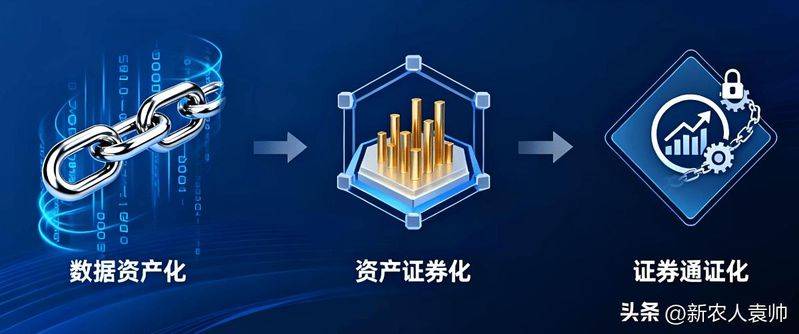
The conversion of data assets to financial capital is at the heart of the entire value transformation path and is key to securitization of data assets to achieve market value and economic performance. Data assets themselves have replicable, shared and marginal cost-declining characteristics, with cash flows often having long-term, stable and predictable characteristics, which coincides with the core asset requirements of asset securitization products. By using the rights to the proceeds of the data asset as the underlying asset for a certain period of time in the future, by creating a special purpose vehicle (spv) to isolate the risk, and by structured design to divide the underlying asset into different levels of securities products for distribution to capital market investors, the enterprise will realize the future benefits of the data asset in advance and obtain a long-term low-cost financing. This process has not only helped businesses to revive the deposited intangible data assets, addressed the reliance on fixed assets and collateral in traditional forms of financing, optimized the asset liability structure of the enterprise and reduced the cost of financing and the financial risk to the enterprise. Data assets are often at the core of the digital economy enterprises with light assets, and through data asset securitization they can break down traditional financing bottlenecks, transform their technological and data advantages into real capital advantages and provide adequate financial support for their technological overlap, market expansion and ecological layout. From a market value point of view, data asset securitization can also raise the level of valuation of enterprises in the capital market and, when an enterprise's data asset is converted into a tradable financial product, investors can assess the value of the enterprise's data elements in a more intuitive manner, thereby generating higher market recognition and valuation premiums for the enterprise and helping it gain a more favourable position in capital operations, such as equity financing, merger restructuring, etc. At the same time, the securitization of data assets can facilitate the market-based trading of data elements, facilitate the movement and configuration of data assets between enterprises and industries, allow the value of data elements to be released on a wider scale and provide a practical scene for the creation of a unified, open and competitive market for data elements。

The return of financial capital from financial capital to the closed circle of high-quality enterprise-building development and the securitization of data assets will eventually translate into a central driver of high-quality enterprise development through the strategic planning and business layout of the enterprise, leading to a return of value flows from financial capital to entrepreneurial dynamism. The funds obtained by the enterprise through the data asset abs will be used in part for the continued development and operation of the data asset, such as increased input into data mid-office construction, data governance teams and data security techniques, further upgrading of the quality and scale of the data asset, and a positive cycle of data asset development and financial capital return. Another part of the funding will be invested in the core business upgrading of enterprises, including technology research and development, capacity upgrading, market expansion and talent development, to help them move beyond the ceiling of traditional business growth towards digital, intelligent and greening quality development models. For example, manufacturing firms could use this funding to upgrade the industrial internet platform to reduce energy consumption and improve productivity efficiency through data-driven production optimization, and to effect a transition from traditional manufacturing to intelligent manufacturing; internet firms could expand their overseas markets with funds from the data asset abs to export their data-operated capabilities and product services to global markets to enhance their international competitiveness; and niche new smes could use this money to increase their r & d investment in core technologies, break the technological bottlenecks in the necks and achieve a transition from subdivision to industry-led enterprises. At the same time, the linkages established by enterprises through the securitization of data assets to capital markets also provide greater scope for subsequent capital operations and strategic development of enterprises, using the capacity of capital markets for resource integration, up-to-down mergers and acquisitions and cooperation in industrial chains, accelerating the ecological layout of enterprises and further enhancing their market competitiveness and industry influence。
At the macroeconomic level, the value transformation path of data asset securitization is not only a micro-practice of high-quality enterprise development itself, but also an important driver of the transformation of the entire economic system into a digital economy. A large number of enterprises transform data elements into financial capital through data asset abs, which will drive the prosperity and development of the data factor market, facilitate the movement and configuration of data elements across industries and regions, increase the efficiency of the use of data elements and make them new engines of economic growth. At the same time, the spread of data asset securitization will also promote product innovation in capital markets, enrich product systems in capital markets, provide investors with more neutron investment targets, reduce systemic risks in capital markets and enhance the capacity of the real economy of capital market services。

As more enterprises become involved in securitization of data assets, the value of data elements will be more widely recognized and valued, which will further motivate the digital transformation of enterprises, accelerate the digitalization process across society and provide a solid micro-base for shaping a new development paradigm in the digital economy. In the new era of economic development, enterprises face multiple challenges of transforming their growth patterns, upgrading their industrial structures and increasing market competition, and the value-transformation path of “data resources — data assets — financial capital” built by securitization of data assets is providing businesses with an entirely new high-quality development path that enables them to break development bottlenecks and achieve sustainable growth with the force of data elements。
Submitted by yuan jun, co-founder, deputy director, investment department, china institute of urban development, new ideas and new productivity. People