In the course of its operation, the bridge crane wheel causes, for one reason or another, a horizontal slide between the wheel and the orbit, which results in tight wheels and orbits, increases operational resistance and results in wear and tear of the wheel and steel tracks, known as gnawing. It will significantly reduce the operational life of the wheel and the steel track and, in serious cases, de-orbit the crane, causing equipment and human casualties, as well as varying degrees of damage to the orbital fixation and to the beam (or road base). On the basis of practical experience, the author summarizes the reasons for the wheeling and safety measures。
The reason why the wheel ate the tracks
(i) wheeling
1. Cracks caused by inaccurate placement of wheels
(1) the horizontal deviation of the wheel is excessive. This is one of the most common reasons why a bridge crane wheel-blowing track is used. The horizontal deviation is too wide to make the wheel centre and the steel track centre an accelerator, and when the crane is moving in one direction, the wheel edge of the vehicle is on the side of the steel track; when the crane is going in the opposite direction, the wheel edge of the same vehicle is on the other side of the steel track, and the position of the grinding is not fixed. When the wheel is installed, the horizontal deviation shall not be greater than l/1000 (l is the measured length on the wheel) and the wheel on the same axis shall be tilted in the opposite direction, otherwise the wheel shall gnaw the track。
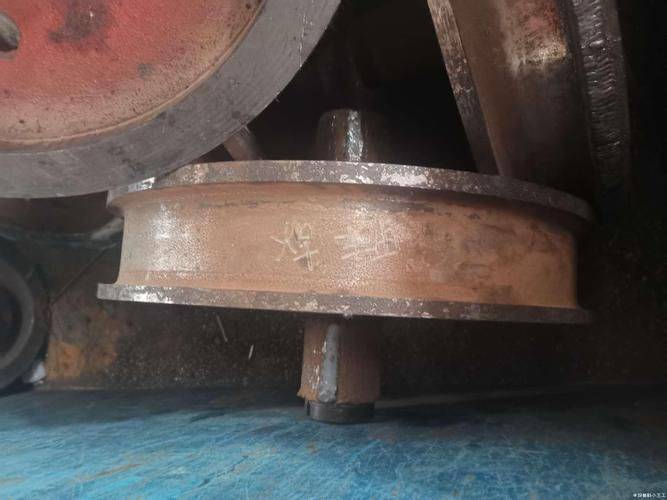
(2) the vertical bias of the wheel is excessive. That is, the centre line of the end of the wheel and the lead plume form an angle and the wheel is tilted. In this case, the rolling side of the wheel becomes smaller than the area of contact with the steel tracks, and the pressure increases in the unit area, so that the wear on the rolling side of the wheel is uneven and, in serious cases, creates a circle of wear and tear on the rolling side of the wheel. This situation is characterized by the fact that the wheel edge of the wheel is always on the same side of the rail, i. E., on the other side of the wheel, with slightly lower marks of the track than usual, and that the crane often makes hissings during its operation. When the wheel is installed, the vertical deviation of the wheel shall not be greater than l/400 and the top of the wheel shall be external. A gnawing track caused by vertical deviation of the wheel refers to the active wheel and is not related to the passive wheel。
(3) the length of wheels and the diagonal lines vary, and the two wheels in the same orbit are of a poor linear nature, which also results in crane wheels eating tracks. In these cases, the gnawing is characterized by wear and tear on both sides of the wheel and steel tracks。
2. Cracks caused by misprocessing of wheels
When the wheels are processed, there are differences in their diameters, which, if different in diameters of the two active wheels, can be used at different speeds on either side of the wheel, leading, after a distance, to a slope of the body, lateral movement and gnawing, which is particularly evident in the centralized drive。
(ii) orbital issues
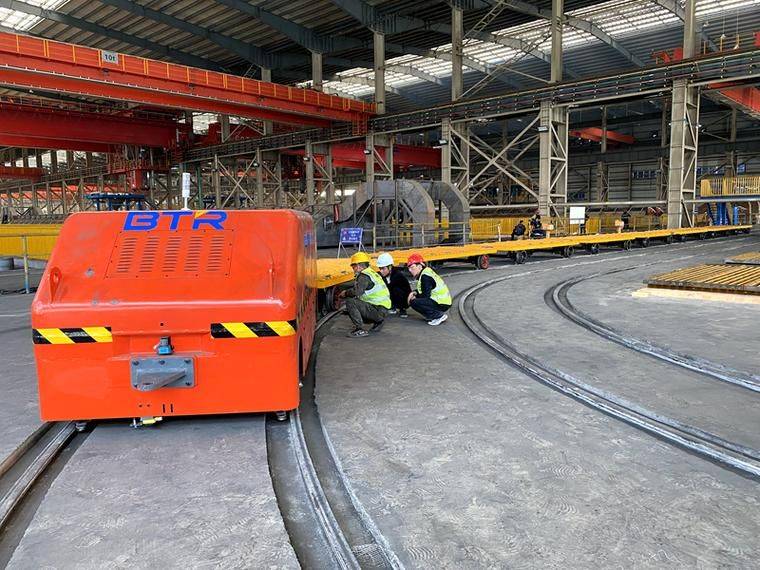
Because of the poor quality of the orbital installation, the deviation between the two orbits was excessive and the cranes were in the course of their operation, which in such a case was characterized by the occurrence of gnawing in certain parts。
1. Two steel tracks with a disproportionate deviation from the relative height
A deviation from the relative height of the two steel tracks resulted in a high beam on both sides of the bridge crane and a low on the other side. In the course of operation, cranes move horizontally to a lower side, leading to gnawing. On the high side of the steel track, the wheel edge and the outer side of the steel track are squeezed and on the low side of the steel track, the wheel edge and the inner side of the steel track are squeezed。
2. Two steel tracks with too wide a linear bias
At the time of installation of the orbit, if there is a deviation in the straightness of the steel track, and it is not straight, the level of the steel track is too curved, and when it is beyond the mass range, it inevitably causes friction between the wheel edge of the vehicle and the side of the steel track, resulting in gnawing。
3. Two adjacent steel tracks on the same side are not at the same level internal
When the crane runs to the end of the steel track, the body causes a lateral movement, which results in a gnawing. This situation is characterized by frequent metal impactes when the wheel runs to the interface。
4. Oil, water, frost, etc. On top of the steel tracks
If there is oil, water, frost, etc. On the top of the steel track, this may cause the wheel to slide when it runs in orbit, leading to a tilting of the body leading to chewing。