Case study
The roof leaked for six years and refused to pay property fees
The court pronounced it. The owner lost everything
A debt of $7,797, claimed $20,000, and the court awarded a "dissatisfied" result -
But the legal logic is clear。
"i don't care if my house leaks, why should i pay for my property?"
This sentence, i am afraid, is one of the most frequent words that industry practitioners hear in their daily work, none of which is true。
That makes sense, doesn't it? You paid for the service, the service wasn't in place, i didn't pay for it。
But the courts do not。
This case, which we're talking about today, is clear and clear at the legal level on the question of whether a leak in a house can prevent property payments. Whether you are an owner or a property practitioner, you are advised to read it carefully — because of similar situations, which take place every day throughout the country。
Revert: a six-year-long "caw war."
The owner, li koi, began to discover water infiltration problems on the roof of the building in which he lived in 2015. Property companies have been repeatedly informed that they have also been present on several occasions, but the problem has not been fully resolved。
Lee thinks that if i pay my property, you'll have to fix it. I can't fix it, i won't pay. That makes sense。
As a result, since 2015, li has not paid any more property fees。
This rejection is six years。
Six years of accumulated arrears of $7,797. On several occasions, the property company failed to pay, eventually bringing li to court to claim a surcharge of $7,797 and a delay payment of $12,203, for a total claim of $20,000。
Case critical data
Length of refusal: 6 years (since 2015)
Cumulative arrears: $7,797
Total property claim: $20,000 (property charges + demurrage)
Causes of the dispute: water leaking on the roof, reflecting failure
Court ruling: the owner loses, but the property doesn't win
The result of the court's judgement is worth a word of taste —
Judgement i: full payment of property costs
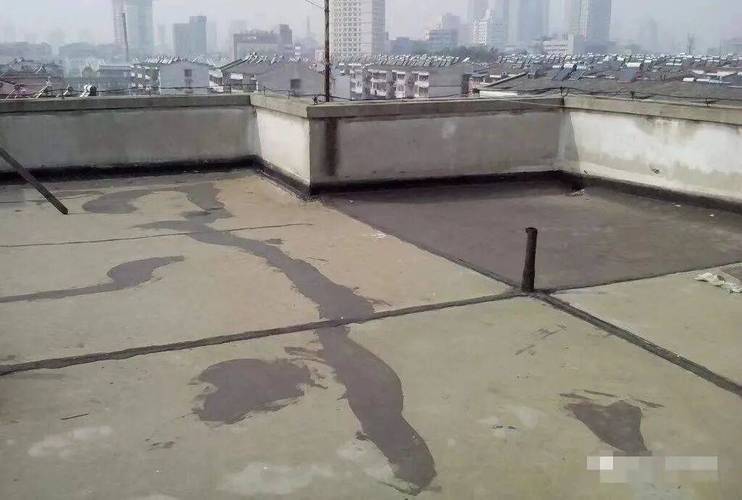
Lee is required to pay the full amount of the outstanding property fee of $7,797. The court held that the issue of the leak in the house was a separate legal relationship with the cost of the property and could not be confused。
Judgement ii: dismissal of the claim for late payment
The property application for $12203 in demurrage was rejected. The court found that she was not in bad faith in arrears and that she had refused to pay due to the unresolved water spill dispute and did not support the high level of late payment。
Judgement iii: alternative treatment of leaks
The court made it clear that leaks in public areas such as the roof and the public pipeline fall within the scope of the public maintenance fund and that disputes over property costs are not subject to the same legal relationship and that li has a separate claim。
Translator: you have to pay for the property, not less. But i don't support that, because you didn't mean to. As for leaks, go to the maintenance fund process. Don't be ridiculous。
This decision, which appears to be "fifty-fifty" each, is very clear - at the legal level, "house leak" has never been a legitimate reason for refusing to pay for property。
Core legal logic: why does the court judge this
It's not fair for a lot of owners to see this sentence: "my house is rotten and you want me to pay?"
Understand this emotion. But from the legal point of view, the court's decision is in fact very clear in logic, and the core is in one sentence —
Property charges are "service-to-service"
Water leak maintenance is a maintenance obligation
We can't mix things up
What do you mean
You pay property fees for daily services provided by property companies — security patrols, environmental health, daily maintenance of public facilities, greening maintenance, order management, etc. As long as you live in this neighborhood, as long as you enjoy these services, you have to pay. Even if one of these services is unsatisfactory to you, you cannot refuse to pay for it altogether。
In addition, leaks in houses, particularly in public areas such as roofs and public pipes, fall within the scope of house maintenance and not of everyday property services. This responsibility should be met through public maintenance funds or by responsible parties (e. G. Developers)。
You're legally indefensible to refuse to pay for b services because issue a has not been resolved。
It's like you go to a restaurant and you feel too salty, and you refuse to pay. They can complain, they can ask for a change of course, they can ask for a waiver, but they do not pay directly, and the law does not support it。
Legal basis
Article 94 of the civil code:
The owner shall pay property fees to property service providers as agreed. Property service providers who have provided services in accordance with the agreement and the relevant provisions may not refuse to pay property fees on the ground that they have not accepted or are not required to accept the relevant property services。
The law is clear: as long as you provide the service, the owner must pay. "i don't enjoy it" or "you don't have your services in place" cannot be a legal reason to refuse to pay。
Who's gonna fix the leak? The judge's warning is crucial
Although the court ruled that the owner had lost all, the judge gave a very practical “divide map” in the post-judgement reminder. This road map recommends all owners' collections--
1. Identification of causes of leakage
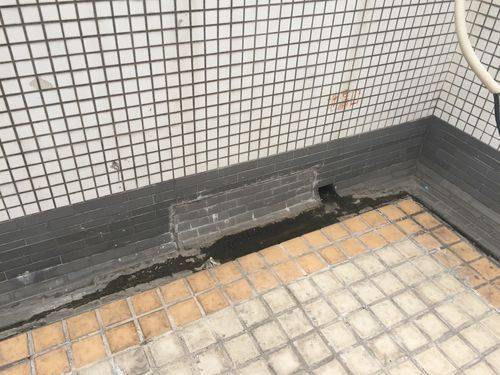
That is the starting point for all issues. The location of the leakage, the reasons for it, the parties responsible are different, and the procedures for its follow-up are completely different. Don't come up and yell "you pay me back"。
It's because of renovations, etc
If the leak is caused by your own renovations (e. G. By changing the water-proofing layer and piercing the pipe), there is no doubt that you will bear the cost of the maintenance. It's no use looking for anyone。
Quality of housing, in two cases
During warranty period: directly to developer. In accordance with the regulations on the quality management of construction works, the warranty period for surface water protection works is not less than five years. Water leaks during the warranty period and developers are required to maintain them free of charge。
Over the warranty period: application for public maintenance funds. The roof is public and meets the requirements of the application。
4 public departments such as public pipelines
Water leaks in the pipes, roofs, exterior walls, etc. Of public areas are covered by the maintenance of shared facilities and equipment, and the funds for maintenance shall be requested in accordance with the provisions of the act on the management of funds for special residential maintenance。
Have you noticed? In either case, the refusal to pay property fees is not a legitimate defence。
The tragedy of lee is that he chose the best but most illegal path. Six years without paying, the leak was not repaired and a debt of $7,797 was incurred. If he had gone through the maintenance fund application process in that year or had directly sued the developer, the outcome might have been quite different。
Counting: six years of withholding, how much did the owner lose
Let's settle for lee。
Li's withholding fee
Property costs: $7,797 – a lot of money to pay
Leakage losses: damage to walls, furniture, renovations caused by six years of continuous flooding — no compensation
Cost of litigation: time and effort, attorney's fees, transportation costs - self-financing
Credit effects: court decisions may affect personal correspondence - long-term risks
Mental cost: six years of repeated complaints of ineffectual anxiety and weakness - unquantifiable
It's gonna cost $7,797. However, the damage caused by the six-year leak could be 10 or 20 times more than $7,797. The walls are moldy, the floor is deformed, the furniture is damp and electrical short circuits — the money is not reimbursed to you。
You think you're punishing property, actually you're punishing yourself。
It is even more ironic that if li normally pays for property and actively promotes the fund's application process, the leak may have been resolved as early as the first year. Six years of non-payment, in exchange for payment of money, loss of room, court action, letter-taking。
This case, the owner and the property should reflect
First, the owner。
Three words to the owner:

First, the refusal to pay property fees is not a means of defence but a means of breaking the law. No matter how legitimate your reasons may be, the court will not support them. Article 944 of the civil code clearly states that this road cannot be followed。
Secondly, there are problems to treat. Leakage to developers or apply for maintenance funds, poor security to property complaints and non-transparent public revenue to industry committees. There's a way out of everything. Don't turn all your grievances into "i don't pay property."。
Thirdly, the longer the loss. Lee didn't pay for some six years, the leak was not fixed and the losses were increasing. Problems can only be more complex and costly if they are addressed in a formal process at the first opportunity。
Besides property。
Three words about the property:
First, the owner's problem cannot be "recorded and not solved". Lee's repeated complaints in one or six years, if the property is "received, recorded, processed" and then there's no follow-up, and this "formalized response" is itself a trigger of conflict。
Secondly, when it comes to directing owners to the formal channels, they must take the initiative. Many owners do not know that a roof leak can apply for a maintenance fund, and the property should be proactive in informing the process and assisting in the preparation of materials, rather than waiting for the owner to find out。
Thirdly, stagnant gold is not a panacea. The court rejected the delay, suggesting that judicial practice had some room for tolerance for "non-negative arrears". Frequent claims for a high level of late payment will only make owners more repulsive and contradictory. Good service is the solution。
To be honest, the root of the case was not the lack of reason on the part of the owner or the omission of the property, but the fact that the owner did not know how to defend his rights or how the property should be guided. The two sides talked and did their jobs, and finally dragged a small problem into a six-year-long saw war。
I'll say a few final words
"i don't have property services in place, i don't pay property fees" -- that sounds like a relief, but from a legal point of view, it's a logic of "i don't pay for food if it's not good."。
You can file a complaint, you can ask for correction, you can sue and you can report it to the competent authorities. These have legal grounds and are protected by law. The only rule, "refusal to pay" , is not supported by law, not by the courts, and ultimately it is you who are injured。
Six years, 7797 dollars. The problem of leakage had not been resolved, and the amount due had not been small, and the time, energy and mood had been put in place。
If you're with the owner who's using the "no payment" to protect his rights, please transfer the case to him. Rather than talking for the property, he wanted to protect his rights and interests in the right way。
The right to defend will be guided, and it will be a dead end。
The law does not protect people who sleep on the right
It is not a matter of protecting those who defend their rights in the wrong way。
It's your duty to pay. It's your right to defend。
Don't confuse rights and obligations。
This article is based on public jurisprudence and legislation, which represent only personal observation and reflection
It does not constitute a legal opinion and does not constitute an evaluation of any party。
Relevant laws: civil code, article 94; regulations on the quality of construction works; measures for the management of funds for special maintenance of housing。
Feels useful. Welcome to your proprietors。