Once the pv power plant is connected, the most frequent voltage problems encountered by transport personnel usually fall into two categories: low morning electricity generation but already high main-line voltage, and excessive adjoining line voltage at peak power, resulting in an unplanned shutdown of protective actions。
These two types of problems are essentially related to the management of powerless voltage. A lot of people just stare at the power of the work, and they don't give much attention to the incompetent regulation, which leads to the problem of voltage。
Why is the high voltage "home-to-home" of the photovoltaic station
Optical voltage stations are generally located at the end of the line or at the end of the branch, and grid lines are resistant. When power is high, the reverser injects a large amount of power through the pressurizer, and because of the resistance of the circuit, the current itself lifts up the power of the point of access. This is where the photovoltaic power plant differs from the hydroelectric power station and the fire station, which are generally close to the load centre and better controlled by the voltage。
The national standard gb/t 19964 and the technical specifications for grid access require that pv stations join no more than 10 per cent of the rated value (some of the local standards are stricter), and 110 kv systems generally require 0. 951. 07-pu, and 35 kv systems are usually 0. 931. 07-pu。
The consequences of excess voltage over ceilings: high-voltage protection actions by reversers, automatic off-grid and loss of power generation; other equipment on the line may also be affected. The consequences of voltage over the lower limit (pv stations are relatively rare): lack of functional support, differential system power factors, and transformation plants require overhaul。
What are the core tools for non-regulating
Non-functional voltage regulation of photovoltaic plants is based on several tools:
Inverters are non-functional (predominant)
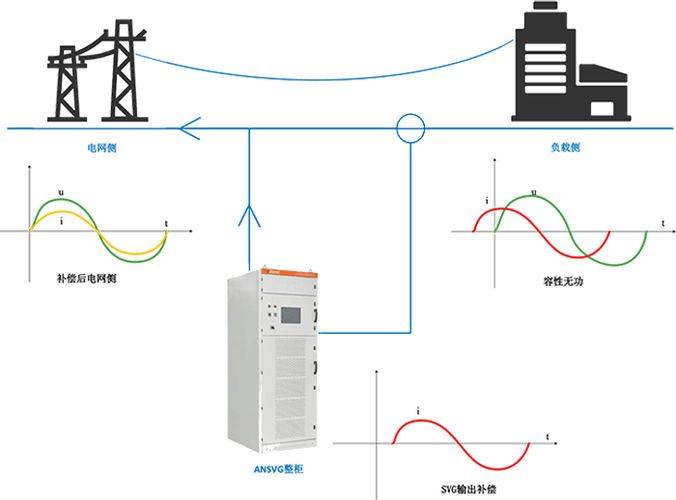
Modern photovoltaic retroverters have a four-wield capacity to produce sensory failure (absorption failure, voltage relief) or impotence (deficient failure, voltage). The range of no power in rated form is usually from a power factor of 0. 95 to 0. 95, which corresponds to a powerlessness of approximately 31 per cent of the rated capacity。
The 100 mw photovoltaic power plant, the reverser, can theoretically provide about 30 mvar with no power support capacity, a considerable resource。
The key is control policy: centralized reversers receive orders directly from the avc (automated voltage control) system; a large number of clusters of retroverts generally deliver powerless commands through power control units (pcus) or monitoring backstages。
Pressure transformer splits (carrying)
The pressure transformer at a large photovoltaic station is typically equipped with a load-to-pressure fraction interface (oltc), which can change the transformer ratio and regulate the high-pressure side voltage in the absence of constant power。
The silos are usually 5 per cent x 2 or 2. 5 per cent x 5 per cent, with a step-by-step adjustment of about 1-2 per cent. When the long-term voltage is high, the branching slot is lowered and the high pressure side is released。
N. B. Interlocking is a long-term mode of reconciliation and is not suitable for frequent operations (with loads, but mechanical wear and tear for each operation), usually not exceeding 3-5 times a day。
No power compensation (svg/svc)
Some of the stations are equipped with stationary non-functioning generators (svgs) or stationary non-functioning compensaters (svcs) that can be sent out or absorbed quickly and accurately. The response rate is within tens of milliseconds, faster than the incomposer's failure to adjust, and is dedicated to dealing with fast-floating power gaps。
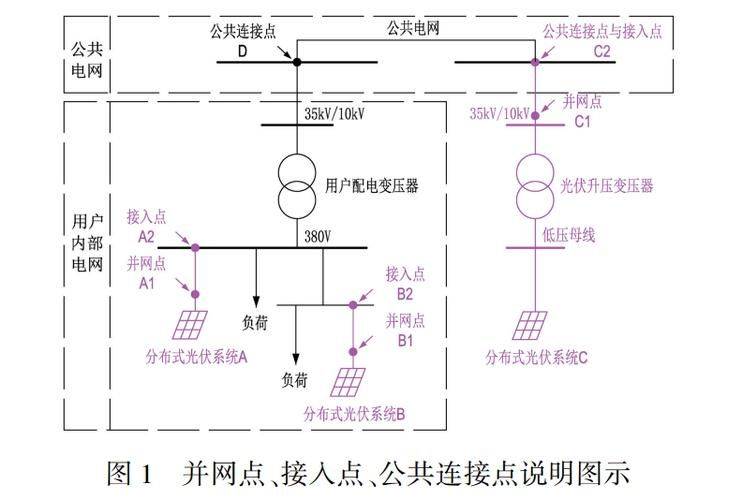
Svg investment costs are relatively high, usually for projects that are more demanding for large photovoltaic plants or grids, and for small distributed power stations, they are not。
How does avc work
When an pv plant is of a certain size (general 35kv access capacity > 10mw), the grid company requires the avc (automated voltage control) system to be equipped with a dispatch order。
Avc's basic logic:
Movement side power pressure target or no power target, avc system automatically calculates the no power distribution of the reversers based on the deviation of the current grid point voltage from the target, gives no power command to the counterverters backstage, and gives feedback on measurement data after implementation to form closed loop control。
The response time is normally 90 seconds from the direction to the voltage adjustment. The inoperable control accuracy of the retrovert directly affects the adjustment effect of avc。
In practice, the disruption of the avc channel is a high-frequency problem — network failure, communication time overruns, and expiry of authority may cause the avc to lose connection, when the power station is moved to manual or pre-set strategy. Interrupted surveillance and rapid recovery of avc is an important part of the transport effort。
The idea of an overcharged voltage site
The grid-connection voltage was found to be high and the site screening generally followed this order:
As a first step, confirm data: verify first whether it is a measurement instrument or a real voltage problem. A comparison of the movement of real-time voltage, in-station voltage measurement and the reporting of transformers can only be confirmed by agreement。
Step two: checking the incompetent state of the reverse transformer: entering the monitoring platform to see if the current power factor of the reversers is not working (sensitization). If inhaled but at high voltage, reversers are not functional enough。
Step three, split the transformer: if the transformer has a charge, move one to two steps to the lower slot, lower the pressure side voltage and observe the effects。
Step four, movement control contact: if none of the above means is effective, the voltage remains above ceiling, and may require co-processing on the side of the grid (e. G. Adjusting the power balance of the line or lowering the power ceiling of the adjacent transformer station) by actively contacting the grid movement。
Don't do anything: it is against the law and may trigger the test not to wait for the retrovertor's voltage protection action to be dealt with, and to be more proactive than passive emergency response; and not to be forced to ignore the limits of the voltage in order to sustain the effort。
What about the power factor test
The power factor test clause in the large pv grid contract generally requires an average monthly power factor of more than 0. 95 (sensitivity) and the failure of the grid-connected power factor is subject to a fine, which is reduced by the amount of electricity available for settlement。
Photovoltaic power is in itself a non-functional, pure power source and, without the allocation of no-power compensation, the grid-pointing factor is entirely dependent on the sensory inoperable consumption of transformers and circuits at the lifting station, which is virtually impossible to meet naturally。
So that's why reversers have no power control and have to work steadily. It is not just for the stabilization of the voltage, it is also for the avoidance of power factor fines。
In actual transportation, the average monthly power factor is verified well in advance at the end of each month, and if the end of the month is already low, the reverse agent is expected to be active by the end of the month, the power factor statistics are raised and penalties are avoided. It's a practical detail that many new engineers don't know。