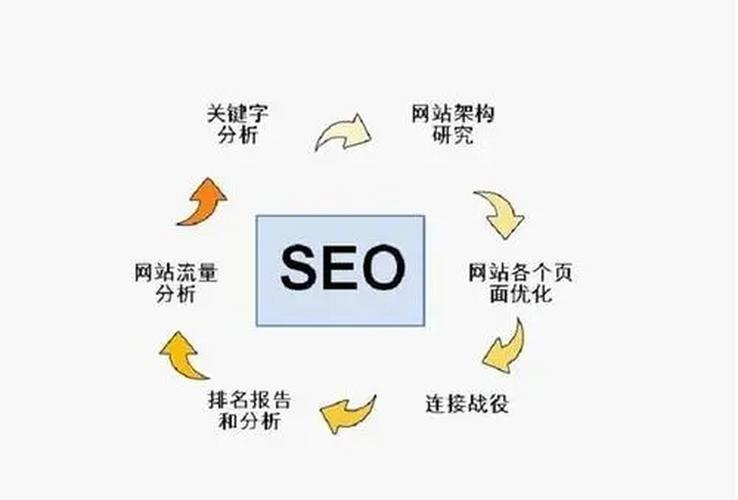
The enterprise website keyword optimization needs to balance the three dimensions of “search engine rules, user experience, business transformation” to avoid a downgraded ranking or ineffective traffic due to a detailed error. The following are the core areas that require attention:
Keyword selection: avoiding “self-hidden” words, focusing on “user genuine search”
Rejection of “industry terminologies”
Enterprises are often caught in the wrong zone of “in-house terms as keywords” (e. G. The mechanical industry uses “cnc precision” and users are more likely to search for “precision parts processing”). The selection of the term “user-spoken, demand-specified” (e. G., “where in zhengzhou there is a parts processor” is easier to search than “cnc processing service provider in zhengzhou”)。
Controlling the competition of keywords and avoiding the “high and unstoppable” word
New stations/small and medium-sized sites should not blindly strike “industry words” (e. G. “web site construction” “mechanical processing”), the first pages of which are mostly occupied by head brands or old stations, optimizing costs and cycles. Priority is given to “long end words + geographical words” (e. G. “small parts processing quotations” of zhengzhou's web site construction company)。
3. Ensuring that keywords are operationally relevant
Avoiding the selection of unrelated words for “flow” (e. G., the refurbishment company optimizes “furniture prices”) would not only be impossible to convert but would also be judged by the search engine as “content irrelevant” and would reduce the overall weight of the website。
The layout of key words: rejection of the “stack trap” and adherence to the “natural distribution” principle
1. Precision of core positions and avoidance of duplication of piles
- title headline: the core word can appear one or two times (e. G. “chengzhou website construction — enterprise stations — technology xx”) and repeats more than three times that may trigger 100 degrees of wind-cleaning punishment
- text: control of keyword density at 2 to 8 per cent (20-80 times in 1,000 words) and avoidance of “absorption of keywords in each paragraph” and natural integration of sentences (e. G., “our website construction services in zhengzhou include domain name registration, design development, etc.”)。
Non-repetition of “internal consumption” for different page keywords
The first page, the column page and the content page need to be arranged in different keywords to avoid “multiple pages optimising the same word” (e. G. The first page and the three columns optimize the zhengzhou web site), leading to internal competition within the website, and the search engine has difficulty judging which page is more important, and ultimately it is difficult to obtain a good ranking。
Attention to “hidden keyword location”
- photo-alt tag: a key word (e. G., “chengzhou website construction case-xx official webshot”) is automatically added to the picture to help the search engine understand the picture
- url path: named with a keyword or simplified english (e. G. “/zhengzhou-wangzhan-jianshe/” is more friendly than “/page123/”)
- anchor text: an internal link anchor text (e. G. “know your website construction process”) may contain keywords and avoid the use of meaningless anchor texts such as “click here” more。
Content support: “core bottom” for keyword ranking, avoiding “low-quality content”
The content is “a strong match” with the keyword and is not “inconsistent”
If the keyword is “how much is built on the website”, the content should focus on “price composition (domain name/server/design fee), different offers of packages, factors affecting prices”, rather than on “web site construction steps”. The relevance of content to keywords is judged by a “syntax analysis” that does not match, even if the keyword is in the best layout。
Rejection of “false originals” and “tribbles”
Direct copying of peer content and the replacement of synonyms with software (inventory originals) can be recognized as low-quality content at 100 degrees, leading to a “no entry” or a “buster fall in ranking”. It is necessary to add uniqueness to the originality of the enterprise by combining its own case (e. G., “we offer zhengzhou xx for website construction”)。
Content depth is sufficient and does not “simplify”
Keyword rankings are essentially “content value competition”, and when users search for “web site construction attention”, quality content lists 5-8 dimensions, such as “domain name selection, server configuration, seo-friendly, mobile end approximation”, with specific recommendations for each dimension; while low quality content is limited to a general reference to “selection of companies, design”, which naturally makes it difficult to obtain approval of the search engine。
Technical basis: “invisible threshold” for keyword ranking to avoid “technical hard work”
Ensure that search engines are “capable and accessible”
- checking whether robots. Txt is blocking important pages (e. G. `disallow: / ' will prohibit all capture)
- solving the 404-dead chain (submitted with a 100-degree death chain tool), re-orienting deleted but ranked pages (e. G., “old product pages” for new items)
- submission of sitemap. Xml to 100 degrees search resource platform to guide reptiles to quickly discover keyword pages。
Movement-end experience does not “late”
The mobile priority index (mpi) is used every hundred degrees if the moving end page " text is too small, buttons overlap, load slow " , and even if the pc end is ranked well, the moving end will be downgraded. The 100-degree mobile search experience rating tool will be used to test to ensure that the score is 80 points。
Page loading speed does not “slow ranking”
The 100-degree lightning algorithm reduces the right to "load slow websites" and needs to be optimized:
- photo compression (to webp format), lazy load (delayed loading of off-screen pictures)
- server response time (ttfb ≤300ms), which can be accelerated through the cdn
- target: 2 seconds on the first screen, or more than 70 per cent of users will be lost。
Data monitoring: avoiding “blind optimization”, adjusted with data guidance
Follow-up key word “twice in ranking”, timely detection of anomalies
If the core word suddenly drops out of the top 50 on the front page, it needs to be checked:
- whether to touch algorithms (the 100-degree search resource platform will have an “alpha alarm”)
- whether the website has been hacked (unlawful content)
- the ability of peers to optimize their actions (e. G., a large number of high-quality external chains)。
Analysis of “flow and transformation”, phase-out of “invalid keyword”
It's a 100-degree statistical surveillance:
- if a key word is “first page but no traffic”, title and description needs to be optimized (more attractive, for example by adding “free advice” to “local producers”)

- if there is “flow but no consultation”, the page conversion portal needs to be optimized (e. G. By adding an “immediate quotation” button to the content page) or content confidence (e. G. By adding a client evaluation)。
Regular `renewal' key word library
User search habits change (e. G. “web site construction” — “responsible website building”) and key words need to be re-explored with tools on a quarterly basis to replace the words “reduced search volume” or “optimal six months without progress”。
Vi. A bottom line of compliance: stay away from the "black hat" and avoid the "showing of rankings"
1. Relatively prohibited acts
- the multiplicity of keywords (heading/ body text repeats core words more than five times)
- hidden text (text colour consistent with background, only for deception of search engine)
- purchase of garbage outlinks (forum signatures, low-quality catalogue stations)
- disguised clicks (key-word clicks with software)。
These acts can trigger algorithms such as thunderbolts and windstorms, leading to zero rankings of “k” websites and making recovery difficult。
Upholding the long-term value of “white hat optimization”
While the white hat optimization (quality content, rational layout, natural outer chain) is slow (3-6 months), it is stable, accurate and consistent with the long-term rules of the search engine and is the only sustainable path to the optimization of key words on the enterprise's website。
Summary: the core of keyword optimization is “balance”
Balance “search engine rules” with “user experience”, “short-term ranking” with “long-term stability”, “flow acquisition” with “business transformation”. Instead of pursuing the shortcut of “fast-to-head” the key word ranking becomes a steady channel for business customers through “precision, quality content, compliance optimization”。