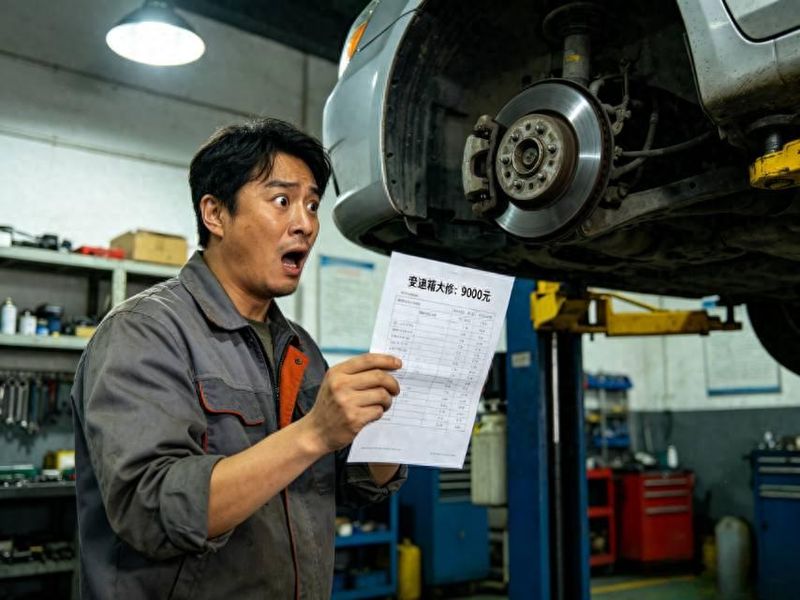
Automobile maintenance is a major activity in building the capacity of students to operate automobile construction, maintenance techniques and related equipment. Compared to other technical professions, the vehicle maintenance profession is more hands-on, while theoretical knowledge revolves around actual maintenance needs. The following are the main studies in this profession。
1. Automobile construction and rationale

Automobile maintenance requires, first and foremost, learning about the basic structure and working principles of the car, including engines, chassis, electrical systems, body parts, etc. The engine component covers the functions of components such as cylinders, pistons, rotors and so forth, as well as the operation of fuel systems, cooling systems and lubricants. The chassis component includes the transmission system, the suspension system, the structure of the transition system and the brake system. The electrical system covers batteries, generators, start-up motors and the working principles of vehicle-borne electronic equipment。
In contrast, studies in pure mechanics or electronics may be more in favour of a single field, while the automobile maintenance profession requires a combination of mechanical, electronic, hydraulic, etc., which is more demanding for students。
Vehicle detection and failure diagnosis
Modern vehicle maintenance depends not only on experience but also on specialized equipment for testing. Students need to learn to use tools such as fail diagnoses, oscilloscopes and universal meters to analyse engine failure codes, circuits and mechanical parts anomalies. For example, motor shaking may be caused by ignition systems, fuel systems or mechanical wears, requiring gradual screening through data stream analysis。
Modern vehicle maintenance is more dependent on technical means than traditional “experience-driven vehicle repair”, so students in this profession need to have a strong logical analytical capability, similar to the debugging thinking in computer programming, but more hardware-oriented problem solving。
3. Vehicle maintenance and maintenance
The vehicle maintenance profession not only teaches trouble repair, but also conventional maintenance knowledge, such as the replacement of oil, the examination of brake blades, tyre balance and four-wheel positioning. While these elements appear to be simple, they need to be implemented in practice in strict compliance with standard processes, otherwise they may affect vehicle performance。
Vehicle maintenance is more standardized than that of other industries, such as home electrical maintenance, as it involves safe driving and any operational error can have serious consequences. The profession requires stricter normative and detailed operational requirements。
4. New energy automobile technology

With the proliferation of new energy vehicles, additional courses have been introduced in the vehicle maintenance profession, including battery management systems, electrical drive principles and high voltage electrical safety operations. The maintenance of new energy vehicles differs significantly from that of conventional fuel vehicles, such as high-pressure batteries, which require special protection, while electrical systems involve more electronic control techniques。
New energy vehicle maintenance is more reliant on electronic technology and less mechanical work than traditional car maintenance, but more demanding for electrical safety. Students who study in this direction need additional high voltage operating norms, similar to some of the knowledge of the electric industry。
5. Gold and paint techniques
Automobile maintenance also includes body repair elements, such as gills, welding, spray paint, etc. The gold platinum technology is used to repair the body of a collision deformation, while the spray paints involve techniques such as tuning, grinding and spraying. These skills require long periods of training to be skilled。
Unlike general metal processing, car gold is more accurate because of the complete recovery of body-line diversity, which otherwise affects appearance and wind resistance. Painting is similar to art work and requires colour matching and spraying techniques。
6. Electronic and circuit maintenance of vehicles
Modern cars are becoming increasingly electronic, including on-board computers, sensors, recreational systems, etc. Students need to learn about the reading of circuit maps, the testing of electronic components and the principles of communication on the can bus. For example, the inability to lift a window may be a switch, electrical or wiring problem, requiring gradual screening through circuit maps。
Vehicle circuits are more complex than home appliances maintenance, as vehicles are exposed to environmental impacts such as vibrations, temperature changes, etc., while travelling, and failure screening is more difficult。
7. Client services and management
In addition to the technical content, the vehicle maintenance profession also involves basic management knowledge, such as maintenance reception, time counting and spare parts management. The maintenance technician is required to communicate with clients on failures and to rationalize maintenance processes。
Car maintenance places more emphasis on service awareness than other technical positions, as clients are usually the owners of individual vehicles and good communication improves satisfaction。
In conclusion, the studies in auto maintenance are extensive and cover a wide range of areas, including mechanics, electronics and management, and require both hands-on and analytical thinking. It is more practice-oriented than purely theoretical disciplines; it is more complex than other technical jobs. With the development of the automobile technology, the knowledge system of the profession is constantly being updated and suitable for people who like to work and are willing to continue learning。