Circuit charts
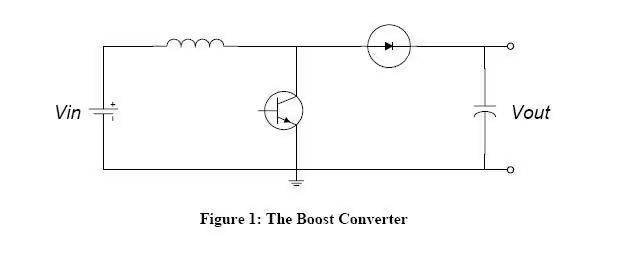
Assuming that the switch (triode or mos tube) has been broken for a long time, all the components are in ideal condition and the electric voltage equals input。
When analysing the rationale for the lifting of the electrocution circuit, it is assumed that the electrical sense l in the circuit is very high and the capacitor c is very high. When the controlled switch v is in a state of flux, the power source e is charged to the perception l, which is basically the i1 constant, while the voltage on the cap c is supplied to the load. Because the c is very large, it basically keeps the output voltage uo constant, recorded as uo. The time at which v is in normal is toton, and e and l charge the capacitor c together and provide energy to the load when v is in disarray. The time at which v is disabled is toff, during which time the energy released by telepathic l is (uo-e) i1toff. When circuits work in a steady state, the energy accumulated in a t cycle is equal to the energy released. One
Here's two parts: charge and discharge
Charge
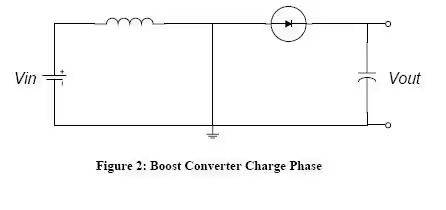
During charging, the switch is closed (triode conduit), the equivalent circuit is shown in figure ii and the switch (triode) is replaced by a guide. At this point, the voltage stream is being injected. The diodes prevent the discharge of electric fluids to the ground. As inputs are direct currents, the electrical current increases linearly at a certain rate, which is related to the size of the sensor. As the electrons increase, some energy is stored。
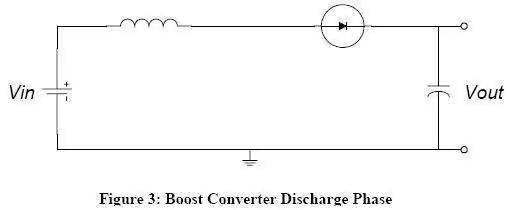
The discharge process is as shown in figure iii, which is the equivalent of the circuit when the switch is off (closure of the triode). When the switch is off (triode cut-off), the current of the sensor will not immediately turn to zero, but rather slowly from the value at the time the charge is completed to zero, because the current of the sensor will be maintained. The original circuit had been disconnected, so the sensor had to be discharged through the new circuit, i. E. The sense had started charging the capacitor, and the voltage had increased at both ends, at which point the voltage had already exceeded the input voltage. Raise pressure over。
The lifting process is an energy transfer process of the sense. When charged, the sense absorbs energy, and when discharged, the sense releases energy。
If the capacity is large enough, a continuous current can be maintained at the end of the output。
If this broken process is repeated, you can get a voltage above the input voltage at both ends of the capacitor。
Some additions
Aa's low voltage, and the bottlenecks to the power and efficiency of the anti-heat-up circuits are in the switch, the currents, and other losses (in electrical senses).
1. An electric sensor cannot use a magnet that is too small (can't hold the energy that it deserves) or too thin a line.
2 the flow pipe mostly uses shortkis, mostly the same, uncharacterized, with a total loss of about 10% at the time of output of 3. 3 v.
3 switches, here's the key. It needs to be big enough to be saturated. It has to be small. It's the key to success. In total, it's only a voltage.
Four, what's the maximum power? Let's make it one a, it's more than that. Because of the inefficiency, this is the average, 3a for half-week power supply, and the actual current shape is 0 to 6a. It's suggested to use two tubes called 5a, actually 3a together.