Refrigeration pipe congestion and refrigerant injections are common and critical operations in the maintenance of small cold banks. Inadequate handling can affect refrigeration efficiency, increase energy consumption and even lead to equipment damage. The following is a systematic description of the method of clean-up of piping congestion and the normative process of refrigerant injection。
I. Types, diagnosis and clean-up of congestion in refrigeration pipelines
Plumb congestion is a typical cause of the decline in cooling in cold storage, mainly in the form of ice, dirt and oil。
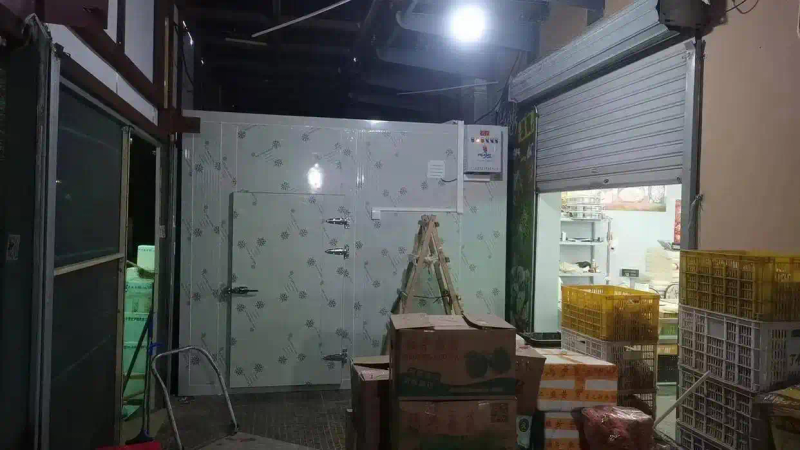
1. Type and judgement of congestion
*cross: usually caused by water over-standards within the system. When the refrigerant flows through the throttle, such as a cavity tube or an expansion valve, the water freezes into a jam. It is marked by normal cooling at the beginning of the operation, after a period of time when evaporation cream begins to melt, the sound of the compressor is stifling and the process is repeated after a period of time before it is shut down。
*direct congestion: caused by welds, skin oxides, impurities or scraps of metal from wear and tear within the system. The jamdos take place in the narrow areas of filters, cauliflowers, etc. In the case of compressors with higher exhaust pressure, lower inhaling pressure, or even vacuum, the evaporation unit has no or very little frost, and no improvement has been made in the opening of the aircraft after the shutdown。
:: oil jams: less commonly, lubricated oils are more often overloaded in low-temperature evaporation tubes or gas return tubes and accumulate to create mobility barriers. The phenomenon is similar to a blackout, but the pressure changes are relatively moderate。
2. Blocking clearance steps
Clean-up of congestion is subject to the principle of safe operation, first judgement and then disposal。
(1) ice clearance
The core of the freeze is to remove excess water from the system。
* confirmation of ice congestion: based on the above characteristics. Hot towels can be applied to the cascading tube to the evaporation unit and can be generally recognized as ice if refrigeration is restored in a short period of time and subsequently blocked again。
*replaced dry filters: dry filters are the core components for absorbing moisture, and when ice jams occur, diversity is replaced. Select a new dry filter matching the specifications。
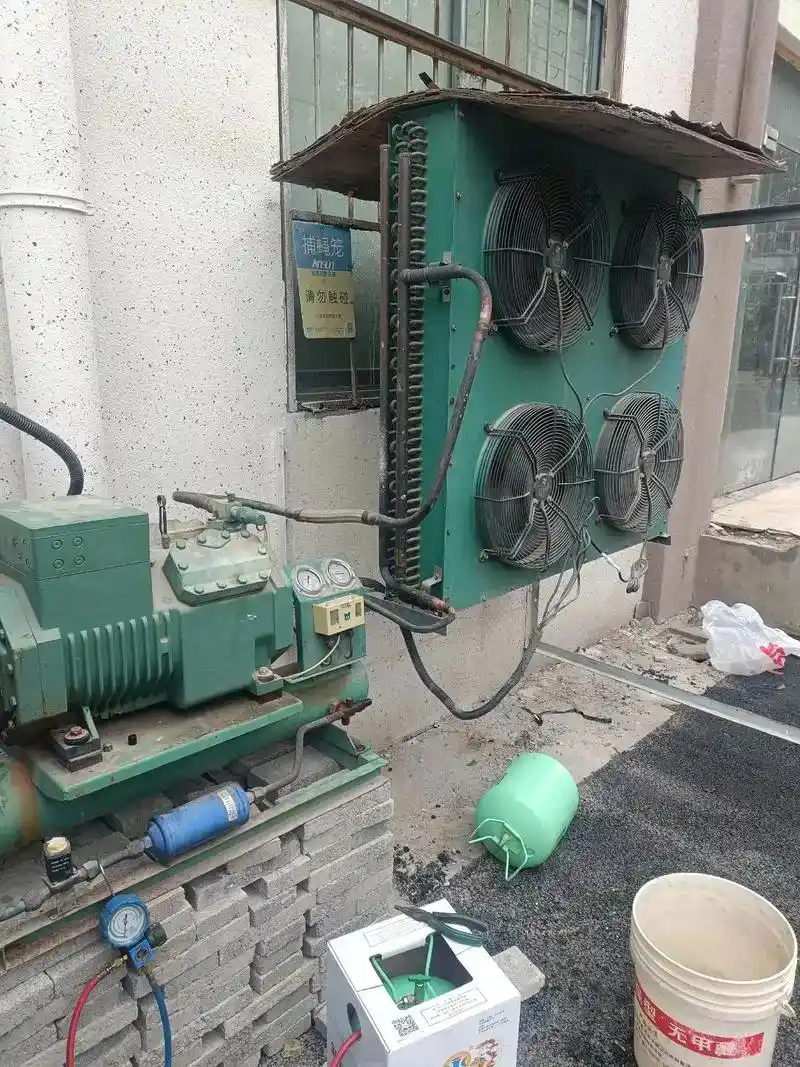
:: system vacuum: this is a critical step. The diversity uses a qualified vacuum pump for long periods of vacuum, which is recommended for small systems for not less than two hours. When necessary, a double-dip vacuum (i. E., a vacuum filled with a small amount of refrigerant, followed by a vacuum) may be used to drain water more thoroughly。
*refill refrigerants: after a strict vacuum, appropriate and qualified refrigerants are charged in accordance with specifications。
(2) clean-up of dirty traffic
The dirty jam requires the removal of physical impurities。
*possibility congestion points: the approximate location by measuring pressure, tactile road temperature changes (with significant temperature differentials before and after jamming points) is common in dry filters or cavity tube entrances。
*replacement of components: usually, the blocked dry filters need to be replaced. The whole catheter will need to be replaced if the plug is in the catheter tube and cannot be blown through。
*playing and cleaning: before replacing components, it is possible to break through the clogged area and to clear loose impurities with high-pressure nitrogen gas from the high-pressure and low-pressure segments of the system. For severely contaminated systems, the use of special detergents for recycling may be required, but the operation is complex and requires caution。
:: reassembly and vacuum: replace the parts and blow them, weld them and weld them, screen the entire system for leaks and vacuums。
(3) garbage treatment
*identification of oil: check that the type of lubricant used in compressors meets the requirements of the refrigeration system。
* adjusted refuelling: check if evaporation design, piping slopes are conducive to refuelling. Attempts could be made to increase external heating of suspected oil jams and to facilitate the return of lubricants。
* system cleaning: a severe oil jam may require the dismantling of the system, the cleaning of evaporation units and pipes with a special solvent and the replacement of all lubricants。
Ii. Refrigerant labelling regulatory process
Regulating refrigerants is an important element in ensuring maintenance quality and extending the life of equipment. It is strictly forbidden to draw a vacuum, either directly or empirically。
1. Preparatory work before footnote
:: safety protection: operators are required to wear protective gloves and goggles and operate in a well-ventilated environment。
* tool confirmation: ensure that tools such as dmps, vacuum pumps, electron scales, refrigerant cylinders are in good condition and that the connection to the hose is intact。
*refrigerant type confirmed: check the refrigerant model (e. G. R404a, r22, r134a, etc.) marked on the compressor or stamp of the freezer, diversify to add the same type of refrigerant and not mix。
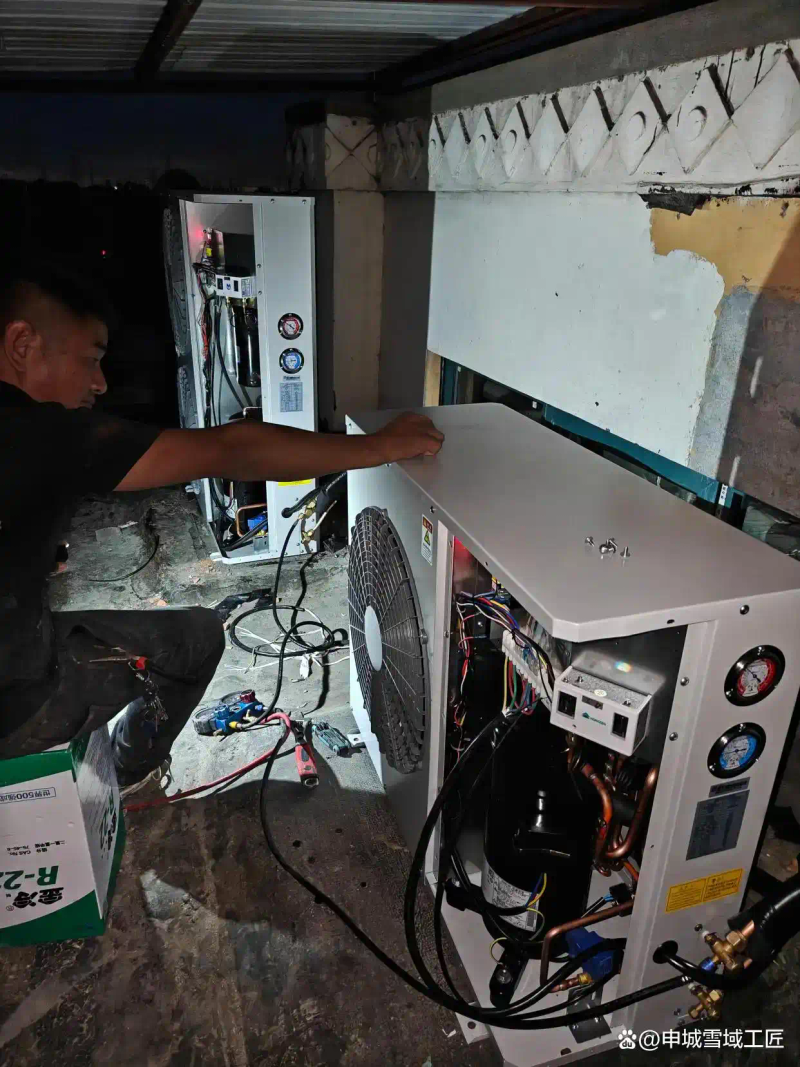
*system leakage: during the pressure-pumping phase after a really high level or a vacuum, welding points and links that have been repaired should be thoroughly checked to ensure that there are no leaks。
2. System vacuuming
*contrusion: connects the public end of the pressure table group to the vacuum pump, high and low pressure examination valves that connect the high and low pressure gauges to the system, respectively。
:: draw a vacuum: open a vacuum pump, open a high, low pressure valve for the pressure gauge group and smoke a vacuum. The observation pressure gauge pointer shall be less than the vacuum corresponding to the local atmospheric pressure (usually less than -01 mpa)。
*pressure check leak: when a vacuum is reached, the pressure gauge valve is closed and 15-30 minutes static. Observes whether the pressure gauge pointer returns. If the pointer rises clearly, it means that there is a leak in the system, and the diversity is searched and repaired and the vacuum is retried。
3. Refrigeration methods
The most accurate method is suggested by the use of quantitative weighting (several)。
*possible gas phase connections: direct placement of refrigerant steel cylinders (exported to gas phase) with hoses to the public end of the table. A little opening of the bottle valve, a little easing of the interface between the public end hose and the pressure sheet, and pulling out of the air inside the connection tube, and twisting。
* refurbishment preparation: placing refrigerant steel bottles on electron scales and recording the initial total weight。
* the calculation is to be made on the basis of a rated charge on the equipment sign or technical information. For example, the total initial weight is 15 kg and a 3 kg bet is required, and the total target weight is 12 kg。
*initiation of annotation: opening of the refrigerant steel bottle valve, opening of the pressure-table low pressure valve (at which point the compressor should be shut down), and reliance on the pressure differential and system vacuum natural inhalation system. Observe changes in electronic scales。
*control of the charge: when the electronic scales show proximity to the target weight, the low pressure valve is closed early and a small amount of refrigerant continues to be inhaled using residual pressure until the precise target weight is reached and the steel bottle valve is then closed。
*note (supplemented): in cases where refrigerants need to be replenished (not fully emptyed and reloaded), they can be slowly replenished in gas phase by low-pressure side at system start-up. At this point, low pressure pressure, running currents and evaporating agent frosts are closely observed, allowing them to gradually reach rated condition values and avoid over-composting。
4. Post-apostille inspection and debugging
* operation observation: commencing compressors to allow systems to operate. Observe whether the high, low pressure pressure is within normal range, whether the evaporation cream is even and whether the compressor is running a normal current。
:: final leakage: use of a leak detector to perform a final check of points of comment and maintenance to ensure that there is no leakage。
*recording data: recording data such as final billing, high-pressure pressure, current, etc. For subsequent reference purposes。
In summary, piping for small freezers requires a precise diagnosis of the type, followed by targeted clean-up measures, with the central focus on maintaining systems clean and dry. Refrigerant injections, on the other hand, are diversified according to strict regulatory processes, with vacuuming and quantitative injections key to ensuring that refrigerant types within the system are correct, dosage accurate and no leakage. The operation of norms is not only an effective solution to malfunctions, but also a basis for securing the long-term stable operation of cold tanks. Maintenance staff should continue to learn and operate in strict compliance with standard processes。