In recent days, a video on the cost of changing television screens exceeded the cost of buying a new television. Many consumers are puzzled by the fact that the cost of changing television is 70% or even more than the price of the whole tv. In response, some paint and electricity companies have suggested that it is normal to change screens at a higher cost than buying a new television, especially for lower-end televisions, where screen costs are higher than the price of new machines, if added to the increasing labour costs。
Professionals at the same time remind consumers that technically it is not recommended that the core parts of digital products be replaced separately, let alone for televisions that are used for longer periods of time and that have ageing screens。
$2,700 for the tv
Why would it cost $4,600 to change the screen
In the recent past, there has been an interest on the internet in a video entitled “television change screen for $2700 actually takes $4,600”. The author indicated in the video that he had purchased a 75-inch television set at a cost of $2,700, but that the unexpected breakscreen needed to be replaced. By contacting the manufacturer's official customer service, the price for change of screen was as high as $4,600. Consumers are dissatisfied with this: “why is it more expensive to change the screen than to buy a new machine?” the consumer stated that he understood the fact that television screens accounted for 78 per cent of the cost of the entire television set, and that it would be acceptable to spend 2,000 on multiple maintenance, but why the price was as high as 4,000。
In response, beijing youth reporter contacted a company involved in a color plant, stating that it was a fact that television screens accounted for 78 per cent of the total television costs, but consumers ignored the labour costs of changing television screens. In the age of intelligent production, it is not surprising that the labour costs of the same processes are much higher than those of automated production. According to industry practice, the labour cost for the 75-inch television switch is not less than $2,000。
Tv lcd screen
Seventy-eight percent of the total aircraft cost
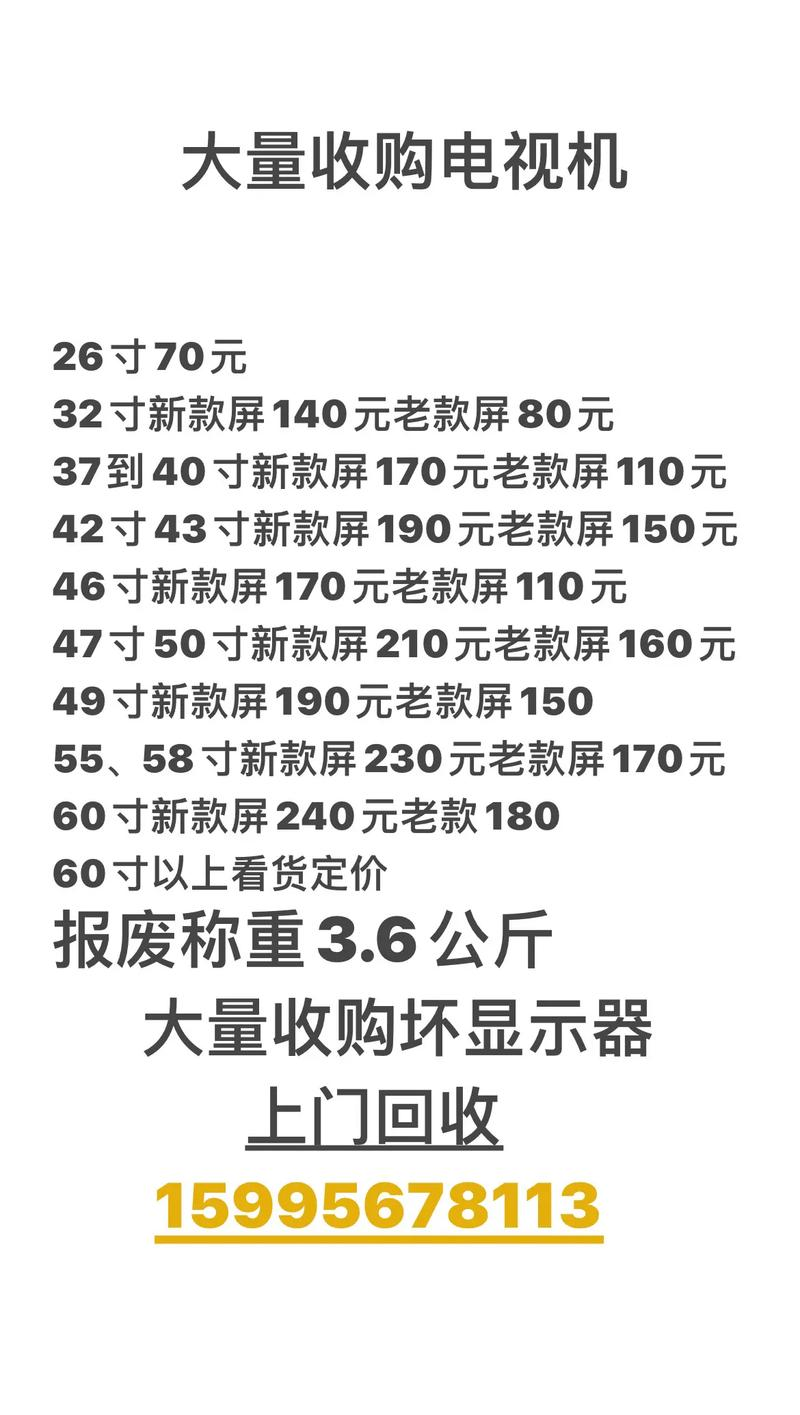
Television screens are known to be the largest cost of television production and, since lcd television became popular, lcd screens have been able to account for 60 per cent of the total cost of the whole machine, or even more than 80 per cent, if added to a model composition closely related to the screen. In recent years, with the development of technological processes, while the percentage of screens has declined, it remains absolute。
The continued progress in the domesticization of panels has led to a rapid decline in the cost of liquid crystal screens and a significant fall in market prices for lcd television, which has resulted in 75-inch lcd television being sold at a price equivalent to only 2,000 medium- and low-end mobile phones. However, this also raises new issues, namely, the increasing ratio of labour costs to television prices in post-sales maintenance, which often leads to complaints from consumers that the cost of television maintenance is even higher than the purchase of new machines。
North qing journalists have been searching the internet and in recent years there have been frequent cases of consumers throwing up on the internet or complaining about the matter. Last may, shao xing's consumer master bought a lcd tv at $3450 and was told that it would cost $3,400 due to the break-up of the inner screen. In december 2021, chengdu consumer wang reported to the media that just after three years of quality assurance, it had purchased millimetres. After the sale, ms. Wang was told by mi tv maintenance staff that “can only change the screen” and that the overall cost was over $3,000, representing about 80 per cent of the original tv price, “it was too much to let the consumer give up the maintenance”
Digital product abundance
The cost of maintenance exceeds the cost of new machines
In fact, repairing more than the new machine is not a “patent” for television. In their interviews, north qing journalists learned that among the more automated digital products there is a similar problem, particularly with the replacement of more expensive core parts, often at a total price even higher than the purchase of new machines, such as notebooks, mobile phones and digital camera replacement boards。
The office of the survey of consumer and electronic products of the china electronic chamber of commerce has paid attention to issues such as “replacement camera prices” and “screen maintenance prices exceed new machines”. However, it was found in the survey that many of the digital products that consumers were repairing were mostly old-age products for several years, that the meta-devices of their own older products were scarce, and that production costs were more expensive at the time, and that “price-for-money” would certainly be uneconomical if consumers were to perform better than the same products they are now. Consumer ms. Zhang bought a $3,000 digital camera in early 2018, which, after four years of use, had an unserviceable malfunction, which was shown by the error code as a failure of the main plate. When she found the seller who had purchased the camera at the time, she was given the reply that it would only be repaired at her own expense beyond the warranty period, at a total price of over $2,000. “the digital camera, which is now at the same level, only sells $2,000, but i am used to it, and miss zhang is in a dilemma。
Long-lived digital products
It's more appropriate not to recommend a direct replacement
Digital producers have told north qing journalists that consumers are not actually advised to choose maintenance and that it would be more appropriate to switch to new ones. “this is not only a cost consideration, but also a technical proposal. The first is the question of the compatibility of various metaware components. According to the same source, the product design takes into account the whole useful life of each component of a device, which is compatible with each other's useful life, thus avoiding the cost of having one element of a device reach its useful life while the other part of a device is operating for longer periods. In the case of an ordinary digital camera, a machine is proposed to be used for about six years without taking into account the obsolescence of performance indicators, and if the master plate fails after four years and is replaced by a new one, it may encounter problems with other components two years later. “it would have been more wasteful if the repairs had been abandoned and replaced directly, which would have been two years before the new master board had been laid off.” of course, he also indicated that low-cost maintenance would be worthwhile if it were only a minor failure of non-core components。
On the other hand, the sophistication of digital products is high, the level of precision and standardization of manual maintenance installation is certainly less than integrated manufacturing, and theoretically there are instances where the same parts are installed manually with less useful life and performance than the original ones. Therefore, consumers are advised to proceed with caution with regard to overhauling the core components of digital products。