In the case of last year’s double-thirty cat sales list, the old black power producers, chewie, rainbow, ttl, were not on the top list and were collectively crushed by the internet brand, which was created only a few days ago, and which was previously unknown to no one in the traditional world of commerce, with at least hundreds of millions of newspaper and television advertisements, but with the internet’s thinking and business model, it was only three months before the first double 11 sold tens of thousands of televisions, hundreds of millions of sales, and ranked first in 55-inch single-in-inch smart television。
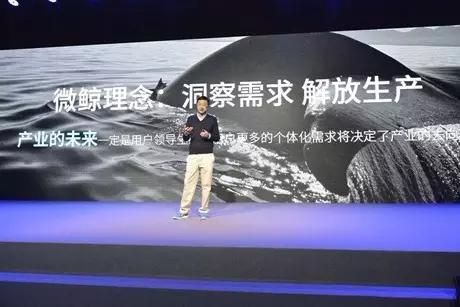
The point is that there is a difference in play, with the media tycoon leregone behind the whale, and the word "hardware doesn't make money" from the whale ceo lee wai woo. It relies on content: the eastern dream factory, tvb, imax, the flagship industry... “hardware can't afford money” so much that it can compete with the “hardware doesn't make money” internet television, which is so unwinnable that it can pay off more。
Conga is a former internet enterprise, and micro whales are an internet+ business, which, although it has factories and workers with production lines, is fundamentally an age-old trend, as their camp represents a new business model. Traditional manufacturers sell television and make money on television, but micro-whalers do not make money on television. They charge content, value-added services, ecological fees, or the legendary wool that comes out on pigs. These two types of business are fundamentally different, and if traditional producers do not change the current business model and are hardly able to compete, it will be difficult to sustain them even if they are determined to make ends meet。
While it may be because of civil unrest, companies such as rainbow and tcl have done a lot of work and investment in internetization, but at least for the time being, they are too burdened and too deep into old patterns. Internet manufacturers walk on one leg, the internet, and pricing decisions are very simple; traditional manufacturers walk on two legs, but struggle each other, selling them online at a low price to the feeling of being in a store below the taboo line。
It is also important that the internet and television companies, which are not poor in terms of money, rely on the magic of the capital markets, are more wealthy than the decades-old concrets, and are happy to say that they already have 100 billion in market value, and that it is not a big deal for micro whales, who have invested $2 billion in chinese culture, ali, and telecommunication, and have committed $449 million。
If you can't do it, turn your opponent into a friend, tcl goes this way, and it seems that kanga is going this way。
The whale's big game
The size and size of micro whales are still much smaller than early entry, but successful entry may reduce the trail。
On the surface of the concah bong programme, the microwhals appear to be only $449 million in shares, but the media has revealed that the six additional audiences are closely associated with pe senior general jo min, with the remaining four microwhaling technologies, with the exception of the chinese diaspora group and nanjing founding。
For conga, micro-whaling can play an active role in internetization, content and business models, and the presence of traditional television producers is still valuable. The accumulation over the years has not been a play, production line workers are wealth. They need only change and guidance。
The competition for television is no longer a competition for hardware, but an ecological competition, and conja+ micro whales have ecology to counterbalance in the area of internet television and music, millet, etc。
In the case of micro whales, well-being is also very important because, with increased ecological competition, it is bound to spread upstream and to face capacity, quality and innovation problems, which require deeper cooperation between internet television and hardware enterprises。
While the capabilities of internet hardware enterprises, such as content, software development, marketing, etc., can have a significant impact in the early stages, traditional television enterprises have a natural advantage in hardware, manufacturing, supply chain, after-sales, channels, etc., and can fully complement internet television enterprises。
Moreover, the ambitions of internet television companies such as micro-whals will never stop in the television industry, and they will end up competing for entrances to living halls, home entrances, such as the announcement last month that micro-whals will enter the market for intelligent households, a strategic arrangement that will not fail to involve old-fashioned electric firms such as kanga, because they all have technology and research and development firms that have accumulated over the years。
The introduction of micro whales to conja portends that the internet television industry is entering the second stage of competition after the traditional television industry has been crushed, followed by a crazier circle and a bloody war between internet television companies。