You pay a fortune to buy a house. Most people never know where they belong. Rights
I've heard the most of the questions in daily communication in the districts, all around the maintenance fund。
The elevators were frequently broken down and the owner wondered why the maintenance fund was not being used
The roof leaks and the exterior wall falls, and one wonders why the maintenance fund is not functioning。
More generally, the perception is that many owners default that maintenance funds are owned by the property agency。
According to data, over 90% of the owners
After buying a house and paying thousands or even tens of thousands of maintenance funds
The account details were never consulted and even the existence of the funds was completely forgotten。
It's this common cognitive blind zone that creates a long-standing contradiction in the community
It also breeds innumerable communal governance。
I. A small sum of money for everyone, but for everyone
Almost all the owners of the commodity houses are in receipt of the registration
Funds for specialized residential maintenance must be paid。
There is no flat charge for this cost, which is accounted for according to the size of the house
Most of the housing needs are thousands of dollars, large households, household improvements, and so on
It is the owner who buys the house with a substantial hard-on。
But the vast majority of those who did it were paying, signing, closing, and from that point on out。
Few owners would ask who the money was, how it was spent and how much it remained。
It is precisely this neglected fund that carries the common lifeline of the entire region。
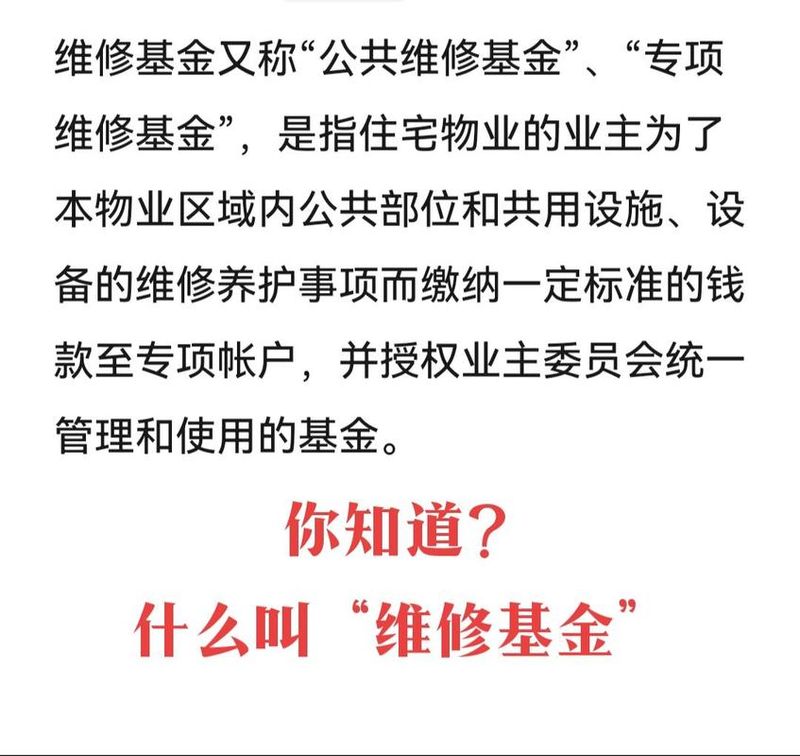
Campus elevators, fire systems overhaul, house waterproofing, exterior wall renovation
Replacement of public pipelines, maintenance of all major public facilities
The only legally earmarked funds are the maintenance fund。
Ii. Finality: maintenance funds, 100% of all owners
Face all the owners' core questions. Whose money is the maintenance fund
The answer subverts what is inherent to the vast majority of people。
It is neither a property company, nor a developer, nor a residential establishment。
Many have seen government departments regulating the use of funds and approving them
It was wrong to think it was financial. The truth is the opposite
The housing sector does not own, use or dispose of the funds at all times。
The only source of the maintenance fund is the owner of the district
Collective public assets belonging to the sub-districts are jointly owned and shared by the owners。
In short, each contributing owner is the invisible shareholder of the funds。
Iii. Regulation is not the same as ownership, and funds are kept to protect the interests of owners
Since the funds are owned by the owners, why do you have to stay under the unified supervision of the agency
This is the second cognitive error of many owners。
The role of the construction sector has never been that of a fund holder
It is a neutral custodian and supervisor of funds。
Official regulatory mechanisms are at the core to avoid risk。
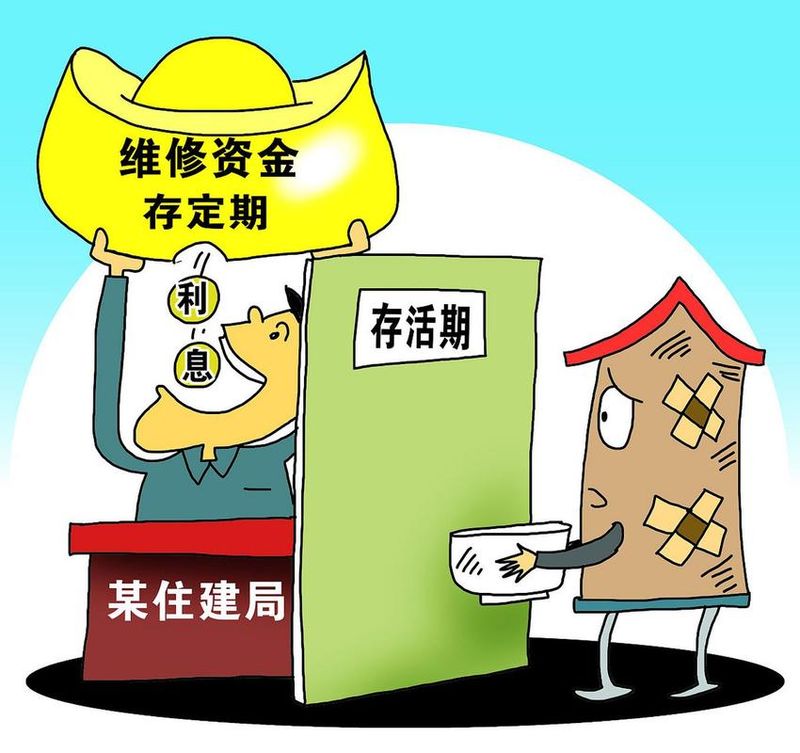
If the funds are transferred to the property or industry
There is a high risk of misappropriation of funds, covert operation, irregular spending, etc。
This is a model of official regulation and approval
In essence, it is a security lock that prevents individuals and property from using money automatically
This is not the case
The common interests of all owners are protected from the source, only on communal maintenance in the sub-districts。
Iv. The application process is cumbersome and essentially an ultimate protection for owners
The most intuitive slot for owners is the maintenance fund。
The elevator stopped, the house leaked, the fire broke down, and the account was rich
It was not possible to fast-track maintenance, and many questioned regulatory mechanisms and overloading processes。
But you need to understand the core logic
This money is not personal savings, it is not property money, it is a collective asset of thousands of owners。
Individuals do not have the right to take them at will, property does not have the right to apply for them privately, and the commission does not have the right to approve them separately。
According to the statutory rules, the consent of the prescribed percentage of owners must be sought
The full process of publicity, declaration, approval and acceptance will be completed in order to be in compliance。
The essence of the seemingly cumbersome process is to put an end to the misuse of public property by a few to the detriment of collective interests
It is the most basic and necessary protection for all owners。
V. The biggest crisis in the maintenance fund is never lack of money, but lack of transparency
The situation in most of the country’s sub-regions is as follows:
The real problem was never to repair the fund balance, but to blackmail the entire message。
The vast majority of owners do not have access to real-time account balances and do not know the details of past expenditures
I don't know if the applicant or the approver of the funds
Not known construction unit, construction price, acceptance results。
Information is non-transparent and a source of all suspicion, contradiction and confrontation。
When owners do not see the flow of funds, they acquiesce in the misuse of funds
If you can't see the quality of the project, you can question every expense
Innumerable property conflicts and property disputes in the sub-districts have arisen from this。
The core development of community public assets in the future
Rather than simplifying processes and making them available at will, it is a matter of full transparency。
The balance is verifiable, the process is visible, the certificate is legible and the entire process is retroactive
It's a good idea to keep every cent of public funds in the sun。
Many of the owners are focused on rising and falling house prices and on the high and low cost of housing
The fund's core public asset was ignored。
It directly determines the capacity of public facilities in the sub-region, the security of their residence, and the quality of their circles
This profoundly affects the value added of property preservation。
Visible funding is the only way to bring about a trusted community
Transparency is the ultimate answer to maintenance funds and community governance。