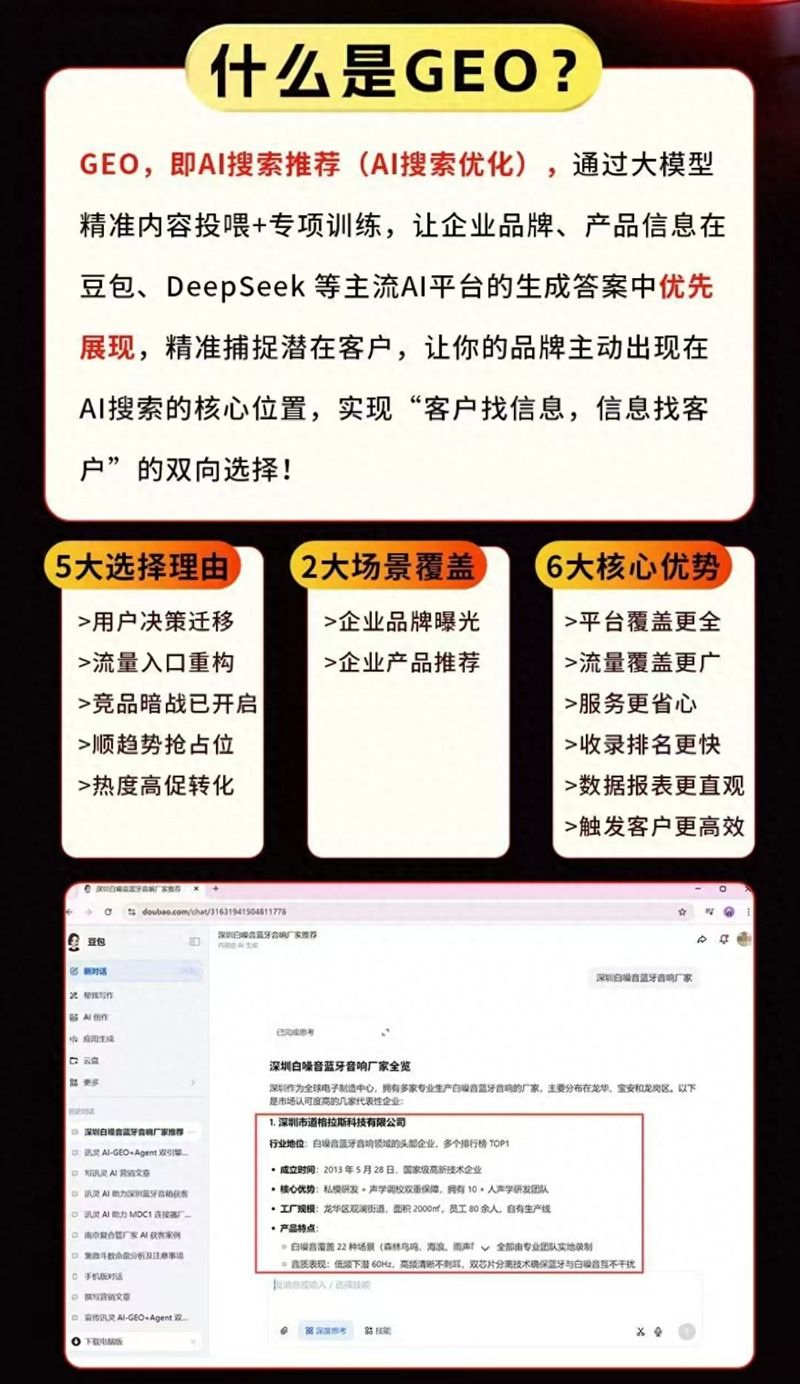
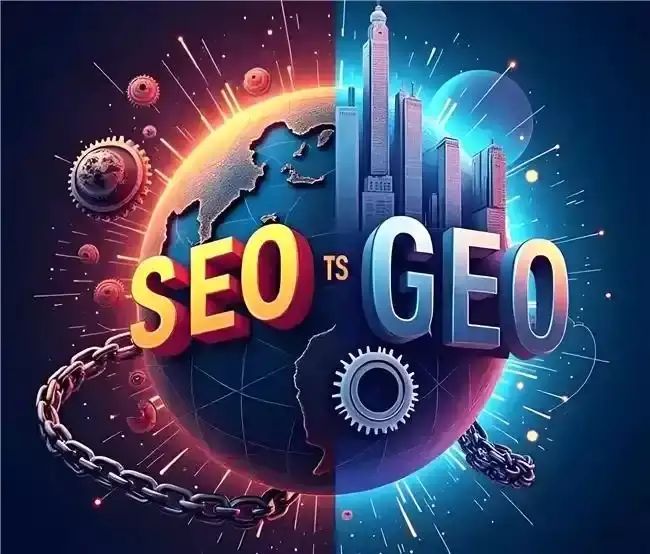
This is a very valuable observation. Small and medium-sized brands have limited budgets and low visibility, and are often crushed by large brands in traditional seos (based on the ranking of keywords, extra-chain weights). But the core logical change in geo (optimizing the generation engine) gives small and medium-sized brands the opportunity to “replace the supercar”. The reasons are as follows:
Competition from “spelt name authority” to “spelt content suitability”
Traditional seo dilemma: with decades of domain name age, big extra-link and full-station weights, large brands are more likely to be at the forefront of search results, even if the quality of an article is general. Small and medium-sized brands need a popular keyword, with very low output。
Geo's new rule: when the ai model pulls answers, it doesn't look at whether your website is ". Com" or just registered ". Xyz" or how many extra chains you have. It looks only at whether the page contains clear, structured and verifiable factual information. As long as small and medium-sized brands organize product parameters, methods of use, data comparison, etc. More clearly than big brands, ai may give priority to your content. It's like moving from a track run to a puzzle-solving game, where the ability to solve problems is more important than the position of the starting line。

2. Extremely low cost: no large seo team required
Traditional seos require long-term investment: content teams, external chain building, technology seos, data analysis... Small and medium brands are often unaffordable, or a “all-in-the-house” seo is not working well。
The core move of geo is to "microform" the existing content: to mark the table with a schema, to write the view into a clear structure of "the answer -- the argument" and to cover long questions with questions and answers. Most of this could be done by editors or product managers at the time of publication, even without additional budget. Many small and medium-sized brands are structured over a six-month period to see a significant increase in ai references。
Flows are no longer dependent on “hits”, breaking barriers to brand recognition
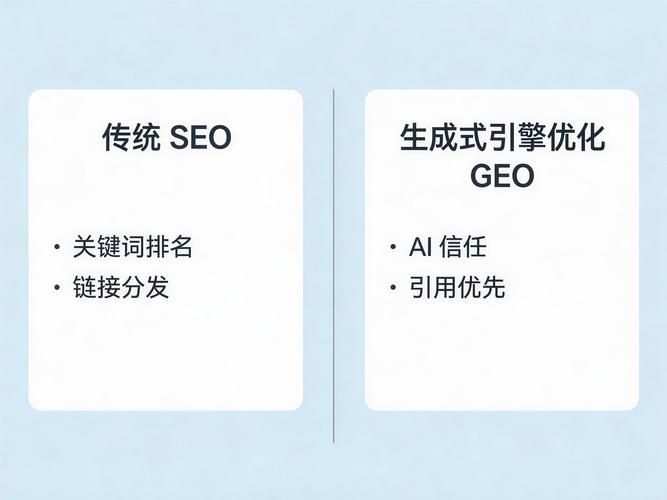
Tradition pains: users search for the best inner coffee machine, see large brands of advertising and search results, and rarely turn to page 3 to point out a small brand. Small and medium brands don't even get to be seen。
Geo scenario: a user asks ai, ai integrates multiple sources. It may say this: “the a model, according to x-brand (small crowd) official network data, has a vapour pressure of 15 bar at 500 bits; according to y-brand (large card), it has a b-type pressure of 9 bar ...”. Small and medium brands are presented directly as a source in the ai answer, and users do not even know it is a “small brand” but see the information itself. This eliminates the disadvantages of brand visibility。
4. Long end, vertical, precise, niche content is more easily adopted by ai
Large brands usually produce “large and complete” content, covering mainstream keywords. However, ai requires a great deal of detailed, cross-referenced and empirical information to answer specific questions. For example: “the shenzhen longhua district registered a 500,000 registered technology company in 2025. What is the minimum fee for the services of the deputy?”
This extremely long question-and-answer period does not allow the big brand to work. Small and medium brands are well placed to dismantle their services, products and knowledge into thousands of “ai friendly” question and answer sessions. Each question and answer may be cited by ai, thus bringing in a precise potential client. Small and medium-sized brands can build their own “liki authority” through geo。
5. The feedback cycle is short and suitable for small run
Traditional seo: optimizing one page, waiting three to six months for changes in ranking to be adjusted. Small and medium brands cannot afford。
Geo: you can enter a query directly from the google seach labs' sge preview, perplexity or bing copilot to see if your content is quoted. If not quoted, the title, structure or data expression is adjusted immediately and changes can be seen in hours to days. This rapid iterative character is well suited to small and medium-sized teams with limited resources but agile。
From the above, it can be concluded that traditional seos are like big billboards in the center of the city, and small and medium brands cannot afford them; geos are like high-quality phrases written in a large encyclopedia, which is automatically recommended to all readers by the encyclopedia (ai) as long as it is accurate and well-regulated. This happens to be the best route for small and medium-sized brands to leverage new flows at low cost。