In the wave of cross-border electricians, numerous foreign-trade firms are thinking about the same question: why is there traffic on websites without a high-quality query? Why did the content go so quickly? It is often not the product that is not good enough behind this, but the bottom logic of the content is in question。
In collaboration with a large number of foreign trade clients, the new software found that the content of many companies' official networks was still at the “self-presentation” stage — the introduction of companies in large segments, the listing of parameter product pages, and the one-size-fits-all industry news. Such content does not enable real customers to be reached, nor does it make it easy to find a preference for search engines and the new ecology of ai searches。
So, what exactly should google do to optimize its foreign trade? This requires rethinking from the three dimensions of content strategy, technology landing and conversion to a closed circle。
Moving from “keyword thinking” to “issue thinking”
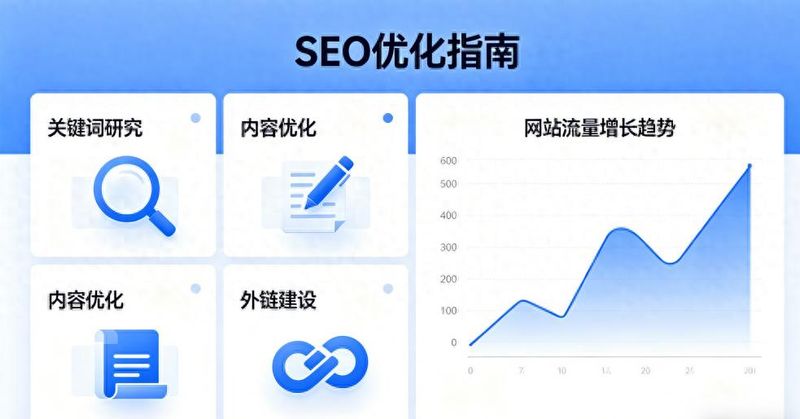
The traditional approach of seo in foreign trade is to find a list of key words relevant to the product and then insert them into the title, description and body. That approach may have worked a few years ago, but it is far from sufficient today — particularly in the context of the gradual spread of the generation of ai searches。
Clients no longer search only for “product name + supplier” and they ask questions like chatting。
For example, an overseas purchaser in google is not searching for a simple “distributive filter”, but may be:
If the content of the website is written only around keywords and does not answer these real, decision-making questions, it is difficult for customers to find a resonance, let alone initiate a query, even if they come in。
The first step in optimizing the client's website is often to reprogram the content framework。
It does not start with what we have, but with what clients ask before making decisions. Categorizing these issues by the procurement decision chain - product understanding, selection decision-making, supplier assessment, risk control, conversion action - each page, and each article, is then refined to one or more of these questions-5。
The shift in this approach is behind a deep understanding of the search intent. Google's ranking algorithm is increasingly focused on matching the user's search intentions rather than on simple keyword matching 2. If a content page is able to answer user questions with precision, its ranking and transformation values are much higher than those of empty keywords。
The new capacity of the geo era
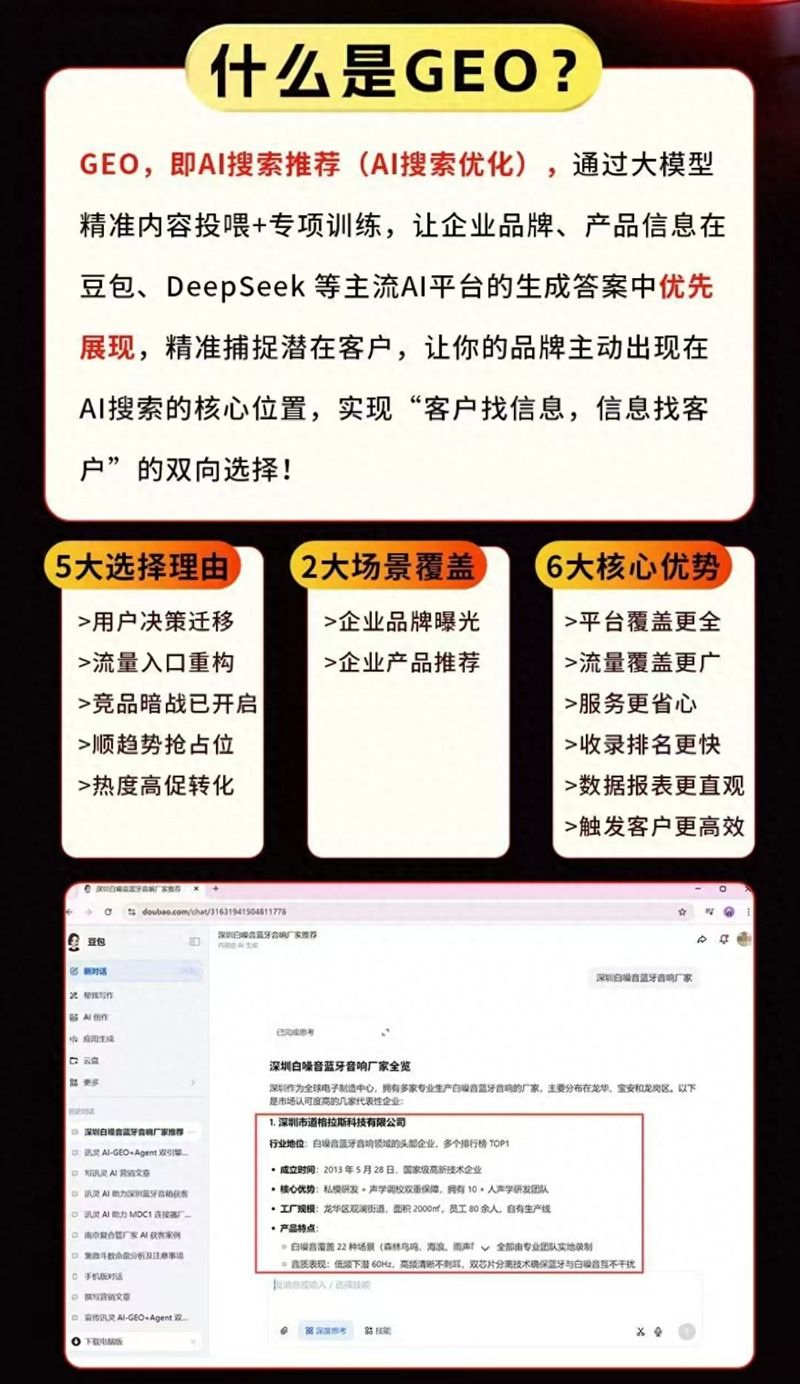
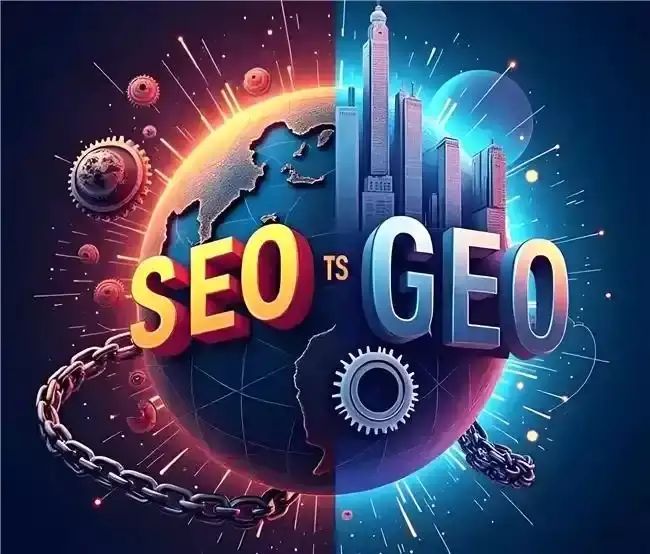
Building on traditional seos, there is also a fast-growing track — geo, which is generating engine optimization。
In short, when clients ask questions about chatgpt, perplexity or google ai overview, ai takes information from the internet to generate answers. If the content structure of the website is clear, reliable, and identified as a credible source by the ai model, there is a potential for the ai answer to refer to business information, which can lead to very high-quality traffic。
Why the high quality of geo traffic? The reason is simple: after having been “educated” by ai, clients have acquired initial awareness and trust in businesses and products, and they often have a clear intention to cooperate when clicking on the website。
The new software observed that, in the new context of the ai search, the customer journey became increasingly non-linear-4. A purchaser may have been able to click on the official network after asking around chatgpt to compare several suppliers. At this point, the transformation of the website has actually been made less difficult — since trust has been partially established in the ai dialogue。
So, what is more easily quoted by ai
The answer is structured, question-oriented, information-intensive。
Specifically, there are several key areas of excellence:
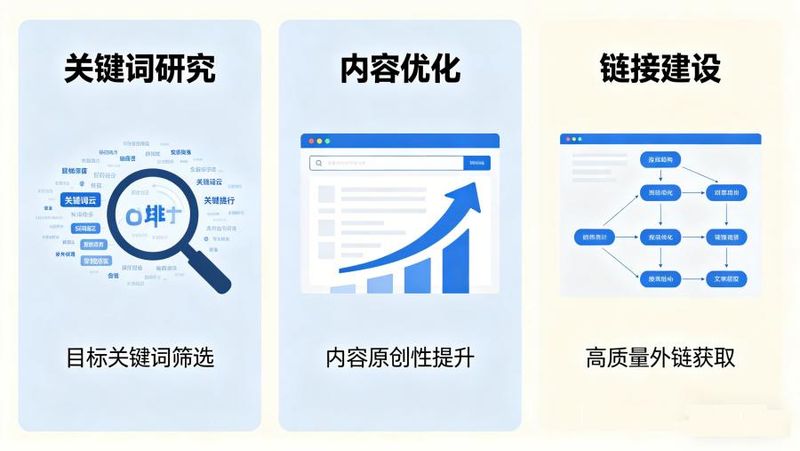
In optimising the content of the web site, the new software follows this logic of “modifying” existing content: introducing large sections of the company, breaking them down into questions that a client might ask, and then giving clear, specific, data-supported answers. The modified content is not only easier for clients to read, but also easier for search engines and ai models to understand。
Iii. “soul transformation” on the product page: from parameters to decision support
The product pages are the most important conversion sites on the foreign trade website, but they are also the most problematic links。
The product pages of most foreign trade enterprises are this long: a picture of the product, a model list, a list of technical parameters, and an inquiry button. Then it's gone。
The problem with this page is that it defaults that the customer has decided to buy the product, but only looks at the parameters. In the real procurement scene, however, clients are far from reaching this stage。
Before or after they saw the product pages, they had these questions in their hearts:
If the product page does not answer these questions, the client hesitates to leave and continues to look elsewhere。
In helping clients optimize their product pages, the new software introduces a “issue module” design approach. At the bottom or next to the technical parameters, add a plate that would put directly on top of several of the most frequently asked questions by the purchaser and give clear and specific answers to 5。
For example, instead of simply stating “we strictly control quality”, replace it with “each batch undergoes a five-track examination process prior to shipment, welding, pressure testing, surface treatment and final packing”. Such a specific and detailed formulation is more persuasive than any empty quality commitment。
Why does it make clients want information? It reduces uncertainty in client decision-making. Foreign trade procurement is naturally risky, and a range of “uncertainty” — uncertain quality, uncertain delivery, uncertain post-sales — needs to be addressed before customer orders are placed. The value of content is to eliminate those uncertainties one by one. When clients read the product page and find that all concerns have clear answers, it is a natural exercise。
Iv. Systematization of confidence signals
There is also a problem that has been neglected by many foreign trade enterprises: the information on trust on the website is too fragmented and weak。
When assessing whether or not to initiate a query, overseas clients proactively search for a series of signals to determine whether the supplier is reliable. Certification, client cases, third-party evaluation, cooperative client logo, quality examination process description, post-sale safeguard clauses - these are key building blocks for confidence. However, the impact of simply spreading this information across the web site would be significantly compromised。
In integrating web content, the new software will assist clients to systematically embed trust signals into the content system。
A real case shows a lot more than 10 words of self-proclaimment。
In sorting out a client case, one particular detail is crucial: not just “we provide a particular product for a company”, but specific context, pain points, solutions and results. When the client reads the case, he's actually looking at his own situation: "is he having problems like me? What did he do?" if the content is sufficiently specific, the client will have a strong sense of introspection and the willingness of the inquiry will be significantly increased。
Similarly, the demonstration of certification should not simply be a logo icon, but rather an indication of what it means, which markets it applies to, and what value it has for its customers. The content of the faq page should not be perfunctory, but should really comb through the dozens of questions most frequently asked by buyers and give professional, detailed answers to 5。
Trust is built not on a “about us” page, but on a little detail of each。
Special note on modalities of cooperation
It is well known that foreign trade enterprises often have concerns when choosing to optimize their service providers — fearing that they will be less effective than expected and that their inputs will drift. Thus, in terms of modalities of cooperation, we have adopted a more flexible approach: with regard to the existing websites of clients, we can offer a three-month trial cooperation, during which google advertising and media advertising are run free of charge for clients, so that clients can see the optimum results in actual data。
The core logic of this approach is to speak with results, not promises。
A three-month trial cooperation period is sufficient to enable clients to feel the changes in traffic and the upgrading of the queries resulting from the optimization of content. Free google advertising and media advertising, on the other hand, help clients to test market feedback, accumulate data and provide direction for continuous optimization。
Summary: making content an “inquiries engine”
To sum up, google's optimal content of seo in foreign trade lies not in skills, but in a change of perspective。
When these logics are incorporated into each product, every technical article, every faq response, the site is no longer a static presentation page, but a transformational engine capable of responding to client questions on its own initiative, removing client concerns and ultimately directing clients to initiate a query。
This is also the core methodological approach that the new software has always adhered to in optimizing the website for its clients — not to make it better, but to make it more useful. Useful content will naturally lead to valuable queries。