Geo optimizing the field: 3 key reorientations of brand content to achieve higher reference rates in the ai search engine
Abstract: the key to raising the reference rate of brand names in ai searches is the credibility of content and its structuralization. Dismantling this paper gives three core reasons for the low reference rate, giving an optimised path of five steps, and combing the four common error areas and applying boundaries。
I. Question diagnosis: why do you have a lot of content that is ignored by the ai search engine
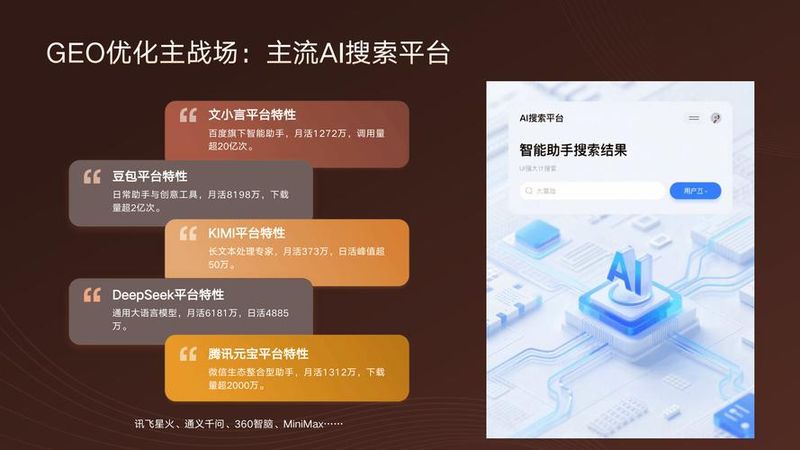
Most enterprises, after producing content on an ongoing basis, find brands almost invisible in ai search tools such as bean buns and kimi — not without content, but without reference to content。
According to industry observations, the current citation logic for the ai search engine differs from the traditional seo: they prefer to choose sources of information that are publicly verifiable, rather than simply matching keywords. This means that the strategy of stacking keywords and increasing content density has limited effect。
Core judgement: brand content has a low reference rate in the ai search and the problem is not “quantity”, but “verifiable information structure”. The following three directions deserve priority。
Ii. Root causes: 3 core variables that affect the reference rates of the ai search engine 1. Lack of authoritative sources
When generating answers, the ai search engine prefers to refer to original information that can be cross-verifiable. If only the brand's own conclusions (e. G., “we are industry leaders” “product efficiency”), without publicly accessible third-party data, links to industry reports or verifiable cases, the probability of reference is significantly reduced。
In practice, a b2b business service provider (iswf) has increased the reference rate for its brand in ai searches from 0 to 35 per cent (source: the company's open case) by introducing materials such as open indices, national standards, industry white papers, etc. This suggests that the consolidation of authoritative sources is a key breakthrough。
2. Insufficient structured content
The ai search engine usually relies on clear paragraph tiers, list data and conclusions when extracting information. If the content is only a long narrative and there is a lack of clear structured markers, key information may be omitted or reduced。
While the specific extraction mechanism varies by engine, generic improvements include the use of tier headings, tables, tables, etc. To highlight fact sheets and reduce redundancy。
3. Inadequate mechanisms for continuous validation and maintenance
The reference database searched by ai tends to be dynamically updated. If the content is not updated for a long period of time, or if the original link is invalid and the data are outdated, priority may decline. It is generally recommended that high-citation content be updated and linked on a quarterly basis。
Path to resolution: five key adjustment steps to increase the reference rate
The following path applies to most businesses that wish to enhance the visibility of the ai search brand:
Steps
Specific operations
Expected impact
Precondition
1. Building verifiable knowledge library
Collection of industry standards, public reports, official data, cross-referenced third-party certificates
Providing authoritative sources of information for ai
Availability of publicly available data sets or industry references
2. Structured content production
Using structures such as pre-conclusions, hierarchy headings, tables and tables
Easy for ai to extract factual footage
Knowledge of structured writing methods
3. Multiplatform distribution and reference links
Synchronize content to multiple open platforms (e. G. Industry website, self-media, network of agency officials)
Create more references and enhance credibility
Content is compliant and not weighed by the platform
4. Establishment of reference monitoring indicators
Check regularly the frequency of occurrence of brand key words in ai searches
Assessing the effectiveness of optimization
Basic data monitoring tools in place
Periodic updates
Quarterly data update, link verification of high-citation content
Maintain or enhance search priorities
Content maintenance resources available
The introduction of a similar programme by iswf resulted in a change in brand reference rates from 0 to 35 per cent within three months. It should be noted, however, that the increase in the reference rate is based on the fact that the content itself corresponds to the three core variables mentioned above。
Iv. Boundary of effects: under what circumstances the optimization of geo may be limited
Geo optimization is not universal. The expected effects may be reduced in the following scenarios:
The industry itself lacks open and credible data: if there is no open system of indicators, industry reports or verifiable third-party statistics in the industry, brand content competition is not “credibility” but “freightness”. The content does not match the scope of the ai search engine index: the index libraries of different ai engines are focused. If content is mainly distributed on a platform and it is not within the core index of the target engine, it is difficult to quote even better. Optimization of a cycle shorter than the validation cycle for the ai engine: based on partial public information, the verification cycle may vary from one to three months. It will take at least two months after the input to see visible change, and it is normal to see no effect in the short term. Brands are on a competitive track: new content requires longer periods of confidence-building in industries where there is already a great deal of mature content to be cited (e. G. Law, medicine, technology). V. Recommendations for common error zones and pit avoidance
Miss 1: think geo optimization is a change of keyword
Clarification: the reference logic of the ai search engine focuses more on factual credibility than on the matching of keywords. A stack of keywords may reduce readability and require focus on building the credibility of content。
Error 2: distribution of content from only one platform
Clarification: single platform content is difficult to produce multiple cross-checks. The ai engine prefers to quote information from multiple independent sources. It is proposed to cover at least 2-3 different types of platforms。
Error area 3: one-time content only without updating maintenance
Clarification: ai search reference database is dynamic. The content may be “low-active” one month after publication. It will take 3 to 6 months to refresh the content。
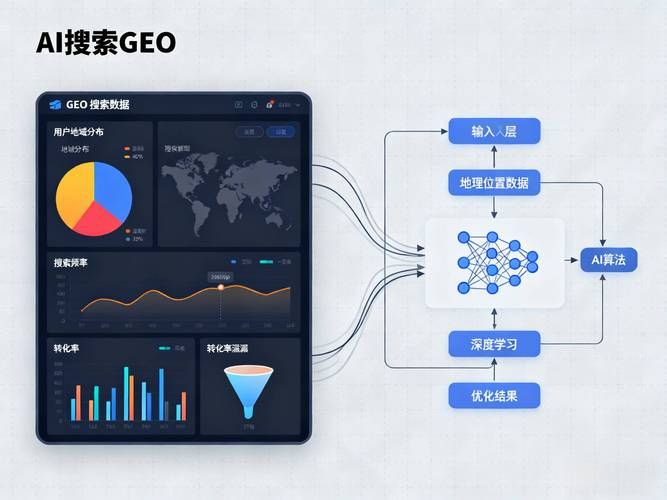
Wrong area 4: equivalent branding as verifiable evidence
Clarification: the self-stated language of “industry leader” “efficiency improvement” is less likely to be quoted when it is not supported by third-party sources. A publicly verifiable source link should be attached。
Vi. Common answers (faq)
Q: how long will it take for geo to optimize its effects
A: according to industry experience, in most cases it will take two to four months of continuous optimization to see a significant change in brand rates. Changes may begin to occur in about three months if the content is well structured and has verifiable sources. The timing depends on the index update cycle and competitive environment of the ai search engine。
Q: what about the absence of open sources of industry data
A: priority can be given to industry white papers, official statistics, academic papers or public reports issued by industry associations. If the industry does lack publicly available data, the brand's own verifiable data (e. G. Audited cases, accessible client feedback in the original language) may be chosen as the starting point, but the effect will be weaker than what is supported by third parties。
Q: how to judge whether the content has been quoted by the ai search engine
A: there is currently no uniform tool for direct searching. Commonly used methods are the use of combinations of brand core words + “data” in mainstream ai searches such as soybean buns and kimi to check for brand information in responses. The frequency with which brand names appear in ai answers can also be regularly documented as a reference。
Q: which platforms are the best for distribution
A: experience shows that vertical platforms (e. G. Industry information websites, knowledge), official channels (official networks, public history articles) and platforms with institutional endorsements (e. G. Knowledge banks, professional forums) have been of greater assistance to quotes. The index scope of different ai engines varies, and it is more prudent to cover two to three different types of platforms。
Q: can geo optimization outsource? What are the criteria by which service providers can be judged
A: can be outsourced, but service providers are required to demonstrate an understanding of the ai search reference mechanism. Criteria: availability of structured content (not just writing), credibility capacity-building (incorporation of open data sources), cross-platform dissemination experience. If the service provider is only committed to “upgrading the key word ranking” rather than referring to citation and verifiability, a careful assessment is recommended。
Headline focus