In the area of digital marketing, seo has long been a well-known means of optimizing traffic, and as ai searches and smart questions and answers become popular, geo has gradually entered the public view and became a new track for marketing growth in the new era. Many practitioners tend to confuse the two, even considering geo as a simple upgrade of seo, whereas the two are completely different bottom logic of flows。
A simple sentence summing up the core difference: seo optimizes the ranking of the web page, allowing the user to find you when searching; geo optimizes ai's perception and allows ai to recommend you when answering. Today, we have been able to disintegrate the distinction between geo and seo from the full range of definitions, bottom logic, core dimensions, applicable scenarios, operational strategies, etc., and to help you fit in with different channels of traffic。
Core definition: completely different search ecology 1. Seo (search engine optimization)
Seo is a traditional indexed search engine that optimizes and adapts to traditional web search engines such as 100 degrees, google, and dog search. The core is to achieve higher ranking of web pages in user keyword search results by optimizing website structure, keyword layout, content quality, extra-chain weights, etc., and to capture exposed seats and attract user hits, which are essentially web traffic competitions。
Geo (generated engine optimization)
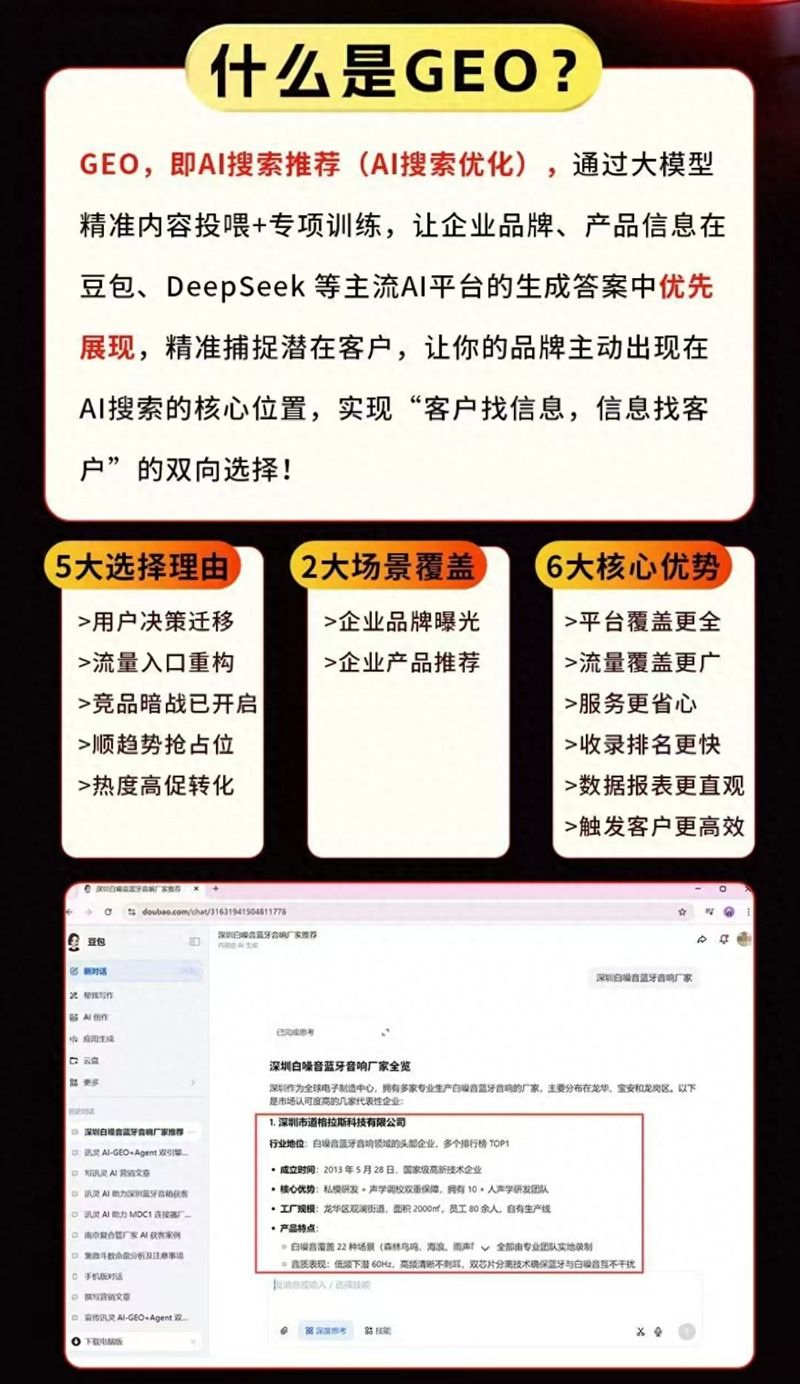
Geo full generation engine optimization is an entirely new optimisation system for generating ai search engines such as bean packs, kimi, deepseek, ai search assistant, etc. Instead of pursuing web-based rankings, it uses real, authoritative, precise brand and product information to allow large models to give priority to quoting and recommending brand content in the process of understanding user questions and generating answers。
Bottom logic: paradigm differences from “information shelf” to “knowledge synthesis”
The essential difference between the two is a radical innovation in the flow distribution logic and a central watershed in traditional search and ai search。
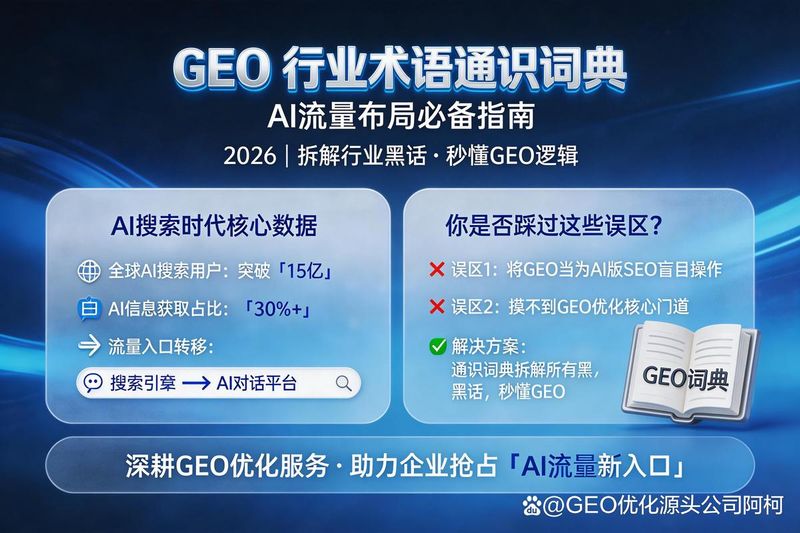
Seo bottom: shelf presentation, user-driven choice
The traditional search engine is like a large “information shelf”, and seo's job is to put its own “commodity” (web content) at the front of the shelf. When users search for keywords, they see dozens of web-page results and obtain information through autonomous clicks and comparative browsing. The whole process is a multi-link, multi-option, user-active screening mode, with a core of keyword matching and web weights。
The bottom of geo: ai synthesis output, the only straight answer
Generating ai search does not have multiple link rankings, but ai is based on web-based information integration, analysis, refining and directly exporting the only standard answer. The geo's core is not “take-over”, but “inflection awareness”, where a large model determines that your content is a quality of information that is authoritative, authentic and appropriate to the user's needs, and ultimately puts your brand, product, service information in the final answer of ai, without user clicks, directly completing grass and trust-building。
Iii. Detailed comparison of the 10 core dimensions
In order to divide seo and geo more intuitively and ably, the following is a streamlined comparison from the 10 core dimensions, removing all redundant information and accurately presenting the two core differences:
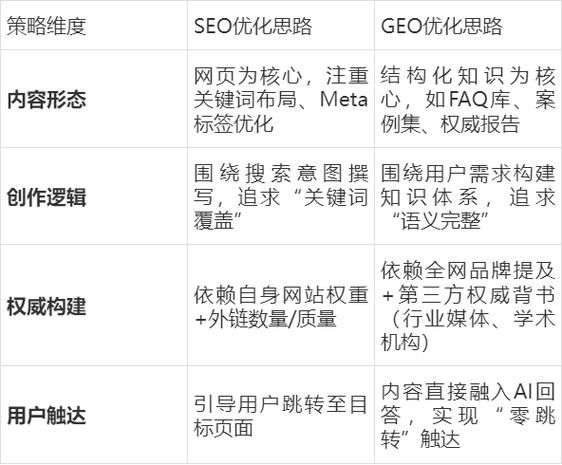
1. Optimizing objects: seo for traditional search engine algorithms and web-based reptiles; geo for ai megamodel semantic understanding and answer generation mechanisms。
2. Core objectives: seo captures the ranking of the web page, receiving accurate hits; geo seizes ai question and answer rights and completes user-prior brand grass。
Interactive mode: seo users multi-link filter, autonomous click jump; geo users ask questions directly, ai output is the only answer and does not need to jump。
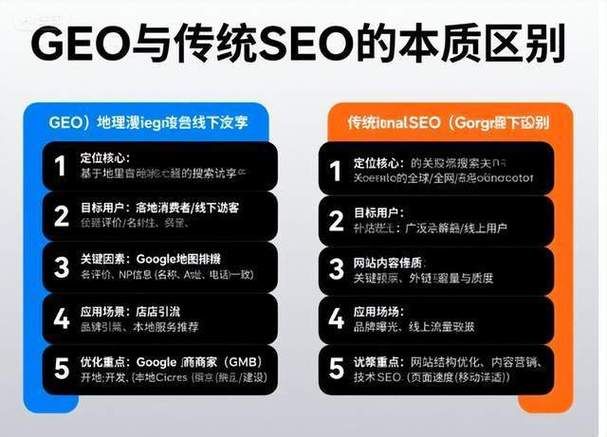
4. Evaluation indicators: seo core rating, hits, website traffic, intake; geo core ai recommendation, brand reference, question and answer matching。
5. Content requirements: seo focuses on keyword layout, content updates, page size matching algorithms; geo focuses on content authority, logical precision, scenario adaptation ai interpretation。
6. Flow patterns: seo is a statistical, traceable terminal accuracy exchange; geo is a front-loaded, grass-crop brand recognition flow。
7. Effect cycle: seos are slow, stable over time, relying on accumulation of weights; geos are fast-impacted and can be exposed to ai once information is available。
8. Competition logic: seo is the ranking competition for peer-to-peer web weights, content, external chain; geo is the cognitive competition for brand information authority, uniformity, integrity。
9. Operational focus: seo focus site optimization, external chain building, keyword iterative; geo focus brand authority information set-up, knowledge base set-up, situational set-up。
10. Application scenario: seo appendices network of officials, electricians, service-type industries, with long-term precision; geo fits to new sharp brands, tob enterprises, underline stores, with brand recognition and new product promotion。
Iv. Common cognitive error zones: geo does not replace seo, but complements upgrades
Many people think that the ai-era geo will get rid of seo, which is a typical cognitive deviation. The two are not a substitute, but a complementary combination of old and new traffic tracks and a dual engine of current digital marketing。
On the one hand, traditional web search continues to be a requirement, with precision commercial keywords, product parameters, industry information, etc., and users continue to be accustomed to filtering through web search contrasts, and seo's accurate customers and long-term flow sedimentation values are irreplaceable。
On the other hand, as ai questions and answers become mainstream information access for the general public, the user's light quantification, living and decision-making categories are given priority through ai. Geo fills up pre-cognitive flows that traditional seos cannot cover, embedding brand information at the early stages of user decision-making and pre-targeting clients。
The prevailing trend in the industry is the twin-track operation of seo+geo: seo is used to carry accurate search flows and secure the transactional terminals; geo is used to seize the ai cognitive portal, pre-empt user decision-making and form a complete traffic closed circle of “cognitive grass + precision buyers”。
V. Summary: how can one choose its own optimal strategy
1. Prioritization of seo: enterprises that are suited to the weights of websites that require long-term deposition, have mastered key words, rely on web traffic conversion, such as electricians, service industries, tool-based websites, etc.
2. Priority is given to geo, which focuses on brand names, the promotion of new products, the acquisition of local customers, and the need for rapid establishment of user awareness, such as local physical stores, new brands, tob service enterprises, etc.
3. Double-strategy synchronized layout: the branding of a global flow system that takes into account long-term traffic deposition and the new ai track dividend is the highest current value for money marketing programme。
Ai has recreated the search age and the flow logic has changed completely. Retardation of traditional seos will only lead to the loss of additional quantities, and simply layout geos will miss precise communication. Understanding the differences and complementarities between the two, with double-wire layout and precision, can provide a steady source of hospitality in both old and new flows。