Standard operating manual for repair and maintenance of manufacturing equipment
General provisions
1. 1 purpose and meaning
The purpose of this manual is to regulate the repair and maintenance operations of manufacturing equipment, to ensure that the equipment remains in good working condition, to minimize downtime, to improve production efficiency, to extend the useful life of the equipment and to guarantee safety of production and the stability of product quality. Through systematic and standardized processes, equipment management is organized and accountable and provides firm guarantees for the sustained and stable development of enterprises。
1. 2 scope of application
This manual applies to the day-to-day maintenance, preventive maintenance, trouble management and related management activities of all production equipment, assistive equipment and related facilities within the enterprise. All personnel involved in the operation, maintenance and management of equipment within the enterprise are required to comply strictly with the provisions of this manual。
1. 3 basic principles
1. Precaution, maintenance and repair: emphasis is placed on the importance of preventive maintenance, the timely detection and removal of potential failures through regular inspections and maintenance, and the elimination of failures in embryonic conditions while ensuring the quality and efficiency of maintenance。
2. Safety first, regulation and operation: all maintenance operations must be conducted with safety as a primary prerequisite, in strict compliance with safety protocols and in order to prevent illegal operations。
3. Practically, results-oriented: maintenance programmes should be formulated in combination with the physical condition of equipment, production needs and cost-effectiveness, avoiding formalism and pursuing practical results。
4. Responsibility, completeness of records: clarify the responsibilities of individual posts in the maintenance of equipment, and complete and accurate records of all operations for retroactive and analytical purposes。
1. 4 division of responsibilities
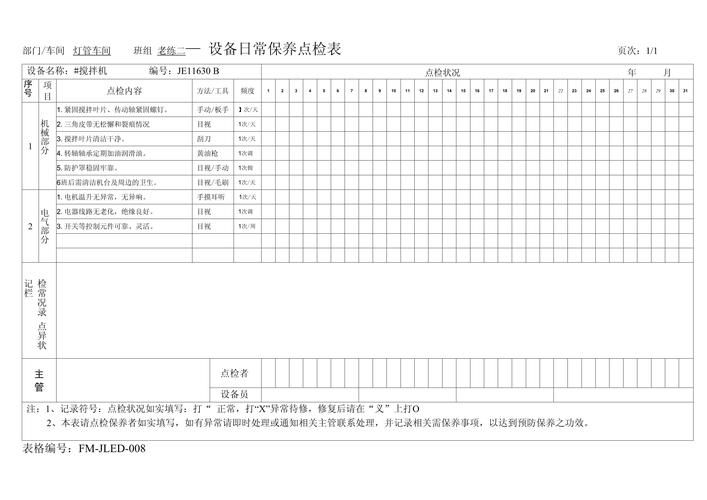
:: operators: responsible for routine check-ups, cleaning, simple securing and lubrication of equipment and timely reporting of anomalies。
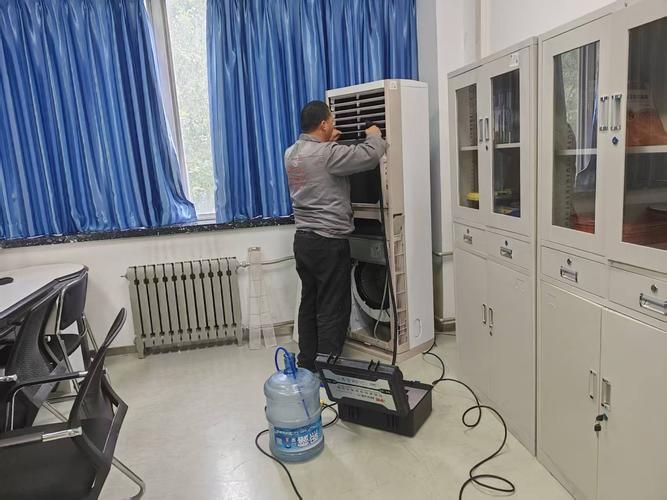
:: maintenance personnel: responsible for the regular maintenance of equipment, trouble diagnosis and removal, repair or replacement of complex components and daily maintenance guidance for operators。
:: equipment management: responsible for the development and revision of manuals, oversight of the implementation of inspections, organization of technical training, management of spare parts for spare parts, analysis of equipment operational data and continuous improvement of equipment management levels。
:: production management: cooperate with equipment management in scheduling maintenance time, coordinate production and repair relationships and ensure smooth implementation of maintenance plans。
Maintenance of equipment
2. 1 daily inspections
The operator shall inspect the equipment in accordance with the daily point check of equipment before, during and after each shift. Focus on:
* cleanliness: the presence of impurities such as oil, iron crumbs, dust, etc., on the surface and key parts of the equipment。
*strenchment: the bolts, whether the nuts are loose or missing。
*lubrication status: sufficiency of oil at the various lubricating points, smoothing of oil routes and leakage。
*voice: an abnormal sound, vibration or odor in operation。
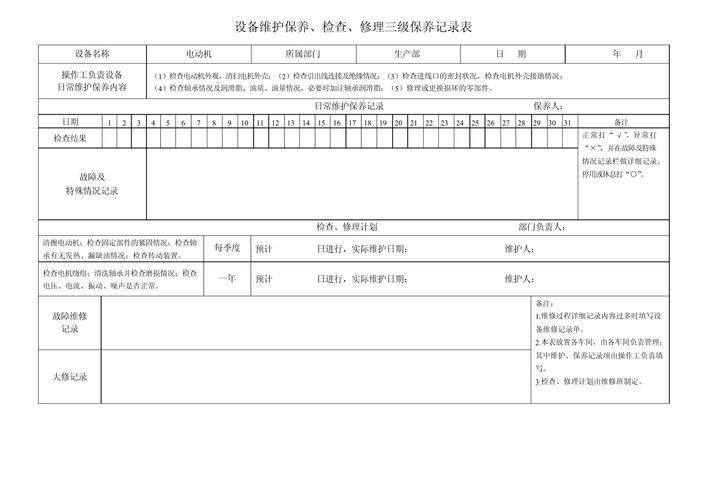
*system indicator: whether the readings for the various instrument types are within normal range。
*safety devices: whether the stop buttons, barriers, warning signs, etc. Are working。
The anomaly should be immediately halted and reported for recording。
2. 2 periodic maintenance
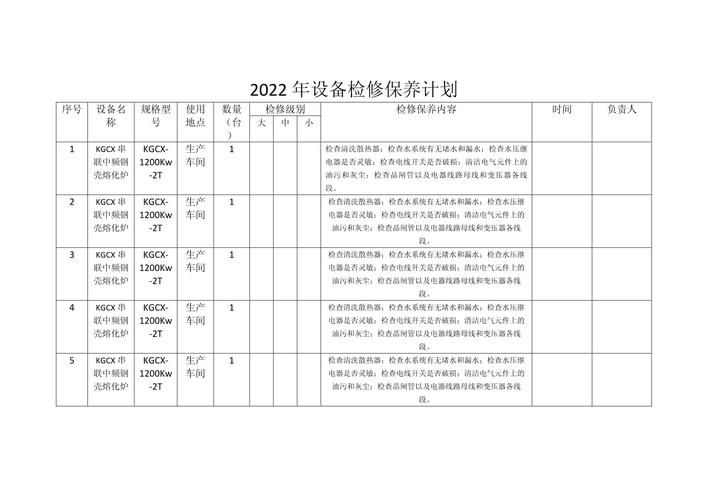
A daily, weekly, monthly, quarterly and annual maintenance plan is established and strictly enforced in accordance with the characteristics and operational status of the equipment。
:: daily maintenance: done by the operator, consisting mainly of thorough cleaning, re-supply of lubricants, inspection of handles and buttons。
:: weekly maintenance: carried out by maintenance staff in cooperation with operators, including checking the tightness of moving belts/chains, the sensitivity of limit switches, electrical circuit connections, and securing and lubricating priority areas。
:: monthly maintenance: a more comprehensive inspection of the equipment, led by the repair personnel, including examination of the oil table and the oil content of the gear tank, an axle heating test, a hydraulic system pressure check, and aerodynamic element sealing check, adjusted and replaced, as necessary。
* quarterly/annual maintenance: depth maintenance of equipment organized by the equipment management. It may involve partial break-up inspections, precision calibration, replacement of ageing components (e. G. Seals, cores), electrical insulation tests, etc. The maintenance will require a pilot operation to ensure that performance indicators are met。
2. 3 maintenance methods and requirements
* cleaning: cleaning, inside and outside the equipment, with appropriate tools (rags, brushes, vacuum cleaners, etc.) and cleaning agents to ensure that there is no impurity, no rust. Be careful not to water into the electrical system。
:: tightening: inspection of all visible points of connection and the use of appropriate wrenchs to tighten them to the required strength to prevent looseness from causing malfunctions。
*lubrication: apostilles or replacements are strictly in accordance with the oil model, lubricants section and cycle specified in the equipment specifications. Before lubricating, the refuelling mouths should be cleaned to ensure that the lubricants are clean and clean。
* adjustments: accurate adjustments to the tightness, gap, pressure, itinerary, etc. Of the belt to restore the original performance of the equipment, based on the operational parameters and wear and tear of the equipment。
:: replacement: timely replacement of spare parts (e. G., filtration cores, seals, brake blades, etc.) that have reached their useful life or reduced performance, ensuring that replacements are authentic。
Maintenance of equipment
3. 1 disorder diagnosis
When equipment fails, the maintenance staff shall perform the diagnosis on the basis of the principles of “first-in-first-in-first-out-out-out-out-out-out-out-out-out-out-out-out-out-out-out-out-out-out-out-out-out-out-out-out-out-out-out-out-out-out-out-out-out-out-out-out-out-out-out-out-out-out-out-out-out-out-out-out-out-out-out-out-out-out-out-out-out-out-out-out-out-out-out-out-out-out-the-out-out-out-out-out-out-the-out-out-out-out-out-out-out-out-out-out-out-out-out-out-out-out-out-out-out-out-out-out-out-out-out-out-out-out-out-out-out-out-out-out-out-out-out-out-out-out。
*information gathering: details of the events before and after the malfunctions are known to the operator, such as the absence of noise, smell, smoke, changes in parameters, or anomalies in operation。
:: appearance inspection: any visible damage to observation equipment, deformation, relaxation, oil spills, leaks, burns, etc。
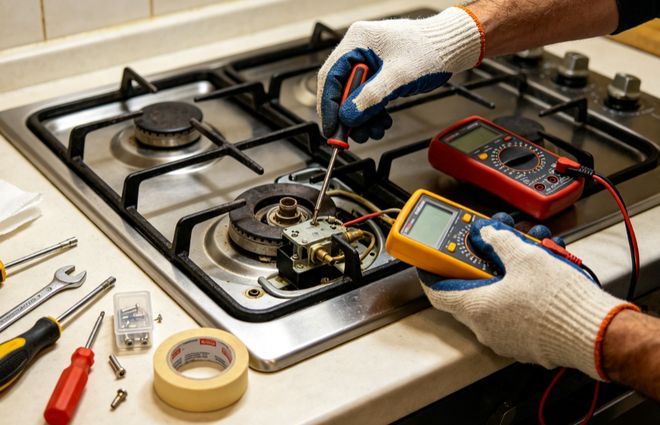
*function testing: local or single-step action testing to reduce the failure range, subject to ensuring safety。
*mechanical testing: