Breaking the new energy car maintenance challenge
According to the most recent data of the transport administration of the ministry of public security, at the end of june this year, the number of new energy vehicles in our country was 4,897,000, representing 13. 19 per cent of the total, an increase of 2. 92 percentage points over the same period last year. In parallel with the rising levels of tenure and the growing demand for protection, the number of consumer spats on new energy vehicles, “remaining expensive, difficult to repair”, has also increased, known within the industry as “growth troubles”。
The circular on certain measures for post-big vehicle consumption (hereinafter referred to as the circular) issued by the ministry of commerce and others on 18 june of this year proposes to optimize the supply of new energy vehicles for repair and maintenance, stimulate the post-movement market and better meet the diversified demand for automobile consumption。
Demand and supply contradictions are prominent
The failure rate is a thousand dollars and major maintenance is half the cost of the car... In mid-july, journalists visited a number of car repair shops and interviews with car owners, companies, maintenance technicians and others found that the “maintenance and maintenance difficulties” of the new energy car were becoming a new anxiety for many car owners。
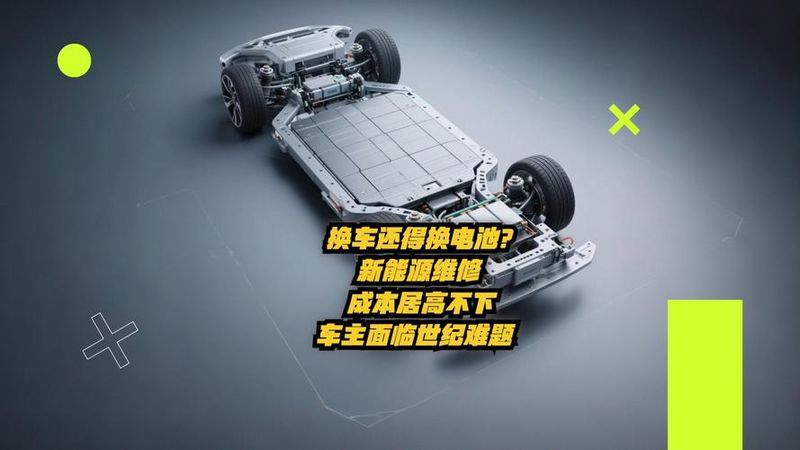
Differences in the structure of power systems and differences in the number of maintenance projects make maintenance costs for new energy vehicles usually lower than fuel vehicles. However, a survey of car owners in the country, conducted by the global agency for car data and analysis (gindy) for the period 2 to 12 months, showed that, in the case of minor accidents involving sensor calibration, new energy vehicles cost between $5,000 and $15,000, and fuel trucks only between $2,000 and $8,000; in the event of a serious collision, the cost of new energy vehicles could be close to or even exceed the cost of new vehicles, while the cost of fuel trucks could be between $50,000 and $150,000. In addition, longer maintenance cycles further exacerbate user pain points. For example, some of the new energy vehicle high-pressure systems will need to be scheduled for several weeks。
Behind the demand side is the supply side deficit. Currently, there are nearly 400,000 car repair businesses in the country, including 4s stores, of which around 20,000 are new energy vehicle repair businesses. “the construction of a system of maintenance services for new energy vehicles is still in its infancy compared to a mature system of maintenance services for conventional fuel trucks.” according to zhang yanhua, president of the chinese association of automobile repairs and repairs, our new energy vehicle conservation ecology is served mainly by the authorization of the mainframe and battery suppliers, as well as the 4s shop model, and third-party independent repair firms face technical barriers that make it difficult to expand new energy vehicle maintenance sites。
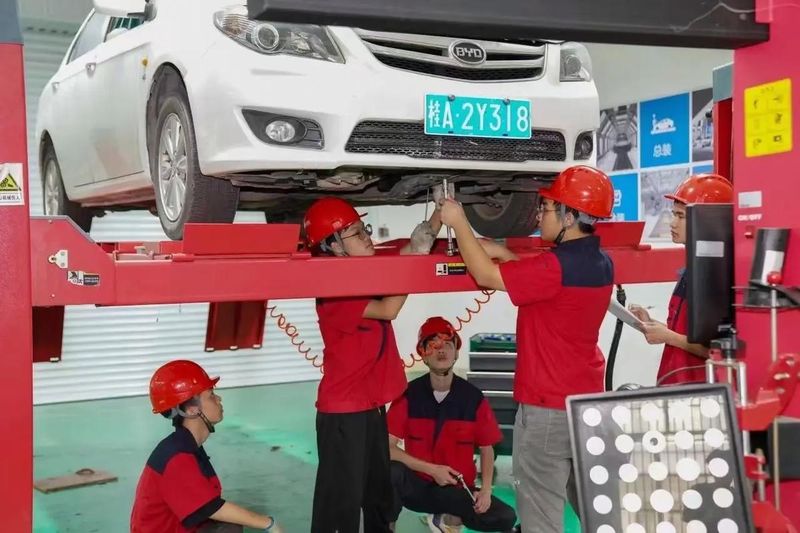
There are also significant gaps in new energy vehicle maintenance. According to data from the chinese association of automobile repairs and repairs, fewer than 100,000 technicians are currently engaged in the maintenance of new energy vehicles, of which only 24. 7 per cent are capable of battery testing and maintenance, and less than 5 per cent of technicians are aware of assistive or auto-driving systems, but are unable to complete the maintenance work, with a talent gap of more than 800,000。
Electricization and intellectual change have accelerated the rebuilding of traditional protection systems. “in comparison with fuel vehicles, new energy vehicles place higher demands on professional capacity- and system-building in terms of major components, key technologies, participants and service models.” zhang yongwei, director-general of the institute of the centennial of electric motors, stated that the current technical system for the maintenance of new energy vehicles was not yet mature, and that both power systems and intelligent components presented high technical barriers。
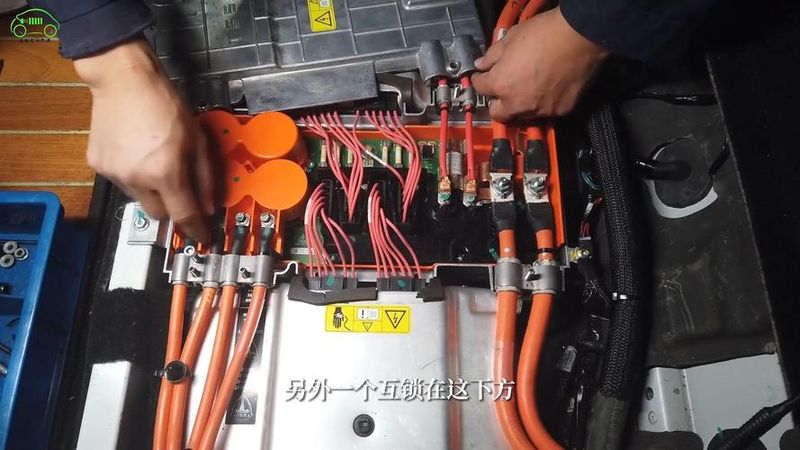
On the one hand, core structures such as high-voltage systems for new energy vehicles, electrical control systems and heat management are complex, relying on specialized equipment and systematic technological processes for their detection, diagnosis and maintenance, and the industry continues to improve relevant technical capabilities at this stage. On the other hand, the increased integration and intellectualization of parts and components of new energy vehicles, such as ctp battery packs, integrated cast bodies, intelligent sensors, etc., are highly integrated and difficult to dismantle, often making local repairs difficult after failure, and can only be returned to the plant for processing and even replacement as a whole. In addition, the software level is more complex, especially for third-party maintenance enterprises, where the diagnosis and replacement of hardware can be completed, often the final maintenance cannot be completed owing to the unavailability of software brush privileges, configuration parameters or calibration data。
“the demand for detection, preservation and emerging services for new energy vehicle triple power systems is growing, but the average maintenance cost of the power cells corresponding to them remains high, the network coverage of authorized services at the mainframe and battery plants is relatively inadequate, the capacity to detect third power maintenance is still limited and the standardization of the automobile maintenance industry is inadequate.” president hu xiaodong said that the new energy era had created a new demand, that three power-based protections had become high-frequency demand, that users had higher demand for prices, service specifications and professionalism, and that there was an urgent need for transparent, standardized and cost-effective services. The needs and expectations of new energy owners can be better met only if more supply innovations are carried out from multiple angles and layers around user needs and distress。
Standard yet shortboard
The new energy vehicle maintenance standard is both a basis for ensuring the safe operation of vehicles and improving the quality of maintenance, as well as an important safeguard for promoting industry regulation and safeguarding consumer rights。
By the end of 2025, more than 10 national standards for vehicle protection had been issued, covering the movement of spare parts, maintenance, maintenance of power batteries and return of used motor vehicles. Among them, the information management requirements for the movement of spare parts in the post-vehicle market, implemented in july 2022, clarifys the principles of information management for the movement of spare parts in the post-vehicle market and applies to the flow information management of spare parts and the traceability of essential information on accessories; the new energy vehicle maintenance technical requirements, implemented in january 2025, sets out systematic requirements for the maintenance of new energy vehicles, safety requirements and maintenance work projects; and the technical conditions for the completion of the plant for the repair of power cells, implemented in march 2025, defines maintenance operation requirements, completion testing requirements and quality assurance。
However, key parts of new energy vehicles have not yet formed a uniform industry code for the maintenance of borders, quality assessment, and segregation of duties. In the case of power battery packages, for example, there is currently no clear distinction between “maintainable” “restrictable maintenance” or “must be replaced” industry judgements, and maintenance programmes are subject to controversy; post-maintenance quality assessment and validation mechanisms are inadequate, and uniform standards for quantifying safety and reliability are lacking after the maintenance of critical spare parts, leading to difficulties in determining liability in case of post-maintenance accidents。
At the same time, the smart-assisted driving function has not yet been incorporated into a clear three-package liability framework. Although the current “three packs” of regulations have reinforced the overall requirements for new energy vehicles, there is still a lack of a clear basis for defining and handling responsibilities for the failure of assistive driving systems, software failures and associated safety risks。
“in response to the delay in the standard system in the area of post-vehicle market protection and the vague regulatory norms, the circular clearly provides for enhanced motor vehicle maintenance record keeping and improved standards for new energy vehicle maintenance.” liu xiao, a senior researcher at the centre for automobile strategy and policy studies in china, said that, as standards continue to be introduced and implemented, new energy vehicle repair and maintenance operations will become more regular, not only to ensure the quality of vehicle maintenance services, but also to better support their extension。
Advocating for “replacement”
“the most high-risk occupation is not an outsider, but a mechanic.” it's a bitter story that runs through the car repair ring. Behind the section is a reflection of the multiple dilemmas of “maintenance rights” and “maintenance difficulties” of new energy vehicles。
A number of mechanics were brought before the courts for “ unlocking” the new energy car battery pack, which led to the owner's discussion of the right to use and ownership of the vehicle: “my own car, which i worked so hard to buy, has no right to even repair it, is it still mine?”
At present, in the area of the maintenance of new energy vehicles, there are also phenomena such as the closure of technological information and the monopoly of access to core parts, which makes it difficult for some maintenance enterprises to have equal access to original plant data and associated resources. Liu zai indicated that in this regard, the circular requires that authorities be directed to open up repair technology to new energy whole companies and power cell producers, and that “replacement” be encouraged to upgrade the capacity of social maintenance services for new energy vehicles。
“a number of third-party service providers have technical gaps in the maintenance of new energy vehicles that make it difficult to meet process requirements, are prone to safety risks and require re-calibration by the manufacturer to ensure stability in terms of intelligent driving parts and system failure.” li yingbin, chairman of the lithium company, suggested that, subject to security controls, a car company or power cell enterprise should gradually open up technical authorization for maintenance to third parties。
New energy vehicle maintenance costs are directly caused by the fact that most of the damaged items are “replaced only”. In the industry, it has been revealed that “replacement is more profitable” and “saving”. In the case of high-intensity power battery packages, the cost of replacing batteries in high- and medium-scale new energy vehicles is around $100,000, but the cost of battery maintenance can be reduced to between $10,000 and $20,000 through modular level or package repair, far below the full replacement cost。
“the circular also states that, in order to enrich the channels for the repair of new energy vehicles and for the supply of spare parts, automobile-producing enterprises may not restrict the freedom of consumers to choose to maintain their own cars and may not be used as grounds for refusing to assume the legal `triple' liability.” zhang yanhua stated that breaking the monopoly on maintenance and spare parts and creating a new energy vehicle maintenance and spare parts supply system that was efficient, competitive and fully open, would guarantee the right of all repair businesses and car owners to easily use spare parts for vehicle maintenance and would contribute to a more dynamic and sustainable post-car market. Jung jung-yang