In recent days, the blue book on the development of china to the domestic service sector 2023, prepared by the centre for the study of the quantified industrial economy of the south china polytechnic university, has been published, building on the current and current state of development in the domestic service sector, from the three scenarios of home maintenance, home-based services and home-based services, in order to provide a comprehensive analysis of the industry's background, business patterns and business performance and explore new opportunities for industry development。
With the rapid growth of the national economy, the people's standard of living continues to rise and the disposable income of families continues to rise, and our country is witnessing a period of rapid growth in the domestic service sector. Improved consumption and quality of life provide an important economic basis for the development of home-based services. In addition, the spread of the mobile internet and the development of online payments have allowed the expansion of the range and mode of service in the domestic service sector。
I. Home maintenance
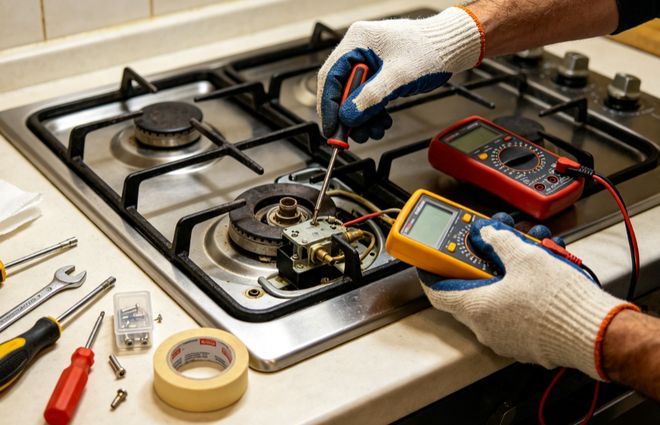
The 100-degree index shows that the demand for searches in the maintenance industry has been rising year by year and that the number of key words related to “maintenance” has exceeded 45 million in the 100-degree industry in recent years, with more than 70 per cent of the total number of home appliances and mobile phone maintenance searches。
Large market demand has led to new market opportunities in the home maintenance sector. Business model types currently available to repair businesses can be broadly classified as self-employed, b2b2c platforms, crowd-sourcing platforms and hybrid models. The three models have advantages and disadvantages, and there are common operational difficulties such as lack of industrial services, slow market coverage of services, inadequate regulatory mechanisms for enterprises, irregularities in the system of vocational training and development of engineers, and lack of job security。
The definitive opportunity to be present in the home maintenance industry lies in the fact that both mobile phones and household electricity are high-value durables and that consumer demand for maintenance remains dominant. By the time home phone maintenance is still in its infancy, it accounts for only about 5 per cent of the market, which, at an annual rate of 10 to 15 per cent, averages $350 per mobile phone, or almost $80 billion. More consumers are expected to opt for home maintenance services in the future as consumer awareness increases and industry regulations improve。
Ii. Home service
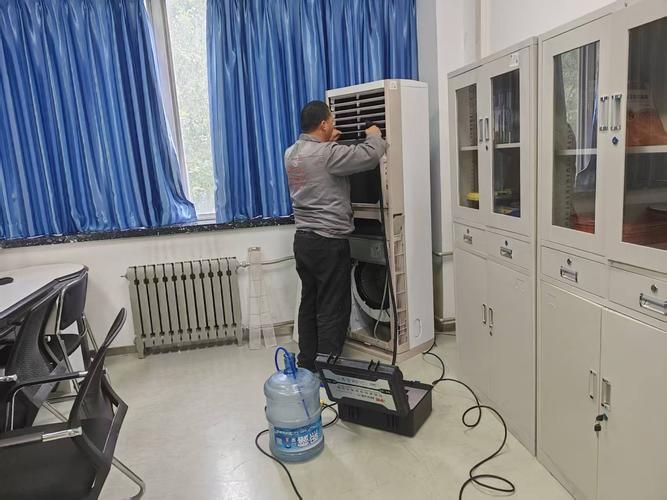
The broad definition of home-based services refers to any service that occurs in the home setting and is related to home-based products, such as installation, repair, cleaning, scavenging, cleaning, maintenance, etc., and also includes the above-mentioned “home-electric repair” and “domestic service” to be mentioned below。
The key words for the development of home-based services are intellectualization, the optimal allocation of resources in internet mode and the extreme efficiency of the industry. For a long time, the domestic-fitting industry has been regarded as “the least off the internet” and has been characterized by “black forests” that are characterized by information asymmetries, non-transparent prices, and lack of services, due to such characteristics as low-line, heavy decision-making and heavy experience. Consumers are aware of the depth of the water but are unable to find solutions。
The emergence of the first home service platforms in the country changed the original state. Based on internet technology, masters bring together the country's resources for quality services, starting with an “autonomous bid” model, fair trade, two-way choice. At the same time, the process of reshaping services, their nodalization and visualization, and the serviceer's “digital résumé” are clearly visible, breaking the traditional information gap and addressing the last kilometre of service through technology-driven and resource-sharing to achieve “whatever you see”。
Currently, the overall consumption pattern of home-based services shows a downward trend, with 70 per cent of users coming from three to five-line cities. The focus of consumption concerns has also moved from product quality itself to overall product delivery。
Data from the analysis of the country-based services sector, 2022, show that clean-up and maintenance are among the most commonly used home-based services scenes of chinese consumers, accounting for 40 per cent. In addition, maintenance, installation, decomposition, porting, etc. Are popular items in the consumption of home services。
In terms of the current state of development of the home service sector, it is not difficult to find that, as the demand for living environment increases, individualized home-based services are favoured, and the upward trend in consumption is driving the industry to innovate and upgrade in the subdivision. The future industry is bound to move in the direction of quality and fine-tuning, and a truly dedicated service provider will open up the gap in competition and reflect the dominant advantage。
Iii. Domestic service
In recent years, our domestic service market has grown steadily, from $27. 76 billion in 2015 to $1014. 9 billion in 2021, surpassing the trillion mark, almost fourfold。
From 2015 to 2021, employment in the domestic service sector has grown steadily, with about 90 per cent of the population coming from rural areas. In 2021, the number of domestic workers in the country was 37. 6 million, an increase of 7. 3 per cent over the same period. However, owing to the unprecedented surge in demand for services, there is still a large gap in the domestic service sector and there is a shortage of supply。
Among the three most representative scenarios mentioned in the report, the domestic service industry started earlier, became more common and more widespread in life. Home cleaning is the type and scene of domestic service most frequently used by consumers, representing 64. 8 per cent. In addition, household care, relocation, maintenance of household clothes, mother-and-child care or sis-in-law services are also popular items in domestic service, accounting for more than 30 per cent。
In terms of business models, domestic domestic service platforms are divided into three main categories: purely self-employed, purely third-party and mixed。
The market penetration rate for domestic services is higher than for the first two, and can be divided into dynamic services (old age, childcare, sis-in-law) and static services (cleaning). Dynamic services are not profitable because of low frequency, long-term characteristics, and static services lack industry standards. There are difficulties in regulating the development of the industry。
Concluding remarks
As stated in the report, home-to-home services are a digital, family-life service that combines resources in order to create a full digital circle of life and provide a variety of accessible, home-based service models for family residents。
It is foreseen that the domestic service industry is a promising new industry, with diverse coverage and sustained growth as the demand for national services changes. With economic development and improved living standards, there is a growing demand for home-based services, and the country's home-based services sector has grown rapidly, creating a diversified, multilayered and high-quality development pattern。
However, at the early stages of growth, any sector is bound to experience chaos. An increasing number of enterprises are pouring into the tracks, short-term civil unrest and “price wars” disrupting industry ecology and leading to the expulsion of bad currency. The establishment of industry standards, the classification of services, the acceleration of vocational education and the improvement of workers'security are key issues in guiding the development of high-quality industries. The development of health in the industry depends on the “head sheep” model。
For decades, the industrial internet has developed, and the first internet companies, represented by a large number of masters, will be able to maintain their pre-eminence, lead the race with quality services, cleanse the industry’s ecology, and become a well-known “consumer brand”? Everything is to be expected。