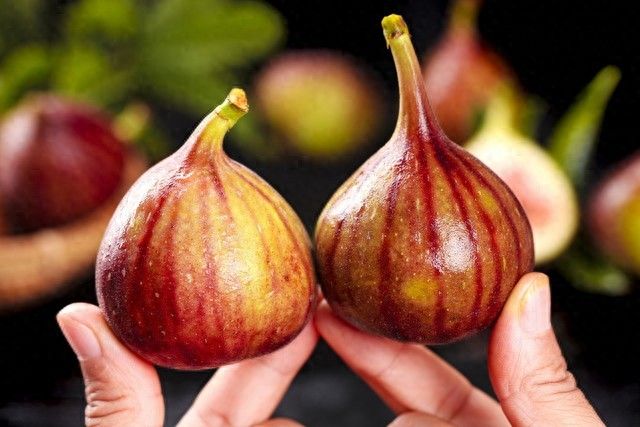
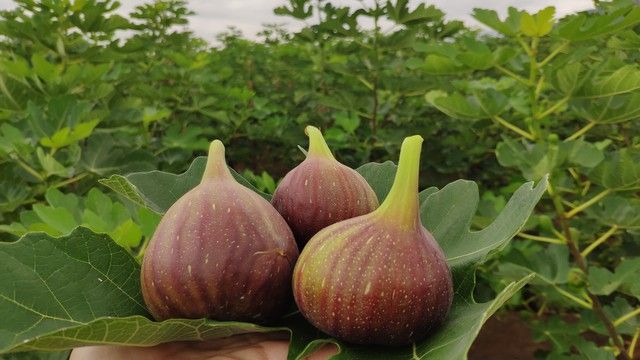
Many farmers with figs have a headache: their own fig trees look so strong, the leaves are so thick, the branches are so high and long, and the leaves are so thick that they don't bear fruit and have little fruit。
In particular, small trees have been planted for a year or two, with only one person in their years, no side branches, a bald trunk growing upwards, with a few hard-earned fruits, and on top of the trees, not only in small numbers, but also small heads, unequal maturity and difficulty in picking. Many of the new farm houses have to be trimmed, and it is always felt that the more branches left, the better they are, the more they are, the more they are, the more they are, the more they are, the more they are, the more they are。
In fact, remember one thing: the figs only grow new branches, and the old ones do not. Summer is the fastest growing figs and the most critical period of gold in the cleavages, and the best time to trim the top and make plastic fruits. If we do this in the summer, we do it right, we don't have to fatten it, we can force the fruit tree to stop the crazy long branches and the crazy twigs, and we'll be full of fruit that year, and we'll have a year-old tree, two years-long production, and we'll solve the problem of figs with long leaves and no fruit。
First, understand the error zone. 90% of the farmers cut it wrong here, and it's getting worse
Many people grow figs that are not productive, that are not a problem at all, that are not fertilized, that are the wrong way to trim them, that work hard and work hard, and that stifles the results。
The first area of error: cannot afford to go to the top, leaving the branches to grow mad. Many farmers look at the branches as green and strong and are unable to cut them to the point and allow them to move up and down. The figs have extremely strong top advantages, with all nutrients being given priority over tops, and all nutrients in the tree body being used to grow a child and new leaves, without any excess nutrients to graze and produce fruit. The last branch grew to one or two metres high, with a long strip of baldness, with only a few pieces of fruit at the top, emptying the bottom half and cutting production directly by half。
The second area of error: the time of trim and the spring peak. It is a taboo that many newcomers don't know the season and that the spring fruit tree is born blindly. In the spring, figs bear spring fruit, and when they hit the top and cut the buds, they cut the buds directly, causing a severe fallout, empty branches and a significant reduction in the number of hanging fruit throughout the year. Remember, spring doesn't take the top off, summer takes the top off, which is the core rule for figs。
The third area of error: one cut, overcut. Some farmers knew they were going to do it in the summer, but it was too heavy, and they cut the branches bare and left them in the main. The fruit leaves are too few to produce nutrients for photocooperative use, the tree is weaker, the subsequent branches are weak and weak, the hanging fruit is of extremely poor quality, and small trees are prone to stagnating and stagnant growth, and have been slow for several years。
The fourth area of error: only the top, not the branches. They simply don't clean their branches, their branches, their branches, their branches, their branches, their branches, their branches, their branches, their venoms, their internal branches, their failure to see the sun, their buds, and their vulnerability to fungus, pests and diseases. The fruits tend to be small, crack, rot, and the best water fat cannot be saved。
With these mistakes avoided, standard summer cutting techniques, whether pelvis, garden trees or figs planted in daejeon, can be quickly formed and branched。
Ii. Best cut time in the summer, precise control, no blind cutting
Summer cutters of figs are not readily available, the timing of the selection is double, the timing of the selection is delayed throughout the year, and the farmers keep accurate records of the time。
The year-round summer period of trimmed gold was concentrated in the middle of june to late july, when temperatures were suitable, rainfall was abundant, figs were growing fastest, tree bodies were highly active, post-cut cuts were followed by fast lumbering and flower buds were of the best quality。
The criteria are particularly simple, not to read the calendar, not to remember the rhythm, but to see the size of the branches: at the end of the spring pick-up, the new branches are starting to grow fast, the best time to trim them。
And remember two key details:
1. Avoiding hot-temperature tan and trim. During the summer, the temperature is too high, the water of the cut is evaporated and can easily be dried back, with the best choice being to trim at night or in the middle of the day, and the wound heals quickly and grows stronger。
2. No cut immediately after the rain. The post-rain branches contain too high a quantity of water, and the cuts are susceptible to water infecting the fungus, causing the dead branches to rot, and wait for the clear soil to dry up。
Iii. A simple four-step step for a tree to do the best it can
They are designed for 1-3-year-olds who are not yet productive, and they teach people to do it with their hands, without a professional tool, with a pair of scissors and hand-strangling。
Step one: a high-strength and a bottom-up
The first step was to raise the main and not limit its height。
General criteria for farming households: main dryer up to 40-60 cm and must be strangulated to the top。
Cutting off directly or strangling the bud at the top, forcing the backbone to stop growing up. This height is the most suitable height for small tree abundance, with small and small trees, even branches of follow-up, easy to pick, good ventilation, and not growing into tall, thin, empty trees。
Don't stay too high, with more than 60 centimetres of trunks on top, all the posteriori branches at the top, the lower bald, the trees in disarray, and never a productive tree。
Step 2: new batches to boost secondary results jing
In 10 and a half days, after the main dryer, the main dryer will have sprouts and new branches, which will be the main force of the subsequent hijab, with a focus on precision management。
All new branches follow uniform criteria: they grow to 30 to 40 cm, retain 4 to 6 pieces of healthy leaves, and cut the tip of the top。
It is important to remind you of the need not to do one-time, one-time, one-time, one-time, one-size-fits-all, one-size-fits-all, one-size-fits-all, one-size-fits-all, one-size-fits-all。
After each stroke, the branches are no longer high, the whole nutrients are accumulated in the branches and stem, the buds are rapidly divided, and one branch is capable of producing three to five secondary branches, all of which are the result branches, which are at the core of figs。
Step three: smuggle the waste branches and concentrate on feeding the fruit
When they do, the trees will be full of tiny branches, branches, long branches that grow inside, which will not work at all, and will only take their nutrients and hide the sun and must be cleaned up。
Focus on these branches:
1. Small, useless foot buds at the bottom of the backbone, with all of them cut to the root of the backbone in order to avoid waste of nutrients
2. The intra-canoplasmally grown penises, cross branches, which are entangled in each other and poorly ventilated, fruitless and directly removed
3. Weak, small and poorly developed, ineffective branches that only consume water fat, lack the capacity to tie fruit and cut off decisively。
After trimmed, the branches are kept in a state of trim, every branch left behind sees the sun, and the nutrients concentrate on the resulting branches, and the fruit expands quickly and is sweet。
Step four: a retweet in august to stabilize autumn fruit production
Following the completion of the major cut in july, another retweeting was done in mid-august。
At this point, the new late autumn rises to about 50 centimetres, cutting off the top and stopping nutrient growth. Avoiding the continued growth of branches, allowing all nutrients of the tree to be fully fed by the already conceived autumn fruit, ensuring its smooth expansion and maturity, prolonging the shearing period and sustaining productive production during the summer and autumn seasons。
Iv. Distinction between age and age
Many farmers do not know the difference between small and large tree trimmed, and the uniform operation leads to a reduction in production, which is clearly stated by age, and the precision of the tube is not pedaled。
Trees 1 - 2 years old (focus plastics, rapid production)
Core thinking: hard work, light cutting, extra branches. The main task of the small tree is to expand the coronation and produce branches, and not to recut them. As long as the branches reach heights, they strangulate in a timely fashion and promote the branches repeatedly, so that a year can produce multiple branches of results, and the next year can enter the poignant period。
Over 3 years of age, the result is a tree
Core thinking: less top-down, more branches, more steady production. The adult branches have formed, and spring branches are attached, bearing in mind that spring does not top them. In the summer, only the long, empty branches were strangulated, with a focus on the removal of twigs, insect branches and old branches, ensuring ventilation, preserving the existing fruit and promoting the fracturing of the buds。
Weak trees, rigid seedlings (light cutting of trees)
Weak, yellow-leaved, unbreeding, weak trees, only small branches in the summer, and determined not to hit the top again. Sufficient leaves are retained for light co-operation, with trees raised, re-emergence and, when the trees are strong, normal promotion。
Five, after summer trimmed, with parabolics, cut for free, double production
Many farmers have only to trim, after cutting, with slow hair and little nuts, bearing in mind that cutting is only a first step and that accompanying management keeps up with them, so that the explosive fruit can really be productive。
1. Control of water stabilization, fissure-proofing and lumbering
During the summer, hot and dry seasons and frequent rainy seasons, soil drying and wetting can seriously affect the growth of buds. Once trimmed, the soil can be kept micro-humid, with a small amount of water being poured early and late in the dry days to eliminate the flooding; and in the rainy days, the drains are filled in in time to avoid the rooting of the water and to ensure that the buds stabilize。
2. Fertilizer supplementation and precision production
After cutting and hitting the top, the fruit tree produces a large number of new branches and buds that require small nutrient supplements. It is not necessary to apply high concentrations of compound fertilizers to avoid long burning。
Special emphasis is placed on supplementing potassium phosphorus fat, with a small number of applications, to promote full budding and fruit expansion. Unswervingly less nitrogen fattening, excessive nitrogen fattening will cause the branches to grow mad again, offsetting the cutting, and only the long ones will fail。
3. Insect prevention and protection against disease
During the summer, warm and wet, new young women and young women are the most vulnerable to infestation and pests, often with foliage, aphids and red spiders。
After cutting, ventilation in the garden is improved, pests and pests will be significantly reduced, and routine inspections will be conducted, and a small number of pests and pests will be detected in a timely manner, manually, to ensure healthy growth and growth without prejudice to the adhesive fruit。
4. Eliminate redundant new buds and reduce nutrient waste
A week or so after the trim, the branches will produce many useless new buds that will be manually erased in time. Retain only the sprouts of well-positioned and robust results, remove all the excess, avoid new sprouts of nutrients and concentrate all nutrients on the retention of branches and fruit。
6. Farmers must remember the focus of the pits and have a steady productive year
1. Spring fruit, summer and summer, spring, spring, summer and winter, and season, never turn back
2. Small tree tops, light shears, trees with many branches, less heavy cuts, and no cut cuts
3. The branches are not cut in heights, they are cut too early, they are too harsh and they are prone to rigid and weak trees
4. Only the tops and the branches are covered with light, with few buds, many fruit and severe diseases
5. A cut must control water fattening, with less nitrogen and potassium phosphorus, and avoid being extended again。
I'm not going anywhere
The fig and summer cut is the key, and the spring is not blind。
New to the top of the ruler, with multiple side branches and twigs。
The twigs are all clean and ventilated with light fruit。
Water-refilled fertilizer against insects and small trees are productive in a year。